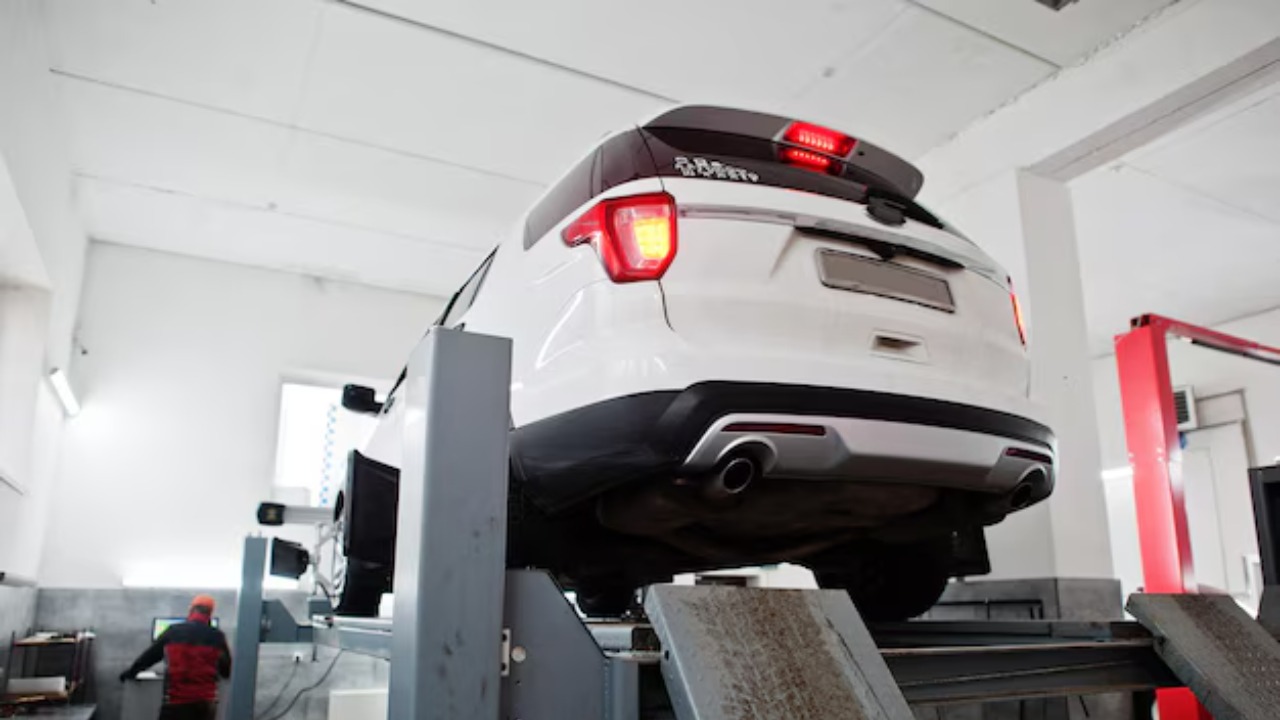
Ford is recalling more than 410,000 sport utility vehicles in North America after identifying a rear suspension defect that can suddenly affect steering control. The action targets popular family haulers that share the same suspension design, raising safety concerns for drivers who may have been using these vehicles for years without realizing the risk.
The recall centers on a rear component that can fracture under specific conditions, which regulators say can change how the vehicle tracks and responds to steering input. For owners of the affected SUVs, the announcement serves as both an immediate safety warning and a reminder of how critical suspension hardware is to everyday driving stability.
Scale of the recall and affected models
According to federal filings and company statements, Ford is recalling more than 410,000 vehicles to address the defect. Several reports describe the campaign as covering roughly 412,774 sport utility vehicles, a figure that reflects the specific production window and configuration where the problem appears. One summary explains that the Ford recall covers 412,774 model year 2017 to 2019 Ford Explorer vehicles, identifying the affected group as a large slice of three consecutive production years rather than a narrow batch.
Additional reporting states that the recall involves 412,774 model year 2017 to 2019 Ford Explorer vehicles equipped with a specific rear suspension design. A related brief notes that the same figure of 412,774 vehicles appears in internal summaries of the campaign, reinforcing that the scope is not approximate but tied to a defined list of vehicle identification numbers. One overview adds that Ford is recalling more than 450,000 vehicles in the United States, including about 412,000 linked to this suspension issue, placing the Explorer campaign within a larger set of safety fixes the company is managing.
What investigators say is going wrong in the rear suspension
Engineers traced the problem to the rear suspension toe link, a metal arm that helps hold the rear wheels at a precise angle relative to the vehicle body. In the affected SUVs, that toe link may fracture under certain conditions, a failure that can abruptly change the alignment of the rear wheels and alter how the vehicle tracks down the road. One technical summary explains that the rear toe link plays a central role in keeping the SUV stable and that if it breaks, the driver may experience a sudden shift in handling that resembles a steering problem.
Regulators describe the defect in similar terms, stating that a rear suspension toe link could fracture and, if that happens, it may affect the vehicle’s alignment and increase the risk of a crash. Company documents cited in multiple reports say the issue was traced to a combination of parts first implemented in 2017 and later pulled from production in 2019, which helps explain why the recall targets those specific model years. One detailed account notes that the toe link may fracture under certain conditions, creating a mismatch between the driver’s input and the SUV’s actual path, especially during cornering or emergency maneuvers.
Safety officials have also highlighted the human side of the defect by describing what a driver is likely to feel behind the wheel. One filing says the driver may notice a change in steering effort or a difference in how the vehicle responds before a complete fracture, although in some cases the failure can appear more suddenly. That description aligns with warnings from the National Highway Traffic Safety Administration that a fractured toe link can increase crash risk once the rear suspension geometry shifts from its intended setting.
Regulatory scrutiny, known incidents, and company response
Public summaries of the campaign emphasize that the recall was launched in coordination with federal regulators after a pattern of suspension failures emerged. One account tied to the National Highway Traffic Safety Administration explains that reports of rear toe link fractures prompted closer scrutiny of the design, including how the part behaves under repeated load and exposure to road salt or other environmental factors. The same material notes that Ford is recalling more than 410,000 SUVs after the suspension defect raised steering concerns, language that reflects the regulator’s focus on how a broken rear component can translate into a front seat safety risk.
Reporting that cites the federal recall database states that Ford recalled 41 separate configurations within the affected production window, indicating that the company and regulators focused on specific assemblies rather than issuing a blanket notice for every Explorer on the road. One overview of the campaign, linked to the National Highway Traffic Safety Administration, explains that the agency has received complaints and reviewed known incidents where the rear toe link fractured and the driver experienced a loss of steering control or difficulty maintaining lane position. Another summary notes that Ford is recalling more than 410,000 vehicles due to the suspension defect and that the company is working with federal safety officials to identify the root cause and implement a remedy.
Independent coverage also points to the broader regulatory context. A report that references National Highway Traffic filings notes that the agency has been monitoring rear suspension issues in Ford sport utility vehicles for several years, including prior campaigns involving similar components. Within that framework, the recall of 412,774 Explorer models is presented as part of an effort to address rear toe link durability and ensure that vehicles on the road receive updated parts that meet revised safety standards.
What owners should do and how the fix will work
For owners, the most immediate step is to determine whether their vehicle is among the 412,774 model year 2017 to 2019 Ford Explorer SUVs covered by the recall. Company guidance referenced in several reports advises drivers to check their vehicle identification number through official recall lookup tools or to contact a dealer directly for confirmation. One consumer-oriented summary notes that Ford has recalled more than 410,000 SUVs due to the faulty suspension and that affected owners will be notified and instructed on how to schedule repairs at no cost.
More from Fast Lane Only