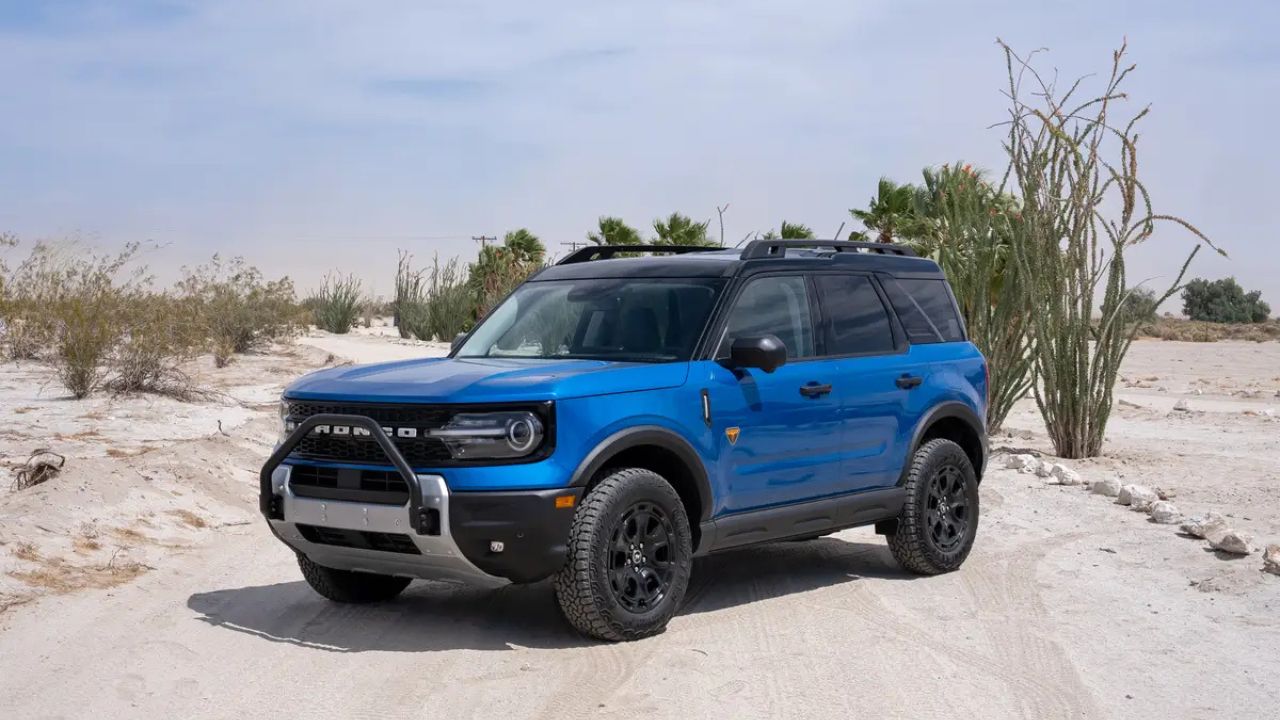
Ford is recalling certain Maverick and Bronco Sport vehicles over a suspension defect that can cause drivers to lose control, and some owners are being told not to drive their vehicles until repairs are made. The defect involves a front lower ball joint that can separate from the steering knuckle, a failure that can abruptly disable steering and increase the risk of a crash.
The recall adds to a growing list of safety campaigns for the automaker, which has already faced scrutiny over issues ranging from engine fires to faulty seat belt pretensioners. For affected Maverick and Bronco Sport owners, the latest warning raises immediate questions about safety, repair timelines, and what to do if the vehicle is their primary transportation.
Scope of the Maverick and Bronco Sport recall and what changed
Ford has identified a defect in the front suspension of certain Bronco Sport and Maverick models in which the front lower ball joint can detach from the steering knuckle. According to detailed recall coverage, the defect affects a subset of vehicles built with specific suspension components that can experience premature wear or improper retention of the ball joint, which connects the wheel hub assembly to the suspension and steering system. In practical terms, if that connection fails, the driver can suddenly lose the ability to steer the vehicle.
Safety analysts note that this is not a minor quality issue but a structural problem that can cause a wheel to splay outward or collapse relative to the suspension. Reporting on the recall describes how a separated ball joint can let the wheel move independently of steering input, potentially sending the vehicle off its intended path, especially at highway speeds. That risk is the reason some owners are being given a clear do not drive instruction until a dealer has inspected and repaired the suspension.
The current action fits into a broader pattern of safety campaigns at Ford. Earlier, the company recalled certain Ford Expedition and Lincoln Navigator SUVs for a separate issue involving seat belt pretensioners that could malfunction in a crash. Together, the campaigns show how Ford has been forced to address safety problems across different vehicle lines, from large SUVs to compact pickups and crossovers.
Coverage focused on the Maverick emphasizes that the new suspension problem follows other safety campaigns for the compact pickup. Analysts who track recall histories have pointed out that the Maverick has already been subject to multiple actions, including engine-related fixes, and now faces what one report describes as a recall serious enough to trigger a do not drive advisory for some owners. That escalation from a routine repair notice to a warning not to operate the vehicle marks a significant change in how Ford is treating the defect.
Why the defect and do not drive warning matter for owners now
For owners, the most urgent issue is safety. A front lower ball joint that separates from the steering knuckle can cause an immediate and dramatic loss of steering control. Reporting on the Bronco Sport and Maverick campaign explains that this failure can occur while driving, which means drivers might have little or no time to react before the vehicle veers off course. The risk is particularly acute in traffic, on curves, or at higher speeds, where even a brief loss of control can lead to a serious collision.
Ford has instructed a subset of owners not to drive their vehicles until they have been inspected and repaired. Detailed coverage of the recall notes that the company has issued a formal do not drive warning for specific Bronco Sport and Maverick models that are more likely to have the defective ball joint parts. According to technical summaries, dealers are being directed to inspect the front suspension, replace affected components, and ensure that the ball joint is properly secured to the steering knuckle before the vehicle is returned to the owner.
In-depth reporting on the recall explains that the problem centers on the interface between the ball joint stud and the steering knuckle bore. If the stud is not held tightly enough, or if the material in the knuckle wears or deforms, the joint can work loose over time. Eventually, the stud can pull free from the knuckle, effectively disconnecting the wheel assembly from the steering linkage. One detailed analysis of the campaign describes how this failure mode in the Bronco Sport and can cause a sudden change in wheel alignment that the driver cannot correct with the steering wheel.
Timing also matters. Many of the affected Bronco Sport and Maverick vehicles are relatively new, so owners may not expect significant mechanical failures so early in the vehicle’s life. A do not drive instruction can be especially disruptive for drivers who rely on these vehicles as daily transportation. Some owners may need loaner vehicles or alternative arrangements while dealers perform inspections and repairs, and service capacity can be strained when a recall targets popular models.
The recall also lands in a context where Ford’s quality record is under close scrutiny. Safety advocates have pointed to the company’s recent pattern of large-scale campaigns as a sign that engineering and manufacturing controls need improvement. The new warning for Bronco Sport and Maverick owners, detailed in recent coverage, reinforces questions about whether Ford is catching potential safety problems early enough in development and production.
For owners, the immediate takeaway is clear. If a Bronco Sport or Maverick is subject to the campaign, it should be checked against the recall information and, if flagged in the do not drive group, parked until a dealer can inspect it. Reports on the recall stress that even if the vehicle feels normal, the underlying defect may not show obvious symptoms before a sudden failure occurs.
How Ford is responding and what comes next for affected drivers
Ford’s response to the suspension defect involves both technical fixes and customer outreach. Dealers have been instructed to inspect the front lower ball joints and steering knuckles on affected Bronco Sport and Maverick vehicles. If technicians find components from the suspect production batches or signs of looseness or damage, they are to replace the parts with updated hardware that maintains a secure connection between the joint and the knuckle.
Detailed recall reporting describes how Ford is working with dealers to prioritize vehicles that fall under the do not drive instruction. In some cases, owners may receive towing to the dealership so they do not have to drive a potentially unsafe vehicle. Coverage from enthusiast-focused outlets has broken down the repair procedure and highlighted that the campaign centers on the front suspension ball interface, which technicians can access and replace using standard service tools once the vehicle is on a lift.
Looking ahead, the recall is likely to influence how Ford approaches quality control for future models. The company has already faced questions over its internal processes after a series of high-profile campaigns. Analysts expect Ford to tighten supplier oversight and validation testing for critical components like suspension joints, steering parts, and seat belt systems. The separate recall for Expedition and Lincoln Navigator seat belt pretensioners shows that the company is dealing with safety issues across multiple systems, not just suspension components.
Owners can expect continued communication from Ford as the campaign progresses. Automaker recall procedures typically include mailed notices, online VIN lookup tools, and coordination with dealers to schedule repairs. Coverage that focuses on the Maverick notes that the company has framed the suspension issue as a top-priority safety concern, similar in urgency to other high-risk defects that have led to do not drive advisories in the past. Reports on the Maverick recall indicate that Ford is emphasizing quick inspections and part replacements to get vehicles back on the road safely.
More from Fast Lane Only
- Unboxing the WWII Jeep in a Crate
- 15 rare Chevys collectors are quietly buying
- 10 underrated V8s still worth hunting down
- Police notice this before you even roll window down
*Research for this article included AI assistance, with all final content reviewed by human editors.