BMW’s very first motorcycle set a layout the company never really abandoned, while a small DKW two-stroke ended up copied on three continents. Between them sit bikes like the Horex Regina, a 350 that made a small Bad Homburg firm a volume builder. Germany’s motorcycle story is full of machines that didn’t shout, yet shaped what came after.
Most riders can name a classic BMW boxer. Far fewer know about NSU’s clever camshaft drive or the East German two-stroke that hit a production milestone in 1983. However, each one left a mark on riders, racers or rival factories.
These eight are our picks for German motorcycles that became icons without much fuss. Some are famous now, while others deserve to be. We’ve ordered them by date, from the 1920s to the mid-1980s, so you can watch the ideas carry forward.
1. 1923 BMW R32
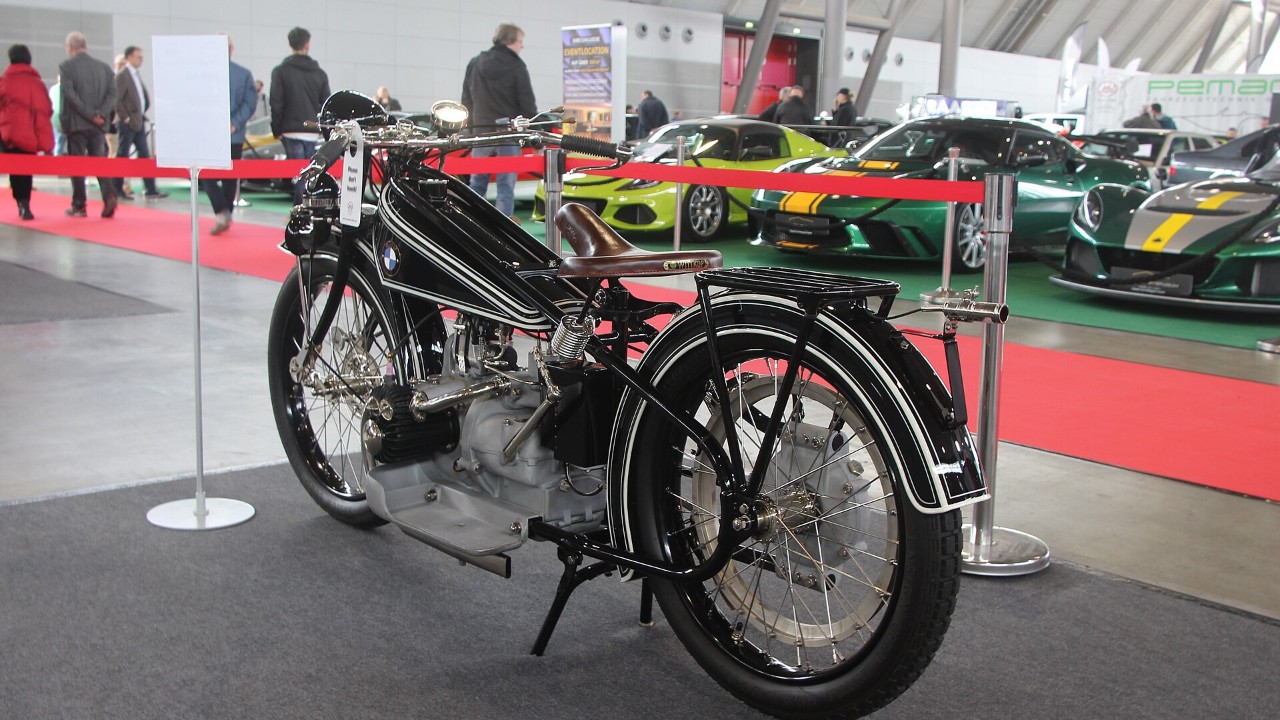
BMW’s motorcycle story starts with one bike. In 1923, the company showed the R32 at the Berlin Motor Show, the first motorcycle to wear a BMW badge. Engineer Max Friz laid out a flat-twin with its cylinders sticking out either side of the frame, right in the cooling air.
As BMW Group Classic’s R32 page lists it, the 494 cc boxer made 8.5 horsepower at 3,200 rpm. That was enough for about 58 mph. For a road bike in 1923, that was brisk. Instead of a chain or belt, it used a shaft to drive the rear wheel, which BMW says made it easier to service. The R32 cost 2,200 Reichsmarks and stayed in production until 1926.
Think about what that means. In our view, the boxer-and-shaft recipe still defines BMW bikes a century later. Very few first attempts in any industry have aged this well. If you ever see an original at a museum, look closely at the gearbox and driveshaft. That’s where the story begins. Also, notice how clean the engine looks, since nothing hangs off it that doesn’t need to.
2. 1952 DKW RT 125
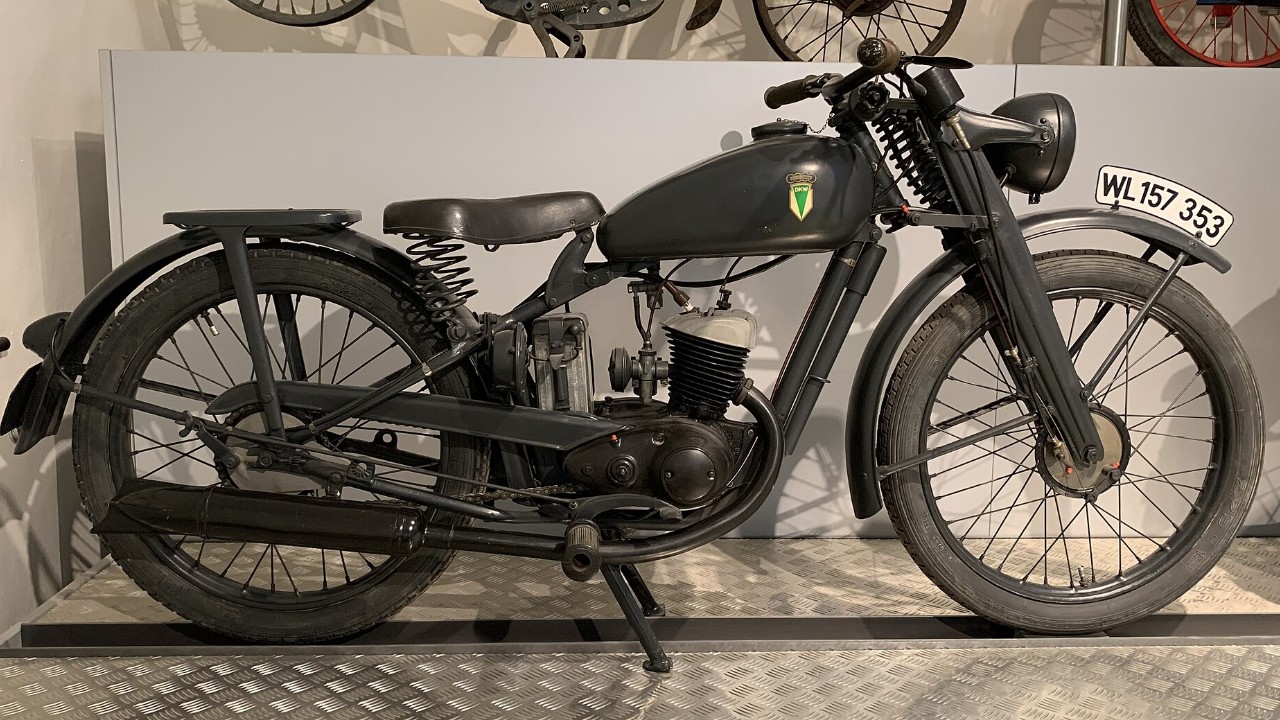
The RT 125 might be the most copied motorcycle ever built in Germany. DKW developed advanced two-stroke ideas in the 1930s, including transfer ports and loop scavenging, and the RT 125 put them in a light, simple bike. After the war, a relocated DKW in West Germany built the RT 125 W from 1949 to 1957.
Meanwhile, the design spread worldwide. According to Carole Nash’s Hall of Fame entry on the RT 125, the Soviets took the drawings and tooling, and Soviet factories built their own versions. In Britain, the BSA Bantam was a close relative that sold more than a quarter of a million units. Harley-Davidson also built its Hummer from the design, and Yamaha’s 1955 YA-1 was largely a reverse-engineered DKW.
That’s an incredible family tree for a 125 cc commuter. Few bikes of any size have spread so far. Our take: no other small German bike had as much influence outside Germany. In fact, if you’ve ridden a Bantam or an early Yamaha, you’ve ridden a piece of the RT 125.
3. 1954 NSU Max
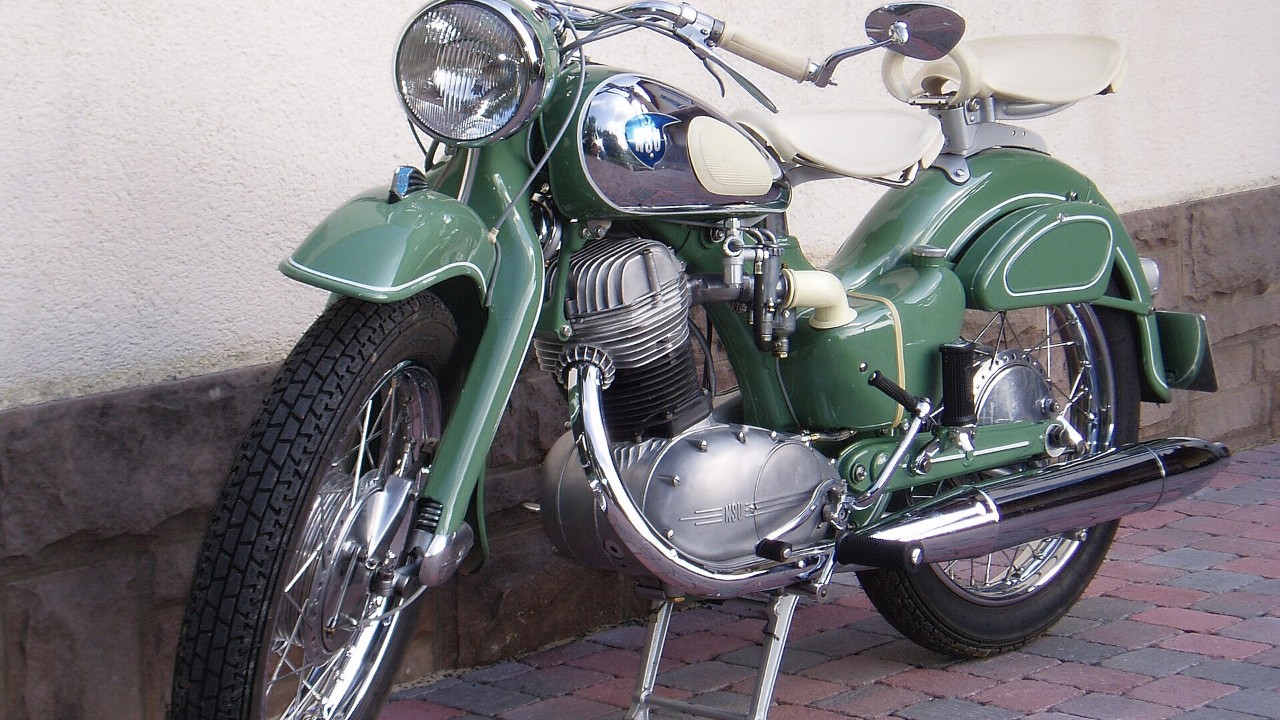
NSU’s Max looked like a tidy 250 single, but its valve gear was pure genius. Rather than a chain or bevel shaft, the “Ultramax” system used a pair of connecting rods driven from a half-speed shaft. Those rods worked eccentrics in the cylinder head that turned the overhead camshaft.
The first 250 Max appeared in late 1952. As Old Bike Australasia’s Supermax story explains, NSU built about 80,000 of the first Max models. The Ultramax drive went on to power everything from 125 cc bikes to the Prinz car from 1958, and almost one million engines used it. Meanwhile, NSU’s racing Rennmax twins took the 250 cc world title in 1953, 1954 and 1955.
The limited-production Sportmax racer later carried riders such as John Surtees and Mike Hailwood. In our opinion, the Max is the cleverest engine design on this list. Better yet, the Ultramax drive kept valve clearances steady as the engine warmed, which made it easier to live with. For other machines from the same era, see our list of vintage motorcycles you may never have seen.
4. 1952 Horex Regina
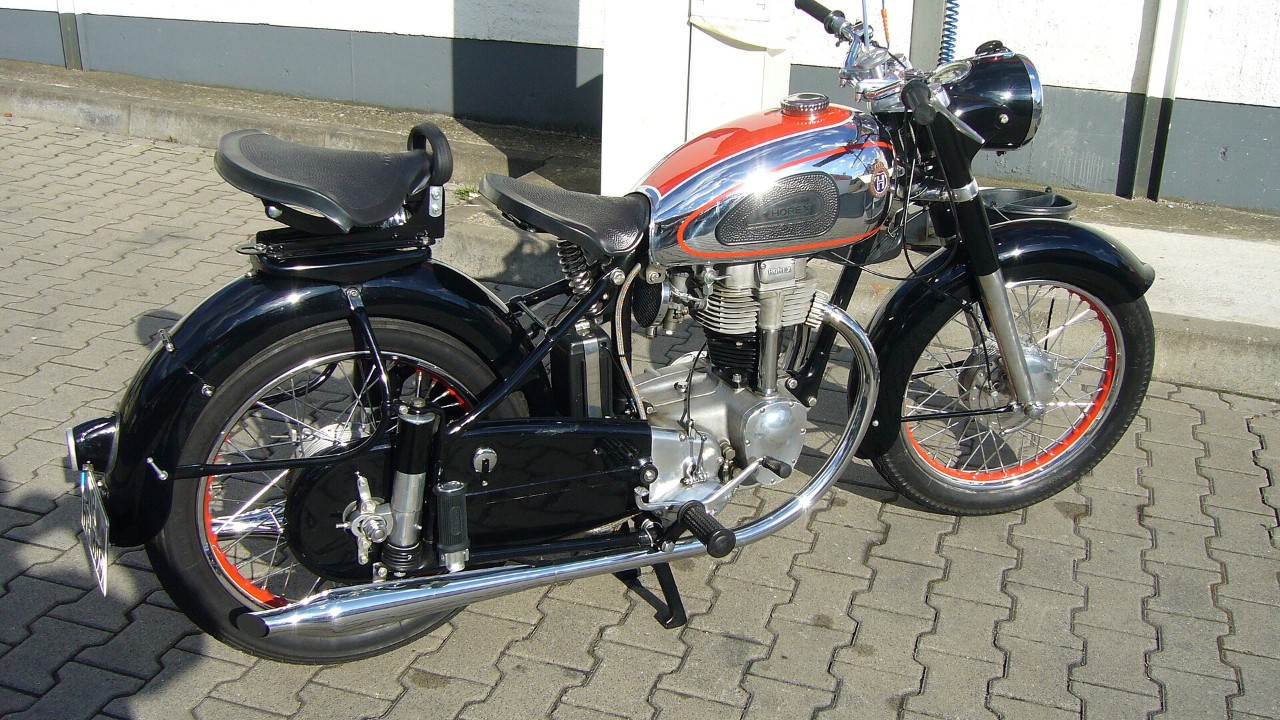
Horex was a small company in Bad Homburg. Its fortunes changed when the Regina range arrived at the end of the 1940s, in 250, 350 and 400 cc forms. The 350 became the star, and it turned Horex into a volume builder in the hungry postwar market.
According to Old Bike Australasia’s Horex history, the Horex Regina 350 used a 342 cc overhead-valve single. By 1953, it made 18 horsepower at 5,000 rpm, and the bike weighed just 160 kg. It also came well equipped, with hydraulically damped telescopic forks, plunger rear suspension, a sealed chain case and full-width alloy hubs.
Horex replaced the Regina with the Resident in 1955, and the same history lists 1957 as the firm’s final model year. Even so, the Horex Regina is the bike people remember. Our take: it’s the best-built everyday single of the era, and a running example is a fine way into German classics. Check that the chain enclosure and alloy hubs are complete, since those details define the bike. Also, ask which engine size you’re getting, because the 250 and 400 versions look much the same.
5. 1960 BMW R69S
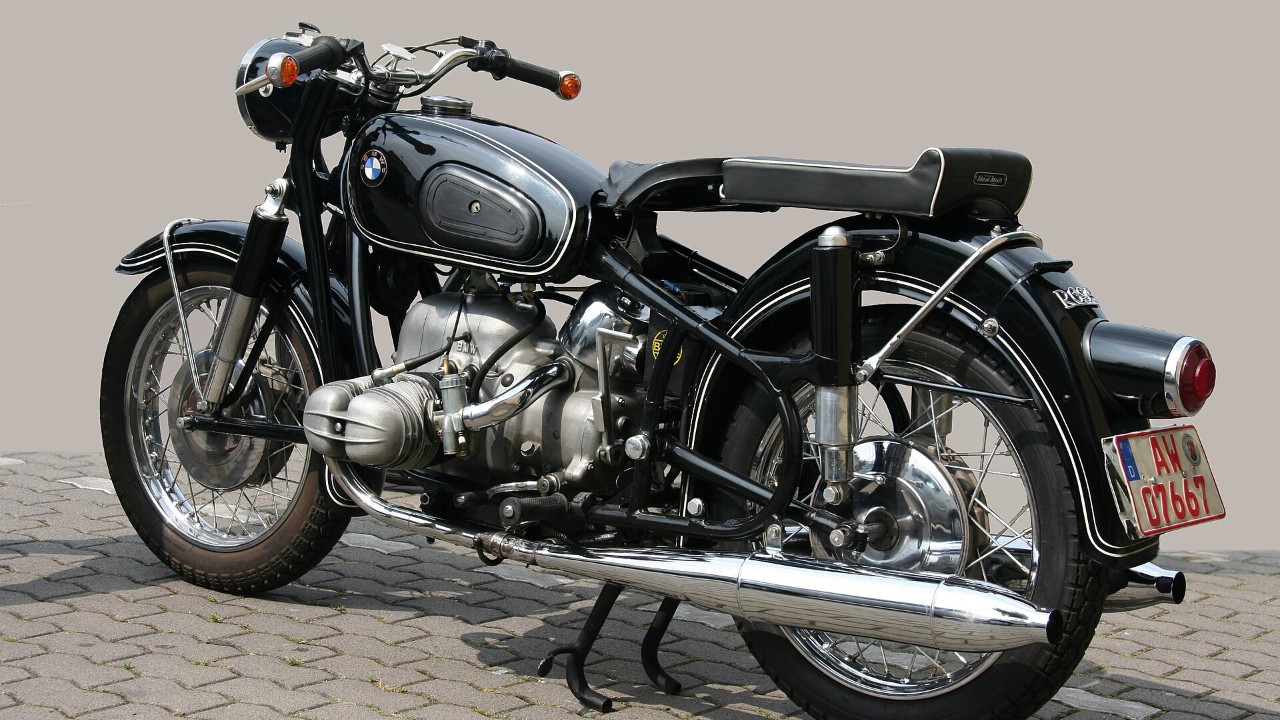
BMW launched the R69S in 1960 as its new sport flagship. The company calls it the fastest German production motorcycle of the era. We think it also made a fast, smooth BMW twin the obvious choice for riders who covered serious miles.
As BMW Group Classic’s R69S page records, its 594 cc boxer made 42 horsepower at 7,000 rpm. Top speed was about 107 mph. That figure backs up BMW’s claim about its speed. The R69S added a hydraulic steering damper to BMW’s full-swing chassis, and it sold for 4,030 marks. BMW even offered it in white, a color earlier reserved for government machines. Today, a white R69S is the one that draws the biggest crowd, at least in our eyes.
The R69S ran until 1969, a long life for a top model. In our view, it’s a bike you could ride hard all day. To our eyes, it’s the most elegant BMW of the postwar years. If you love bikes that went faster than their looks suggested, our piece on vintage motorcycles that were faster than anyone admitted is for you.
6. 1974 BMW R90S
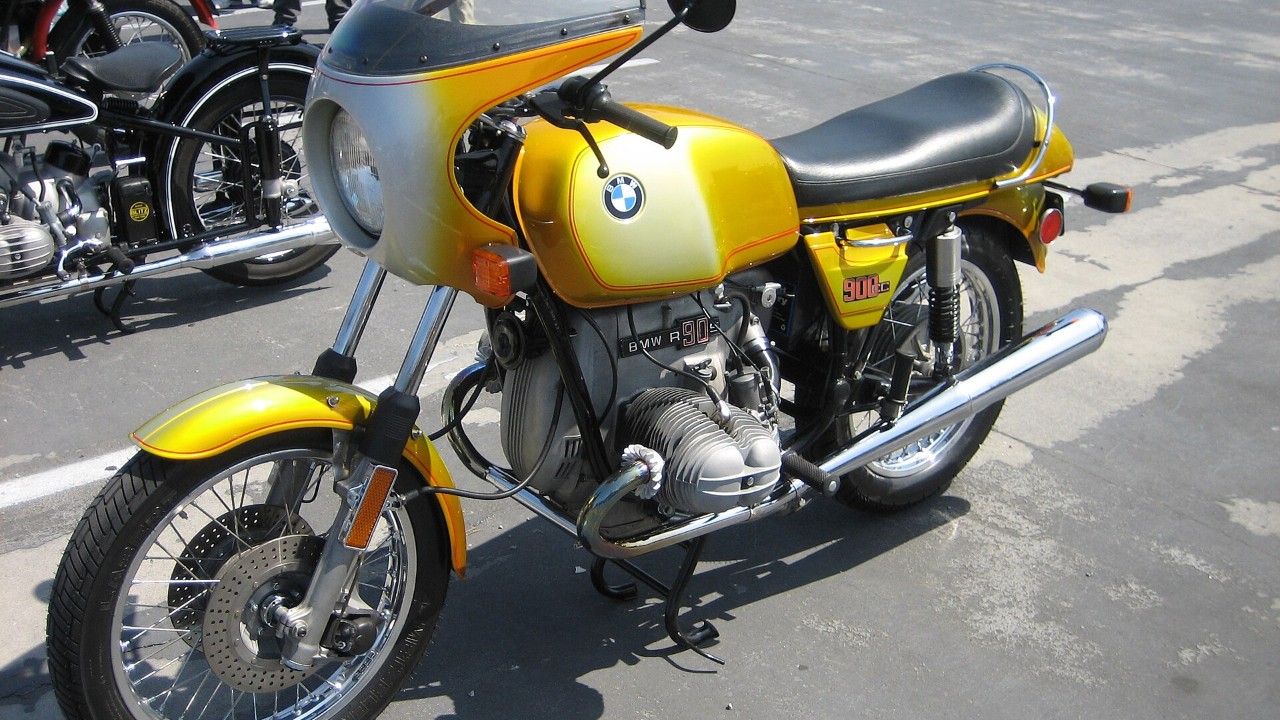
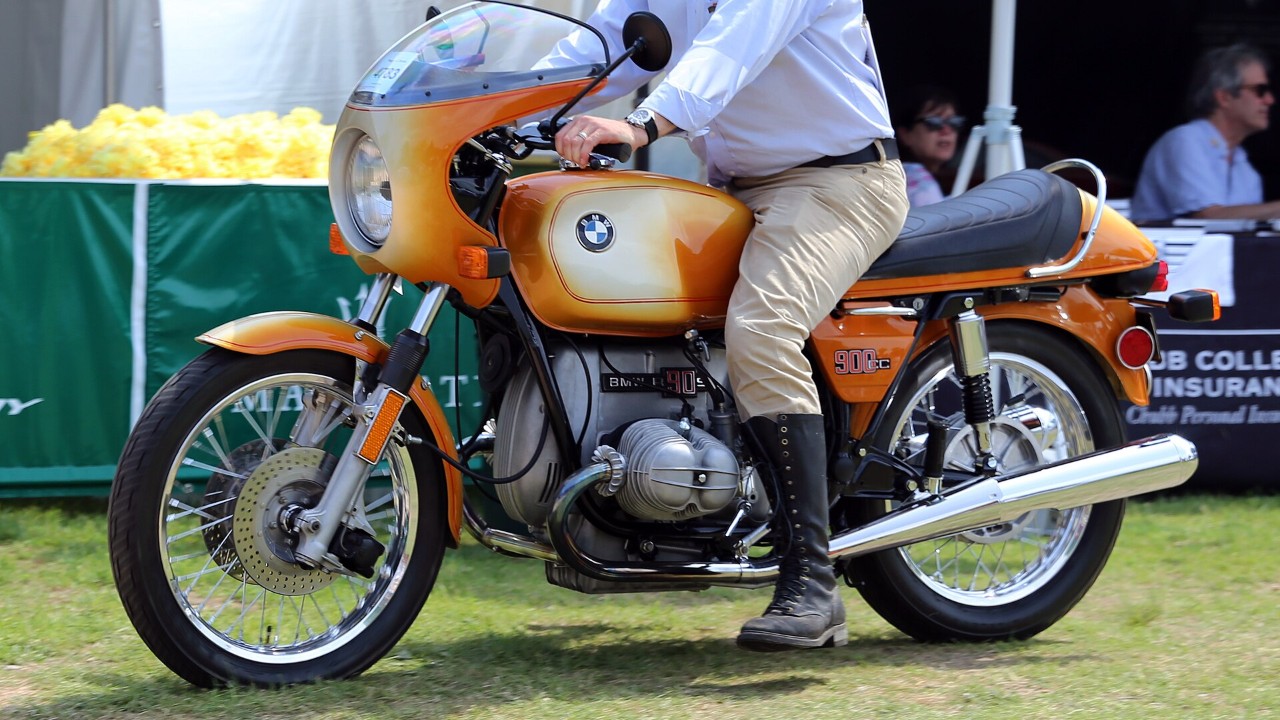
The R90S was the moment BMW stopped looking sensible. Introduced in 1973 as the flagship of the new /6 range, it was the first BMW motorcycle shaped by a hired designer, Hans Muth. His work included a small handlebar-mounted cockpit fairing, which BMW calls the world’s first on a production bike.
Under the styling sat an 898 cc boxer. According to BMW Group Classic’s R90S page, it made 67 horsepower at 7,000 rpm and could reach 200 km/h, about 124 mph. It cost 9,130 marks when new, more than twice the R69S’s 1960 price. The original paint was Silver Smoke Metallic, while Daytona Orange came from 1975 and is the one collectors chase.
Production ended in 1976 after a short run of just four model years. Our take: the R90S showed that a BMW could be beautiful and fast at once, and every sporty boxer since owes it something. If you’re shopping, check that the smoked paint and fairing are original, because they make the bike.
7. 1980 BMW R80G/S
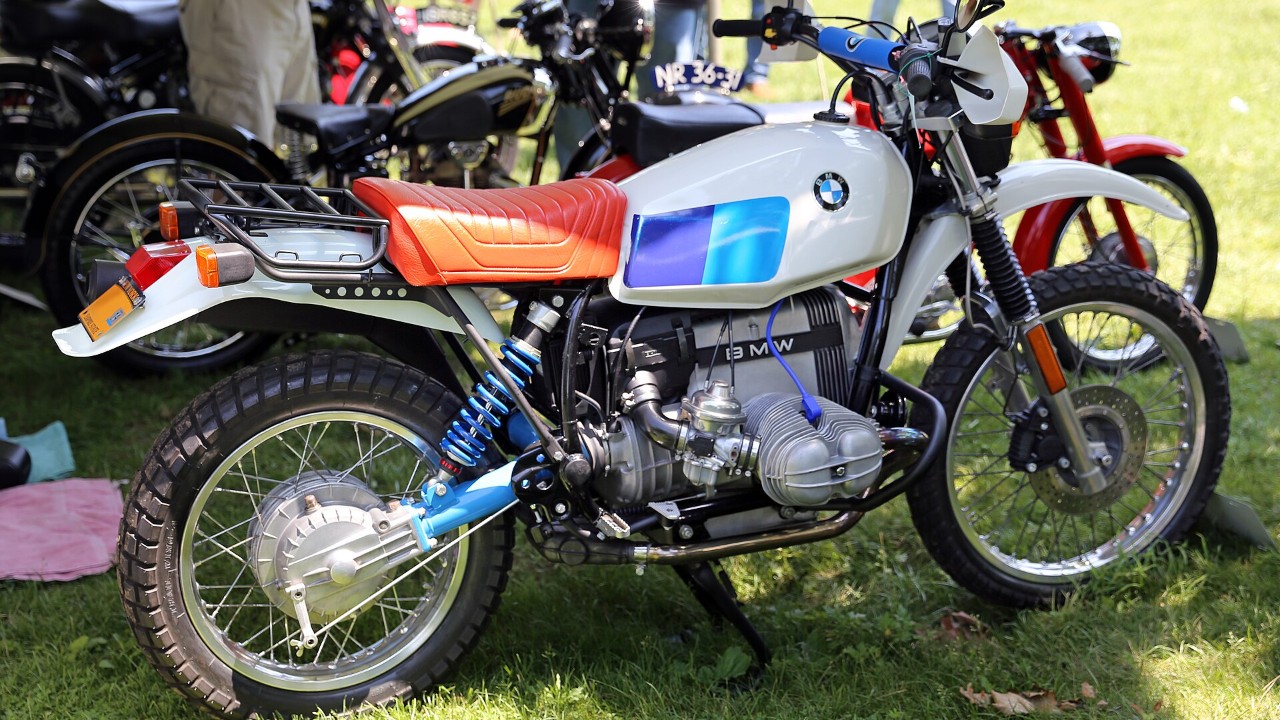
BMW launched the R80G/S in 1980, putting a big boxer twin on long-travel suspension for dirt and pavement alike. In our view, it created a whole category, and today’s adventure bikes trace straight back to it.
As BMW Group Classic’s R80G/S page shows, the 797.5 cc boxer made 50 horsepower at 6,500 rpm, good for about 103 mph. The big news was the Monolever, a single-sided rear swingarm that BMW calls a world first. It was stiffer, and it let you pull the rear wheel off quickly in the dirt. That mattered when a flat tire meant a repair on the trail. BMW built the bike in Berlin until 1987. Meanwhile, the G/S family won the Paris–Dakar Rally several times, which did wonders for its image.
For modern riders, we’d call this the most influential bike on the list. If you’re buying, look for service records and check the final drive, since the shaft and Monolever carry the whole design.
8. 1985 MZ ETZ 250
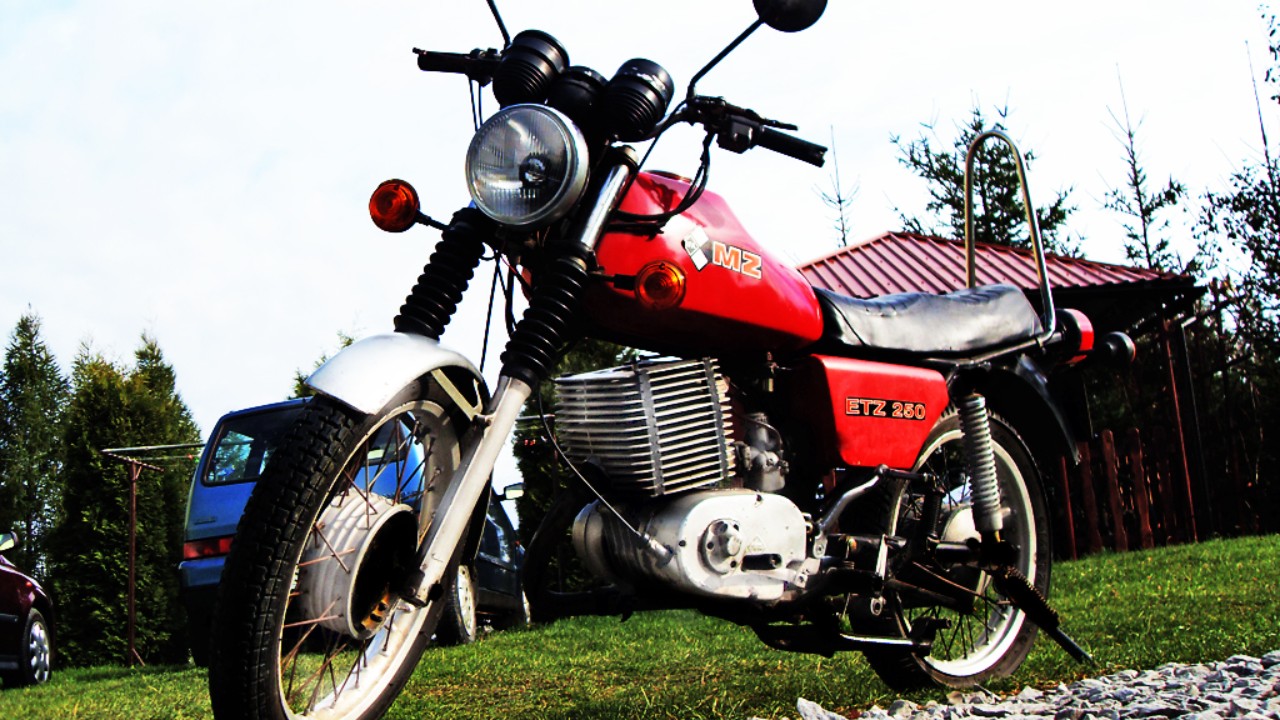
MZ took over the old DKW factory in the East after the war. In our view, its two-strokes were simple, tough and cheap. The ETZ 250 arrived for 1981, and in 1983 one became the two-millionth MZ motorcycle built.
According to the German magazine Motorrad & Reisen’s ETZ 250 data, its 243 cc single made 21 PS at 5,500 rpm. Top speed was around 125 to 130 km/h, and dry weight was 135 kg. Later bikes used a hydraulic front disc brake. That was a modern touch for a budget machine from the East. The ETZ 250 ran through 1989, and dealers sold leftover stock into the early 1990s.
The ETZ also found a second life in British club racing, which we think says a lot about how easy it is to work on. Our take: it’s the most honest bike here, and a reminder that icons don’t need big budgets. Better still, in our view it’s the friendliest way into German classics on this list. If you find one, check the electrics and the two-stroke oil system before anything else.
More from Fast Lane Only