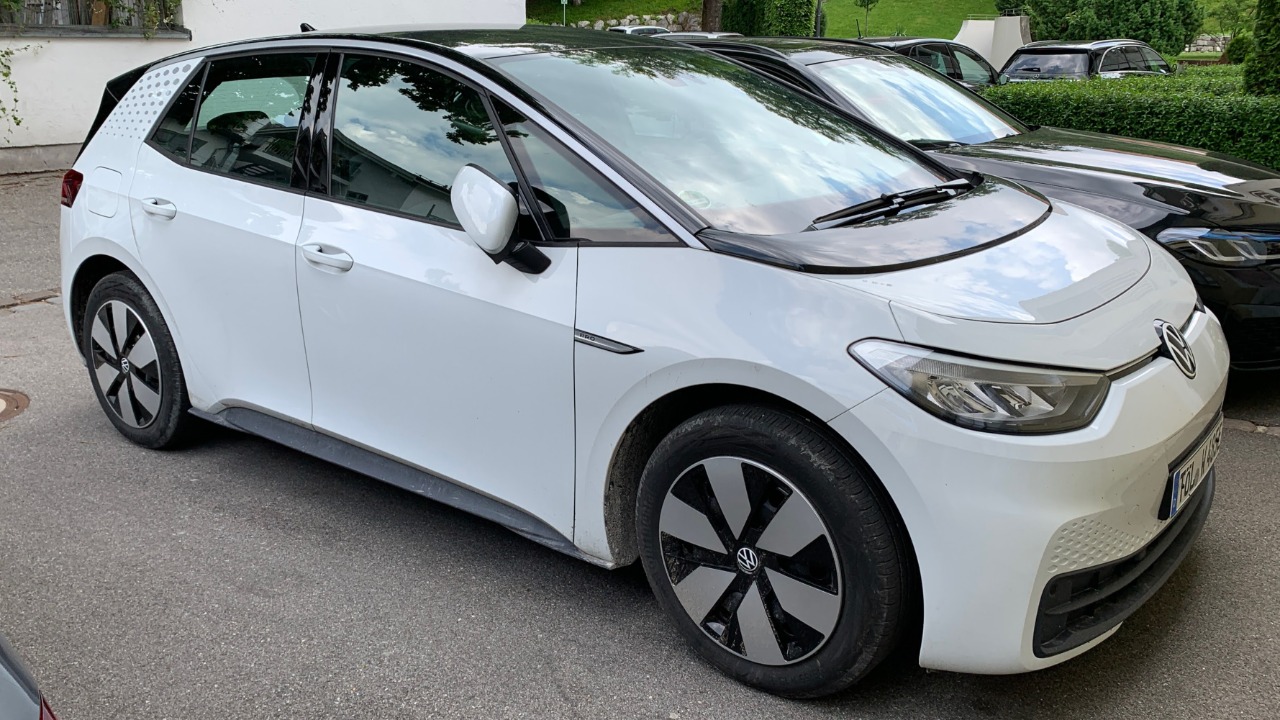
For years you have been told that an electric car’s battery is a ticking time bomb of depreciation, destined to fade fast once the odometer climbs. A four year, six figure mileage torture test on a Volkswagen ID. 3 has just supplied one of the clearest real world rebuttals to that fear, keeping more than 90 percent of its usable capacity after the kind of distance that would send many combustion cars to the classifieds. The result forces you to rethink what “high mileage” means for an EV and how long a modern pack can realistically serve as your daily workhorse.
Instead of the steep decline many drivers still expect, the ID. 3’s battery degradation curve looks more like a gentle slope, even after repeated fast charging, harsh winters and constant use. If you are weighing a new or used electric hatchback, the data emerging from this long haul experiment gives you a rare, quantified glimpse of how a contemporary pack behaves once the honeymoon period is over.
Inside the 160,000 kilometre experiment
The German Automobile Club, better known as German Automobile Club and abbreviated as ADAC, set out to answer a question you probably have yourself: what happens to an EV battery when it is treated like a normal car for years on end, not a pampered tech toy. Its engineers chose a Volkswagen ID. 3 Pro S Tour, a rear wheel drive hatchback that functions as Volkswagen’s RWD electric version of the Golf, and drove it relentlessly over four years. The car covered more than 160,000 kilometres in mixed conditions, including long autobahn stretches, city traffic and cold weather, while being charged in ways that mirror how you would actually use an EV rather than a lab protocol.
By the time the odometer ticked past that 160,000 kilometre mark, equivalent to 160,000 kilometres, 99,000, the pack still retained over 90 percent of its original net capacity. Volkswagen itself highlighted that the endurance test was the first of its kind for an ID. family vehicle and that 90 per cent remained available despite the punishment. Between the individual test drives, the car was repeatedly checked for any significant issues, and according to the company, Between the inspections no major problems emerged. For you as a potential owner, that combination of high remaining capacity and mechanical resilience is the core story.
What 91% capacity really means on the road
Battery health statistics can sound abstract until you translate them into the range figure you see on your dashboard. In this case, the Volkswagen ID. 3 Pro S started life with a usable pack of 77 kWh, and independent testing recorded an initial real world range of 77 k and 272 miles on a full charge. After the long term trial, the car still had 91% of its battery capacity, a figure that aligns with separate reporting that the Volkswagen ID 3 retained 91% battery capacity in a 160,000 kilometre test. In practice, that meant the car lost only around eight miles of usable range, a change small enough that you would struggle to notice in daily driving.
That eight mile figure has been repeated across several analyses of the same vehicle, including coverage that described how This Volkswagen electric car lost only eight miles of range after 107,000 miles. Another detailed breakdown of the same ADAC project noted that the EV lost just eight miles of range after that distance, with the ADAC team deliberately cycling the battery between 10 and 80 percent and exposing it to temperatures between 0 and 5 degrees Celsius. When you see 91% capacity and 8 miles of range loss side by side, the message is clear: the pack is aging slowly enough that you can plan for a decade of use without obsessing over every kilowatt hour.
The “one trick” that kept degradation in check
Underneath the headline numbers sits a more technical story about how software and charging strategy can protect a lithium ion pack. The ID. 3 Pro S Tour used in the trial benefited from a series of over the air updates that refined its thermal management and charging logic, and testers highlighted that this Software Update With actually improved efficiency over time. At the outset, the car delivered its rated range, but as the software matured, the vehicle’s energy use per mile dropped slightly, offsetting some of the natural capacity loss. That is why, even after more than 100,000 miles, the real world range figure barely moved.
Independent testers, including Chris Chilton and others, pointed out that the key “trick” was not a gimmick but a conservative approach to usable capacity and charging windows. The car rarely charged to 100 percent, instead living most of its life between 10 and 80 percent, which is exactly the band that battery engineers recommend if you want to slow degradation. Reporting on Real World Battery Health Miles At the 100,000 mile mark stressed that the pack remained well above the 70 percent threshold at which many manufacturers consider a battery to have reached the end of its first life. For you, the takeaway is that software, charging habits and a bit of restraint on fast charging can materially extend the useful life of an EV battery.
Why this matters for used EV buyers
If you are shopping the used market, the ADAC findings should change how you look at high mileage electric cars. A Volkswagen ID. 3 that has covered 100,000 Miles is no longer an unknown quantity, because you can point to a controlled test where a similar car kept 91% Battery Capacity After that distance. Coverage of the same project has underlined that the car’s performance in low temperatures remained strong, which is often a concern for second hand buyers in colder climates. When you combine that with the fact that the ID. 3’s battery warranty typically runs to eight years or 160,000 kilometres, the ADAC data suggests that a high mileage example still has a meaningful chunk of warranty protection and usable life left.
Market analysts have also noted that such endurance results could reshape residual values and leasing assumptions. Reporting that Michelle Lewis and others have followed shows that Volkswagen’s ID. family EVs shrug off 100,000 miles with 91% battery health, which is likely to make finance companies more comfortable with longer terms and higher mileage leases. On enthusiast forums, owners have been dissecting the ADAC report, with one thread titled around Finishing the road test of over 160,000 kilometres and discussing how a 2020 used ID. 3 still felt tight and Golf like. When you see both institutional testing and grassroots owner feedback converge, it becomes easier to trust that a used ID. 3 is not a battery gamble.
The broader signal for EV longevity
Although this story centers on one Volkswagen hatchback, the implications reach across the EV landscape. The fact that a mass market car like the Europe focused ID. 3 can endure four years of hard use with minimal degradation suggests that modern cell chemistry, pack design and software management are maturing quickly. A discussion thread titled German Automobile Club project framed the test as proof that EV batteries last longer than many skeptics assume, highlighting how ADAC tracked degradation over time and mileage. For you, that means the old assumption that an EV pack is “done” at 100,000 miles is increasingly out of date.
More from Fast Lane Only