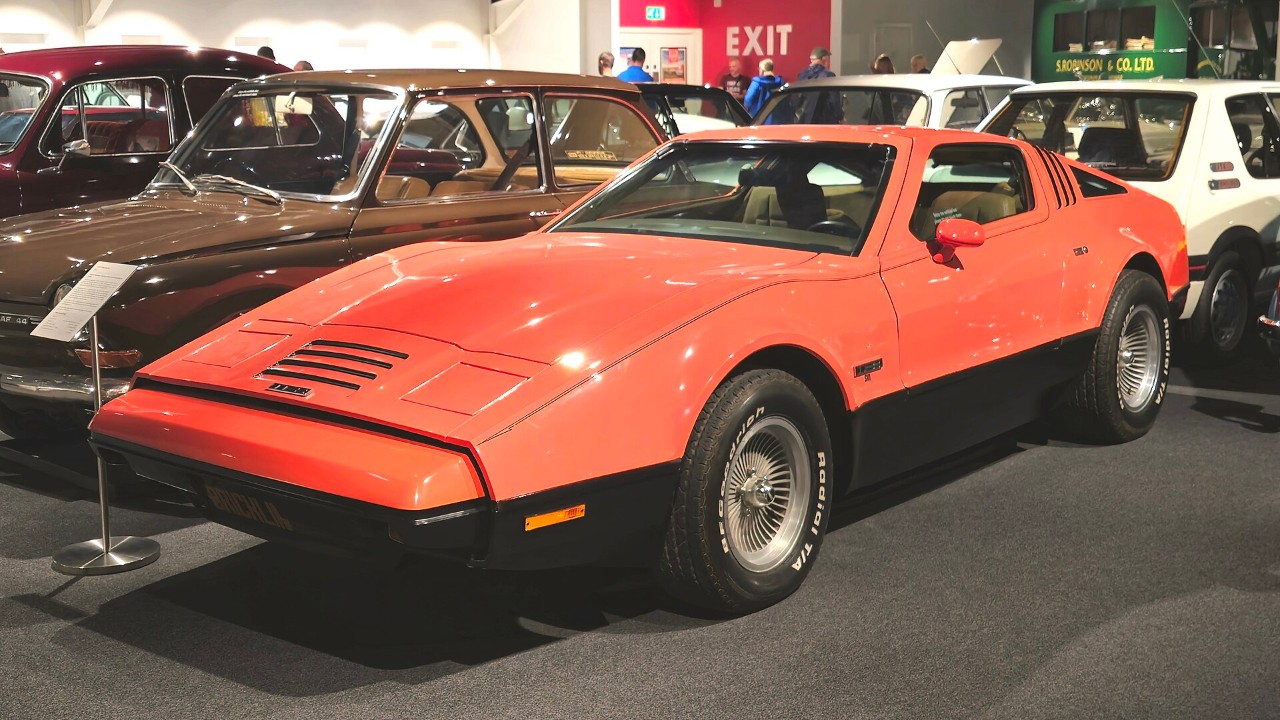
The Bricklin SV-1 gullwing doors weighed 90 pounds apiece, a lot of weight to raise overhead. So Malcolm Bricklin gave his mid-1970s sports car a hydraulic system to lift them. It was the most striking part of a car built around one idea, safety, and also one of its biggest headaches.
The SV-1 came from a small factory in New Brunswick, Canada, between 1974 and 1976. Fewer than 3,000 left the line before the money ran out. Even so, about half or more of them survive, along with their unusual doors.
Here is how the doors worked, why Bricklin wanted them and what else made the car different. The figures come from Hagerty, a long Bricklin history at Drivingline and CBC News reporting from New Brunswick.
A “Safety Vehicle” with doors that went up
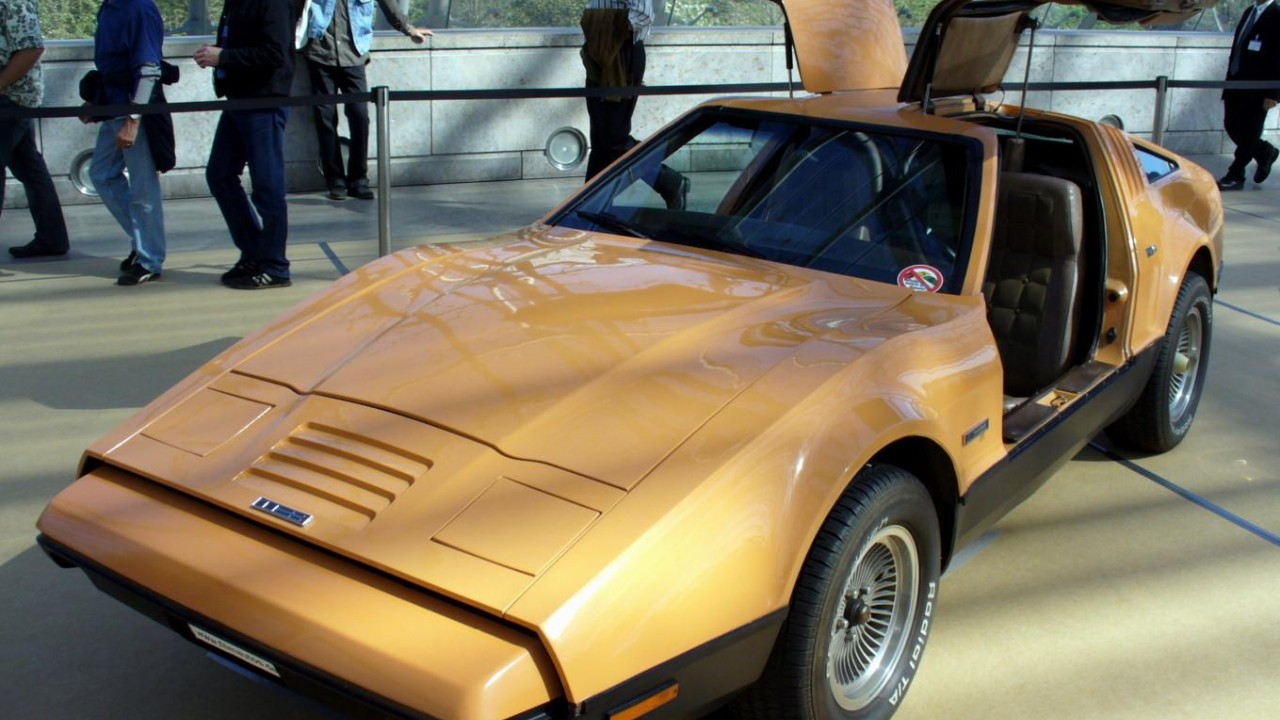
The letters SV stood for “Safety Vehicle,” according to Hagerty. Bricklin wanted a car that could protect its occupants better than anything else in the showroom. As he told CBC News, his goal was “to build the safest production car there is. And it’s going to be beautiful.”
Gullwing doors fit that plan. According to Drivingline, Bricklin claimed they were safer because they did not risk swinging out into a lane of traffic. Instead of opening sideways, each door hinged at the roof and swung upward.
The rest of the car followed the same thinking. Hagerty describes a tubular steel perimeter frame and bumpers built to handle a 12-mph impact. By comparison, the government standard then called for 5 mph. Drivingline adds a roll cage that also shielded the fuel tank. There was even no cigarette lighter, Hagerty notes, because smoking while driving was considered dangerous.
How the Bricklin SV-1 gullwing doors worked
The trouble was weight. Hagerty and Drivingline both put each door at 90 pounds, a heavy slab to raise overhead. For that reason, Bricklin used a hydraulic pump to lift each door and hold it open. Drivingline describes the doors as “90 pound slabs” carried by that pump.
In practice, the system gave owners plenty of grief. Hagerty calls the hydraulics finicky. It also warns buyers to expect the doors to leak, even with new weather stripping. Drivingline goes further and reports that faulty door hydraulics trapped some owners inside their cars.
Bricklin himself found the flaw the hard way. He told CBC News that he got rained on while trying to get into the car. His planned fix was to replace the hydraulic fluid with air, but he never got the chance to install it. Today, Hagerty says, owners have found fixes for the known door issues.
Getting out was its own event, too. Hagerty quotes Car and Driver, which said that exiting the car was like “climbing out a manhole while a semi-trailer is parked on the cover.”
A body with the color built in
The SV-1 had no paint. Instead, the color went into the body panels themselves, Hagerty says. Buyers chose from five shades: Safety White, Safety Green, Safety Red, Safety Suntan and Safety Orange.
The panels were acrylic laid over fiberglass, according to Drivingline and CBC News. Bricklin told CBC he chose the material so the car would not rust. However, the glue that bonded the acrylic to the fiberglass failed in Arizona desert heat, and the body came loose. Drivingline reports that the bonding problems ruined nearly a quarter of all parts produced, even a year into the program.
The acrylic panels came from a plant in Minto, New Brunswick, CBC says. Meanwhile, the cars themselves came together in an industrial park on Grandview Avenue in Saint John.
AMC power first, then Ford
Early cars used a 360-cubic-inch V8 from AMC rated at 220 horsepower, according to Hagerty and Drivingline. For 1975, Bricklin switched to a 351-cubic-inch Ford V8 rated at 175 horsepower. Hagerty says about 155 cars got the four-speed manual. Every Ford-powered car came with a three-speed automatic.
Performance came close to the Corvette’s. In a 1975 test against a 165-horsepower Corvette, Hagerty reports, the SV-1 ran the quarter-mile in 16.6 seconds, about half a second behind the Chevrolet.
Price was another story. Bricklin hoped to sell the car for about $3,500 and undercut the $6,400 Corvette, Hagerty says. Production cars cost about $7,900, though, and by 1975 the price was nearly $10,000.
What happened to the Bricklin SV-1
The government of New Brunswick backed the factory. According to CBC News, the province’s first investment of $4.5 million grew to $23 million. Bricklin Canada went into receivership in 1975. Drivingline says Consolidated Motors, which bought the assets, assembled the final model year.
Hagerty puts total production at fewer than 3,000 cars, against a plan for 12,000 a year. Still, decades later, Bricklin told CBC, “I’m proud of the car.” He has bought five SV-1s himself and given them to museums, the broadcaster reports.
Many of the cars are still around. Hagerty believes a little more than half of the run survives, while CBC puts the number at about 1,700. And Hagerty says an SV-1 in #3 condition is worth about $15,000 on average, roughly a third of a DeLorean in similar shape.
More from Fast Lane Only
- Unboxing the WWII Jeep in a Crate
- 15 rare Chevys collectors are quietly buying
- 10 underrated V8s still worth hunting down
- Police notice this before you even roll window down
This article was created with the help of AI and was reviewed and edited by Fast Lane Only editors before publication.