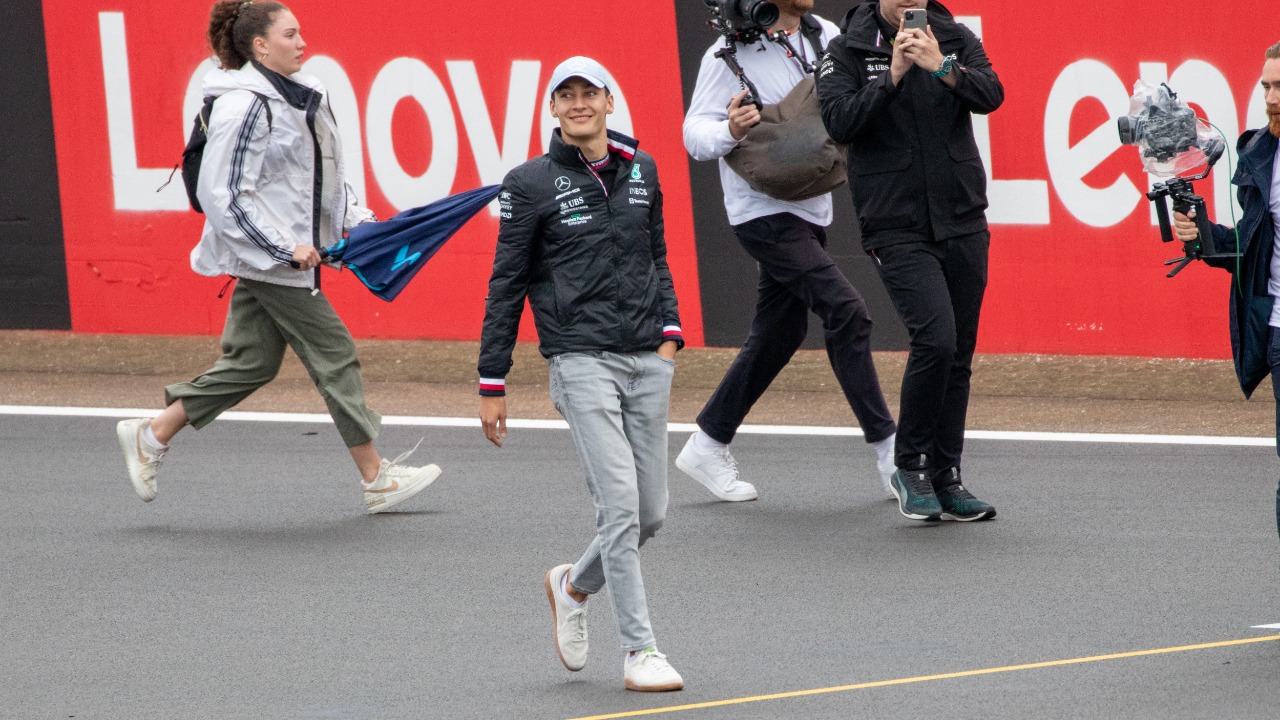
George Russell has spent the past few seasons turning quiet promise into hard evidence that he can anchor Mercedes through Formula 1’s next era. His climb from junior champion to de facto leader in Brackley has been methodical rather than explosive, but it has left him uniquely positioned to shape how the team rebuilds around a new car, a new team-mate and a new competitive landscape.
As Mercedes navigates life after Lewis Hamilton, Russell’s blend of speed, consistency and technical authority has become less a luxury and more a strategic necessity. His trajectory explains why the team has doubled down on him for the long term and why so much of its future, on and off the track, now runs through car number 63.
From karting prodigy to Mercedes cornerstone
Russell’s current status only makes sense when you trace the arc from his early years to his present role. George William Russell emerged from Britain’s junior ranks as a meticulous, data-driven racer, winning titles on his way up and building a reputation for extracting more from a car than its baseline suggested. That grounding, combined with his methodical approach, helped the British driver stand out to Mercedes long before he reached the grid.
By the time he arrived in Formula 1, Russell had already been earmarked as a long-term project, and his early seasons reinforced that judgment. His Formula Profile, Stats, Career History underline how quickly he proved his mettle in difficult machinery, turning underdog outings into reference drives and showing the kind of racecraft that top teams prize. That combination of raw pace and resilience is what convinced Mercedes to keep investing in him through its junior pipeline and into a full-time seat.
Learning in Hamilton’s shadow and emerging as a benchmark
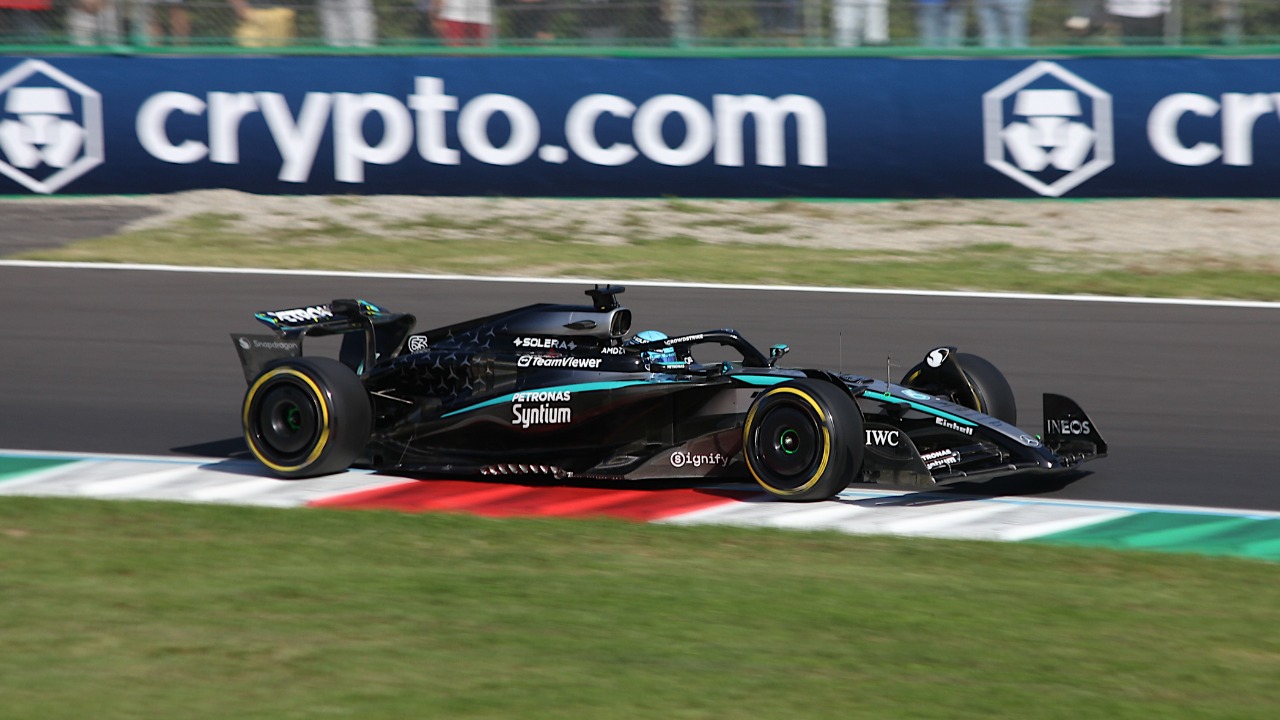
Russell’s apprenticeship alongside Lewis Hamilton was as demanding as any in modern Formula 1, yet it accelerated his evolution into a complete driver. Over three seasons paired with the ultimate F1 benchmark, he had to match one of the sport’s greatest qualifiers and race-day operators while also integrating into a team built around Hamilton’s habits and feedback. The fact that Over three seasons, paired with the benchmark, Russell repeatedly demonstrated he could live at that level is central to why Mercedes now trusts him to lead its next phase.
Inside the team, that growth has been framed in very specific terms. Mercedes has described George as “a reliable and rapid benchmark,” a phrase that captures both his speed and his value as a reference point for car development and for younger team-mates. That internal label matters, because it shows how Mercedes now sees him not just as a race winner in waiting but as the standard against which others in the garage are measured.
2025: His best season yet and the making of a leader
The 2025 campaign has been the clearest proof so far that Russell is ready to be the face of Mercedes. Entering the year as the de facto team leader at Mercedes following Lewis Hami’s departure, he was expected to carry both the competitive burden and the political weight of guiding a top team through transition. Rather than shrinking from that responsibility, he delivered what has widely been described as his most impressive season, combining sharper qualifying performances with more complete race executions.
That step forward has been defined as much by consistency as by headline results. In the shadow of the spotlights focused on the McLaren and Max Verstappen battle, George Russell has quietly assumed his place as one of the grid’s most dependable points scorers, rarely leaving performance on the table and routinely maximising whatever package Mercedes has given him. That pattern of delivering solid weekends, even when outright wins are out of reach, is exactly what teams look for in a future champion.
Why Mercedes has tied its future to car number 63
Mercedes’ long-term commitment to Russell is not sentimental, it is strategic. The team has locked him in with a multi-year extension that provides security on both sides and signals that he is the driver around whom the next generation of cars will be built. The fact that Mercedes clearly sees Russell as central to its medium-term plans underlines how deeply the team believes in his ceiling.
That faith is reinforced by how Russell himself views his position. He has said he believes he has the best F1 seat on the grid at Mercedes, a statement that reflects both his confidence in the team’s ability to rebound and his own readiness to be the driver who leads that resurgence. When a driver with Russell’s profile commits to that vision, and the team reciprocates, it creates a stable axis around which engineers, strategists and future signings can align.
The Antonelli partnership and the next Mercedes era
Russell’s importance will only grow as Mercedes reshapes its driver line-up. From 2026, George Russell and Kimi Antonelli will form Mercedes’ Formula One pairing, a combination that blends proven race-winning potential with one of the most hyped junior talents in years. The confirmation that George Russell and Kimi Antonelli will share the garage underscores how the team expects Russell to act as both competitive spearhead and mentor.
That dynamic will test Russell’s leadership in new ways. He will be expected to set the standard in qualifying and races while also helping Antonelli integrate into the complexities of a top-tier operation. The team’s own description of him as a rapid benchmark suggests it wants the Italian to measure himself against Russell’s data and habits, using car number 63 as the reference point for what a complete Mercedes driver should look like.
Technical authority in a transformed Mercedes
Russell’s value to Mercedes is not limited to what happens on Sundays. Inside the factory and on the simulator, he has become one of the key voices shaping how the team responds to the new regulatory cycle and to the end of the Hamilton era. He has spoken about a transformed approach in Brackley, explaining that the team has developed a more thorough understanding of how far it can push concepts without tipping into instability and how it must balance risk and reward across seasons. His comments about how “if you go too far, that is just as much of a problem” capture the more measured philosophy he says has taken hold, with Mercedes now treating him as a central resource between 2025 and 2026.
That technical influence extends to how Russell works with the team’s wider driver group. In parallel with his race duties, Mercedes has highlighted how Getting to take all my sim experience to the track is the best part of my role for its young drivers, with simulator specialists describing the “incredible feeling” of translating virtual work into real-world performance and referencing Russell’s feedback as a key input. The way Getting that loop right is central to Mercedes’ hopes of closing the gap to the front, and Russell sits at the heart of that process.
Mentality, regulations reset and the clean-slate opportunity
Beyond the data and the contracts, Russell’s mentality is a major reason Mercedes sees him as the driver to carry it into the next rules cycle. His official Formula 1 profile describes a refusal to cede ground to his rivals and a commitment to tricky passes that underpin his winning mindset, traits that have been evident since he first stepped into a front-running car. That description of George Russell as a driver who will not back down in wheel-to-wheel fights is exactly the kind of edge a team needs when it is trying to reassert itself against champions like Max Verstappen.
Russell has also been vocal about what the next set of regulations could mean for him and for Mercedes. He has said he “can’t f****** wait” for a clean slate under the new rules, framing the reset as a chance to level the playing field and reward teams that learn fastest and execute best. That raw enthusiasm, captured when Excited Russell spoke about the coming changes, hints at a driver who sees the next era not as a threat but as an opening to convert his consistency and technical feel into a sustained title push.
Why his climb matters beyond Mercedes
Russell’s rise has implications that stretch beyond one team’s internal planning. In a grid shaped by Max Verstappen’s dominance and by shifting alliances among manufacturers, Mercedes needs a driver who can be both a marketing figurehead and a sporting weapon. The way In the broader narrative of the season Russell has established himself as a future champion candidate positions him as one of the few realistic threats to Verstappen’s hold on the sport if Mercedes can deliver a car worthy of the fight.
His journey also reflects how top teams now think about succession planning. From his early days as a junior backed by Mercedes to his current status as team leader, Russell has been developed with a long horizon in mind, with each step designed to prepare him for exactly the role he now occupies. That is why, when I look at the combination of his results, his contract security and his influence inside Brackley, it is hard to escape the conclusion that George Russell is not just part of Mercedes’ future, he is the lens through which the team is choosing to view the next era of Formula 1.