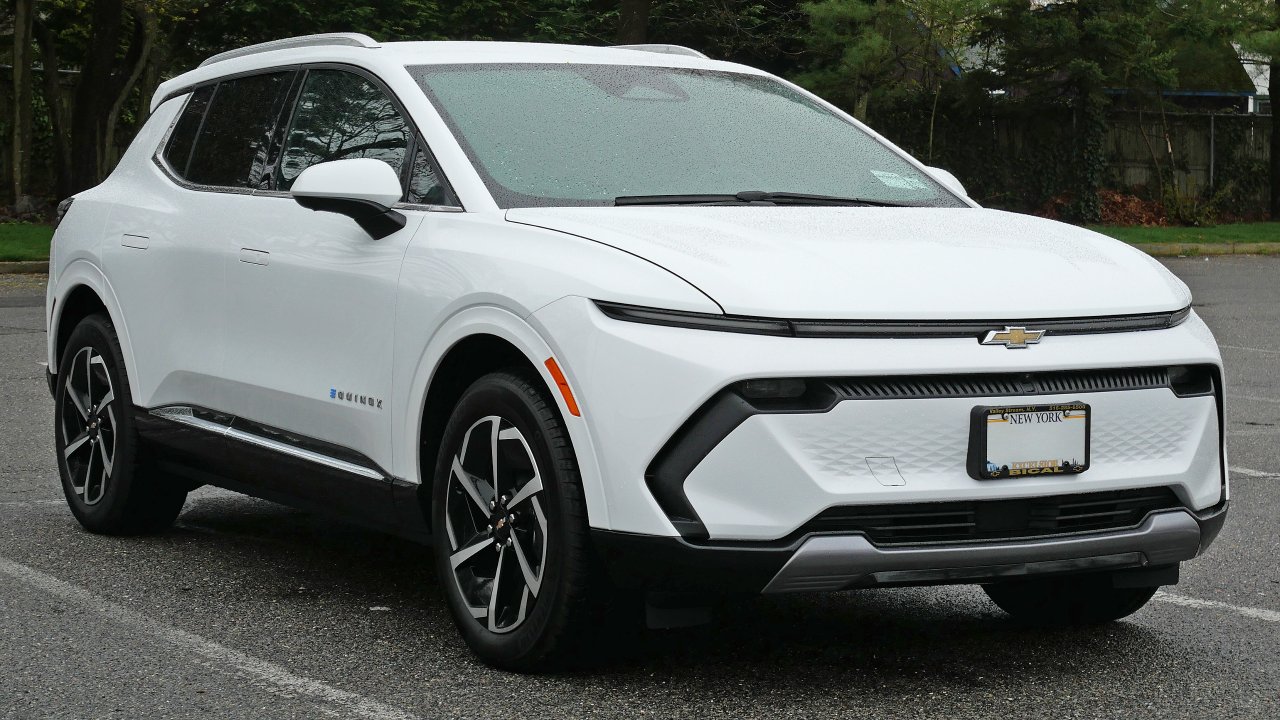
General Motors has acknowledged a basic but consequential failure in its latest wave of electric vehicles: they are not making enough noise at low speeds to warn people nearby. That admission has triggered a sweeping recall of tens of thousands of Chevrolet Equinox EVs so the company can recalibrate the pedestrian warning system that regulators say is falling short of federal safety rules. The episode underscores how a feature once treated as a regulatory box to tick has become a frontline test of whether automakers can marry quiet electric drivetrains with the obligation to protect pedestrians.
What GM found wrong with the Equinox EV
At the heart of the recall is software, not hardware. General Motors has told regulators that incorrect calibration in the pedestrian alert sound system means affected Equinox EVs do not consistently emit the required warning noise when moving slowly, particularly from stationary up to 10 kilometers per hour. Federal rules require electric vehicles to generate artificial sound at low speeds so that people who rely on auditory cues, including those with limited vision, can detect an approaching vehicle. In this case, GM has effectively conceded that its software tuning did not meet that standard, creating what safety officials describe as a serious pedestrian risk.
The scope of the problem is large. GM has said that more than 80,000 Chevrolet Equinox electric sport utility vehicles are covered, with one detailed filing citing 81,177 model year 2025 and 2026 vehicles. Regulators at The National Traffic Safety Administration have linked the defect to the low speed range from stationary to 10 kilometers per hour, and internal investigations have traced the issue to the specific calibrations used for those later model years rather than the software that had been deployed to remedy 2024 vehicles. GM has characterized the fix as a software update, which in many cases can be delivered as an over the air update without a physical service visit, but the company has still had to formally notify owners and federal authorities that the original configuration did not do its job properly.
A recall that has grown from thousands to more than 80,000
The current campaign did not emerge in isolation. Earlier, Chevrolet had already recalled 23,700 Equinox EV sport utility vehicles from model year 2024 because the pedestrian alert system was not loud enough at low speeds. That initial action focused on Certain 2024 Chevrolet Equinox EV vehicles and led to a software remedy that brought those cars into compliance. At the time, the problem could be read as a teething issue for a new electric model, one that could be corrected with a targeted update and better validation.
The new recall shows that the problem was more deeply rooted in the development cycle for subsequent model years. GM Recalls More Than 80,000 Chevy Equinox EVs Over Pedestrian Alert Flaw, with filings describing more than 80,000 Chevrolet vehicles and specifying the 81,177 figure for 2025 and 2026 model years. Separate summaries of the action describe GM recalls over 80,000 Chevy vehicles over defective pedestrian alert sound system citing serious risk, and note that More than 80,000 Chevy Equinox EVs are affected. Another account frames it as Over 80K Chevy Equinox EVs recalled for being too quiet, again tying the issue to the same low speed sound requirement. Taken together, the progression from 23,700 early vehicles to more than 80,000 later ones illustrates how a calibration choice, once embedded in a product plan, can propagate across an entire production run before testing and regulatory scrutiny force a course correction.
Why “too quiet” is a safety problem, not a punchline
To drivers accustomed to the roar of internal combustion engines, the idea of a recall because a car is too quiet can sound counterintuitive. Yet for pedestrians, cyclists, and especially people who are blind or have low vision, the near silence of an electric vehicle at neighborhood speeds can be a genuine hazard. Federal rules were written precisely to address that risk, requiring a minimum level of sound output at low speeds so that people can detect a vehicle that might otherwise glide by unnoticed. In the Equinox EV case, regulators have concluded that the defective calibration means the alert sound may not activate or may not be loud enough in the critical range from stationary to 10 kilometers per hour, which is exactly when people are most likely to be walking near driveways, parking lots, and crosswalks.
Reports on the recall emphasize that the regulator has treated the defect as a serious pedestrian safety risk, not a minor annoyance. One account notes that an investigation into the Equinox EV’s pedestrian alert system focused on how the sound behaved from stationary to 10 km/h, and that the 2025 and 2026 model year calibrations differed from those used to remedy 2024 vehicles. Another describes how General Motors is recalling certain 2025-2026 Equinox EV vehicles after The National Traffic Safety Administration said the pedestrian alert sound system did not meet the required performance at low speeds. The framing in these documents is consistent: the quietness is not a luxury feature gone too far, it is a failure to meet a safety standard designed to protect people outside the vehicle.
How GM is fixing the defect and what owners should do
GM’s technical remedy is straightforward in concept. The company has told regulators that the issue arises from incorrect software calibration in the pedestrian alert sound system, and that the fix is to update that software so the vehicle emits the required sound whenever it moves within the regulated low speed range. In many cases, GM can deliver that change as an over the air update, which allows the vehicle to download and install the new calibration without a dealership visit. For owners whose vehicles cannot receive such updates, dealers can apply the new software using their service tools, bringing the pedestrian alert system into compliance.
For drivers, the more immediate question is whether their specific vehicle is affected and how to confirm that the repair has been completed. GM’s recall notices direct owners of Chevy Equinox EVs from the relevant model years to check their vehicle identification details and contact dealers if they have not received a notification. Federal safety officials provide a broader tool for this. They instruct consumers to Find their 17 character Vehicle Identification Number on the lower left of the car’s windshield or on the label inside the driver side door, then enter that Vehicle Identification Number into an online database to search for open vehicle recalls. That process allows any owner, whether of an Equinox EV or another model, to verify if a recall applies and whether a remedy has been performed.
What the recall reveals about EV design and regulation
The Equinox EV recall highlights a tension at the center of the electric transition. Automakers market battery powered vehicles as refined and quiet, yet regulators insist that they must still be audible enough to protect people outside the cabin. In this case, GM’s admission that its calibration did not do the job properly shows how easily a design choice in favor of a more subdued sound profile can cross the line into noncompliance. The fact that the defect persisted into the 2025 and 2026 model years, even after a 23,700 vehicle recall for 2024 models, suggests that internal processes for validating safety critical software in electric vehicles are still catching up to the complexity of these systems.
More from Fast Lane Only