General Motors has pulled decisively ahead in the U.S. electric race, more than doubling Ford’s battery‑electric sales in 2025 and cementing itself as the clear runner‑up to Tesla. The gap reflects not just one strong model but a broad EV push that is gaining momentum even as some rivals retrench. Ford, despite celebrating its best overall U.S. sales since 2019, is now confronting the cost of slowing its EV rollout just as the market begins to reward scale players.
GM’s EV surge reshapes the U.S. pecking order
General Motors used 2025 to turn its electric ambitions into hard numbers, seizing the number‑two spot in the U.S. EV market behind Tesla and putting real distance between itself and Ford. General Motors sold 169,887 electric vehicles in the United States last year, an increase of 48% from 2024 that pushed the company firmly into second place behind Tesla. That performance came in the context of General Motors GM once again leading overall U.S. auto deliveries, with the company remaining the top‑selling automaker in the United States even as it shifted more of its volume to battery power, according to Full-year sales data.
The scale of that EV push is even more striking when set against Ford’s retreat. Reporting on 2025 sales shows that GM sold more than twice as many EVs in the U.S. as Ford, a gap that reflects both GM’s acceleration and Ford’s pullback. Ford’s electric vehicle sales for the year totaled 84,113, a figure that is less than half of GM’s EV tally and confirms that GM sold more than twice as many EVs in the US as Ford in 2025. That divergence is now the defining storyline in the non‑Tesla EV market: one legacy giant using 2025 to scale up its electric portfolio, and another watching its early lead erode.
Ford’s EV stumble behind a strong overall year
Ford’s headline numbers for 2025 look impressive at first glance, with the company reporting its best annual U.S. vehicle sales since 2019 and a 6% rise in total volume driven by trucks and hybrids. Visitors to the OC Auto Show at the Anaheim Convention Center could see that momentum firsthand as Ford leaned into high‑margin pickups and popular hybrid trims, a strategy that helped it gain share in a market still dominated by combustion engines, according to Visitors coverage. The company also set a new record for electrified powertrains of a different kind, selling 228,072 hybrid vehicles in 2025, a jump of 21.7% that underscores how much of Ford’s electrification bet has shifted toward hybrids rather than full battery electrics.
Behind those wins, however, the EV story turned sharply negative. Ford reported that its sales of EVs for the year were 84,113, down 14% from 2024, and that the fourth quarter was particularly painful, with EV sales plunging 52% from the year‑ago period. Reporting on Ford’s results notes that the company scaled back some EV investments and production plans in 2025, a move that may have protected near‑term margins but left it exposed as rivals like GM pushed ahead. In effect, Ford traded EV growth for hybrid strength, a choice that looks more precarious now that GM has more than doubled its EV volume relative to Ford.
Model mix: Equinox EV versus Mustang Mach‑E
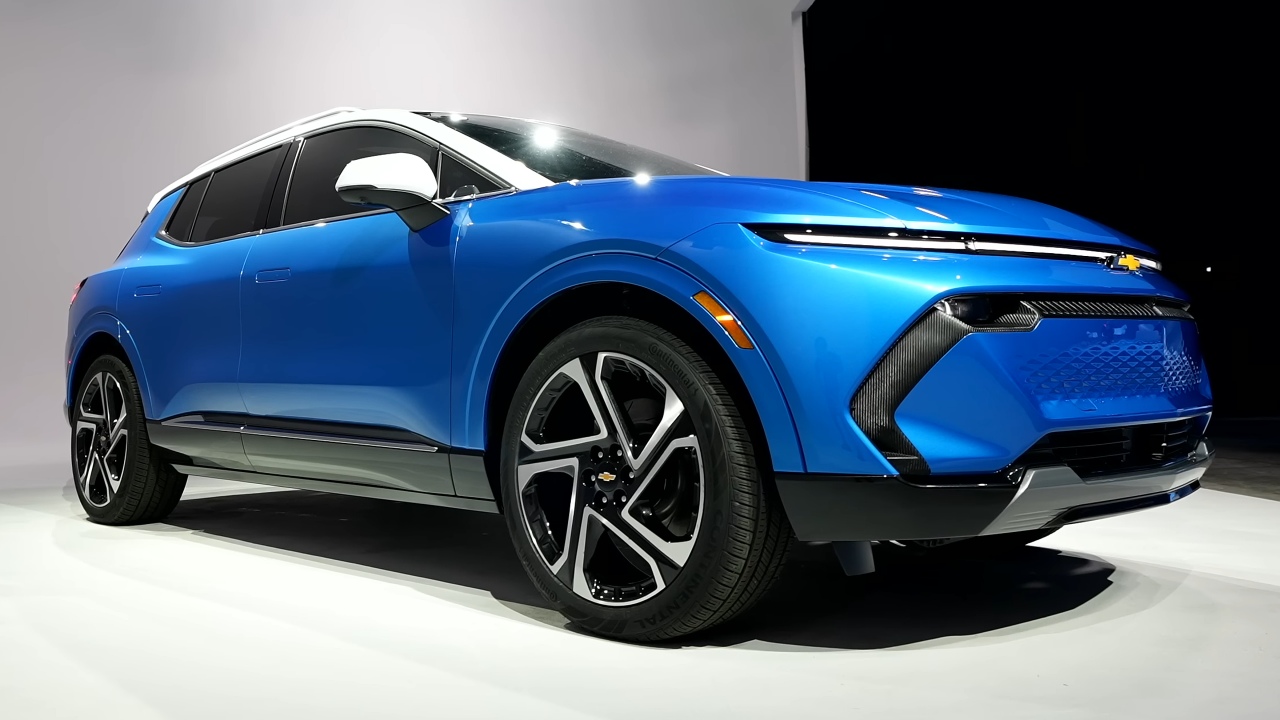
The sales gap between GM and Ford is not just a corporate story, it is visible in the showroom lineups that actually moved metal in 2025. The Chevy Equinox EV emerged as GM’s breakout hit, with 57,945 units sold, making it the company’s best‑selling electric model and one of the top EVs in the country outside of Tesla. That volume reflects a deliberate strategy to put an affordable, mass‑market crossover at the center of GM’s EV push, rather than relying solely on premium nameplates. The Equinox EV’s performance helped lift GM’s broader electric portfolio, which also includes models from its Chevrolet, GMC, and Cadillac brands that collectively contributed to the 46-state rollout of its Ultium‑based vehicles.
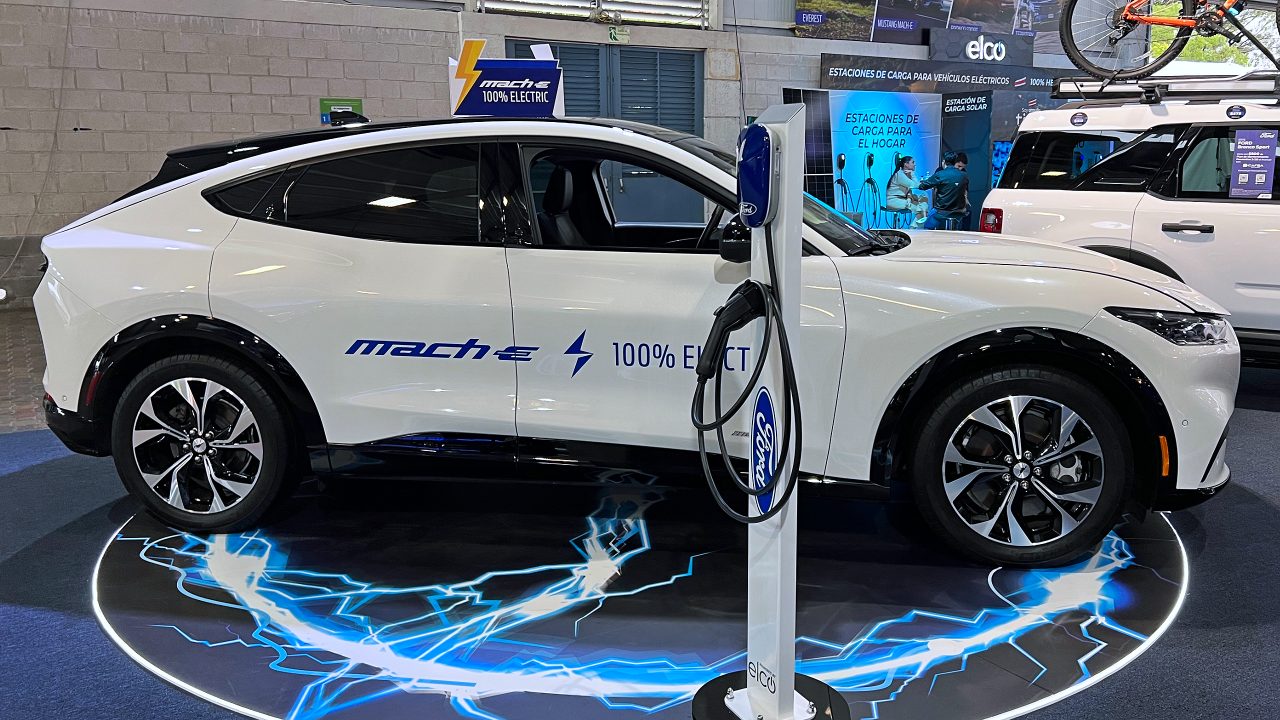
Ford, by contrast, leaned heavily on a smaller set of EV nameplates, with the Mustang Mach‑E remaining its primary battery‑electric passenger vehicle. The Mustang Mach‑E posted 51,630 sales in 2025, a respectable figure that still trailed The Chevy Equinox EV and was not enough to offset weakness elsewhere in Ford’s EV lineup. Reporting on the best‑selling EVs outside Tesla shows that while Ford’s Mustang Mach‑E remained competitive on a model‑by‑model basis, GM’s broader mix of electric crossovers and SUVs allowed it to stack volume across multiple nameplates. In practice, that meant GM could post record EV totals even as some individual models slowed, while Ford’s narrower EV range left it more vulnerable to shifts in demand for a single vehicle.
GM’s EV strategy: scale now, profits later
GM’s decision to chase volume in 2025 came with trade‑offs, particularly in the final months of the year. Record EV volume through most of 2025 gave way to a sharper than expected slowdown in the fourth quarter, with reporting noting that General Motors set a full‑year EV sales record but then saw demand cool as the year closed. One analysis described how that Record EV surge “gave way to a sharper‑than‑expected slowdown in Q4,” highlighting that even as GM’s electric models absolutely crushed earlier in the year, the company still has to manage the volatility that comes with a rapidly evolving market, according to Record EV coverage.
At the same time, GM is layering in technology and brand investments that signal a long‑term commitment to electrification. General Motors announced plans to Offer Native Apple Music and Apple Car Key Feature in its vehicles, integrating software and services that are increasingly central to EV buyers who expect seamless digital experiences, according to Offer Native Apple Music and Apple Car Key Feature reporting. That same reporting notes that all of GM’s core brands, including Chevrolet, GMC, Buick, and Cadillac, recorded EV growth in 2025, reinforcing the idea that GM is using its full portfolio to build electric scale. The company’s willingness to absorb a late‑year slowdown in exchange for a 48% annual EV growth rate suggests a strategy focused on locking in market share now and worrying about fine‑tuning profitability later.
What GM’s lead means for the next phase of the EV race
The fact that GM sold more than twice as many EVs in the US as Ford in 2025 is more than a one‑year scoreboard, it is a signal about where each company is placing its bets as the market shifts. GM’s combination of high‑volume models like the Equinox EV, a diversified brand approach, and continued investment in in‑car technology has given it a commanding position behind Tesla in pure EVs. General Motors GM also maintained its status as the top‑selling automaker in the United States overall, which gives it the production scale and dealer network to keep pushing electric models into the mainstream, according to General Motors GM reporting. In that context, GM’s EV surge looks less like a one‑off spike and more like the early payoff from a multi‑year strategy.
Ford, meanwhile, enters 2026 with a more complicated story. The company can point to rising total sales, strong truck demand, and record hybrid volume of 228,072 units as evidence that its broader lineup is healthy, and executives have emphasized that hybrids give customers a bridge between gasoline and full electric. Yet the hard reality is that Ford’s EV sales of 84,113 units left it far behind GM in the very segment that is expected to drive long‑term growth. As I look at the numbers from Jan reporting that GM sold more than twice as many EVs as Ford in 2025, the message is clear: unless Ford accelerates its battery‑electric plans, the gap that opened in 2025 could harden into a lasting hierarchy in which General Motors and Tesla define the top tier of the U.S. EV market and Ford is forced to play catch‑up from a distance.
More from Fast Lane Only: