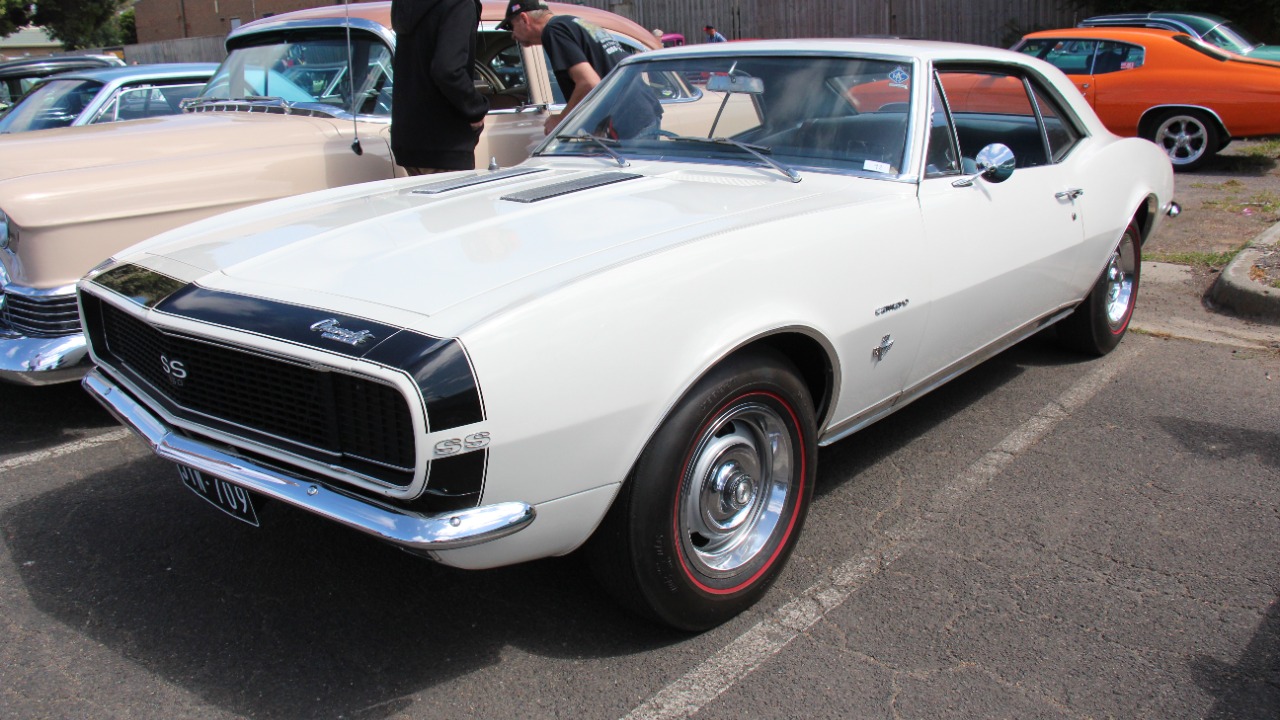
The 1967 Chevrolet Camaro RS/SS arrived as General Motors’ direct answer to the Ford Mustang, but its impact did not come only from big-block power or bold styling. Chevrolet layered the car with subtle engineering choices and styling tricks that many original buyers barely noticed, yet those touches now shape how historians and collectors judge the first-year Camaro.
From hidden headlamps to under-the-skin chassis tweaks, the RS/SS package combined appearance and performance in a way that rewarded close inspection. Some of the most interesting details were buried in option codes, bracketry, and trim pieces that looked ordinary on the showroom floor but later proved central to the car’s identity and value.
How Chevrolet Positioned the First-Year Camaro
When Chevrolet launched the Camaro for 1967, the company needed more than a single pony car to counter a growing list of rivals. Its strategy relied on a flexible platform that could carry everything from an entry-level six-cylinder coupe to a high-visibility halo model. The RS/SS combination sat near the top of that ladder, marketed as a blend of luxury-inspired style and genuine muscle.
The RS, or Rally Sport, focused on appearance. It brought hidden headlamps, revised taillights with backup lamps moved to the lower valance, bright exterior trim, and interior upgrades that gave the car a more upscale feel. The SS, or Super Sport, added performance hardware, including a more aggressive suspension tune, power front disc brakes on many builds, and V-8 engines that ranged up to the 396 cubic inch big-block.
Chevrolet allowed buyers to stack these packages, creating the RS/SS configuration. On paper, it looked straightforward: an RS body with SS performance. In practice, the combination produced a car loaded with small, easily overlooked differences from the base Camaro, many of which only become obvious when a restorer compares parts side by side with a standard model.
Hidden Headlamps and Subtle Exterior Tweaks
The most visible RS cue, the concealed headlamp system, illustrates how Chevrolet embedded complexity behind a clean face. The doors that covered the headlights were vacuum operated, controlled by a network of hoses, actuators, and switches that sat behind the grille and inner fenders. Buyers saw a smooth, full-width grille with no exposed lamps, but they usually did not appreciate how much additional hardware and adjustment work went into making those doors open and close reliably.
The RS-only grille itself differed from the standard Camaro piece, with a unique pattern and bright accents that framed the hidden doors. Around the car, the package added wheel opening moldings, rocker panel trim, and specific emblems. These parts were small and easily missed on a quick walk around the car, yet they now serve as important clues when enthusiasts try to verify whether a car left the factory as a true Rally Sport or received cosmetic upgrades later.
At the rear, the RS taillights carried a different lens design, and the backup lights moved down into the lower valance panel. That change required additional wiring and a unique stamping for the panel itself. Many buyers likely focused on the overall look of the rear fascia and the SS gas cap, not on the fact that Chevrolet had reengineered the lighting layout for a single appearance package.
SS Hardware Beneath the Surface
Under the skin, the SS side of the equation brought its own set of quiet changes. The Super Sport package added heavier-duty springs and shocks, a stiffer front anti-roll bar, and in many cases power front disc brakes. On the street, these upgrades translated to flatter cornering and shorter stops, but they were not always obvious in a brief test drive, especially for buyers accustomed to the softer suspensions of full-size Chevrolets.
The SS package also mandated or strongly encouraged specific rear axle ratios, which improved acceleration but could raise engine rpm at highway speeds. Many buyers chose the car for its appearance and V-8 sound, without realizing how much the chosen axle code would affect long-distance comfort or fuel consumption.
Engine choices added another layer of nuance. The small-block 350 cubic inch V-8 offered a balanced mix of power and weight, while the 396 cubic inch big-block delivered stronger straight-line performance but also added mass over the front axle. Chevrolet adjusted front springs and sometimes steering components to account for that extra weight, creating subtle differences between small-block and big-block SS cars that only become obvious when comparing part numbers or ride heights.
Interior Details That Signaled a Different Mission
Inside the RS/SS, Chevrolet scattered cues that separated the car from a base Camaro, but many of those touches blended into the overall design. The Rally Sport package typically brought upgraded door panels, additional bright trim, and different badging. Optional features such as the center console with integrated gauge cluster, woodgrain appliqués, and deluxe steering wheel could be added to many Camaros, yet they were more common on RS/SS builds because buyers had already committed to a higher price point.
The optional gauge package itself illustrates how Chevrolet rewarded attentive customers. Instead of relying solely on warning lights, the console-mounted cluster added instruments for oil pressure, battery condition, fuel level, and engine temperature. Drivers who watched these gauges could catch problems early, but many original owners treated them as decorative elements rather than tools, especially when the car served as a daily driver rather than a weekend toy.
Even the seats and carpeting varied by trim level and option mix. RS/SS cars often left the factory with upgraded upholstery patterns and deeper-pile carpet, which improved perceived quality but only marginally changed the driving experience. Those details, easily taken for granted when new, now influence restoration accuracy and appraisal values.
Option Codes, Build Sheets, and the Paper Trail
One reason so many details slipped past original buyers is that Chevrolet buried key information in option codes and internal documents. The RS package carried its own code, as did the SS package, the engine choice, the transmission, the axle ratio, and numerous comfort and convenience features. Salespeople often highlighted the big-ticket items, such as the 396 engine or four-speed manual, while the smaller codes remained invisible behind the order process.
Today, collectors and restorers spend considerable time decoding trim tags, Protect-O-Plate data, and surviving build sheets to determine how a given 1967 Camaro left the factory. A car that appears to be an RS/SS based on its current trim might reveal, through its original paperwork, that it started life as a simpler SS or even a non-SS V-8. That detective work matters because factory-correct RS/SS cars typically command higher prices than clones.
Guides that walk buyers through these details, such as a dedicated Camaro buyers guide, emphasize items like correct emblems, lighting layouts, and trim codes. Those elements were easy for first owners to overlook, yet they now serve as the backbone of authenticity checks.
Manufacturing Shortcuts and Running Changes
The 1967 model year also brought running changes that further complicated the RS/SS story. As production ramped up, Chevrolet adjusted bracket designs, wiring harness routes, and small hardware pieces to speed assembly or cut costs. Many of these revisions never appeared in consumer-facing literature, so buyers had little reason to notice that their car’s headlamp door actuators or brake line clips differed from an early build.
Some of those quiet changes affected how well the RS-specific hardware aged. The vacuum system that controlled the hidden headlamps, for example, relied on hoses and seals that could degrade over time. Owners who later experienced slow or stuck headlamp doors sometimes replaced the system with more straightforward hardware, unintentionally erasing one of the package’s signature features.
Other revisions involved corrosion protection and seam sealing in areas such as the rear quarter panels and trunk floor. These adjustments did not change the way the RS/SS looked when new, but they influenced how the cars resisted rust, which in turn affects how many original components survive on unrestored examples.
Marketing Versus Reality on the Street
Chevrolet’s marketing highlighted the Camaro RS/SS as a stylish, powerful choice that could handle daily commuting and weekend performance driving. In practice, the car delivered on much of that promise, but the experience depended heavily on how the buyer configured the options. A big-block SS with a steep axle ratio and minimal sound insulation felt very different from a small-block RS/SS with more comfort features.
Some buyers who focused on appearance might have selected the RS/SS combination with automatic transmission and power steering, ending up with a car that looked aggressive but felt relatively tame. Others chose the four-speed manual, heavy-duty suspension, and disc brakes, creating a machine that could hold its own in local drag racing or spirited back-road driving.
The gap between marketing images and real-world use meant that certain engineering choices went underappreciated. Features like improved suspension geometry, upgraded steering components, or specific brake hardware contributed to the car’s behavior in ways that did not always show up in showroom conversations. Only owners who pushed the car hard, or later enthusiasts who compared multiple configurations, fully appreciated how these hidden details shaped the driving character.
Why Collectors Care About the Small Stuff
As the first-year Camaro matured into a collectible, the very details that many original buyers missed became central to the car’s appeal. Hidden headlamps that still operate with the original vacuum system, correct RS taillight lenses, factory console gauges, and matching-number drivetrains all separate top-tier RS/SS cars from more ordinary survivors.
Collectors now hunt for cars that retain original trim, correct fasteners, and factory-style finishes in the engine bay and undercarriage. A small bracket in the right place or a specific routing of brake lines can support the case that a car is largely unmodified. Those items rarely appeared in period advertisements, but they now influence auction results and insurance valuations.
The RS/SS combination also carries historical weight as a snapshot of Chevrolet’s response to a rapidly changing performance market. The option structure, with its mix of appearance and mechanical upgrades, reveals how the company tried to satisfy both style-conscious buyers and performance enthusiasts. The overlooked details show how far engineers and designers went to create a cohesive package, even when not every choice made it into the sales brochure.
Lessons for Modern Enthusiasts and Restorers
For anyone restoring or shopping for a 1967 Camaro RS/SS today, the story of missed details offers practical guidance. Careful inspection of trim, lighting, interior components, and chassis hardware can reveal whether a car has been modified, partially cloned, or kept close to its original specification. Documentation, from factory invoices to period photographs, becomes essential in verifying that the RS and SS elements match the car’s build history.
Modern replacement parts can recreate much of the RS/SS look, but they sometimes differ in subtle ways from original components. Enthusiasts who understand those differences are better equipped to judge quality and authenticity. They also gain a deeper appreciation for the engineering work that went into integrating features like hidden headlamps, upgraded suspensions, and interior gauge packages.
More from Fast Lane Only
- Unboxing the WWII Jeep in a Crate
- 15 rare Chevys collectors are quietly buying
- 10 underrated V8s still worth hunting down
- Police notice this before you even roll window down
*Research for this article included AI assistance, with all final content reviewed by human editors.