General Motors is quietly preparing a return to traditional passenger cars in the United States, with plans for two new sedans that could reshape its performance and luxury strategy. At the center of the speculation sits a familiar nameplate, as enthusiasts and analysts weigh whether this renewed focus on rear-wheel-drive platforms might open the door for a modern Camaro in a very different form.
The stakes are high for both GM and fans of American performance cars, as the company balances its electric ambitions with a renewed interest in driver-focused models. The emerging picture suggests a future in which new sedans, a potential Camaro revival, and an electric SUV wearing the same badge coexist in a carefully tiered lineup.
GM’s quiet return to rear-wheel-drive sedans
After years of pivoting toward crossovers and trucks, General Motors is reasserting its interest in rear-wheel-drive passenger cars in the United States. Reporting indicates that General Motors is planning two new models on a rear-drive architecture, a notable shift for a company that had allowed most of its sedans to fade from the market in favor of higher-riding vehicles. This renewed commitment is framed explicitly as an appeal to driving enthusiasts, with the layout chosen for its balance, handling, and performance potential rather than pure packaging efficiency.
The backbone of this strategy is the Alpha 2-2 platform, a rear-wheel-drive architecture that is expected to underpin both of the upcoming sedans. Sources describe these cars as part of a broader move to revive rear-drive passenger offerings in the United States, positioning them as more engaging alternatives to front-drive family cars and crossovers. By investing in a shared platform, GM can spread development costs while tailoring each sedan to a distinct audience, from luxury buyers to performance-focused drivers.
Cadillac CT5 as the first pillar of the plan
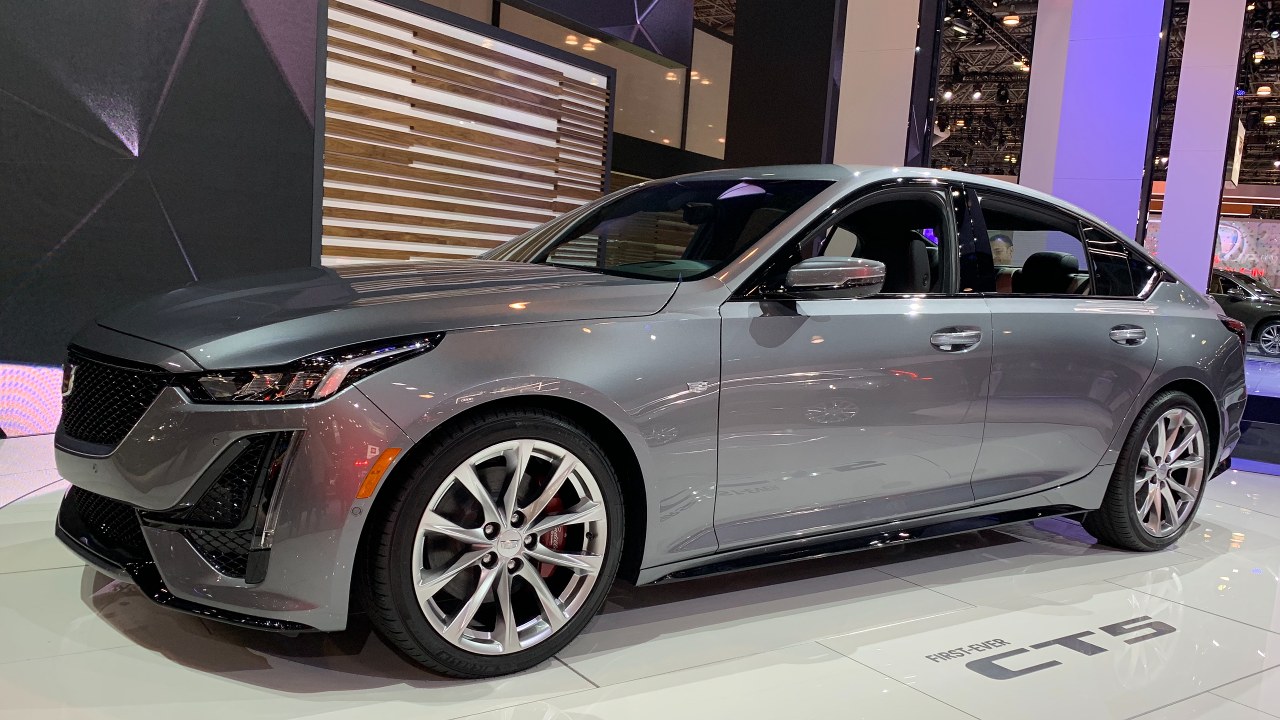
The clearest piece of the puzzle is the next-generation Cadillac CT5, which GM has already confirmed for the U.S. market. The new CT5 is set to continue as a sedan, and it is expected to use the same rear-wheel-drive Alpha 2-2 platform that will support GM’s broader passenger-car revival. This positions Cadillac as the premium spearhead of the strategy, offering a refined yet athletic four-door that can compete with established luxury rivals while showcasing the capabilities of the new architecture.
The CT5’s role goes beyond simply filling a slot in Cadillac showrooms. By anchoring Alpha 2-2 with a high-margin luxury product, GM can justify the investment in a sophisticated rear-drive platform that might otherwise be difficult to support in a market dominated by crossovers. The CT5 also provides a natural test bed for advanced powertrains and chassis technologies that could later filter into more affordable sedans or performance variants, reinforcing Cadillac’s image as the technologically advanced face of General Motors.
The mystery second sedan and the Camaro question
While the CT5 is effectively confirmed, the identity of the second Alpha 2-2 sedan remains the subject of intense speculation. Reporting on GM’s product plans notes that the company is preparing a second rear-wheel-drive passenger car for the United States, but the exact badge and body style have not been publicly detailed. Internal discussions have reportedly explored several possibilities, including a more mainstream four-door model and performance-oriented variants that could share components with the CT5 while targeting a different price point.
Within those conversations, one name surfaces repeatedly: Camaro. Some coverage of GM’s Alpha 2-2 program describes a “louder whisper” around the idea of using the platform for a fresh Camaro coupe and convertible, suggesting that the architecture is inherently suited to a modern muscle car. At the same time, other reporting on GM’s sedan plans emphasizes that the two confirmed products are sedans for the U.S. market, which would imply that any Camaro-branded model on Alpha 2-2 would either be a four-door reinterpretation or a separate project that builds on the same engineering base. The result is a landscape in which a second sedan is all but certain, while its relationship to the Camaro legacy remains unresolved.
Inside GM’s Camaro deliberations
The uncertainty around the second sedan is amplified by GM’s complex internal debate over the future of the Chevy Camaro. When GM ended production of the previous Camaro generation, the company did not immediately approve a direct successor, and an early proposal for a next-generation Chevy Camaro was reportedly “blown apart” by management for failing to meet business targets. That decision left the Camaro nameplate in limbo, with no greenlit program even as engineers and planners continued to explore options for a revival.
More recent reporting suggests that GM has at least prepared the groundwork for a potential comeback. A next-generation Camaro body has reportedly been tooled at a GM factory, indicating that design and manufacturing teams have advanced beyond the sketchpad stage. However, sources also stress that GM has not formally approved a new Camaro program, which means that any such vehicle remains contingent on internal financial and strategic sign-off. This tension between visible factory preparation and the absence of an official green light underscores how carefully GM is weighing the Camaro’s future role within its broader product portfolio.
Electric SUVs, fastback visions, and a divided fanbase
Complicating the picture further is GM’s parallel push to reposition Camaro as an electric performance brand. Future product reporting describes a 2027 Chevrolet Camaro EV that would once again serve as a foil to the Ford Mustang, echoing the model’s original mission. In this vision, What It Is The Chevrolet Camaro is recast as a modern electric performance car, with History appearing ready to repeat itself as Che faces off against the Ford Mustang in a new technological era. At the same time, separate coverage points to Chevy preparing a 2027 Camaro as an electric fastback SUV, with the SUV expected to pack up to 1,000 horsepower, a figure that would place it firmly in the upper tier of performance crossovers.
This dual track, with both a potential electric car and a high-powered SUV wearing the Camaro badge, reflects GM’s attempt to stretch the nameplate across multiple segments. Enthusiast reaction, however, is far from unanimous. Commentary on the Camaro’s Future notes that no one wants the Camaro to vanish completely, but fans are divided on what form it should take, with some open to an electric reinterpretation and others insisting that The Camaro should remain a low-slung coupe. That divide is sharpened by the prospect of a Camaro-branded SUV, which some see as a pragmatic way to secure the badge’s survival in an electric era, while others view it as a departure from the car’s core identity.
Against this backdrop, reports that GM is planning two new sedans on the Alpha 2-2 platform take on added significance. One analysis explicitly links those sedans to the broader Camaro conversation, noting that GM is reportedly preparing the pair of four-doors for the U.S. market on Alpha 2-2 and suggesting that, if a traditional Camaro coupe does not return, a sedan on the same architecture could carry some of its performance spirit. Another assessment of GM’s rear-drive revival frames the two sedans as a way for General Motors to reengage driving enthusiasts in the United States even as crossovers and the Camaro SUV move the brand into new territory. For now, the only firm conclusions are that two rear-wheel-drive sedans are coming, that Camaro is being pulled toward electrified and SUV formats, and that any return of a classic two-door muscle car remains unverified based on available sources.
More from Fast Lane Only