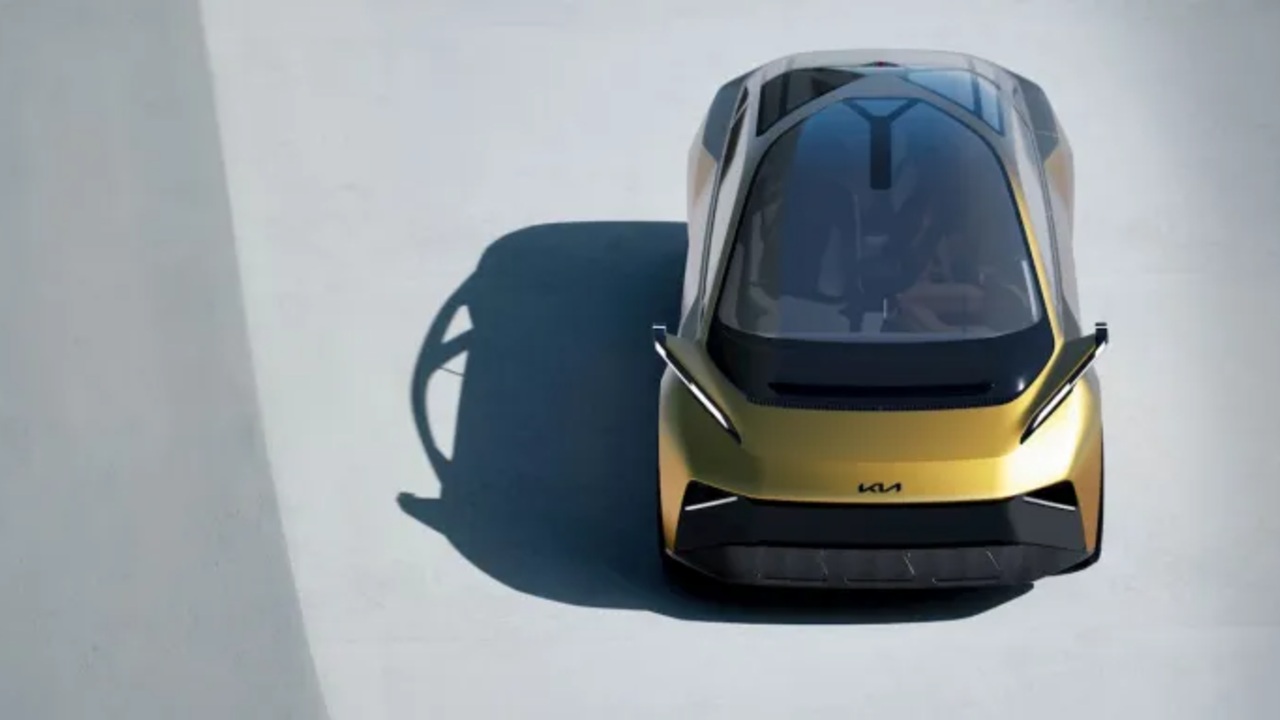
Kia is edging closer to revealing its next flagship electric model, and the latest teaser images offer the sharpest view yet of a car designed to sit at the top of the brand’s EV range. The upcoming halo EV appears set to bridge Kia’s performance-minded past with its rapidly expanding electric future, picking up where the Stinger left off while drawing on lessons from the EV9 GT and other recent high-end projects.
Although the final name and full technical details remain under wraps, the emerging picture is of a statement car that will showcase design, performance and charging technology in a single package. With fans already debating whether it will wear a Stinger badge or an EV7-style moniker, the clearest look so far suggests Kia is preparing a model intended to stand alongside its most advanced electric SUV as a rolling showcase of what its next generation of EVs can do.
The clearest teaser yet of Kia’s new halo EV
The latest teaser of Kia’s halo EV reveals a low, wide silhouette that contrasts with the upright stance of the EV9, signaling a focus on performance and style rather than outright utility. The images highlight a long bonnet, a swept roofline and a pronounced rear haunch, visual cues that recall the proportions of the discontinued Stinger while clearly evolving them for an electric platform. Kia has openly described the upcoming model as a halo car, positioning it as a flagship that will sit above its existing EV range and serve as a design and technology showcase for future products.
Early previews of the car have already sparked intense discussion among enthusiasts who see echoes of a Stinger successor in the fastback profile and aggressive stance. At the same time, the brand’s recent focus on numbered EV models has prompted speculation that the car could instead join the family as an EV7, sitting between the EV6 and EV9 in size but above both in prestige. Kia’s own description of the project as a new flagship electric model that connects its enthusiast past with its electric future underlines that this is not a niche experiment, but a core statement of intent for the next phase of its EV strategy.
Stinger legacy versus EV7 future
The debate over whether this car is effectively a new Stinger or a future EV7 reflects how much weight the original Stinger still carries among Kia loyalists. The Stinger, and particularly the Stinger GT, gave the brand a credible rear-drive performance fastback that challenged established players and helped shift perceptions of Kia from value-focused to enthusiast-friendly. With the gas-powered Stinger discontinued after the 2023 model year, many fans have been waiting for a spiritual successor that can deliver similar drama in an all-electric form, and the halo EV’s proportions and positioning make it a natural candidate to fill that role.
At the same time, Kia has been steadily building a coherent EV naming structure, with models like the EV6 and EV9 defining clear rungs in the lineup. Reports that the new halo model could be called EV7, or that a Stinger GT badge might be revived for an electric flagship, show that the company is weighing how to balance emotional heritage with the clarity of its EV branding. Separate speculation around an electric Stinger, sometimes referred to as an EV8 concept, further illustrates how the Stinger name continues to resonate as Kia explores different ways to package performance within its expanding electric portfolio.
Design cues and what they signal about performance
Even in teaser form, the design of the halo EV offers clues about its dynamic ambitions. The car’s low roofline and cab-rearward stance suggest a focus on high-speed stability and rear-biased proportions, while the sculpted sides and sharp lighting signatures align it with Kia’s latest design language seen on its larger electric SUV. Where the EV9 leans into a “Sleek Silhouette” combined with “Rugged” detailing and a drag coefficient of 0.28, the halo EV appears to translate that aerodynamic thinking into a more overtly sporting shape, likely prioritizing reduced drag and visual drama over outright interior volume.
Details such as short overhangs, muscular wheel arches and a pronounced rear deck hint at a chassis tuned for agility rather than just comfort. Kia has already shown with the Stinger GT that it can engineer a platform capable of engaging handling and strong straight-line performance, and with the halo EV it has the opportunity to apply that experience to a dedicated electric architecture. The way the teasers emphasize stance and proportion rather than sheer size suggests that, while this car will sit at the top of the range in status, it may be more closely aligned with grand tourers and fastbacks than with the three-row SUV format of the EV9.
Lessons from the EV9 GT and Kia’s high-performance EV push
To understand what the halo EV might deliver under the skin, it helps to look at how far Kia has already pushed its electric technology with the EV9 GT. Kia America has described the 2026 EV9 GT as a high-performance SUV, and official information confirms that it is the brand’s most powerful three-row electric SUV to date. The GT variant has been unveiled with an estimated 501 horsepower, a figure that places it firmly in performance territory for a large family vehicle and signals how aggressively Kia is willing to tune its dual-motor setups.
Independent assessments of the 2026 EV9 GT reinforce that this is not a token performance badge. One detailed review notes that the GT model delivers 501 horsepower and a 0 to 60 m time of 4.3 seconds, numbers that would have been associated with dedicated sports cars not long ago. Commentators have gone as far as to describe the EV9 GT as a “supercar in disguise” that can trouble high-end rivals, including Porsches for breakfast, despite its size and three-row layout. That Kia can extract this level of performance from a large SUV suggests that a lower, lighter halo EV could push even further, whether in outright acceleration, handling precision or both.
Charging tech, infrastructure and the halo EV’s likely toolkit
Performance alone is no longer enough to define a modern halo EV, and Kia’s recent work on charging technology provides another strong hint at what the flagship car is likely to offer. The 2026 EV9 already features a built-in NACS charge port, giving owners access to over 18,000 Tesla Superchargers, and can also use a Kia CCS adapter to connect to a wider network of DC fast chargers. By integrating this hardware directly into a mainstream model, Kia has signaled that broad, convenient access to high-speed charging is a core part of its EV strategy rather than a niche add-on.
Given that positioning, it would be surprising if the halo EV did not at least match, and potentially exceed, the EV9’s charging capabilities. A flagship model is the ideal place for Kia to showcase its fastest charging curves, most advanced battery management and the latest software for route planning and preconditioning. The company has already framed the new halo car as a showcase for future design and technology, and pairing high performance with rapid, widely compatible charging would help it compete with established premium EVs that emphasize both speed and convenience.
More from Fast Lane Only