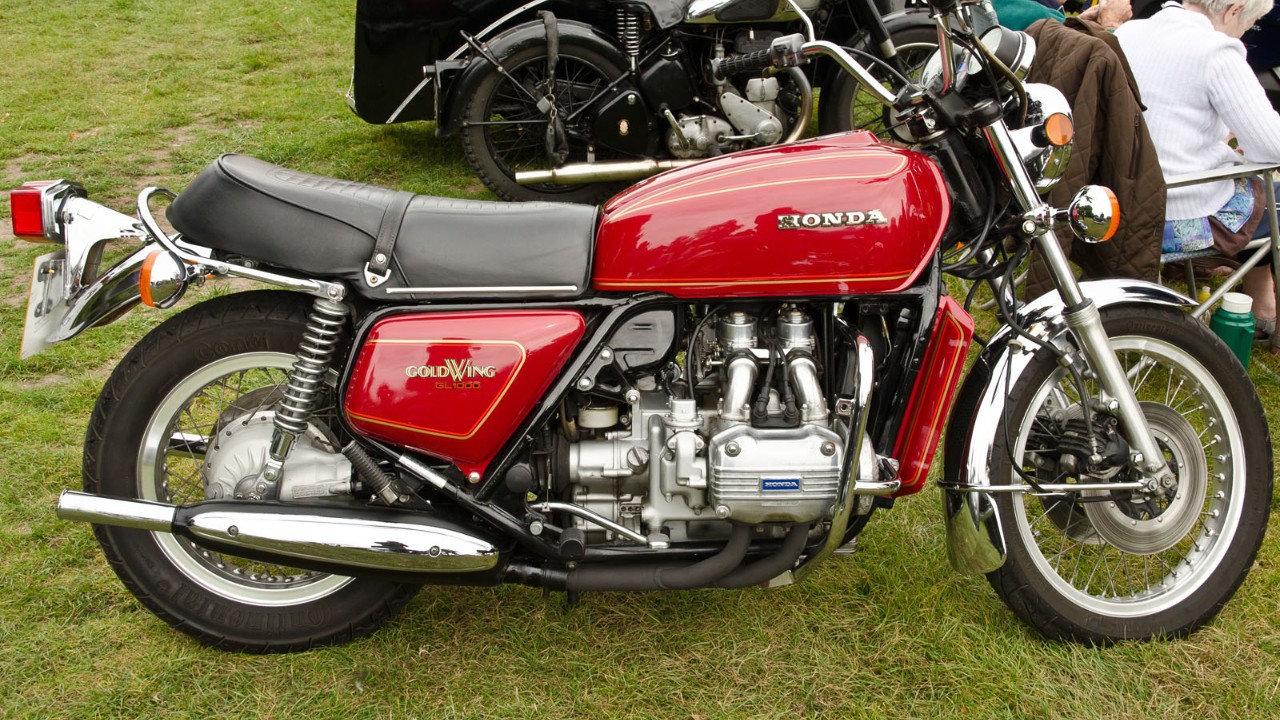
Honda showed the Gold Wing GL1000 at the Cologne show in October 1974, and it looked nothing like the sport bikes of the day. It hid its fuel tank under the seat and drove the rear wheel through a shaft. Within five years Honda had sold more than 97,000 of them in the United States alone.
Touring bikes are built to carry two people and their luggage across a country. That job demands comfort, range and reliability, so the best ones tend to stay in service for decades. Even so, several of the bikes below arrived to raised eyebrows, odd styling or slow sales.
These are our picks for eight touring motorcycles that outlived expectations. These verdicts are our opinion, while the engines, years and figures behind them come from factory heritage pages, period magazine retrospectives, owner club archives and buyer’s guides.
1. 1975 Honda Gold Wing GL1000
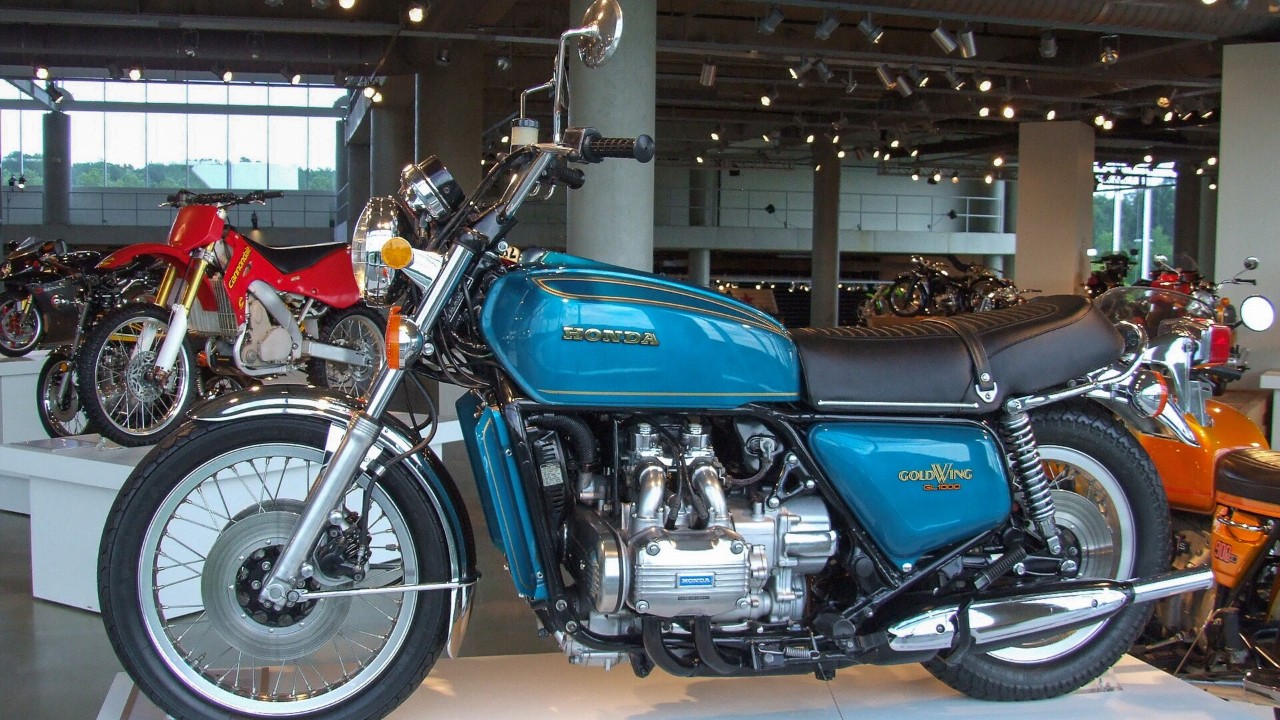
Underneath, the GL1000 used a 999 cc liquid-cooled flat-four with belt-driven overhead cams. Honda also put the real fuel tank under the seat to keep weight low. On top sat a dummy tank that held the air filter, electrical parts and the radiator’s expansion tank.
It was a practical package, too. Final drive was by shaft, and an electric starter did the work, with a backup kick-start lever stored inside that dummy tank. The bike weighed 584 pounds dry, and Honda sold about 13,000 of them in the US in 1975. For more of the era, see our list of Honda motorcycles from the 1970s worth collecting.
Our take: the Gold Wing GL1000 set the pattern for every Gold Wing that followed, with a flat engine sitting low and a shaft at the back. The name is still on sale, as our report on Honda’s 2027 Gold Wing lineup shows.
2. 1993 BMW R100RT
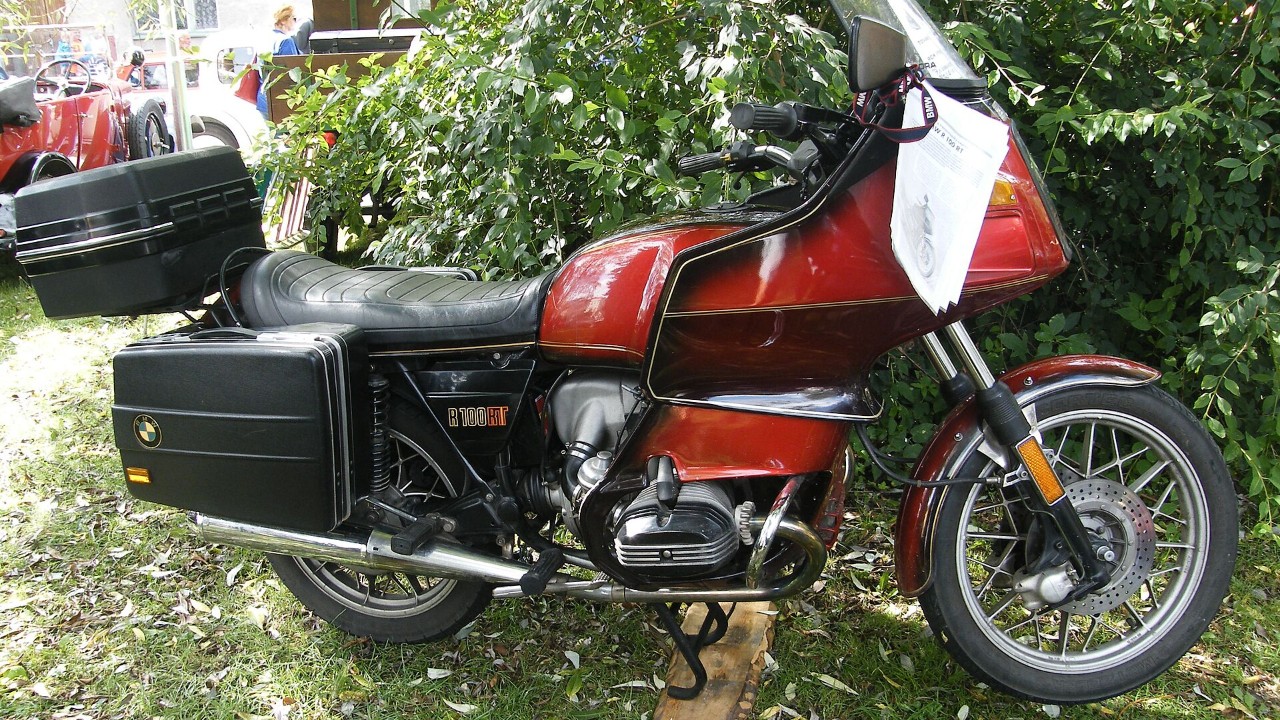
BMW’s R100RT wrapped its 980 cc boxer twin in a full touring fairing. The RT was already on sale for the 1978 model year. Later, demand for the old boxers turned out stronger than BMW expected.
According to the BMW Group Classic page on the R 100 RT Monolever, BMW revived the R 100 RS in 1986 because demand was higher than expected. It then brought back the RT in 1987 with the Monolever chassis. That later RT made 60 hp at 6,500 rpm and reached 185 km/h, or about 115 mph.
In our view, a 1993 bike shows how stubborn the airhead really was. BMW built the Monolever RT from 1987 to 1996. When the two-valve boxers finally retired, the company even added an R 100 RT Classic in 1994.
3. Honda ST1100 Pan-European
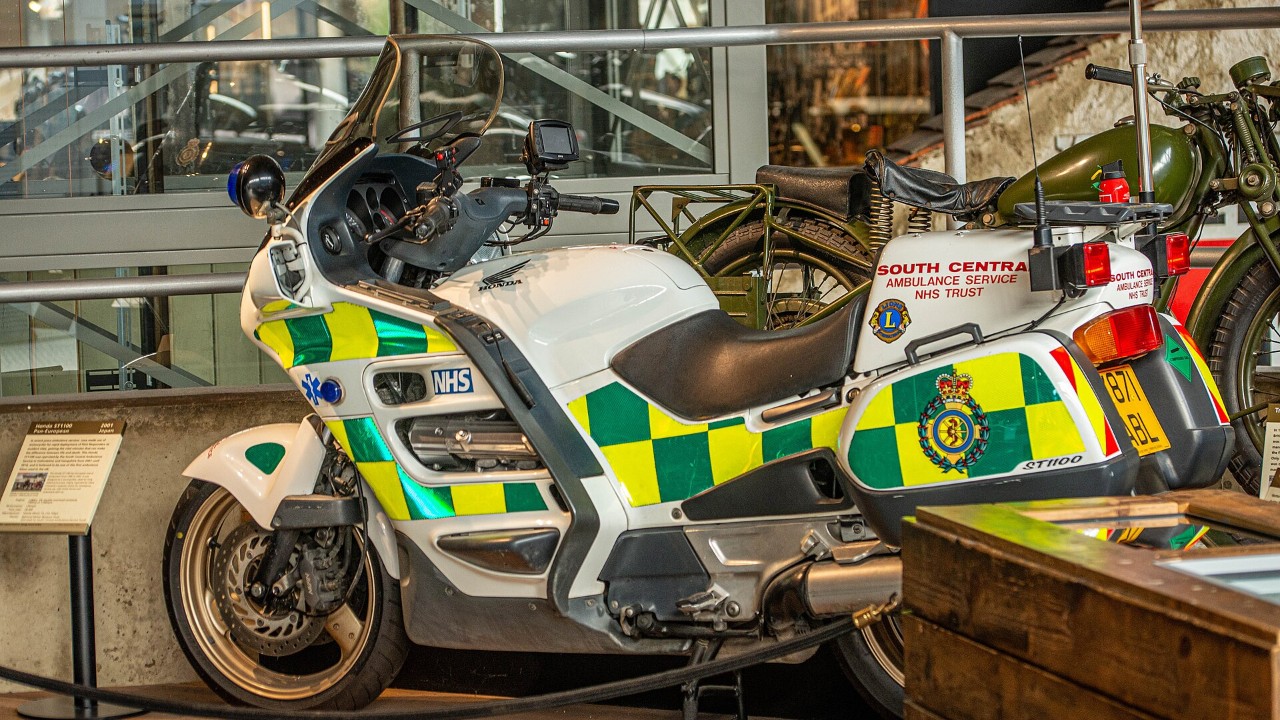
Honda built the ST1100 from 1990 to 2002, and European riders knew it as the Pan-European. Its 1,085 cc, 90-degree V4 sat lengthwise in the frame and made 100 hp at 8,500 rpm. Meanwhile, a shaft carried that power to the rear wheel with very little maintenance.
Range was a big part of the appeal. The 28-liter tank, about 7.4 gallons, sat below the seat and gave roughly 300 miles on the highway. ABS and traction control were optional, and from 1996 the ABS bikes also had linked front and rear brakes.
Our take: the ST1100 was built for riders who measure trips in countries, not counties. A police version, the ST1100P, stayed available for several more years after the civilian bike ended. That kind of second career says a lot about a motorcycle’s toughness.
4. BMW K1200LT
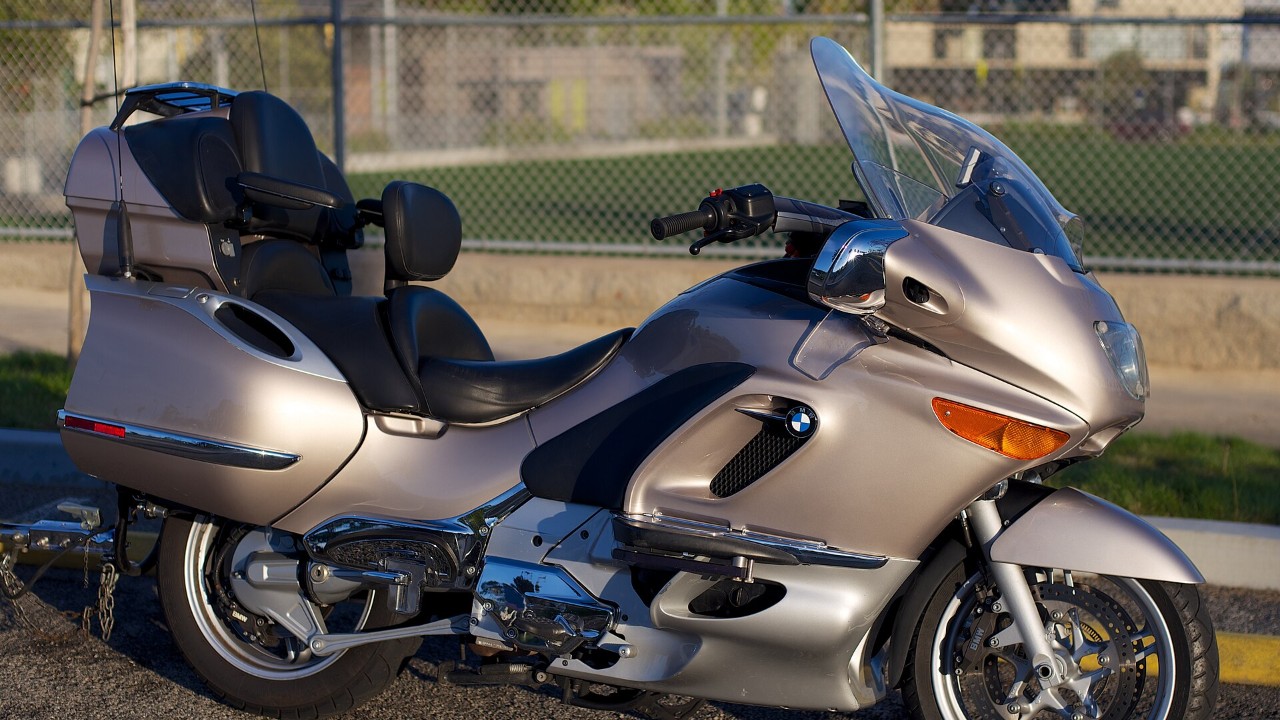
BMW built the K1200LT from 1998 to 2009 around a 1,171 cc inline four. At first it made 98 hp at 6,750 rpm. After the 2004 facelift, the engine rose to 116 hp at 8,000 rpm, according to BMW’s heritage records.
The LT also came loaded. BMW listed an electric reverse assistant, a radio panel and optional built-in navigation. A BikeSocial buyer’s guide to the K1200LT adds an electrohydraulic center stand that owners praise, plus standard ABS. It also lists a curb weight of 387 kg before you add a passenger or luggage.
In our view, the LT outlived its reputation for complexity. Still, buy carefully. That same guide warns about clutch slip, with repairs said to approach £1,000, and notes that stand parts and ABS repairs can be expensive.
5. Moto Guzzi V7 California
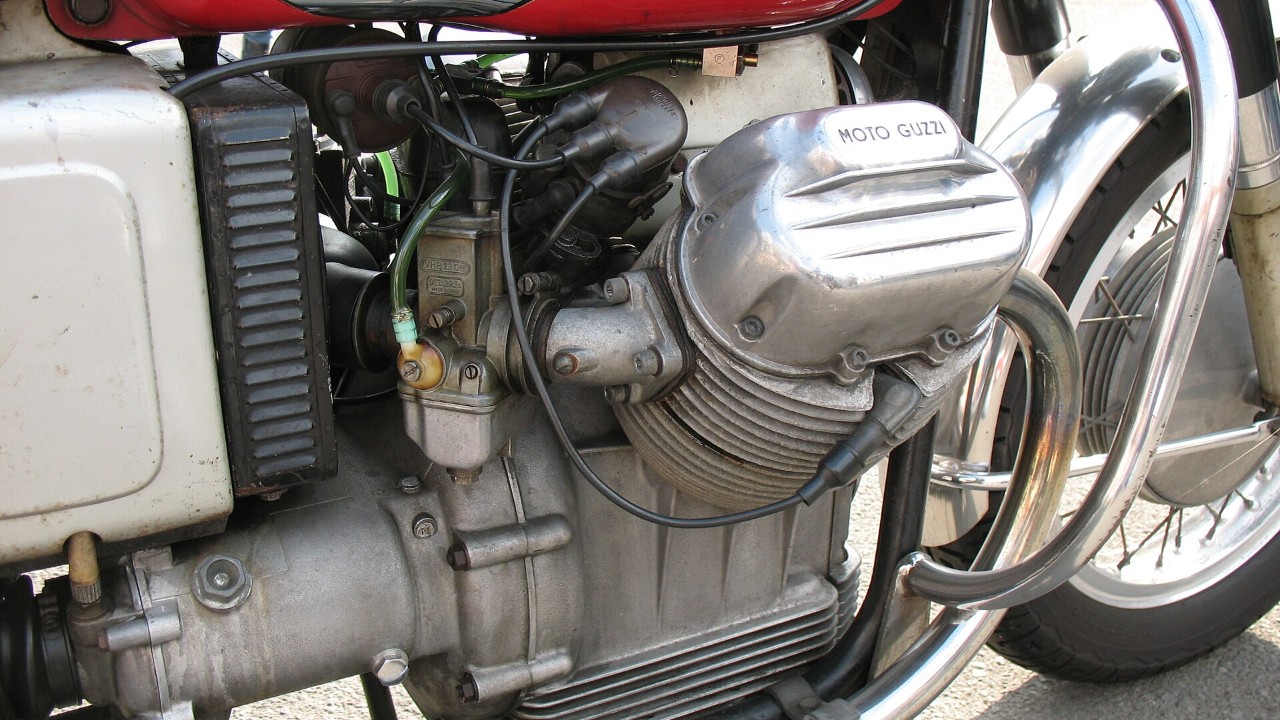
The California began with a police contract. Moto Guzzi’s Ambassador had won a Los Angeles Police Department supply tender. The factory then developed the first California in consultation with the LAPD Traffic Division.
The recipe stayed familiar for decades. First, an air-cooled overhead-valve V-twin drove the rear wheel by shaft, and the rider sat upright with feet on footboards. Over time, linked Brembo brakes became part of the California story too.
Our take: few police-bike spin-offs last this long. Moto Guzzi produced a version of the California almost continuously from 1971 to 2021. That is a 50-year run for a bike that started as a sales pitch to one city’s traffic cops.
6. Triumph Trophy 1200
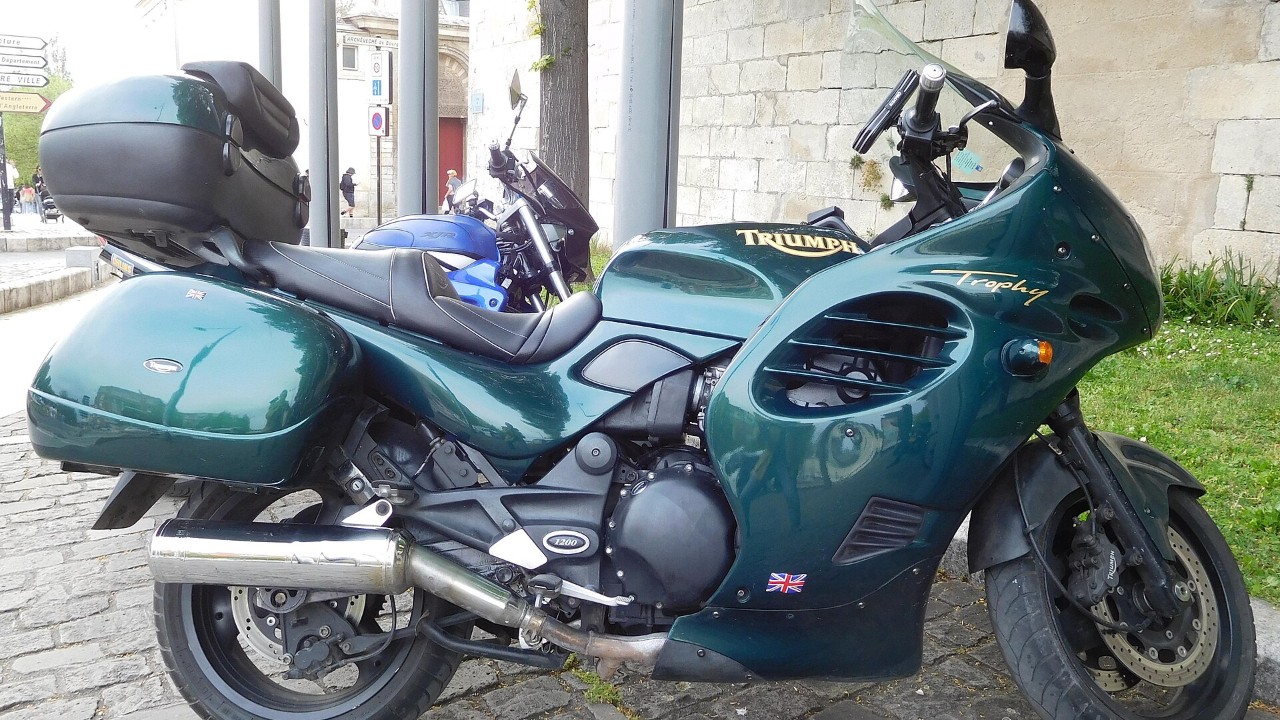
When Triumph’s new Hinckley factory started producing bikes in 1991, the first machines out were Trophy fours, starting with the 1200. That put the Trophy at the front of the company’s comeback. As a result, it carried the job of showing what the revived brand could build.
According to Classic Bike Hub’s guide to early Hinckley Triumphs, the four-cylinder is “an incredibly solid and unburstable motor.” The same guide calls it superb two-up, with a comfortable passenger seat. However, it rates the suspension and brakes as fairly basic.
In our view, the Trophy 1200 is one of the best-value ways into modern Triumph history. If you are shopping, the guide suggests a later “Mk2” Trophy with twin headlights. Early bikes have a single headlight that it calls not especially effective.
7. Suzuki GV1400 Cavalcade
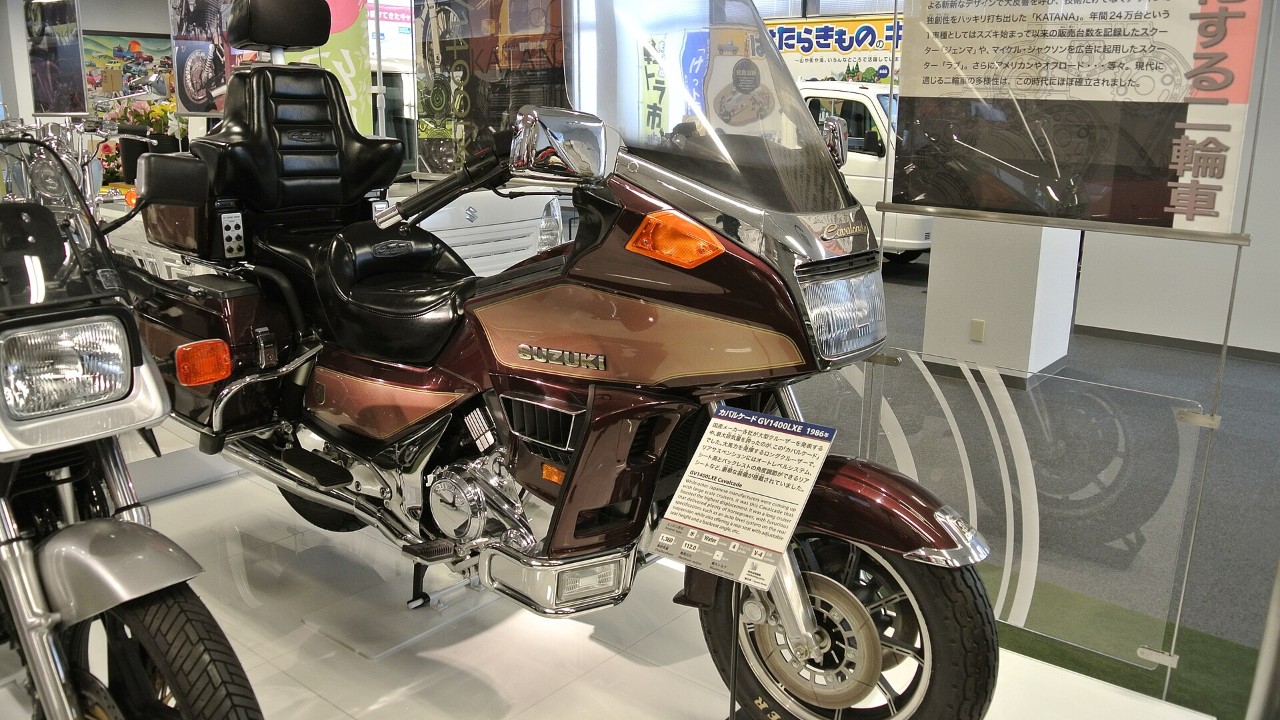
Suzuki introduced the Cavalcade in the summer of 1985, and American buyers got it as a 1986 model. It used a 1,360 cc liquid-cooled V4 with an 82-degree vee, double overhead cams and 16 valves. The Suzuki Cycles owner archive lists 112 hp at 7,000 rpm.
Clearly, Suzuki aimed straight at the luxury touring market. The LX model brought an auto-leveling rear suspension, cruise control, an onboard air compressor and a Clarion radio-cassette. Then the top LXE added fairing lowers, an air-adjustable rider’s seat and engine bars with cornering lights.
Our take: the Cavalcade had a short life in showrooms, with its model history covering 1985 to 1988. Yet it packed cruise control, self-leveling suspension and a stereo into a mid-1980s tourer. That is why we think it deserves more respect than its brief run suggests.
8. Honda PC800 Pacific Coast
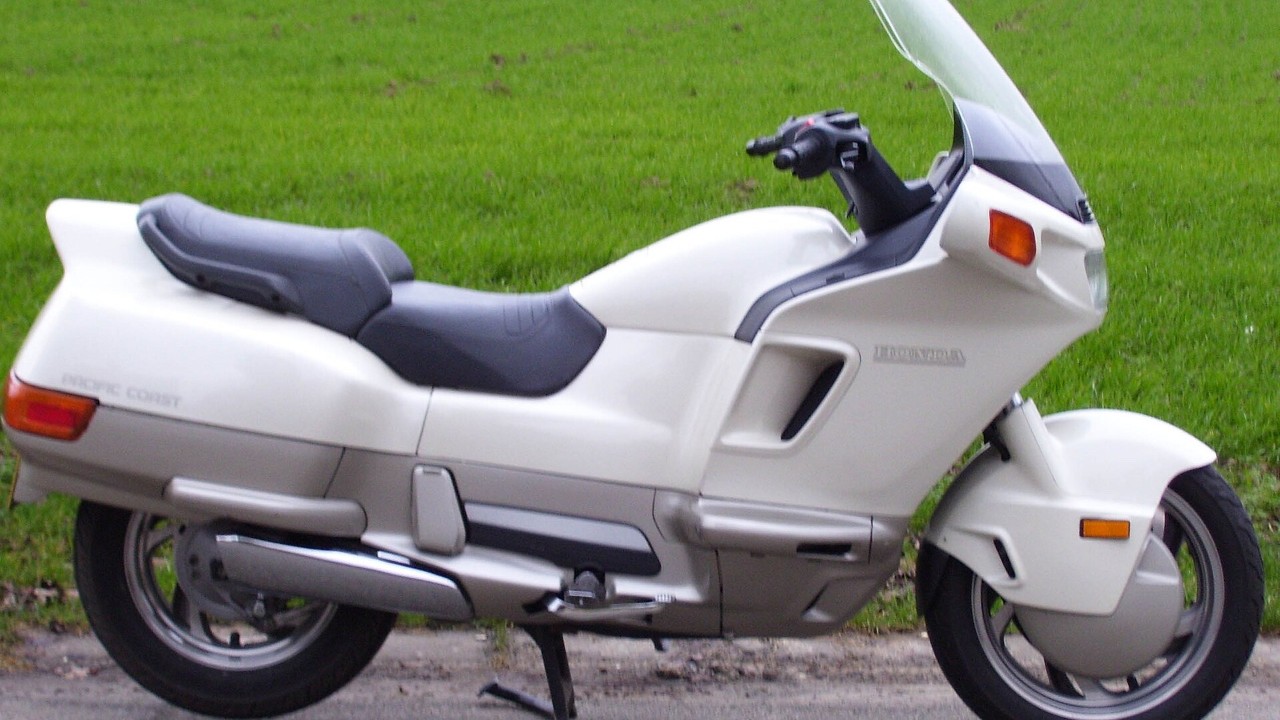
Honda wanted a motorcycle that would appeal to Civic drivers. After Honda R&D Americas formed in 1985, motorcycle engineers handled the drivetrain and chassis, while car designers shaped the bodywork. The enclosed body hid the 45-degree V-twin, which came from the 1988 Shadow VT800.
A Rider magazine retrospective on the PC800 says the bike weighed 630 pounds and cost $7,700 in 1989. It also notes that Honda sold more than 7,000 in the first year. Sales then fell by half in 1990, and Honda pulled the model for 1991.
In our view, the PC800 outlived its own sales chart. It came back for 1994 and stayed through 1998, with a waterproof trunk under the passenger seat and shaft drive. Even so, the comeback never caught fire, and fewer than 600 sold in 1998.
More from Fast Lane Only