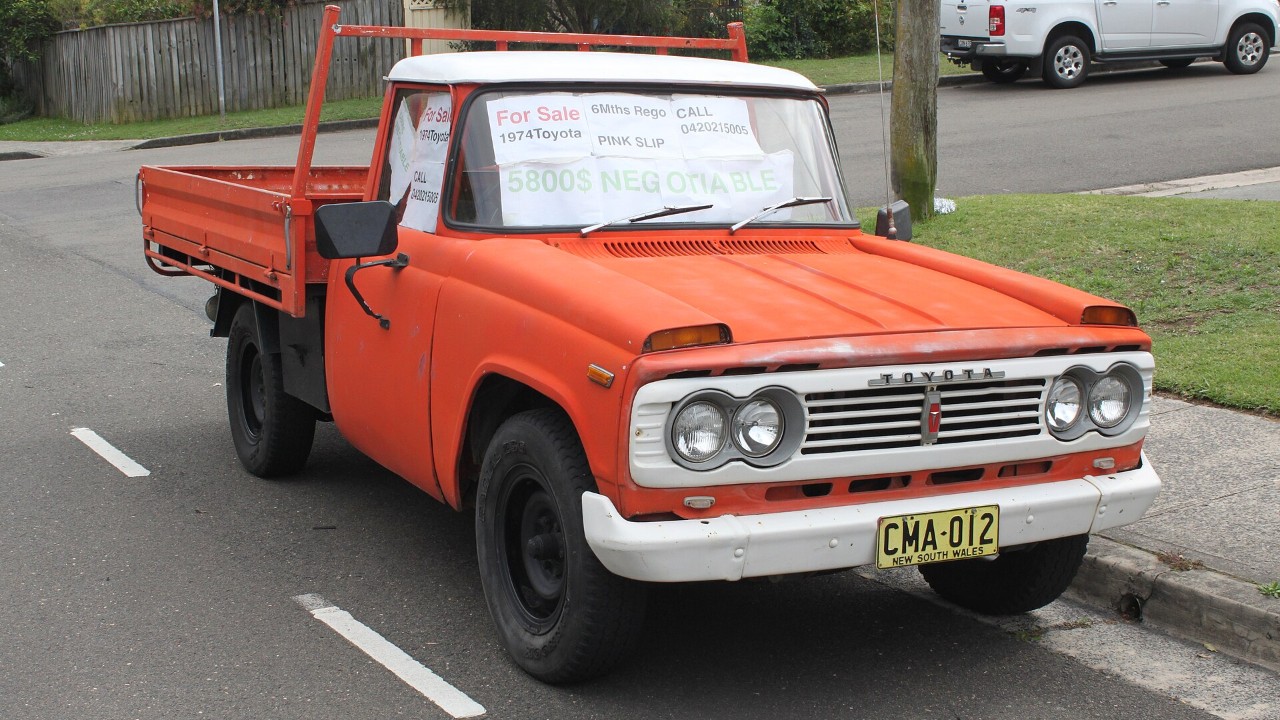
Toyota built the Toyota Stout light truck from April 1956, and export production kept going until February 2000. That is a 44-year run for a pickup most American drivers have never heard of. It also shows how Toyota earned its truck reputation, one plain workhorse at a time.
Today, the Tacoma and the modern Tundra get the attention. However, the trucks that came before them did the hard part. In our view, they opened markets around the world and taught buyers to trust a Japanese pickup.
These are our picks for seven forgotten Toyota trucks that did more than anyone expected. Calling them over-achievers is our opinion. Still, the dates, engines and figures in each entry come from the record.
1. Toyota Stout RK101
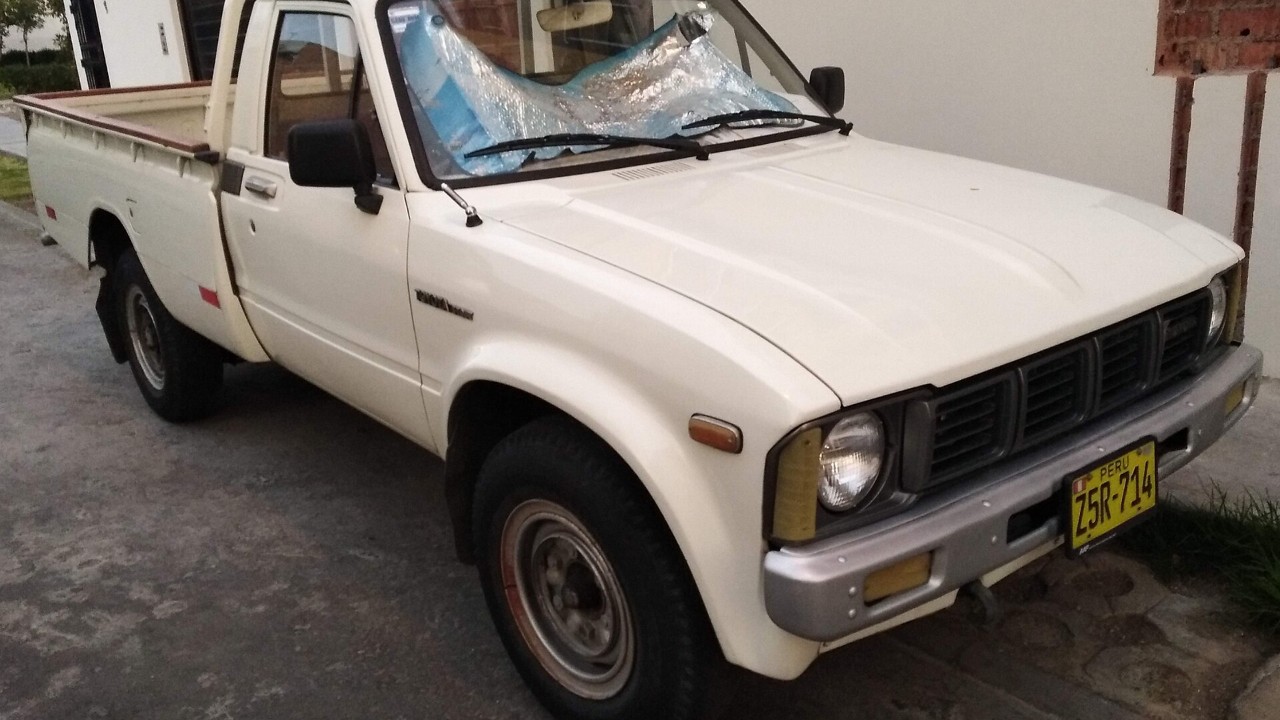
The Stout replaced Toyota’s earlier RK truck, and the second generation arrived with a complete redesign in July 1960. Then in September 1967, Toyota added the RK101. It used a 1,994 cc 5R four-cylinder, rated at 93 PS in Japanese trim and later 98 PS at 5,200 rpm.
The RK101 was a truck for the wider world. For example, Peru took 940 Stouts between 1967 and 1971, and the Stout was Toyota’s launch model in South Africa in 1961. In markets such as Southeast Asia and Australia, Toyota kept selling it alongside the Hilux as the heavier-duty choice. Curbside Classic notes that it outsold Nissan’s Junior in developing nations.
America saw far less of it. Curbside Classic says the Toyota Stout appeared here only briefly, from 1964 to 1969, and sold only modestly. Our take: that makes the RK101 the classic over-achiever, a truck that struggled in one market and thrived in many others. We traced the U.S. side of the story in our list of Toyota compact pickups from the 1964 Stout to the 1995 Tacoma.
2. Toyota Hilux N10
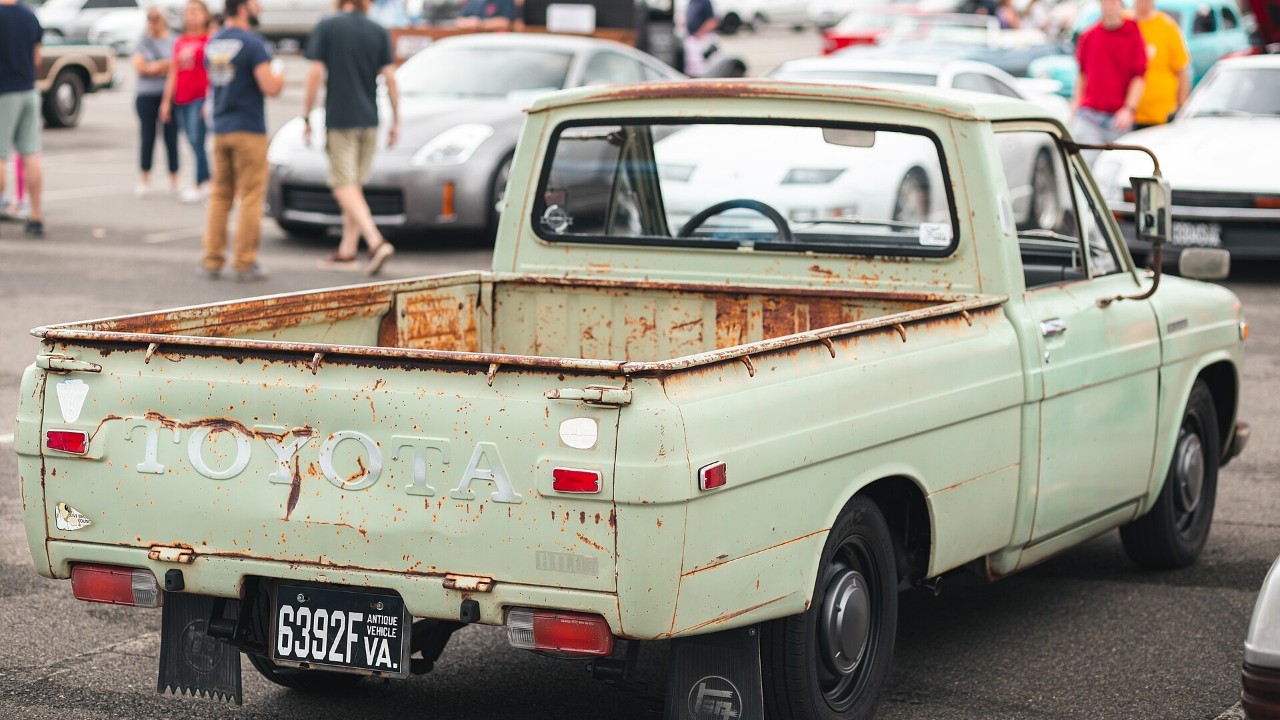
The first Hilux went into production in March 1968, and Toyota did not build it itself. Instead, Hino built it at its Hamura plant. Curbside Classic explains that the truck was loosely based on the Hino Briska and was still engineered and assembled by Hino, even after Hino joined the Toyota group in 1967.
In Japan, the base engine was a 1.5-liter 2R four with 77 PS. The truck reached the United States for the 1969 model year with the 1.9-liter 3R and 85 horsepower. Then for 1970, Toyota switched to the 8R and 97 horsepower. North American buyers did not get the long-wheelbase version until 1972.
In our view, the N10 is the most important Toyota truck most people forget. It replaced the Toyota Stout in most markets and started the Hilux name. Curbside Classic says small pickups like it sold so well that U.S. makers responded almost immediately with captive imports of their own.
3. Toyota Hilux RN20
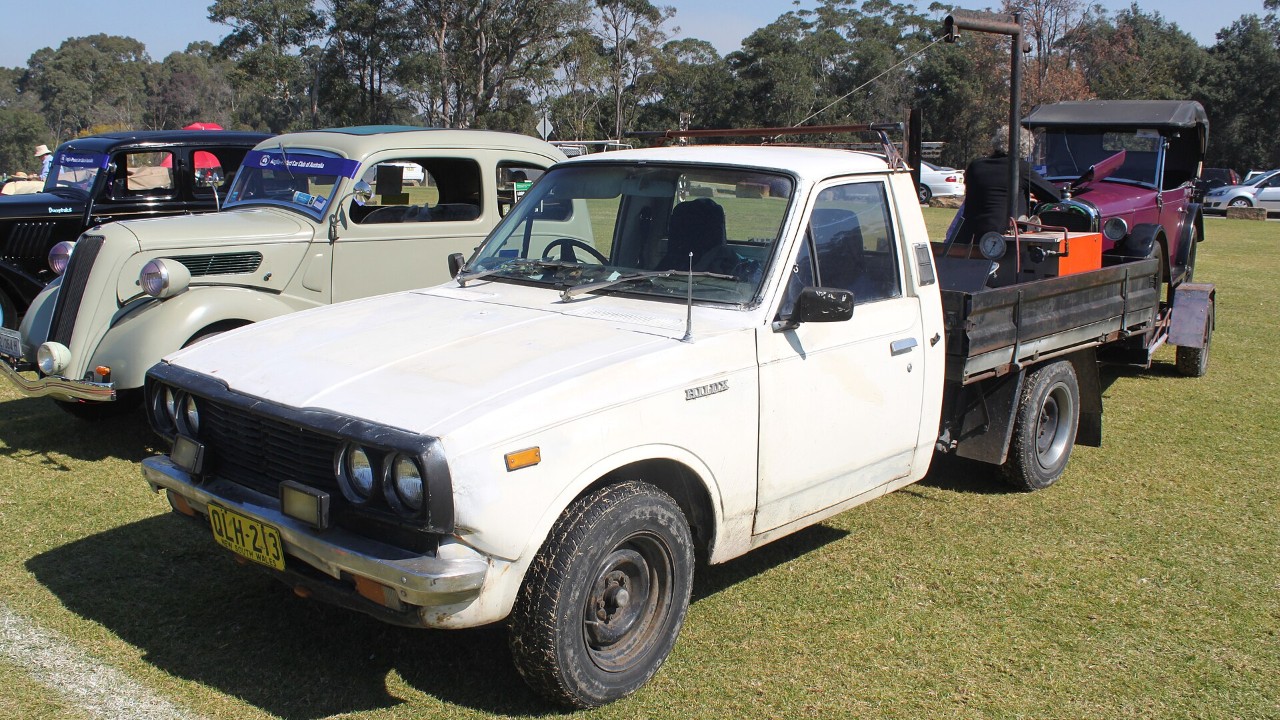
The second-generation Hilux debuted in May 1972 as a 1973 model. In Japan, the RN20 used the 2.0-liter 18R four, listed at 105 PS SAE gross from 1973 to 1978. In our view, it kept the formula simple, with a small cab and a useful bed.
This generation also brought the SR5 name to the Hilux, with the 1975 facelift. We think that mattered, because the SR5 badge signaled a truck for personal use as much as for work.
Our take: the RN20 is where the Hilux grew up without growing too big. If you find one in original shape, check the cab corners and bed floor before anything else.
4. 1975 Toyota Land Cruiser FJ45 pickup
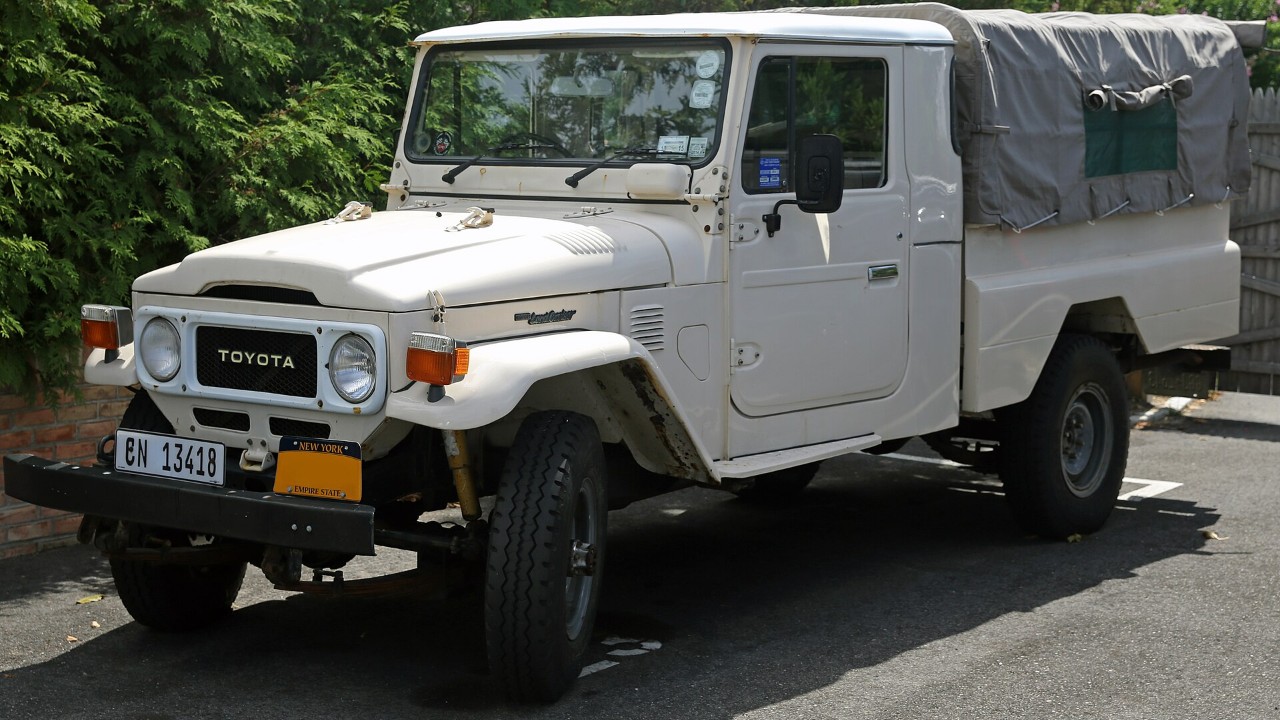
Toyota added the pickup to the J40 Land Cruiser range in 1963, on a long 2,950 mm wheelbase. The J40 series ran from 1960 to 1984 in most markets. Meanwhile, Brazil kept building its version, the Bandeirante, until 2001.
The year 1975 was a turning point for the engine bay. From 1960 to 1975, the J40 range used the 3.9-liter F inline-six. Then in 1975, Toyota introduced the 4.2-liter 2F six, rated at 135 PS, for markets outside Japan. The truck in this entry is a 1975 South African pickup, from the year the 2F arrived.
In our view, the FJ45 pickup over-achieved because it carried the Land Cruiser’s toughness into a working bed. It gets overlooked next to the short FJ40. We covered the whole family in our guide to Toyota Land Cruiser series from the 40 to the 300.
5. 1988 Toyota Hilux SR5 Xtracab
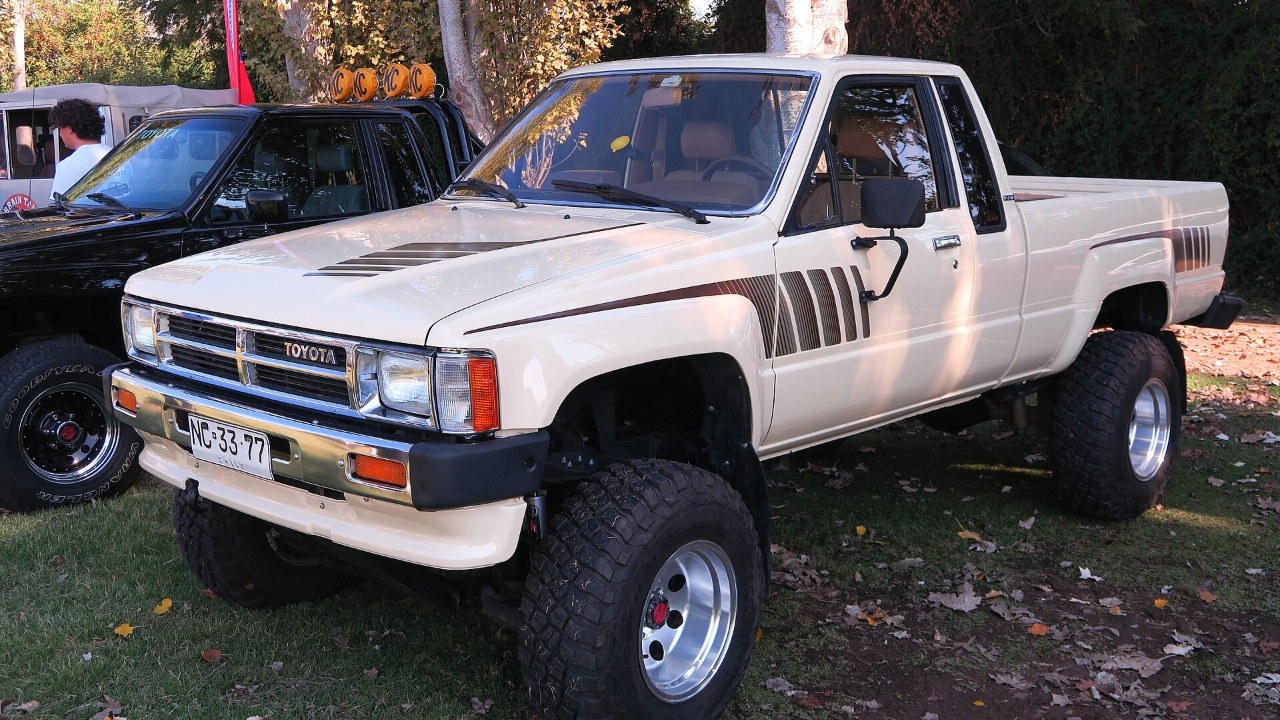
The fourth-generation Hilux arrived with a redesign in August 1983, and it brought the Xtracab. That extended cab gave owners space behind the seats for tools, bags or a jacket. It also made a compact pickup easier to live with every day.
The bigger change came underneath. Outside North America, four-wheel-drive models kept a solid front axle. North American 4WD trucks, however, switched to double-wishbone independent front suspension with torsion bars for the 1986 model year. So a 1988 North American 4WD Xtracab would ride on that newer setup.
Our take: the SR5 Xtracab is the late-1980s Toyota pickup at its most complete, with comfort and room the earlier trucks lacked. Even so, it is easy to forget today. The fourth generation ran through 1988, which makes this one of the last of its line.
6. 1993 Toyota T100 SR5
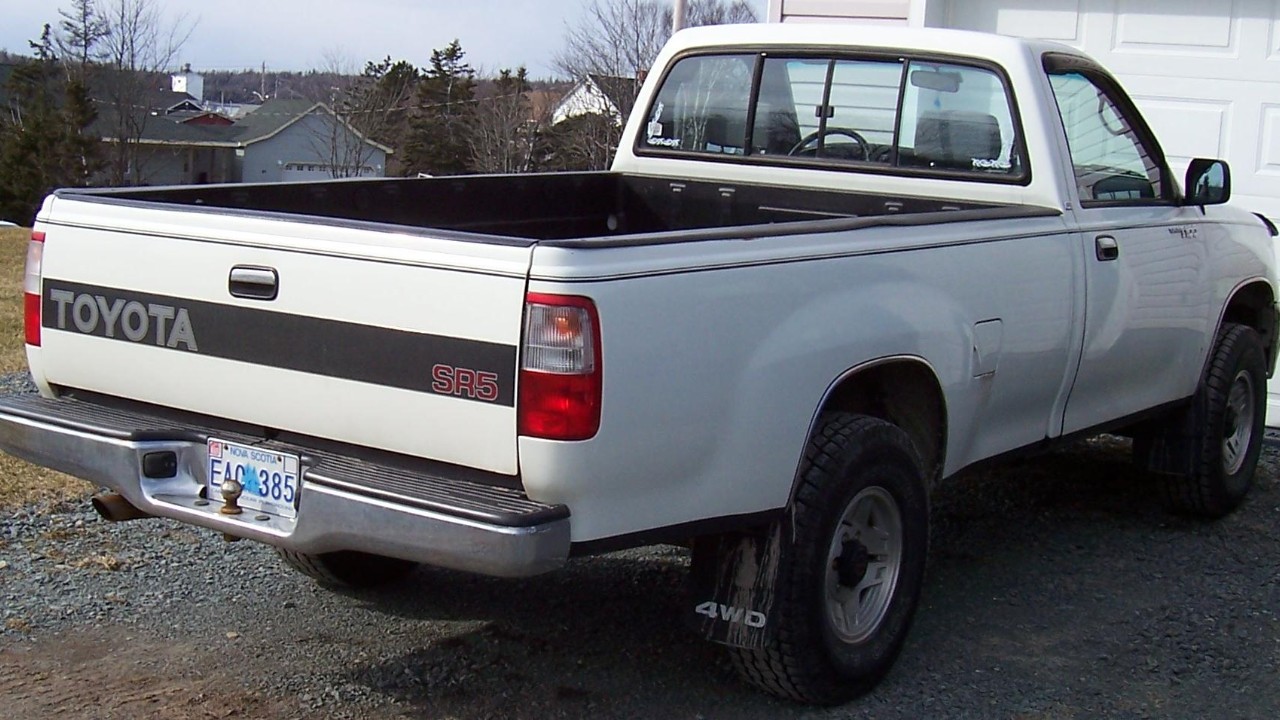
The T100 was Toyota’s full-size pickup before the Tundra. Edmunds summed up the 1993 model as a new full-size Toyota pickup designed to battle the Chevy C/K, Ford F-Series and Dodge Ram. At launch, its 3.0-liter V6 made 150 horsepower, and Edmunds says it was the only engine.
The odds were against it. Hino assembled every T100 in Japan, so each one faced the 25% U.S. import tariff on light trucks. Plant capacity of 40,000 a year also limited sales, which peaked in the mid-40,000 range in 1996. Critics also pointed to its size and the lack of a V8.
Toyota answered some complaints. The Xtracab arrived for 1995, and a 3.4-liter V6 with 190 horsepower followed the same year. In our view, the T100 over-achieved as a test run, because it showed Toyota what American full-size buyers wanted. Edmunds lists a one-ton version that could carry 2,570 pounds.
7. 2000 Toyota Tundra
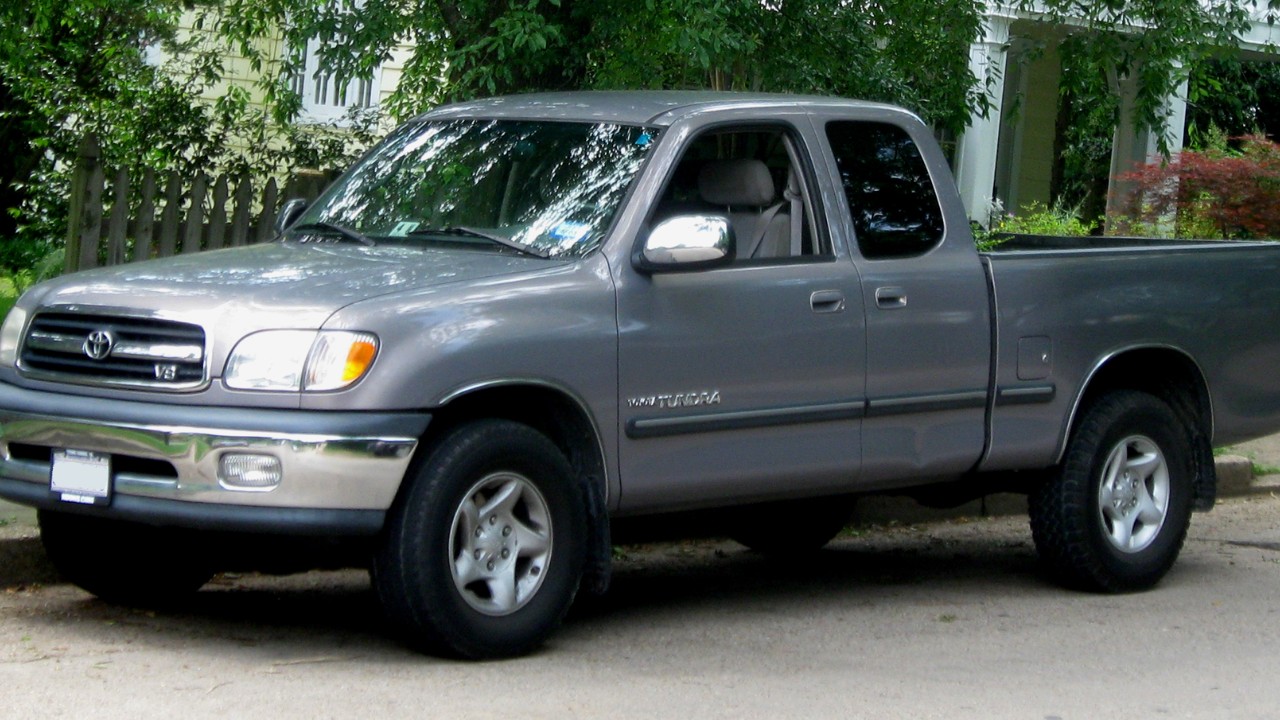
Toyota introduced the first Tundra in May 1999 as a 2000 model. It came from Toyota’s new plant in Princeton, Indiana, so unlike the T100, it was built in America. Buyers could choose a 3.4-liter V6 with 190 horsepower or the 4.7-liter i-Force V8 with 245 horsepower and 315 lb-ft of torque.
It finally gave Toyota the V8 that critics wanted. Motor Trend named the Tundra its Truck of the Year for 2000. U.S. sales then held above 99,000 a year from 2000 to 2004, compared with the T100’s peak in the mid-40,000 range.
It was not perfect. In late 2009, Toyota recalled 2000–2003 Tundras for rust on a rear crossmember, covering 110,000 trucks. If you buy one, check that the recall work was done. Our take: the first Tundra is now the forgotten one, overshadowed by bigger later trucks. U.S. sales reached 112,484 in 2004.
More from Fast Lane Only