$125,000 sounds like a pretty good number for a used Porsche GT3.
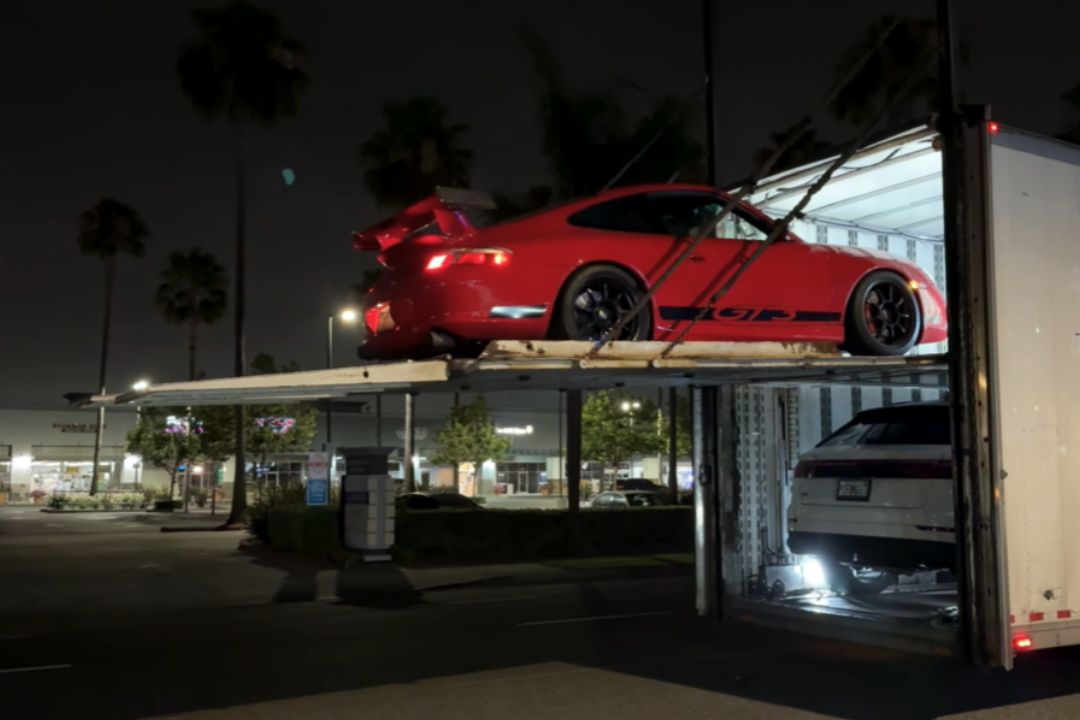
That is exactly what one flipper thought when he agreed to sell his freshly restored 2004 GT3 for that price. On paper, it looked like a solid payday for a rare car in guards red, one of only a handful ever brought to the US in that color. Then the math came out, and the number left standing at the end was nowhere close to what $125,000 makes it sound like.
A Rare Car Bought Sight Unseen
The flipper picked up the GT3 for $100,000 without seeing it in person first, drawn in by its rarity and the long list of upgrades already on the car. It came with a close ratio gearbox, a CAE shifter, carbon fiber seats, and a three way coilover suspension setup, the kind of build that made it stand out even among other modified GT3s.
There was one detail he did not love. The car wore aftermarket GT3 RS style side graphics, stickers that were never a factory option on a regular GT3. He decided to peel them off before selling the car, expecting a quick, simple fix.
One Sticker Turned Into a $15,000 Problem
Removing the stickers with a steamer pulled clear coat off the door along with them. What should have been a small touch up job turned into something much bigger once a body shop looked closer. Matching the paint meant blending into the fender, quarter panel, and the opposite side of the car, since red paint fades unevenly and a partial repaint would have left the car looking mismatched.
The result was a full exterior repaint, done the proper way with doors removed and panels sprayed separately rather than just taped off. What started as a quick fix for one sticker turned into a body and paint bill of $15,000, with the shop noting that the same job would normally run over $20,000 on the open market.
The Bills Kept Coming
The paint job was not the only unplanned cost. Getting the car back together required new glass, seals, and trim pieces sourced from FCP Euro, adding another $2,000. Small parts nobody thinks about until a car is fully disassembled, brackets, rivets, and clips, added another $1,000 on top of that.
He also swapped out the front brake rotors, which had come cracked and did not match the drilled rotors in the rear, and gave the faded brake calipers a cheap clear coat touch up rather than a full rebuild. Transport to get the car to him in the first place had already cost $2,200. By the time every bill was added up, his total investment in the car reached $121,200, more than $17,000 over his original plan.
Doing the Math
Here is where the $125,000 sale price stops sounding impressive. Subtract the $121,200 he had into the car, and the profit comes out to $3,800.
That is the return on a car that took months of work, a full repaint, new brakes, and constant coordination between a body shop and a detail shop, on a car worth six figures before any of that work even started. He put it plainly himself, describing the outcome as tying up $120,000 for three months of hard work to end up with under $4,000 to show for it.
Was It Worth It
He had the option to hold out for more, listing the car closer to $150,000 instead of honoring the original $125,000 deal. He chose to sell at the agreed price anyway, saying it made more sense to get his money back and move on to the next project rather than risk the car sitting on the market.
Looking back, he admitted the whole ordeal changed how he saw dealerships that skip cosmetic restoration work on cars like this. What started as removing a set of stickers he did not like ended up costing him nearly everything he made on the deal, a reminder that even small cosmetic decisions on a car this rare can turn into expensive ones fast.
More from Fast Lane Only: