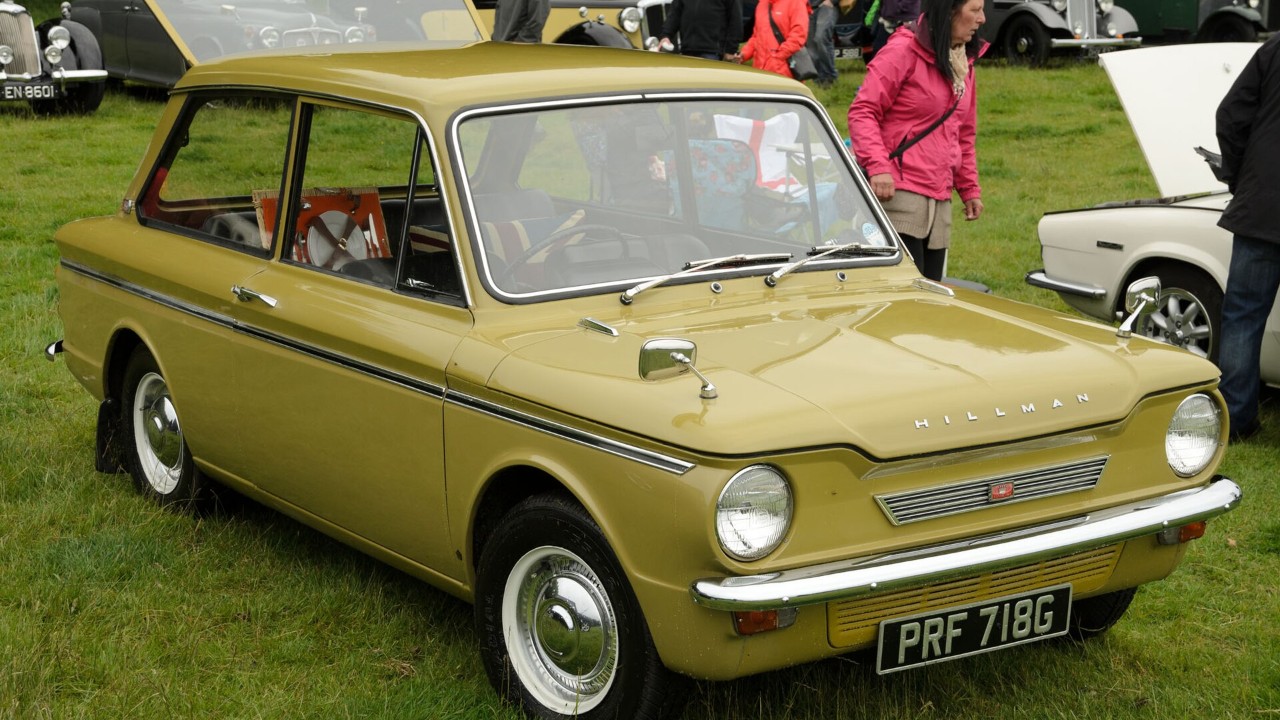
Putting the engine behind the rear wheels was a common answer for small European cars of the 1950s, 1960s and 1970s. The Hillman Imp, a Škoda coupé and a string of tuned Renaults all took that route. Most of them have since faded from memory, even among car fans.
These seven are our picks for the forgotten rear-engine cars that were the most fun to drive. That verdict is our own opinion. However, every spec, date and production figure below comes from a maker’s heritage file, a museum record or a period road test.
1. 1963–1976 Hillman Imp
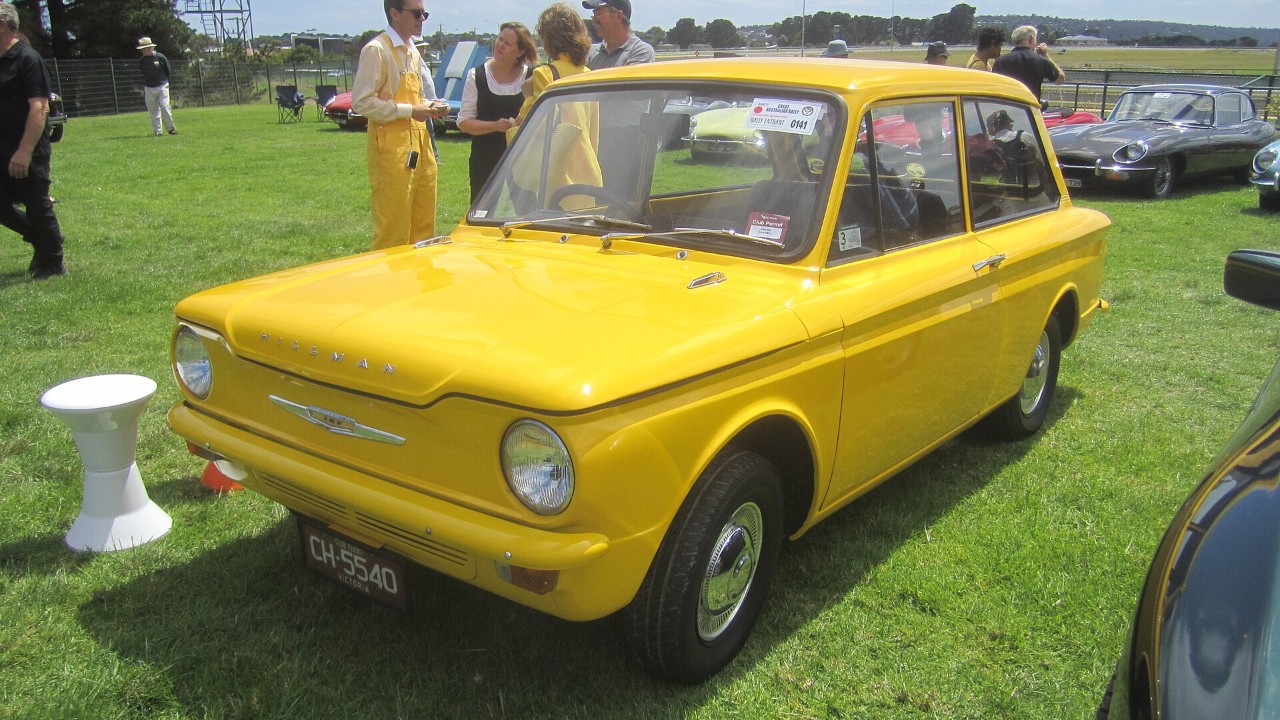
Rootes launched the Hillman Imp in May 1963 with an all-aluminium engine derived from a Coventry Climax fire-pump unit. The overhead-cam four displaced 875 cc and made 39 bhp. It drove a four-speed transaxle, and the whole package sat in line at the back. In fact, the car was built in a brand-new factory at Linwood, near Paisley in Scotland.
The Autocar tested an Imp de luxe that month and recorded about 80 mph flat out, with 0–60 mph in 22.7 seconds. Yet the light 711 kg test car averaged close to 40 mpg, according to Hagerty UK. In our view, an engine that loves to rev in a car that light makes up for the modest numbers.
2. 1964–1970 Renault 8 Gordini
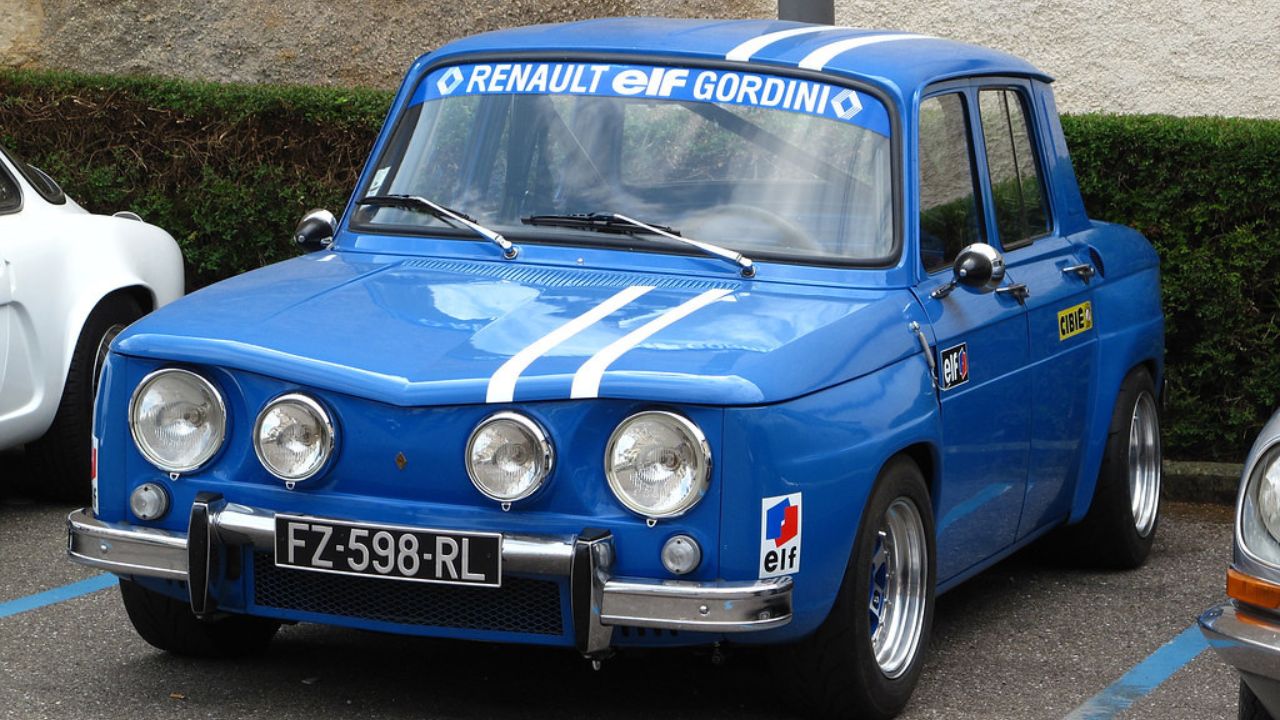
Renault unveiled the R8 Gordini at the Paris Motor Show on October 1, 1964, priced at 11,500 francs. Its 1,108 cc four made 95 bhp SAE (75 DIN) at 6,500 rpm on two twin-choke Solex carburettors. Meanwhile, four 260 mm disc brakes stopped a car that weighed just 795 kg.
Renault’s own Renault Classic data sheet lists 2,626 of these first 1100 cars. A 1,255 cc version with a five-speed gearbox followed in 1966, and 8,981 of those were built by June 1970. Better still, a one-make Gordini Cup gave French drivers a cheap way to race from 1966. We think that pairing of tiny weight and a high-revving engine is hard to beat.
3. 1967–1972 NSU TT
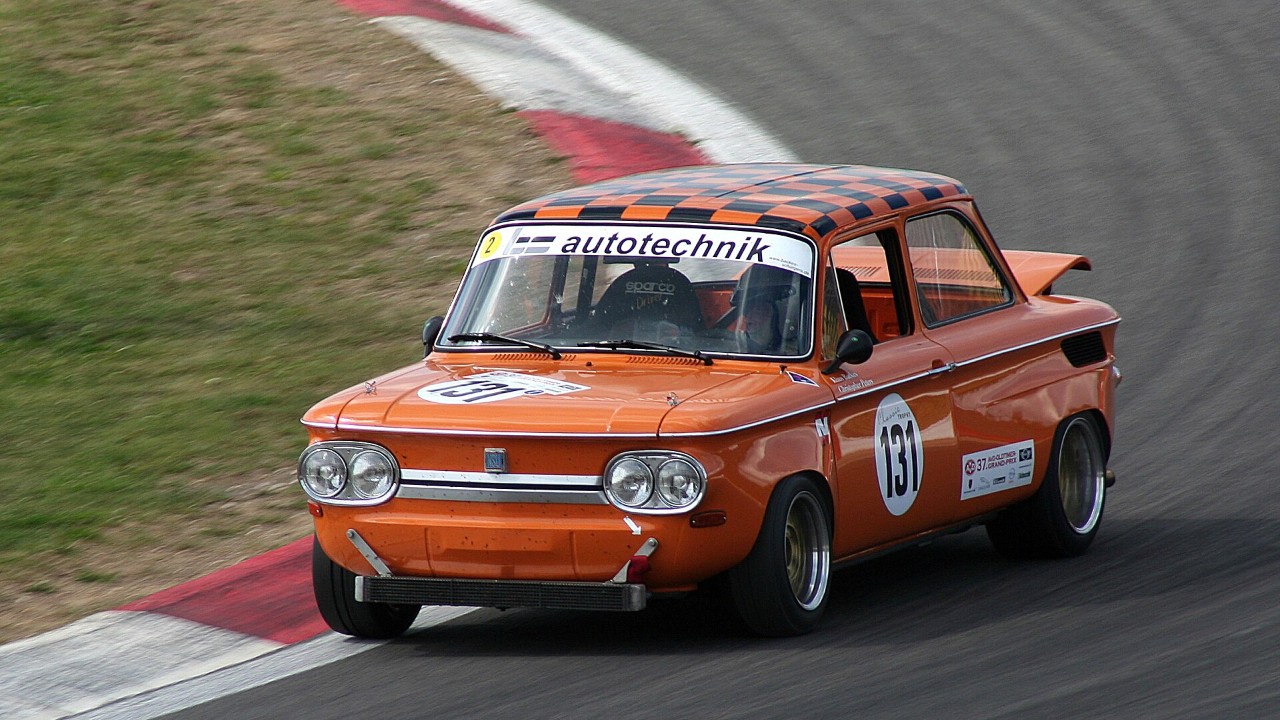
NSU started with the little two-cylinder Prinz in 1957. By 1967 the line had grown into the 1200 TT, the high-performance model. Its air-cooled four-cylinder engine sat in the tail, displaced 1,200 cc and made 65 hp. A four-speed manual sent that power to the rear wheels.
The Lane Motor Museum lists a top speed of 90 mph and a production run of 52,082 cars. Later, Audi took over NSU in 1969, and the TT stayed in the range until 1972. For our money, this was the German rear-engine car for people who wanted a little more noise than a Beetle offered.
4. 1973 Simca 1000 Rallye 2
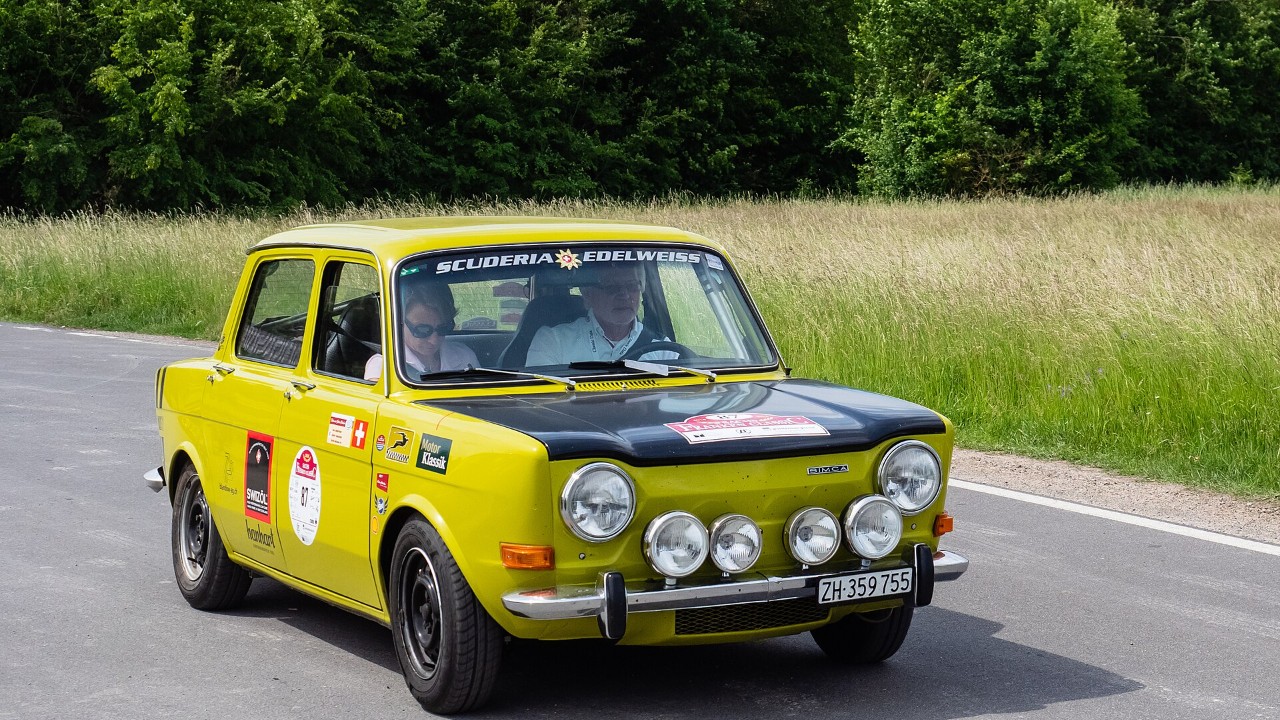
Simca began its sporty Rallye series in 1970 with a mild 53 hp car. The Rallye 2 changed the formula. Its 1,294 cc engine breathed through two double-barrel Solex carburettors and made 82 DIN hp at 6,000 rpm. Also, Simca moved the radiator to the front for better weight distribution.
French site Automobile Sportive lists 170 km/h (about 106 mph) flat out and a weight of 860 kg. The car also borrowed four disc brakes from the 1200 S coupé, though it kept a four-speed gearbox. In our view, the Rallye 2 offered pocket-rocket fun on a modest budget.
5. 1965–1974 Fiat 850 Coupé
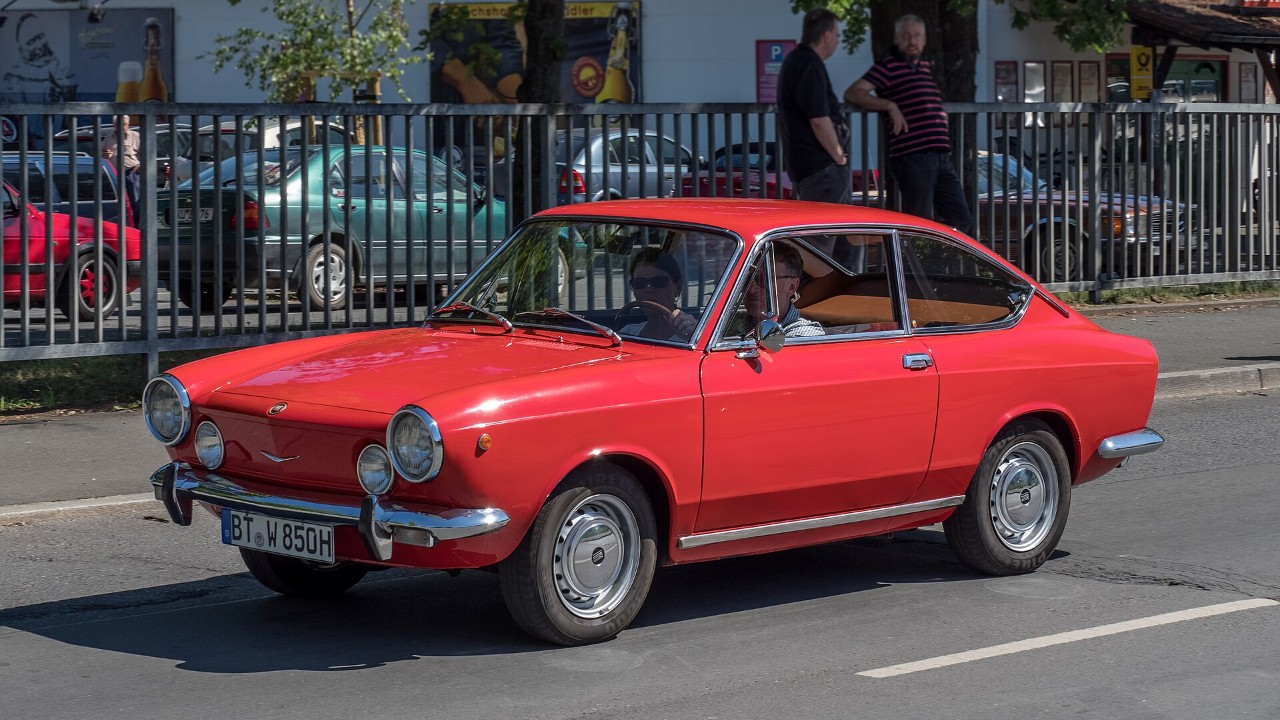
Fiat showed the 850 Coupé at the 1965 Geneva Auto Show, a year after the sedan. Its rear-mounted, water-cooled four displaced 843 cc. The Lane Motor Museum gives a top speed of 90 mph, and the original Coupé stayed in production until 1974.
From 1968, a 903 cc engine replaced the 843, though it added no power. Even so, Hagerty UK’s buyer’s guide says the Coupé handles well and doesn’t snap into oversteer when you lift mid-corner. It also praises the eager engine and precise gearchange. Hagerty puts the best cars at around £14,500. We’d call that a fair price for this much grin per cubic centimetre.
6. 1970–1980 Škoda 110 R
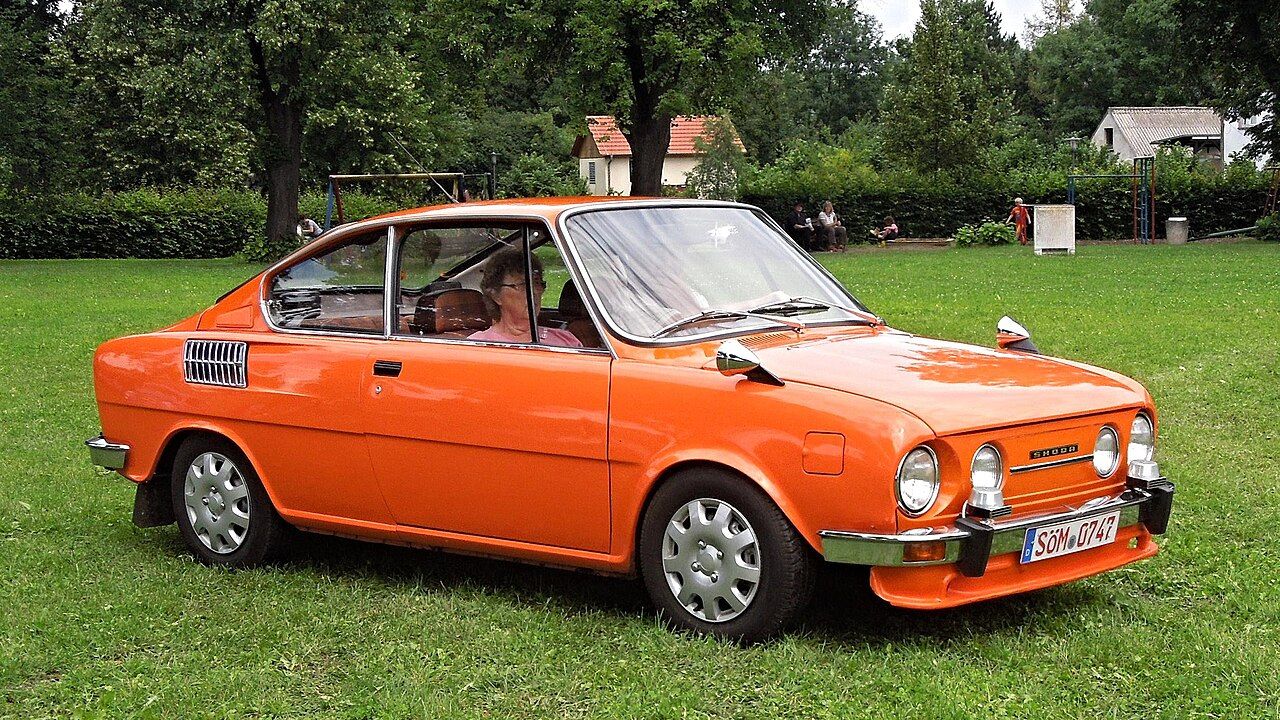
Škoda debuted the 110 R coupé on September 5, 1970, at the Engineering Fair in Brno. Its rear-mounted 1,107 cc four used a die-cast aluminium block and twin carburettors to make 52 hp. As a result, the 880 kg coupé could reach 145 km/h (about 90 mph).
The Kvasiny plant built 57,085 of them by December 30, 1980, Škoda’s heritage team says. A basic car cost 78,000 crowns, about 40 months’ wages at the time. The 110 R also became the base for the 130 RS, which took a class win at the 1977 Monte Carlo Rally. To us, that racing offspring proves the bones were good.
7. 1957 Renault Dauphine Gordini
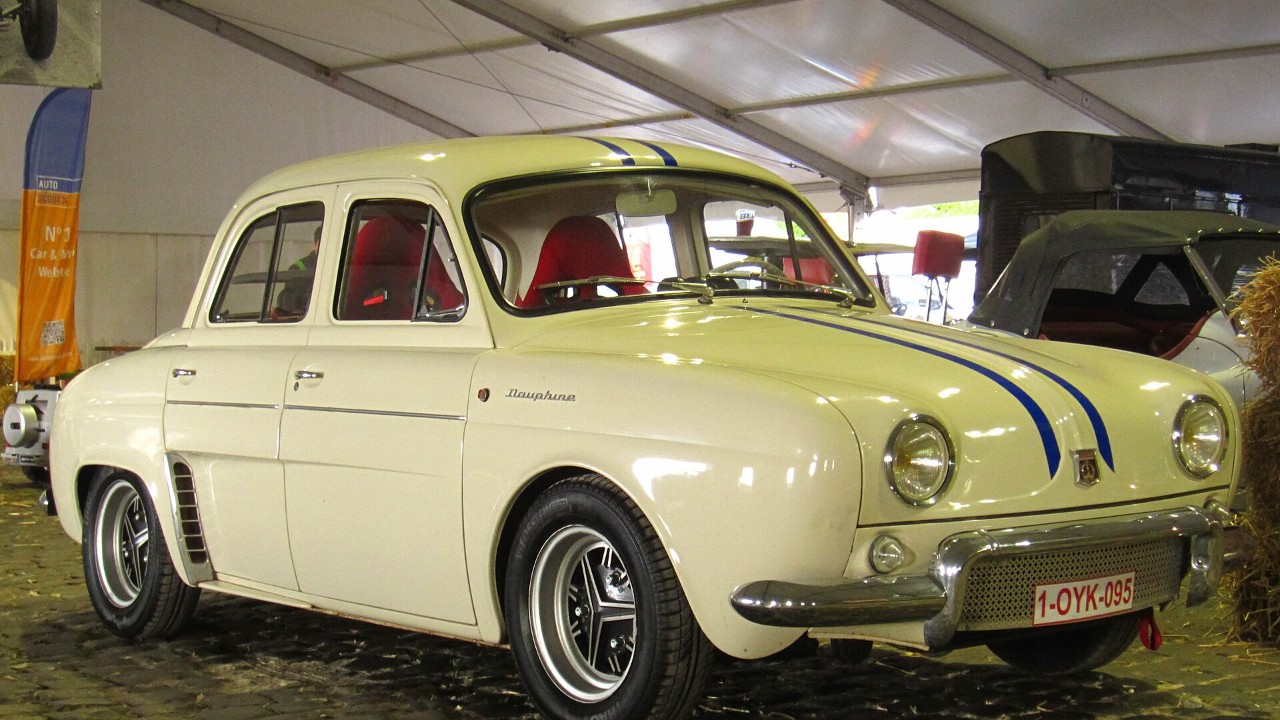
The Dauphine was essentially a larger, updated 4CV, and more than two million were built over twelve years. In addition, about 200,000 reached the U.S. from 1957 to 1960, the Lane Motor Museum notes. Amédée Gordini then gave the little sedan his own treatment.
According to Unique Cars and Parts, the Gordini version arrived for the 1957 model year. Gordini’s changes lifted the 845 cc engine from 32 hp to 38 hp, about 20% more. Then, in 1961, output rose again to 40 hp. Our take: few cars prove better that you can have plenty of fun with less than 50 horsepower.
More from Fast Lane Only