Honda has lifted the curtain on its first fully fledged Formula 1 hybrid power unit of the new era, revealing the RA626H that will propel Aston Martin from 2026. The launch crystallises a fresh works alliance between the Japanese manufacturer and the Silverstone team just as the sport prepares for a sweeping reset of its engine rules.
With the RA626H, Honda is positioning its technology at the centre of Formula 1’s next regulatory cycle while Aston Martin gains the factory backing it has long pursued. The partnership is being framed as a bid to fight for championships under rules that place unprecedented emphasis on electrical power and sustainable fuel.
RA626H: Honda’s new hybrid for a new era
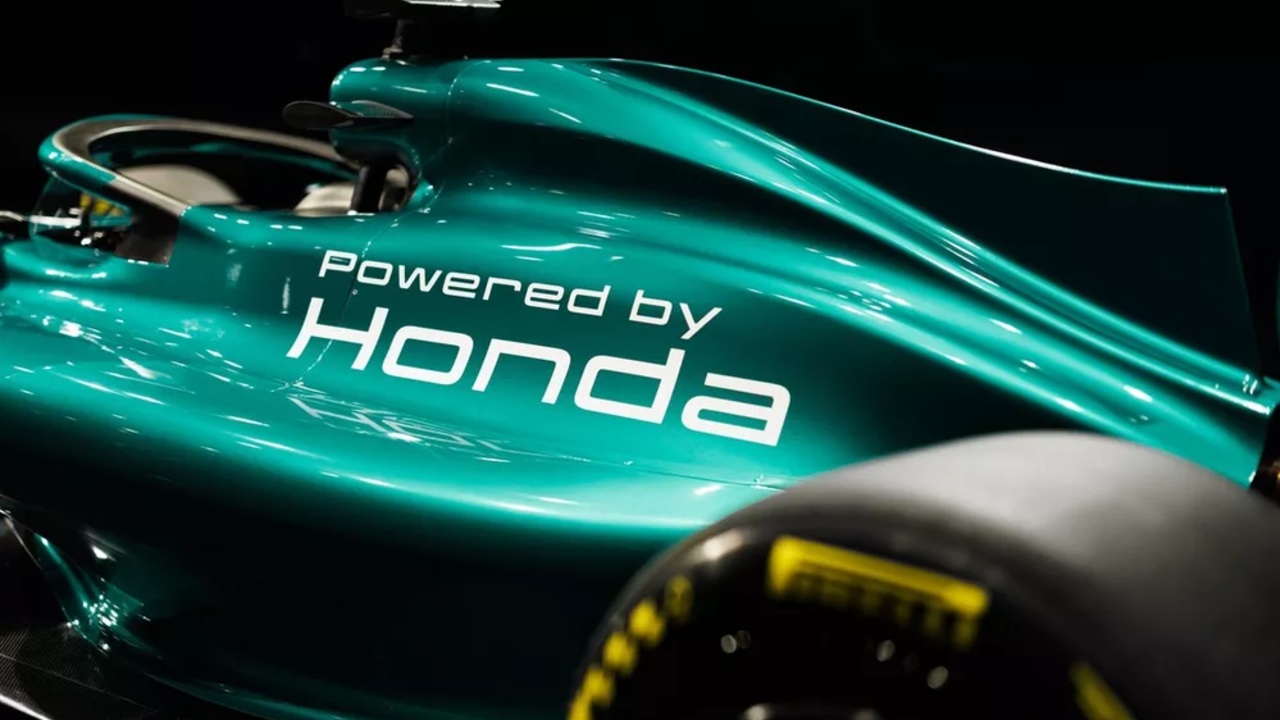
The RA626H is Honda’s answer to Formula 1’s 2026 power unit regulations, a compact hybrid designed around a far larger electrical contribution and strict fuel limits. Honda has presented the unit as a clean-sheet design that must deliver competitive performance while operating on fully sustainable fuel and within a tighter energy budget, a step that aligns with Formula 1’s stated ambition to reach carbon net zero through its next generation of engines and fuels. The company has already showcased the power unit visually, including a revised corporate logo that has appeared on Aston Martin’s 2026 concept car, signalling how closely the Sakura engine group and the Silverstone chassis operation are being integrated.
Although Honda has released images and a launch specification, it is deliberately keeping several technical details out of public view. Reporting on the unveiling notes that key aspects of the RA626H’s internal architecture and energy deployment strategies remain confidential, with Honda “covering the cards” on elements such as combustion layout and precise hybrid packaging to protect its competitive position. Early footage of the engine’s first fire-up has circulated through official channels and fan platforms, but even there, Honda has limited what can be seen of the installation, underlining how sensitive the technology has become in a formula where the power unit is expected to be a decisive differentiator.
Aston Martin’s long‑planned factory alliance
For Aston Martin, the Honda deal completes a strategic journey from customer team to works-backed contender. The team has confirmed that Honda will become its exclusive engine partner from the start of 2026, replacing its current supply once the existing agreement runs to the end of the 2025 season. In public statements, Aston Martin has framed the tie-up as the missing piece in its push to challenge at the front, pairing its expanding Silverstone campus and wind tunnel programme with a dedicated power unit built specifically around its chassis needs. Honda and Aston Martin have jointly described their new arrangement as the creation of an Aston Martin Aramco Honda Team, a label that underlines the depth of the collaboration.
The relationship is also being sold internally as a cultural fit, with both sides emphasising a shared appetite for risk and rapid development. Background reporting on conversations among Honda staff suggests that engineers see Aston Martin as a more agile and receptive partner than some of Honda’s previous counterparts, with the new agreement viewed as a chance to operate as a true factory squad rather than a bolt-on supplier. The decision to reveal the RA626H alongside Aston Martin branding, and to place Honda’s updated logo prominently on the 2026 car concept, reinforces the message that this is not a short-term supply contract but a long-term works alliance built around the new regulations.
What the 2026 rules demand from Honda
The scale of Honda’s task is defined by the 2026 power unit framework, which reshapes how performance is produced and managed over a race distance. The rules, first set out in the Engine Specification published in 2022, retain the 1.6 litre turbocharged V6 but dramatically rebalance the hybrid system so that electrical power contributes roughly half of the total output. At the same time, the regulations cut the permitted fuel flow and require the use of fully sustainable fuel, forcing manufacturers to chase efficiency gains in both combustion and energy recovery. Official briefings on the new rules stress that the engines must be more efficient, use less fuel and support Formula 1’s carbon net zero objectives, while still delivering the spectacle and power levels expected of the category.
Teams and manufacturers are already being warned that the new power units will behave very differently on track. Technical explainers from within the paddock highlight that the increased reliance on the MGU-K, combined with reduced drag chassis concepts, will change how drivers deploy energy on straights and out of corners, with power delivery becoming more dependent on battery management and software. Honda’s engineers must therefore design the RA626H not only to meet headline power and efficiency targets but also to integrate seamlessly with Aston Martin’s 2026 chassis and aerodynamics, which are being developed in parallel under the same regulatory package. The company has publicly acknowledged that the new rules represent a major challenge, even as it presents the RA626H as a symbol of its commitment to innovation in Formula 1.
Ambition and anxiety inside Honda
Honda’s leadership has been candid that the 2026 project carries significant risk as well as opportunity. Senior figures have admitted that the company “will struggle” initially under the new rules, with internal doubts growing about how quickly the RA626H can reach the front of the competitive order. Reports on those comments describe concerns over the complexity of the hybrid systems, the demands of sustainable fuel development and the need to match or exceed rivals who have been working on their 2026 concepts for several years. The memory of previous periods of underperformance, which led to strained relationships and even a costly divorce from a former partner, hangs over the current effort and shapes Honda’s cautious public tone.
At the same time, Honda is using the Aston Martin alliance to reset its Formula 1 narrative. The company has framed its return as a full works supplier as a statement of intent, presenting the RA626H as proof that it sees Formula 1 as a “symbol of challenge” and a test bed for future road car technology. Internal voices quoted in background reporting suggest that engineers are motivated by the chance to start afresh with a partner that is building its own long-term project, rather than joining an established giant with entrenched systems. The launch event in Tokyo, where Honda unveiled the 2026 power unit in front of Aston Martin representatives, was designed to project confidence that the two organisations can grow together through the early struggles that Honda itself predicts.
Strategic stakes for Aston Martin and Formula 1
The new partnership arrives at a pivotal moment for Aston Martin, which has invested heavily in facilities and personnel but still lacks the consistent front-running pace to fight for titles. By aligning with Honda at the start of a regulatory cycle, the team gives itself a rare chance to design its 2026 car around a bespoke power unit rather than adapting to a customer engine. Official communications from both Honda and Aston Martin stress that they are “planning with the start of the 2026 season” as a joint project, with shared performance targets and development roadmaps. For a team that has publicly set its sights on championships, the RA626H is not just an engine but a central pillar of its competitive identity.
More from Fast Lane Only