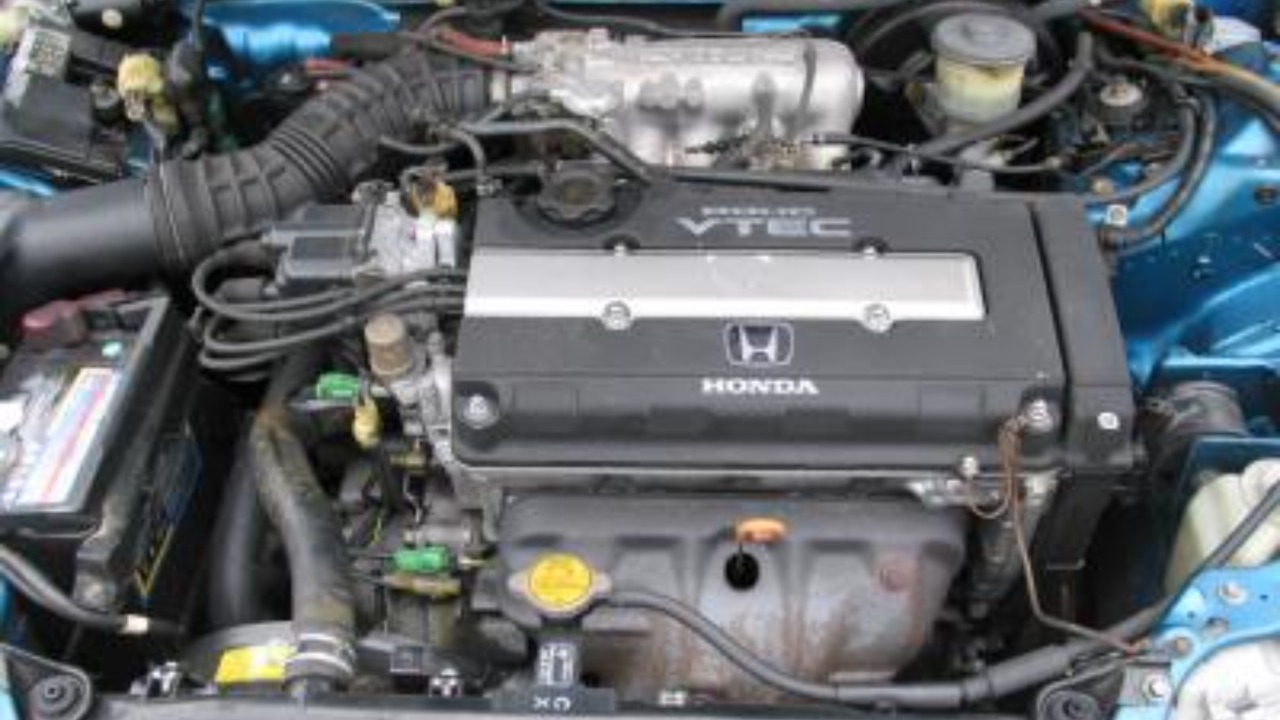
Honda VTEC gave a small four-cylinder engine two personalities, one for town and one for the top of the tachometer. It first went on sale in the Integra in April 1989. That 1.6-liter engine made 160 hp, or 100 hp per liter, a target set by Honda’s own head of research.
The trick was mechanical, not electronic magic. Each pair of valves had a mild cam profile for low speeds and a wild one for high revs. Oil pressure decided which one was in charge.
Here is how the system worked, why Honda’s engineers pushed for 100 hp per liter, and where the idea went after the Integra.
The 100 hp per liter target
Initially, the project was about fuel economy, not speed. Honda formed a team in January 1983 to study switchable valve timing for better mileage, according to Honda’s own heritage history of the engine. Honda approved the production project in November 1986, aimed at the 1989 Integra.
Engineer Ikuo Kajitani led the work. At first, his team planned on 90 hp per liter, which Honda’s history gives as 140 hp from 1.6 liters. Then Nobuhiko Kawamoto, then president of Honda R&D, proposed 100 hp per liter instead. That meant 160 hp from 1.6 liters at a maximum of 8,000 rpm.
That was a big jump. By comparison, Honda’s existing 1.6-liter DOHC engine made 130 hp and peaked at 6,800 rpm, the heritage history says. Higher revs meant inertial forces on the parts would rise by 40 percent.
How Honda VTEC switches cam lobes
VTEC stands for Variable Valve Timing and Lift Electronic Control, as Hagerty’s engine-room explainer spells out. In a normal engine, each valve follows one cam profile. As a result, engineers must choose between smooth low-speed running and high-rpm power.
Honda gave each valve pair three cam lobes instead. Hagerty describes two outer lobes for low-rpm running and a center lobe with a more aggressive profile. In other words, the 16-valve four carried 24 cam lobes in total.
In addition, three rocker arms sat on each valve pair. At low speed, the outer lobes worked the outer rockers, which opened the valves. Meanwhile, the middle rocker followed the big center lobe but did no work.
When it was time to switch, oil pressure pushed small plungers sideways through the rockers. Hagerty says those plungers measured 10 mm and sat inside the middle rocker arm. Once engaged, they locked the three rockers together, so all three followed the center lobe. As a result, the valves opened farther and stayed open longer.
The switch at about 4,500 rpm
According to Hagerty, the changeover happened at about 4,500 rpm. An electronic controller commanded the oil pressure. It watched engine speed, throttle position and coolant temperature, among other readings.
When oil pressure dropped, return springs pulled the plungers back. Then the valves went back to following the mild outer lobes. Honda’s heritage history calls the part a hydraulic timing selector pin. It was only 10 mm thick, so wear of just a few microns could affect how it worked.
Reliability, however, was the worry. For that reason, Honda set a target of 400,000 switching events, the heritage history says. Engineers also ran what Honda calls “malicious” tests on the timing belt, camshaft, rocker arm and selector pin, beyond normal operating conditions.
What else changed inside the B16A
The switching rockers were only part of the job. Honda enlarged the intake valves from 30 mm to 33 mm, according to its history. It also made the camshafts from a new high-carbon, high-chrome cast steel that could take up to 40 percent more surface pressure.
The exhaust valves changed too. Honda used a nickel-based steel with molybdenum, titanium and tungsten. That alloy raised heat resistance by 30 percent and cut weight by nearly 20 percent. Hagerty adds that the project involved about 30 new technologies and more than 100 engineers.
The result met the target. The engine, which Hagerty identifies as the B16A, made 160 hp at 7,600 rpm with an 8,000 rpm redline, Honda’s history says. Hagerty puts that in context with a Corvette V8 of the time making 245 hp from 5.7 liters.
The Integra and where VTEC went next
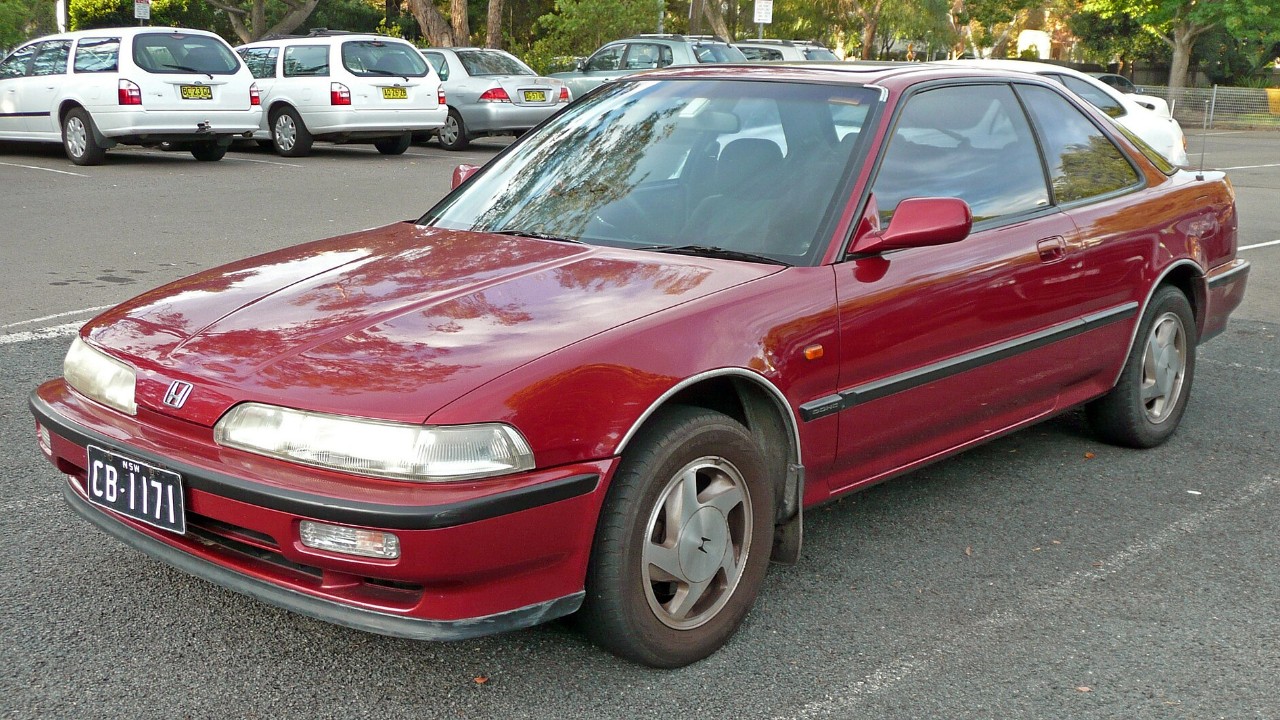
The first VTEC engine sold in Japan went into the 1989 Integra XSi, Hagerty reports. Later that year, VTEC spread to some Civics and to European CRX models. In fact, the CRX was the first VTEC car in Britain.
Next came the 1991 NSX. Its 3.0-liter V6 made 270 hp, Hagerty says, which fell short of the 100 hp per liter mark. After that, Honda’s history lists VTEC-E in 1991, a three-stage VTEC in 1995 and an SOHC VTEC 1.5-liter engine in the 1996 Civic.
Honda VTEC did not stay a niche idea. About 5 percent of Honda engines used it in 1991, according to Hagerty, and by 2001 that share had reached 80 percent.
More from Fast Lane Only