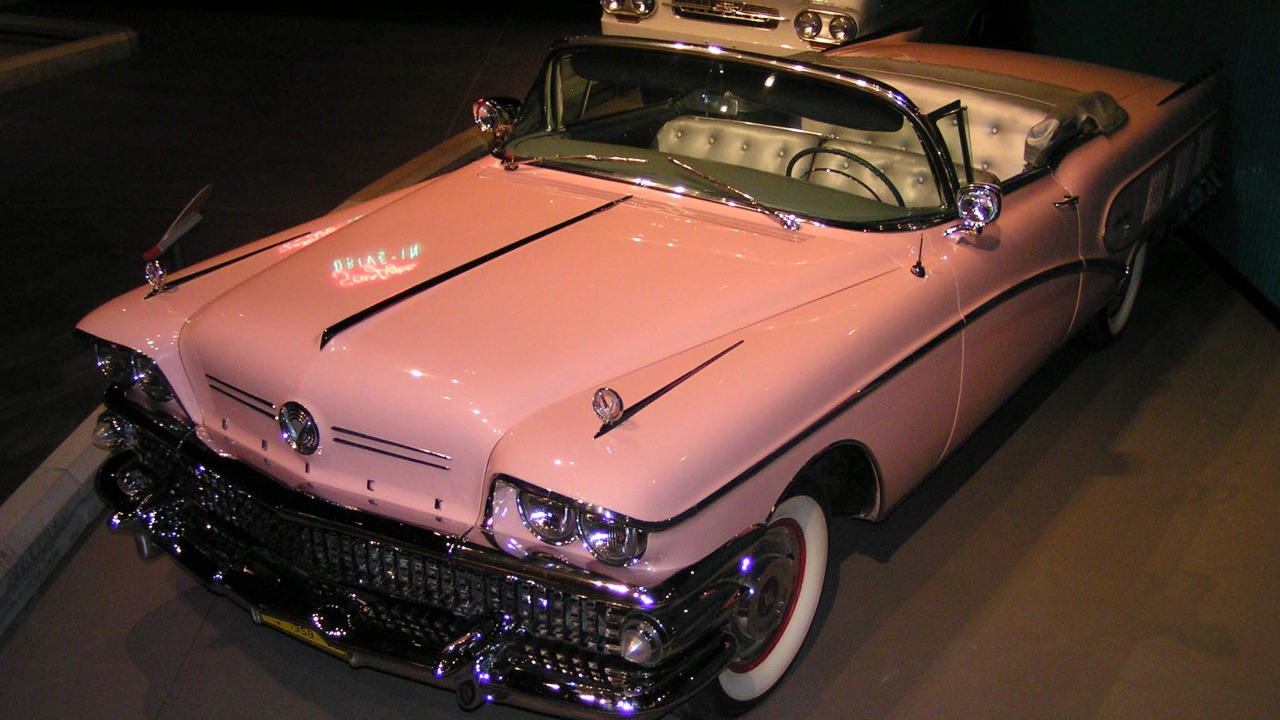
Among American cars of the 1950s, few inspire as much conflicted admiration as the 1958 Buick Limited. Built for a single model year, it promised Cadillac levels of glamour but instead left Buick with a sales crisis and modern collectors with a maze of headaches. Its story is not simply about chrome and tailfins, but about how one spectacular miscalculation can echo through decades of restoration bills and parts-hunting frustration.
The Limited’s brief life captures a turning point in Detroit, when exuberant styling collided with economic reality and shifting tastes. Today, its rarity and visual drama make it desirable on paper, yet the very traits that once scared off buyers now complicate ownership for enthusiasts who dare to take one on.
The year Buick went too far
By the late 1950s, General Motors projected an air of absolute dominance, and Buick, as GM’s oldest brand, was expected to keep pace with the industry’s appetite for size and spectacle. Instead, 1958 became what one detailed account bluntly describes as a truly horrible year for the division, with trouble gathering around a lineup that arrived just as the market cooled and buyers grew wary of excess. As the largest manufacturing enterprise in all the world, General Motors could absorb missteps, but Buick’s stumble was severe enough to trigger concern about the brand’s direction and leadership.
The Limited sat at the center of that storm. Conceived as a halo car to sit just below Cadillac, it arrived in a season remembered as the apex of automotive excess, when the most lavish trim was draped over the largest-ever bodies. Buick’s own history shows that the division had already been wrestling with the consequences of rapid growth earlier in the decade, and by 1956 its wild sales expansion had led to quality and production issues that required a housecleaning of the division’s leadership. Unfortunately, Buick entered 1958 with that recent turmoil in its rearview mirror and a flagship that doubled down on the very extravagance the market was starting to question.
A one-year flagship loaded with unique parts
On paper, the Buick Limited was a masterstroke of differentiation. It was not often that a model was built for just one year, yet that is precisely what happened with the 1958 Buick Limited, a car positioned as the most opulent Buick money could buy. Article content from period coverage emphasizes that it was intended to be magnificent, with features and finishes that pushed far beyond the division’s other offerings and aimed squarely at buyers who might otherwise look to Cadillac.
That ambition produced a car saturated with bespoke hardware. Distinctive to the three Limited body styles were the “hash marks” along the rear fenders, intricate trim pieces that did not appear on lesser Buicks. The Limited was also the only 1958 Buic to feature a rear bumper design that integrated the taillights in a way that required unique castings and lenses, and its side moldings and ornamentation were tailored to blend impeccably into the massive rear bumper. These touches delighted stylists at the time, but they ensured that almost every panel and brightwork item on The Limited would be specific to that single model year.
Chrome, fins, and a styling gamble that aged badly
Visually, the Limited represented Detroit’s golden era turned up to its highest setting. Contemporary descriptions of the 1958 model year recall cars that were long, wide, and drenched in chrome from front to rear, and Buick’s flagship was no exception. The Limited’s bodywork bristled with sculpted trim, layered grilles, and elaborate rear fender treatments that made even other late fifties Buicks look restrained. Where a 1959 Wildcat concept would later channel performance and clean aggression, the Limited was pure ornament, a rolling showcase of what the styling studio could bolt onto a full-size shell.
That gamble did not land as intended. While some admirers saw the Limited as magnificent, others, even within Buick’s own orbit, described its look as gaudy or over the top. The car arrived just as economic headwinds and changing tastes made buyers more cautious about ostentatious displays, and the Limited’s sheer visual weight became a liability. In contrast, other GM products, such as the 1958 Chevrolet Corvette, introduced unique styling cues and chrome flourishes that were quickly refined and carried forward into the 1959 production models, giving owners a sense of continuity. The Limited’s design, by comparison, was a one-season statement that was effectively abandoned when Buick pivoted to a very different look for 1959.
From showroom disappointment to restoration nightmare
The Limited’s commercial performance reflected that misalignment. Buick had hoped that a Cadillac-adjacent flagship would reinforce the brand’s prestige, but the combination of economic softness and polarizing styling left the car struggling to meet expectations. As the, General Motors leadership watched Buick’s numbers falter, the Limited’s fate was sealed, and the division moved quickly to reset its lineup rather than refine the experiment. The result was a model that vanished after a single year, leaving a small population of cars scattered among owners who often treated them as curiosities rather than long-term investments.
That short run is precisely what haunts collectors today. Because the Limited was built for only one model year and loaded with unique trim, restorers face a parts landscape that is far more hostile than for other late fifties Buicks. Items such as the rear fender hash marks, the special bumper-integrated taillights, and the elaborate side moldings were never reused, so there is no later parts-bin relief. By contrast, a 1958 Corvette owner benefits from the fact that many mechanical components and some styling elements carried into 1959, which broadens the pool of usable pieces. Limited owners, by comparison, must either track down scarce original components or commission costly reproductions, a process that can turn even a modest cosmetic refresh into a multi-year ordeal.
Why collectors still chase it, despite everything
Yet the Limited’s difficulties have not consigned it to obscurity. Auction descriptions of surviving cars, such as a 1958 Buick Limited Convertible from a noted collection, emphasize that the 1958 model year is remembered as the peak of American automotive extravagance and that Probably the closest Buick ever came to matching Cadillac’s visual drama was with this car. For some enthusiasts, that context is irresistible. The Limited offers the chance to own a machine that captures a specific, unrepeatable moment in Detroit history, when chrome, size, and optimism briefly overruled caution.
That allure is strengthened by Buick’s broader narrative. Earlier in the decade, the division’s wild sales growth and subsequent leadership shakeup showed how quickly success could turn into vulnerability, and the Limited stands as a physical artifact of that tension. It is the product of a company trying to reassert its status within General Motors while the market was already shifting under its feet. Collectors who pursue the Limited are not simply buying a flashy convertible or sedan, they are embracing a car that embodies Buick’s overreach and resilience. The price of that romance is paid in scarce parts, complex restorations, and the constant risk that a minor parking-lot mishap will damage trim that cannot be easily replaced, but for a certain kind of owner, that challenge is part of the appeal.
More from Fast Lane Only