The Chevrolet Monte Carlo earned its reputation not just through styling or marketing, but through the engines that defined each era of the car’s life. From big-block V8s to front-drive V6s, its powertrains tracked the shifting priorities of American drivers and regulators, and they shaped how the coupe was perceived on the street, at the dealership, and on the NASCAR grid.
Understanding which engines sat under the Monte Carlo’s long hoods, and why Chevrolet chose them, reveals how a single nameplate could move from luxury muscle to downsized efficiency and back toward performance. The story of those engines explains why the Monte Carlo still sparks debate about whether it was a muscle car, a personal luxury coupe, or something in between.
Big-block beginnings: luxury meets muscle
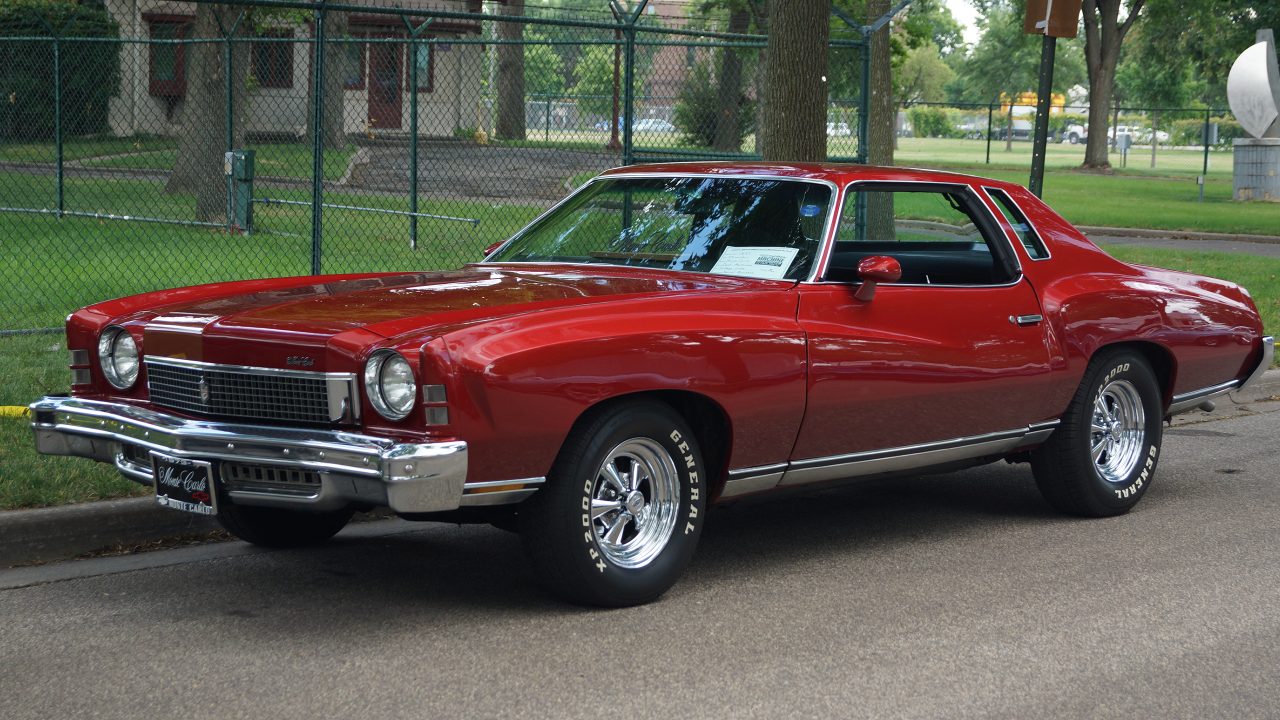
When the Monte Carlo arrived for 1970, Chevrolet positioned it as a personal luxury coupe with the heart of a muscle car. The most dramatic expression of that idea was the Monte Carlo SS 454, whose 454 cubic inch V8 was rated at 360 horsepower and 500 lb-ft of torque, a combination that made it one of the most powerful cars in Chevrolet’s lineup at the time. That big-block option turned what could have been a stylish cruiser into a serious straight-line performer, while the base models and smaller V8s kept the entry price accessible for buyers who cared more about comfort than quarter-mile times.
This blend of luxury and brute force mattered because it allowed Chevrolet to sell performance in a more mature package just as insurance costs and public scrutiny were starting to squeeze traditional muscle cars. The Monte Carlo’s long hood, formal roofline, and upscale interior signaled comfort, yet the availability of the 454 engine meant it could still run with contemporary Chevelle and Camaro variants when properly optioned. That dual identity, supported by the big-block SS 454 and a range of smaller V8s, laid the foundation for the car’s later reputation as an “overlooked” muscle machine that hid serious power behind a more restrained image.
Surviving the 1970s: downsizing and NASCAR credibility
As the 1970s progressed, tightening emissions rules, fuel crises, and changing insurance standards forced Chevrolet to rethink the Monte Carlo’s powertrains. Big-block options faded, compression ratios dropped, and the focus shifted toward smaller displacement V8s that could meet new regulations while still delivering acceptable performance. Even as output declined, the Monte Carlo remained rear-wheel drive and V8 powered, which preserved its basic character and kept it aligned with American expectations for a full-size or midsize coupe of the period.
Those engines also underpinned the Monte Carlo’s growing presence in stock car racing. During the late 1970s and early 1980s, the Monte Carlo became a dominant shape in NASCAR, where its aerodynamic profile and V8 layout made it a favorite among teams. The race cars did not share exact engines with showroom models, but the connection between a V8-powered street Monte Carlo and its competition counterpart reinforced the idea that this was still a performance-oriented coupe, even if showroom horsepower figures were a shadow of the early 454 era. That racing success helped carry the nameplate’s credibility through a decade when many American coupes lost both power and prestige.
G-body revival: the 1980s Monte Carlo SS
The early 1980s brought a more focused performance revival with the return of the Monte Carlo SS on the G-body platform. In 1983 the Carlo SS came back with a 175-hp 5.0-liter V-8 as standard, a figure that may seem modest today but represented a meaningful step up in an era still constrained by emissions and fuel economy rules. Paired with a performance-oriented suspension and a more aggressive final drive, that small-block V8 gave the SS sharper acceleration and a more responsive feel than the regular Monte Carlo coupes of the time.
What made this engine choice significant was how it reconnected the Monte Carlo with enthusiasts without abandoning its role as a comfortable daily driver. The 5.0-liter V-8 sat in a rear-wheel-drive chassis that still offered a usable back seat and a compliant ride, yet the SS package added an aerodynamic nose, revised bodywork, and gearing that made the most of the 175-hp output. That balance turned the 1980s Monte Carlo SS into an icon of the decade, a car that symbolized Chevrolet performance and design while also serving as a visible link to the brand’s racing legacy on oval tracks.
Front-drive transformation: V6 power and changing priorities
By the late 1980s and 1990s, market forces pushed Chevrolet to rethink what a personal coupe should be, and the Monte Carlo eventually returned on a front-wheel-drive platform with V6 power. The shift from rear-wheel-drive V8s to transverse engines altered the car’s driving character, but it kept the nameplate relevant at a time when traditional coupes were losing ground to sedans and emerging SUVs. The base 3.4-liter V6 in the revived Monte Carlo produced 180 horsepower, a level that matched contemporary expectations for a midpriced coupe while delivering better fuel economy and packaging efficiency than the old small-block layouts.
This move to V6 power mattered because it showed Chevrolet prioritizing everyday usability and regulatory compliance over raw displacement, yet the company still tried to preserve a sense of performance. Later versions of the front-drive Monte Carlo offered more powerful V6 options and sport-oriented trims that leaned on styling and chassis tuning to maintain some of the car’s historic flair. The change did not please every traditionalist, but it allowed the Monte Carlo badge to survive into a new era of front-drive architecture and more efficiency-minded buyers, rather than disappearing with the last of the big coupes.
Final flourish: LS V8s, modern V6s, and the Monte Carlo’s legacy
In its final years, Chevrolet attempted to reconcile modern engineering with the Monte Carlo’s performance heritage by pairing contemporary engines with the existing front-drive platform. For 2006, the base engine was a 211-hp, 3.5-liter V-6, which provided smoother power delivery and improved refinement compared with earlier V6 offerings. More importantly for enthusiasts, a V8 returned to the lineup for the first time in many years, with an LS-based 5.3-liter engine that had to be mounted transversely because the Monte Carlo was front-wheel drive. That layout, with the crankshaft aligned for a front-drive configuration, created a rare combination of a modern V8 in a mainstream front-drive coupe.
The final SS V8 model peaked at 303 horsepower, a figure that restored a level of straight-line performance the nameplate had not seen since its big-block days, even if the driving dynamics were very different from the original rear-drive cars. This closing chapter mattered because it showed Chevrolet was willing to invest in a relatively niche configuration to give the Monte Carlo a proper performance sendoff, rather than letting it fade away as a purely cosmetic trim. Across its six generations, from the 454 big-block that delivered 360 horsepower and 500 lb-ft of torque to the last 303 horsepower LS V8, the engines that powered the Monte Carlo charted the changing definition of American performance and luxury, and they remain central to why the car still commands attention among collectors and fans.
More from Fast Lane Only