The SR-71 Blackbird is usually remembered for its titanium skin, Mach 3 speed, and cloak of secrecy, not for the rumble of Detroit iron. Yet behind every reconnaissance sortie, a pair of Buick Nailhead V8s quietly did the dirty work of bringing the Blackbird’s exotic engines to life. The story of how those humble Buicks became indispensable to the most advanced spy plane of the Cold War reveals how aerospace innovation often rests on surprisingly ordinary hardware.
As I traced the Blackbird’s origins and the evolution of its support systems, I kept returning to a simple truth: the SR-71’s radical design pushed technology so far that even starting its engines required a bespoke solution. That solution, refined through trial, error, and a lot of broken parts, turned Buick Nailheads into the “engines behind the engines,” a role that was as precarious as it was essential.
Why the Blackbird needed car engines to wake up
The SR-71’s Pratt & Whitney J58 powerplants were designed to operate at extremes of temperature, altitude, and speed, which meant conventional starting systems were inadequate. The engines had to be spun to very high rotational speeds before fuel and ignition could be safely introduced, or the risk of damage and failed starts would be unacceptably high. In practice, that meant ground crews needed a compact, controllable source of mechanical power capable of delivering intense torque directly into the J58’s starter gearbox.
Rather than build an entirely new turbine-based starter, engineers turned to robust American V8s that could be packaged into a mobile “start cart.” Two Buick Nailhead V8 engines were coupled together to drive a vertical shaft that engaged the SR-71’s engine through an access port beneath the nacelle. The Buicks were required to spin up to about 4,500 rpm to bring the J58 to the necessary rotational speed, a figure that illustrates just how demanding the start sequence was for what began life as passenger-car powerplants. Ground crew accounts describe the command “Buicks out” marking the moment when the cart disengaged and the jet engine took over, a small phrase that captured the handoff from Detroit torque to aerospace thrust.
Inside the Nailhead start cart: brutal simplicity with a narrow margin
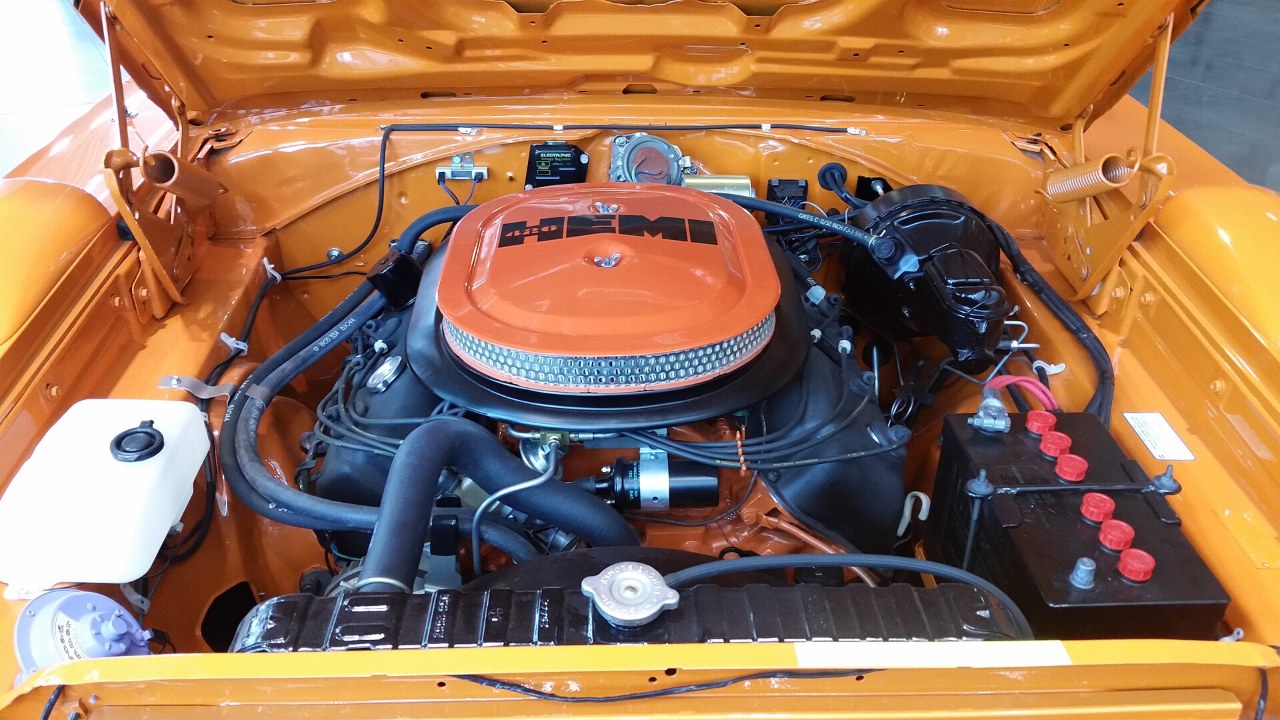
From a distance, the start cart looked like a squat trailer, but its internals were a carefully balanced system that left little room for error. Two Buick 425 engines sat side by side, their crankshafts linked through a common output that drove the vertical shaft into the SR-71’s starter gearbox. The arrangement had to deliver enough torque to accelerate the massive compressor stages quickly, yet remain controllable enough that the gearbox was not shocked into failure. According to detailed technical recollections, too little torque during the Buick start process caused overheating, while too much torque damaged the gearbox, a narrow operating window that demanded both mechanical precision and crew finesse.
That sensitivity shaped the way crews worked the throttles. One former crew chief recalled having to “rev the snot out of the Buicks” to get the J58 turning fast enough, then modulate the engines to keep the torque in the safe band as the jet spooled up. The process was loud, violent, and time critical, with the twin Nailheads screaming at high rpm while the Blackbird’s engine transitioned from dead weight to self-sustaining power. When the J58 reached the target speed, the crew disengaged the Start Cart and the Buicks dropped back to idle, their job complete until the next engine needed to be lit.
From junkyards to airshows: how Buick carts became legend
What began as a pragmatic engineering choice soon developed its own mythology among maintainers and aviation enthusiasts. Accounts from ground crews describe how the demand for suitable Buick Nailhead engines eventually exhausted junkyards across the United States, as every usable block was hunted down to keep the start carts operational. One widely shared recollection notes that on one side of the aircraft, and on the other side as well, sat a Buick start cart, a visual reminder that even the most secret reconnaissance platform relied on very visible, very noisy support equipment.
Those same carts became crowd-pleasers at public events. When the SR-71 appeared at airshows, spectators might see the sleek Blackbird on static display, but the real drama unfolded when crews demonstrated or described the start sequence. Veterans of those events recall that it never failed to thrill them to start the Blackbird’s engines with the Start Cart, the twin Buicks howling as the vertical shaft engaged. Museums such as The Air Zoo, a Smithsonian-affiliated aerospace center, now preserve and interpret the Start Cart story, including candid memories summed up in the rueful line “We got every one and broke it,” a nod to how hard the system was on the donor engines that powered it.
Design choices, dead ends, and the shift away from Nailheads
The decision to use Buick Nailheads did not emerge in a vacuum. When Kelly Johnson was designing the A-12, YF-12, M-21, and eventually the SR-71, he and his team had to solve a cascade of practical problems that came with operating a Mach 3+ aircraft. One of those problems was that the Blackbird did not have an onboard starter, which forced engineers to look for an external solution that was powerful, relatively compact, and field maintainable. Two Buick Nailhead V8 engines to start the SR-71 Mach 3+ plane fit that bill, especially given the Nailhead’s reputation for strong low-end torque and durability in automotive use.
Over time, however, the very intensity of the start cycle took its toll on the Buicks. Reports from maintainers and enthusiasts describe conflicting details about exact configurations, but they converge on a pattern of repeated failures and rebuilds as the Nailheads were pushed far beyond their original design envelope. Eventually, the original Buick units were replaced with Chevy 454 V8s, a shift that reflected both the dwindling supply of Nailhead cores and the search for improved reliability. Even as the hardware evolved, the basic concept of a twin-engine Start Cart remained, a testament to how a seemingly provisional solution became a long-lived part of Blackbird operations.
The hidden partnership between hot rodding and high altitude
What fascinates me most about the Buick Nailhead story is how it blurs the line between backyard hot rodding and black-budget aerospace work. Accounts of the Blackbird’s early development highlight a web of unlikely collaborators, from Shell Oil formulating the top secret JP-7 fuel that fed the Pratt & Whitney J58 engines, to racing and fabrication experts like Frank Kurtis contributing to specialized support equipment. Frank Kurtis’s son Arlen has described how his father’s experience in performance engineering intersected with clandestine projects, a reminder that the skills needed to build winning race cars translated surprisingly well to solving problems for the Central Intelligence Agency and Lockheed’s Skunk Works.
In that context, the Buick Nailheads were not an oddity but part of a broader pattern in which high performance automotive technology quietly underpinned strategic reconnaissance. The same instincts that led hot rodders to squeeze more torque from a V8 were harnessed to spin up a J58 at the edge of its operating envelope. When crews heard the call “Start the Buicks” or “Buicks out,” they were participating in a ritual that linked Detroit, drag strips, and Area 51. The Blackbird’s legend rests on titanium, stealth, and speed, but its story is incomplete without acknowledging the roar of those Nailhead start carts that made every mission possible.
More from Fast Lane Only