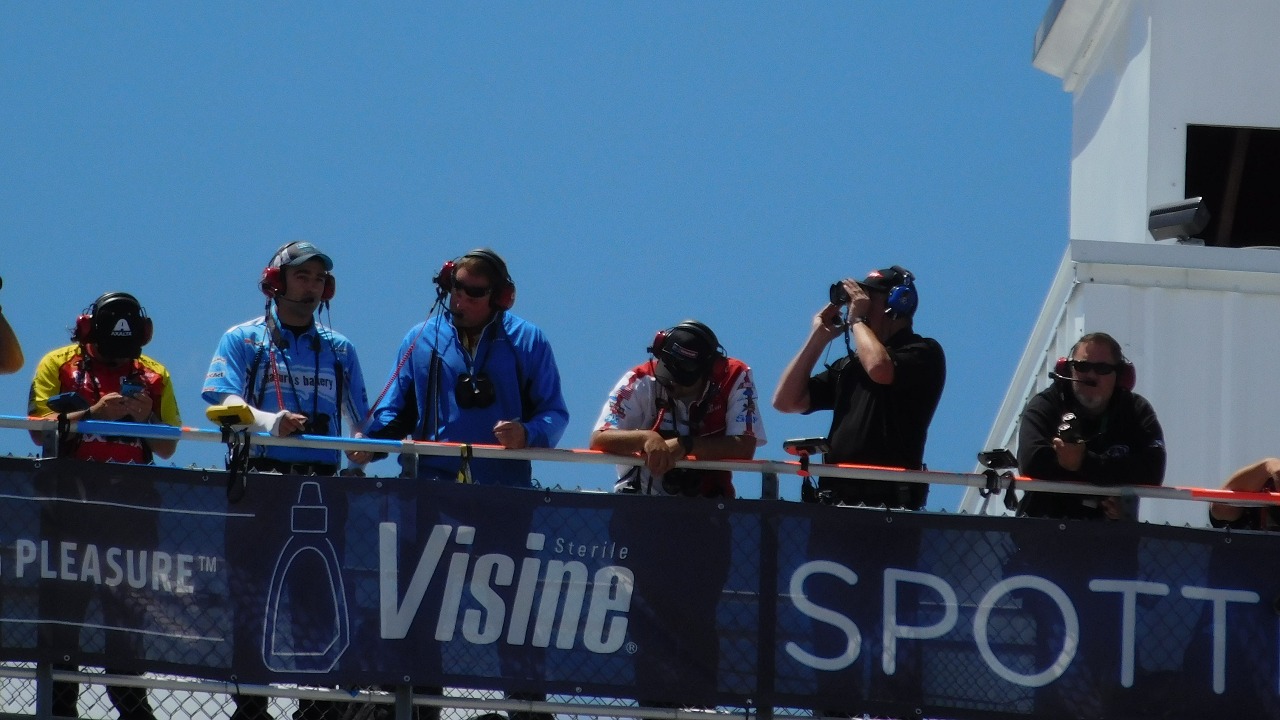
At 190 miles per hour, a stock car driver can see only a sliver of what is actually happening around them. The rest of the picture, from closing runs in the mirror to a spinning car three rows ahead, comes from a voice perched high above the track that turns chaos into clear instructions. That is the job of the NASCAR spotter, the unseen partner who keeps a driver alive, competitive, and calm when the race turns violent.
Spotters do far more than shout “wreck in turn four.” They manage information, risk, and emotion in real time, translating a storm of movement into a steady stream of words a driver can act on in fractions of a second. To understand how they guide drivers through the worst moments, I look at what they see, what they say, and how they decide when to push and when to protect.
The extra set of eyes that never blinks
Every NASCAR team assigns at least one spotter to stand high above the track, usually on a rooftop or grandstand, where they can see the full field and both straightaways. From that vantage point, they track their own car, the lanes forming around it, and any developing trouble, then feed that information to the driver through a dedicated radio channel. As detailed in What Do NASCAR Spotters Do, their core responsibility is to describe what is happening around the car in real time so the driver can make split-second decisions without guessing what might be lurking in a blind spot.
That role becomes most obvious when something goes wrong. When a car snaps sideways or a pack stacks up, the driver’s windshield fills with smoke and spinning sheet metal. The spotter, still seeing the whole scene from above, becomes the driver’s only reliable source of truth, calling out which lane is blocked, where the opening is, and whether to slow, stop, or punch through. Reporting on spotters has described them as the driver’s “eyes” in these moments, a phrase that captures how completely a competitor must trust that voice when visibility disappears in a wall of tire smoke and debris, as seen in first-hand accounts from Turn 12 at a road course.
Turning chaos into clear, simple language
In a major crash, the difference between a near miss and a destroyed car often comes down to how quickly and clearly a spotter can talk. The best spotters strip their language down to short, repeatable cues that a driver can process under heavy g-forces and adrenaline. Instead of long explanations, they use phrases like “inside, inside,” “clear,” or “back it down” to describe where other cars are and how aggressively the driver should react. Guidance from experienced spotters emphasizes that they must relay what is happening around the car, not what they think the driver should feel, which is why the communication is so clipped and specific in the examples captured in a Transcript of in-race radio.
That discipline extends beyond wrecks to every lap. Spotters constantly update their drivers on runs forming behind them, gaps to cars ahead, and where they are gaining or losing time. Advice shared with aspiring spotters highlights the importance of calling out lap times, gaps, and where a driver is faster or slower than rivals, so the driver can adjust lines and braking points without staring at the dash or mirrors. In one widely shared exchange, veterans stress that the more precisely a spotter can describe where a driver is gaining or losing ground, the more useful that information becomes in the heat of competition.
The safety net above the grandstands
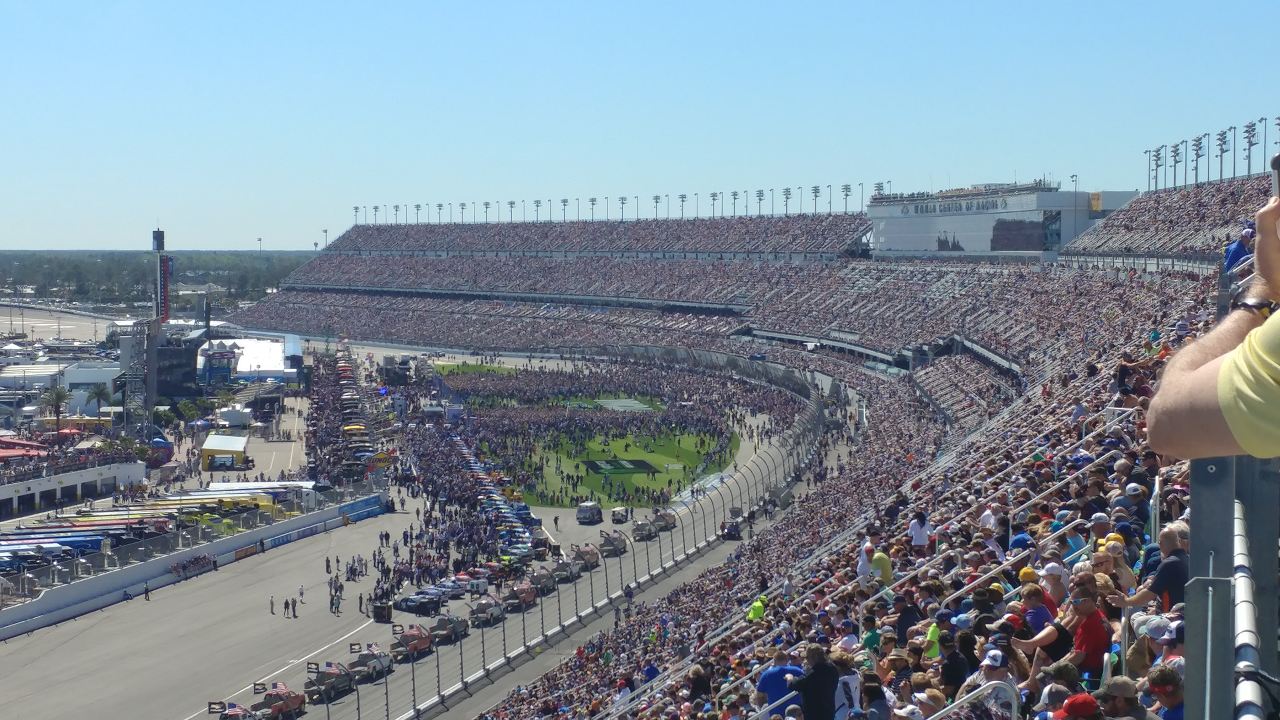
Spotters are not just performance coaches, they are a core part of NASCAR’s safety system. When a wreck starts, they are often the first to see it, sometimes even before the flag stand or race control, because they are focused on the pack around their own car. Their warnings give drivers an extra second to lift, change lanes, or brace for impact, which can be the difference between glancing contact and a direct hit. Reporting on Spotters has described them as holding one of the most crucial responsibilities in the sport, precisely because they balance the thrill of close racing with the constant need to keep drivers out of unnecessary danger.
That responsibility extends beyond the obvious pileups. Spotters monitor where cars are on corner entry and exit, how aggressive rivals are getting, and whether a driver is about to put themselves in a vulnerable position three-wide or in a bad lane. They also let a driver know when a move is safe or when it might trigger contact that could send someone into the wall, a nuance highlighted in What Do NASCAR Spotters Do, which notes that sometimes a spotter will green-light a bold move and other times urge patience. In that sense, they are constantly running risk calculations, weighing the potential gain of a pass against the chance of sparking the next caution.
Managing pressure, emotion, and trust
When a race unravels, the spotter’s voice often becomes the driver’s emotional anchor as much as their tactical guide. The pressure on the spotter is intense, because one missed call can end a day or worse, yet they must sound calm and confident even as cars slam the wall below them. First-hand descriptions of life atop the grandstands describe dry mouths, pounding hearts, and the constant awareness that a single word like “clear” carries enormous weight when a driver is inches from another car’s quarter panel. In one vivid account from turn 12, a spotter describes the job as a kind of controlled panic, where the only acceptable output is a steady, measured tone.
Trust is the currency that makes this work. Drivers must believe that their spotter will never overpromise a gap or sugarcoat a risk, because they are often committing to a move based solely on that voice. Over time, pairs develop their own shorthand and preferences, from how aggressively to call runs to how much information to give under caution. Guidance shared with new spotters emphasizes that learning a driver’s style, and tailoring the flow of information to what that driver can handle, is as important as raw eyesight. The more laps they log together, the more a spotter can anticipate what their driver will try next and shape their calls to either encourage a move or gently rein it in, a dynamic that surfaces repeatedly in both They and community advice threads.
Strategy, data, and the modern spotter’s toolkit
Modern NASCAR spotters operate in a far more data-rich environment than their predecessors, and that changes how they guide drivers through messy situations. In addition to watching the track, they often have access to timing screens, lap charts, and sometimes even basic telemetry, which lets them see where their driver is faster or slower and how strategies are unfolding. Advice shared with aspiring spotters underscores the value of calling out lap times and gaps, not just positions, so a driver knows whether a new line or adjustment is actually working relative to the cars around them, as described in the Such discussion.
Radio traffic from real races shows how this plays out in practice. A spotter might tell a driver to “stay behind the 17 car on the inside line” as the field forms up for a restart, then immediately pivot to warning about a car showing smoke or a lane that is stacking up, as captured in the Jun radio clip. In a multi-car crash, that same spotter will shift again, abandoning long-term strategy to focus on survival, calling out “check up, check up” or “go low, go low” as the wreck unfolds. The ability to move seamlessly between big-picture strategy and microsecond crisis management is what separates a competent spotter from a great one, and it is why detailed breakdowns like What Do NASCAR Spotters Do describe the job as one of the toughest and most important in the sport.
In the end, the chaos of a NASCAR race is not something a driver conquers alone. It is a shared task, split between the hands on the wheel and the eyes above the grandstands, between the instinct honed in the seat and the information flowing through a headset. When the field barrels into a blind corner or a wreck erupts in front of the leaders, the calm, clipped voice on the radio is often the only thing standing between a narrow escape and a destroyed car. That is how spotters quietly shape every lap, guiding drivers through the sport’s most dangerous moments with a few well chosen words.
More from Fast Lane Only: