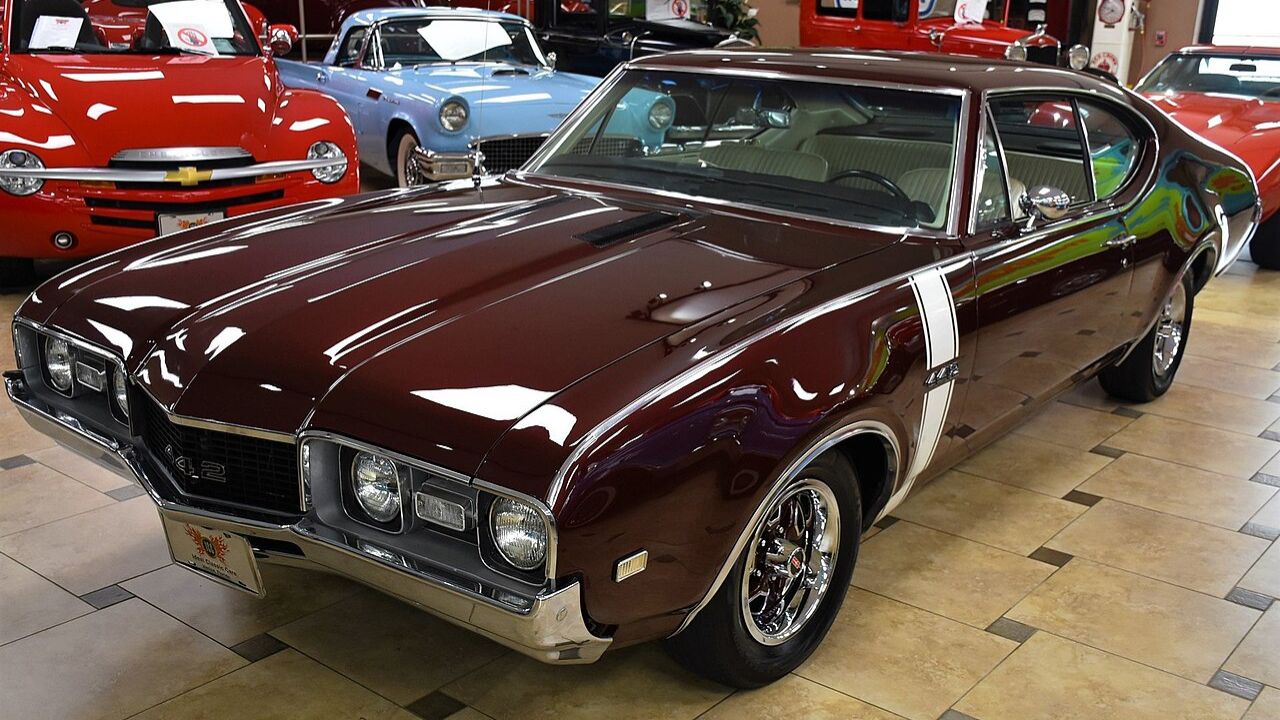
During the golden age of American muscle, the loudest cars often received the most attention. However, Oldsmobile took a different approach by creating performance machines that blended power, refinement, and engineering innovation. The Oldsmobile 442 became one of Detroit’s smartest muscle cars because it delivered serious performance while maintaining the comfort and sophistication expected from the brand.
A Performance Package Became a Legend
When Oldsmobile introduced the 442 in 1964, it was not originally designed as a standalone muscle car. Instead, it began as an optional performance package for the Cutlass and F-85 models. The name represented its original formula: four-barrel carburetor, four-speed manual transmission, and dual exhaust.
This approach allowed Oldsmobile to compete in the growing performance market without abandoning its reputation for building comfortable, upscale vehicles. Engineers focused on creating a balanced package rather than simply adding the largest engine available.
The 442 quickly gained attention because it offered strong acceleration, improved handling, and everyday drivability. Buyers could enjoy muscle car performance without sacrificing the refinement associated with Oldsmobile.
This combination helped the 442 stand apart from many competitors that focused primarily on horsepower numbers.
Engineering Made It More Than a Straight-Line Performer
While many muscle cars were built mainly for drag racing, Oldsmobile developed the 442 with a broader performance philosophy. Engineers improved suspension components, braking systems, and chassis tuning to create a car that could handle corners as well as straight roads.
The introduction of larger engines, including the powerful 400 and later 455 cubic-inch V8s, gave the 442 impressive acceleration. However, Oldsmobile continued emphasizing balance by pairing horsepower with improved control and stability.
Features such as heavy-duty suspension packages and performance gearing allowed drivers to experience the car’s full capabilities. The result was a muscle car that felt refined rather than simply aggressive.
Oldsmobile proved that performance and sophistication could successfully exist together in one vehicle.
The 442 Challenged Traditional Muscle Car Ideas
At a time when many manufacturers promoted their biggest engines and highest horsepower ratings, Oldsmobile focused on creating a complete driving experience. The 442 appealed to buyers who wanted speed but also appreciated comfort, quality, and advanced engineering.
Its interior featured more upscale materials than many competing muscle cars, reflecting Oldsmobile’s position between mainstream Chevrolet models and luxury-focused Buick products. This gave the 442 a unique identity within the GM performance lineup.
The car also benefited from Oldsmobile’s engineering reputation. The brand experimented with advanced engine designs and performance technologies, helping the 442 remain competitive throughout the muscle car era.
Rather than chasing trends, Oldsmobile created a performance car that matched its own philosophy.
A Legacy Built on Intelligent Performance
Today, the Oldsmobile 442 is recognized as one of the most underrated muscle cars of the 1960s and 1970s. Collectors appreciate its combination of powerful engines, refined styling, and thoughtful engineering that separated it from many competitors.
The 442 demonstrated that a muscle car did not need to be the most extreme vehicle on the road to become memorable. Its success came from delivering a balanced package that satisfied drivers looking for both excitement and everyday usability.
Although Oldsmobile is no longer part of the automotive landscape, the 442 remains a reminder of the brand’s ability to innovate and compete during Detroit’s performance era.
By combining intelligence with power, Oldsmobile quietly built one of the smartest muscle cars America ever produced.
More from Fast Lane Only
- Unboxing the WWII Jeep in a Crate
- 15 rare Chevys collectors are quietly buying
- 10 underrated V8s still worth hunting down
- Police notice this before you even roll window down
*Research for this article included AI assistance, with all final content reviewed by human editors