Ford is confronting how quickly major investments in electric vehicles can generate heavy losses when policy shocks and shifting consumer demand collide. After piling up tens of billions of dollars in electric-vehicle losses and absorbing a punishing tariff bill, the company is now effectively burning through money at a pace that approaches $4 billion a month as it writes down past projects and scrambles to redesign its future lineup. The result is a financial situation shaped by strategic missteps, political risk, and a late pivot toward smaller, lower-cost EVs.
Behind the headline numbers lies a deeper question: whether a 120-year-old automaker can absorb this kind of hit and still finance the next wave of technology that regulators and investors expect. Ford insists it can, pointing to strong revenue from gasoline and hybrid trucks and a reset of its electric strategy. The scale and speed of the recent losses, however, show how thin the margin for error has become.
From record revenue to record losses
Ford entered the EV race with momentum, generating about $185 billion in revenue in 2024 even as its electric division flooded the income statement with red ink. That year, the company sold a record 97,000 battery-powered vehicles, yet it still lost money on every electric model it delivered, a sign that scale alone could not outrun high battery costs and aggressive pricing from rivals. By 2025, the bill for that strategy was coming due, with the company slipping from a prior net income of $5.9 billion to a full-year loss that stunned investors and analysts alike.
Several reports put the 2025 net loss at roughly $8.2 billion, a sharp reversal described as one of Ford’s largest setbacks in years, even as overall sales volumes climbed and models like the F-150 Lightning continued to sell. The company’s own breakdown shows that its EV unit, branded Model e, was the main drag, with losses of $4.7 billion in 2023 and $5.07 billion in 2024 widening again to about $4.8 billion in 2025, and cumulative electric-vehicle deficits since 2022 topping $16 billion. Those figures explain why a single quarter produced an $11.1 billion loss driven by EV write-downs and why some analysts characterize the effort as a $35.1 billion miscalculation rather than a smooth transition.
Tariffs turn a difficult year into a crisis
Even without policy shocks, Ford’s EV investment would have strained its balance sheet, but tariffs intensified the financial pressure. The company has acknowledged that in 2025 it paid about $2 billion in import duties on auto parts, roughly double what it had expected earlier in the year, after a late ruling limited how far back it could apply a tariff-reduction measure. That surprise came on top of an already rising cost base, and executives have indicated that a similar tariff expense is likely again in 2026, creating a multiyear headwind that management cannot quickly offset.
The impact of those levies shows up directly in the bottom line. One detailed breakdown of Ford’s 2025 results attributes the full-year $8.2 billion loss largely to EV write-downs and to the $2 billion tariff hit, which erased much of the profit generated by the company’s gasoline and hybrid portfolio. A fire at a key Novelis aluminum supplier at the same time added further disruption to the production of high-margin trucks, compounding the damage from trade policy. Chief executive Jim Farley has warned that tariffs on imported auto parts would weigh heavily on companies with complex global supply chains, and Ford now illustrates how quickly those costs can pressure even a large, diversified automaker.
Model e’s mounting bill and the $4B-a-month burn
Behind the headline loss figures is a specific culprit: the Model e division that houses Ford’s battery-electric programs. Analysts tracking the unit calculate that from 2022 through 2025, Ford has lost more than $16 billion on EVs, a tally that includes $2.2 billion in 2022, $4.7 billion in 2023, $5.07 billion in 2024 and about $4.8 billion in 2025. One assessment notes that Model e accumulated these losses while selling only three core EV nameplates, underscoring how capital-intensive early electrification is for a legacy manufacturer that must fund new platforms while maintaining existing factories.
Ford itself is now guiding investors to expect the bleeding to continue. In Feb, the company told followers that its electric division, Ford Model e, is likely to lose another $4 billion to $4.5 billion in 2026, and that breakeven is not expected until 2029 when a lower-cost EV platform is in place, according to CFO Sherry House. That forecast, combined with the $19.5 billion in charges tied to canceling an electric truck and other EV projects, implies that at peak Ford is absorbing cash impacts averaging close to $4 billion per month when operating losses, write-downs, and tariff costs are combined. Investors saw the strain in the latest quarterly report, where Ford posted an adjusted EPS of $0.13, missing a $0.19 estimate, and where a massive EV-related charge produced an $11.1 billion loss in a single three-month stretch.
Recalibrating the EV bet without abandoning it
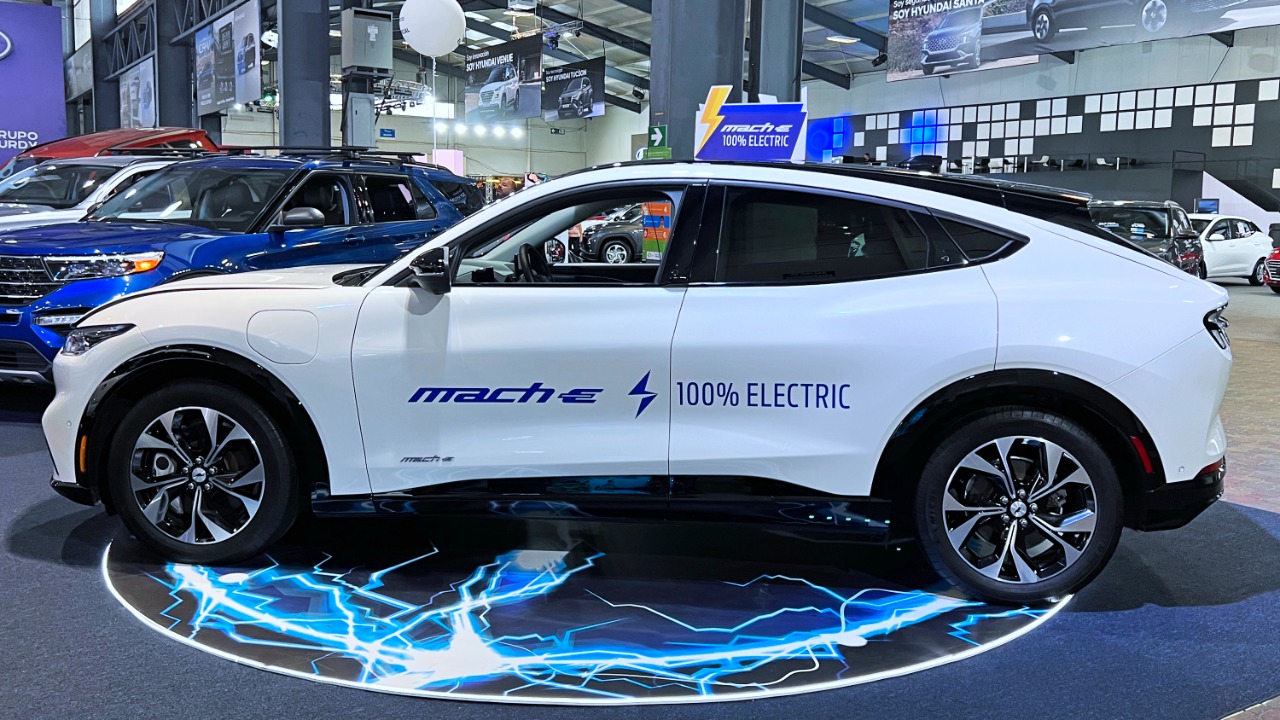
Faced with those numbers, Ford is not walking away from electrification, but it is rewriting the script. The company has already scrapped high-cost projects, including a next-generation electric pickup tied to its West Tennessee plant, and accepted that $19.5 billion hit as the price of shifting to smaller, more affordable vehicles. Executives now emphasize launching a mid-size electric pickup targeted at around $30,000, along with a new electric commercial van designed to share components and reduce costs. The goal, laid out in internal targets and public briefings, is to reach a companywide operating margin that can support both EV investment and shareholder returns by the end of the decade.
More from Fast Lane Only