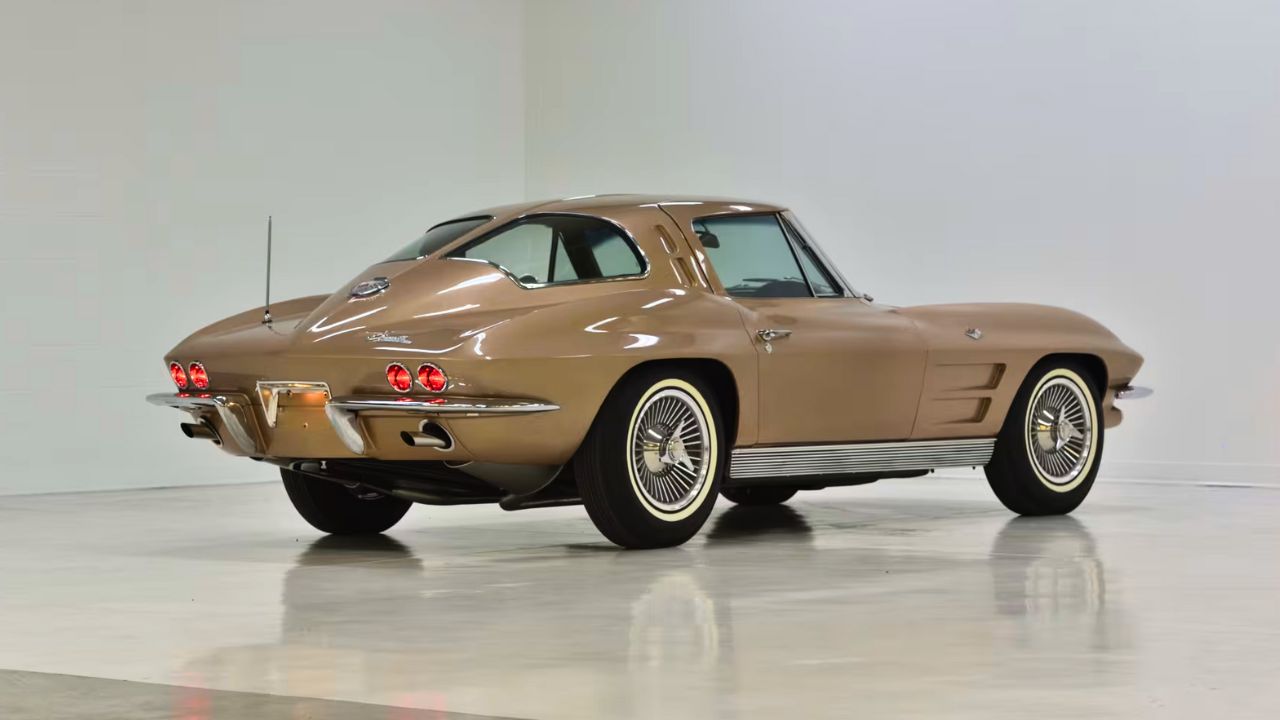
Today, the 1963 Chevrolet Corvette split-window coupe is one of the most recognizable American cars ever built.
Its dramatic styling, hidden headlights, sharp body lines, and distinctive divided rear window have made it a favorite among collectors, enthusiasts, and automotive historians. Original split-window Corvettes routinely command significant premiums in the collector market, and the design is widely considered one of the greatest achievements in American automotive history.
But when the car first appeared in showrooms, not everyone was impressed.
In fact, one of the Corvette’s most famous features—the split rear window that would later define the model—was controversial almost immediately. Critics questioned its practicality, some customers complained about visibility, and even people inside General Motors debated whether it should have been included in the first place.
The split-window Corvette’s modern reputation can make it easy to forget that its most celebrated design element was once viewed as a problem.
What eventually became an icon started as one of the most debated styling decisions of the 1960s.
The Corvette Needed a Transformation
By the early 1960s, Chevrolet’s sports car was at a crossroads.
The first-generation Corvette had helped establish America’s sports car market, but competition was increasing. European manufacturers continued to attract enthusiasts with sophisticated sports cars, and domestic rivals were beginning to pay closer attention to the growing performance segment.
Chevrolet needed something dramatic.
The company wanted a Corvette that looked more advanced, performed better, and could compete with the world’s best sports cars.
The result was the second-generation Corvette, known today as the C2.
Introduced for 1963, the new model represented a complete departure from its predecessor. Everything from the chassis to the suspension to the bodywork had been redesigned.
The transformation was so extensive that it effectively created an entirely new Corvette.
And at the center of that redesign stood a man with a very specific vision.
Bill Mitchell Wanted Something Different
The driving force behind much of the Corvette’s styling was Bill Mitchell.
Mitchell believed American cars could be both dramatic and sophisticated. Throughout his career, he pushed designers to create vehicles that inspired emotion rather than simply serving transportation needs.
For the new Corvette, Mitchell wanted a shape that looked exotic, athletic, and unmistakably modern.
One of the inspirations behind the design came from a concept vehicle known as the Sting Ray Racer, a competition-oriented machine developed by designer and engineer Larry Shinoda working under Mitchell’s direction.
The Sting Ray Racer featured dramatic proportions and a center spine running along portions of the body.
That design theme would eventually influence one of the Corvette’s most famous features.
The Birth of the Split Window
The split rear window wasn’t originally created to solve a practical problem.
It was primarily a styling statement.
Mitchell admired certain European sports cars that incorporated strong central design elements running through the body. He believed a divided rear window would give the Corvette a distinctive appearance while emphasizing the vehicle’s sleek roofline.
The design featured a narrow vertical bar separating two panes of rear glass.
Viewed from behind, the effect was striking.
The split window created symmetry and visual drama unlike anything else on the road.
It immediately distinguished the Corvette from every competitor.
No other American production car offered anything quite like it.
The feature became an instant conversation starter.
Unfortunately, not all of those conversations were positive.
Visibility Concerns Appeared Immediately
One of the biggest criticisms involved rearward visibility.
Sports cars already tended to have limited visibility compared to ordinary passenger vehicles. The Corvette’s fastback roofline naturally restricted the driver’s view to some extent.
Adding a divider directly in the middle of the rear window only made matters worse.
Drivers quickly discovered that the center bar partially obstructed their view behind the car.
The obstruction wasn’t catastrophic, but it was noticeable.
Customers voiced complaints.
Automotive journalists mentioned the issue in reviews.
Dealers heard concerns from prospective buyers.
For many people, the split window looked fantastic.
Living with it every day was another matter.
Some Chevrolet Executives Wanted It Gone
The visibility issue generated enough discussion that it eventually reached Chevrolet management.
According to accounts from the period, several executives questioned whether the design should remain in production.
From their perspective, the split window created a compromise without providing a practical benefit.
The feature looked dramatic, but it also generated customer complaints.
Not everyone inside Chevrolet shared Bill Mitchell’s enthusiasm for the design.
The disagreement highlighted a classic automotive conflict.
Should styling take priority over function?
Or should practicality always win?
The split-window Corvette became one of the clearest examples of that debate.
The Design Survived for Only One Year
Ultimately, practicality won.
For the 1964 model year, Chevrolet eliminated the divider and replaced the split window with a single-piece rear glass panel.
The change improved rear visibility and addressed many customer concerns.
From a functional standpoint, it was a sensible decision.
From a collector’s perspective, however, it transformed the 1963 model into something special.
Because the split-window design existed for only one model year, it immediately became unique within Corvette history.
Every subsequent Sting Ray coupe featured a conventional rear window.
The original design never returned.
That brief production run would later become a major factor in the car’s desirability.
The Rest of the Car Was Revolutionary
The irony of the split-window controversy is that it overshadowed many of the Corvette’s other innovations.
The 1963 Corvette introduced independent rear suspension, a major advancement that dramatically improved handling and ride quality.
The chassis was significantly more sophisticated than its predecessor.
Engine options ranged from capable small-block V8s to fuel-injected variants that delivered impressive performance for the era.
The car also featured hidden headlights and one of the most dramatic body designs ever produced by Chevrolet.
In many ways, the rear window was only a small part of a much larger automotive achievement.
Yet it became the feature people remembered most.
Collectors Changed the Narrative
During the years immediately following production, the split window remained an interesting historical footnote.
Over time, however, collector attitudes began to change.
Enthusiasts increasingly appreciated the feature’s uniqueness.
What once seemed impractical began to look distinctive.
What had generated complaints in 1963 now attracted admiration.
The design became a symbol of automotive creativity during an era when manufacturers were willing to take stylistic risks.
Collectors also recognized that the feature could never be replicated by another production-year Corvette.
The 1963 model stood alone.
That exclusivity enhanced its appeal.
As demand increased, values followed.
The One-Year Wonder
The split-window Corvette occupies a fascinating place in automotive history because its most famous feature existed for such a short time.
Many iconic designs enjoy long production runs that allow them to become familiar.
The split window achieved legendary status despite surviving for only a single model year.
Its rarity created intrigue.
Its appearance created recognition.
And its controversy created a story.
Together, those factors elevated the car beyond ordinary collector status.
The 1963 Corvette became more than a sports car.
It became an automotive milestone.
Why the Split Window Endures
More than sixty years after its debut, the split-window Corvette continues to captivate enthusiasts.
Part of that appeal comes from its beauty.
Part comes from its rarity.
Part comes from its role in Corvette history.
But perhaps the most interesting aspect is the fact that the feature nearly everyone celebrates today was once viewed as a mistake.
The split window reminds us that groundbreaking designs often face criticism when they’re new.
People tend to embrace innovation only after time has had a chance to reveal its significance.
The Corvette’s divided rear glass is a perfect example.
From Problem to Legend
The 1963 Chevrolet Corvette split-window coupe became iconic because it dared to prioritize style over convention.
Bill Mitchell’s vision produced one of the most distinctive sports car designs ever built, but it also created genuine controversy. Critics questioned visibility, customers complained, and Chevrolet ultimately abandoned the feature after just one year.
Yet that decision helped create the legend.
The split window’s short lifespan transformed it into a symbol of bold design and automotive individuality.
What began as a disputed styling experiment eventually became one of the most celebrated features in Corvette history.
Today, enthusiasts view the split-window coupe as a masterpiece.
But its journey from controversy to icon is a reminder that some of the most beloved automotive designs were not universally loved when they first appeared.
Sometimes a legend needs time to become one.
More from Fast Lane Only