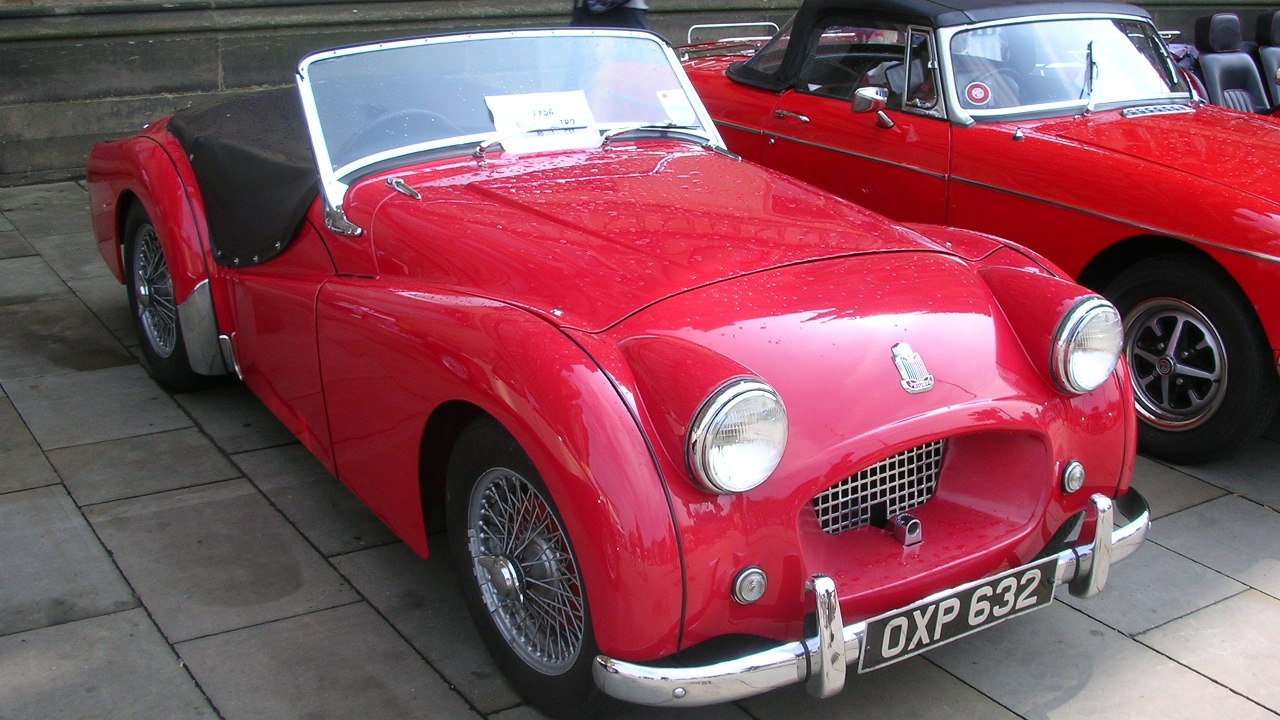
When the Triumph TR2 arrived in American showrooms in the mid 1950s, it landed in a landscape dominated by chrome heavy domestic cruisers and soft riding sedans. Against that backdrop, a low slung British roadster that prioritized speed, simplicity, and driver involvement felt almost confrontational. The 1954 Triumph TR2 did not just offer an alternative, it challenged American assumptions about what a sports car should be and how much performance buyers could demand for their money.
A British upstart aimed squarely at America
The TR2 existed because Sir John Black decided that Triumph needed a true sports car that could sell in export markets, especially the United States, rather than another conservative saloon. After he tried and failed to buy Morgan, he pushed his own company to create a rival that would be light, compact, and fast enough to compete with established European names yet affordable to American enthusiasts who were used to domestic pricing. That determination produced a simple ladder frame chassis, a torquey four cylinder engine, and a body that sat low over the wheels, all of it engineered with the expectation that a large share of production would cross the Atlantic, as detailed in period accounts of Sir John Black and his push for a sports car.
By the time the TR2 reached American buyers in 1954, Triumph had already positioned it as the starting point of a new sports car line, with the model debuting in 53 and then being replaced by the TR3 in 55. That short production window underscored how aggressively Triumph was iterating to keep the car competitive, yet even the early long door examples, including the 1954 cars whose door skins ran down to the bottom of the rockers, delivered the core formula that would define the series. Contemporary descriptions of a 1954 long door car emphasize its compact proportions and purposeful stance, and note that the 2.0 liter engine was putting out around 65 horsepower in stock trim, a figure that sounds modest today but felt very different when paired with a light body and short gearing, as seen in listings for an early 1954 Triumph TR2.
Performance that embarrassed bigger American iron
What shocked American buyers most was not the TR2’s size or its sparse interior, it was how quickly it could cover ground compared with the larger domestic cars of the day. In an era when a typical family driveway might hold a white over light green 52 Chrysler 4 door sedan or a black 50 Buick, both substantial machines built for comfort and straight line cruising, the Triumph’s ability to slice along a winding road at speeds those sedans struggled to match was revelatory. Period snapshots of early import adopters show exactly that contrast, with the compact British sports car parked in front of those big American shapes, a visual reminder that the TR2 traded bulk and plushness for agility and feedback, as illustrated in images that place it alongside a 52 Chrysler and a 50 Buick.
On paper, the Triumph’s power output did not look intimidating next to American V8s, but the car’s low weight and short gearing meant it could reach high speeds and maintain them over distance, something that mattered to enthusiasts more than raw displacement. Buyers who were used to soft suspensions and light steering suddenly found themselves in a machine that demanded involvement, with direct controls and a chassis that communicated what the tires were doing. That focus on usable performance, rather than sheer size or luxury, was a key part of why the TR2 felt so disruptive in the United States, and it set expectations for later British sports cars that would follow the same template, as explained in modern Triumph TR2 buyer guides that trace the lineage back to the early 1950s.
Design that looked nothing like a Chevrolet Bel Air
Styling played an equally important role in the culture shock. In 1954 and 1955, one of the most popular American cars was the Chevrolet Bel Air, a model that embodied the domestic taste for generous chrome, two tone paint, and a sense of visual mass that made the car look substantial even when parked. The Triumph TR2, by contrast, sat low and narrow, with cut down doors, a simple grille, and minimal ornamentation, a look that made it appear almost fragile next to the Bel Air yet also more focused and athletic. Contemporary retrospectives on the 1954 and 1955 Chevrolet Bel Air highlight how that car was offered with power features and plush interiors, while the TR2’s cabin was basic, with simple gauges and thinly padded seats, a deliberate choice that signaled its priorities, as seen in discussions of the mid fifties Chevrolet Bel Air By comparison.
From the front, the TR2’s rounded fenders and small grille gave it a friendly face, but from the side, the long hood and short rear deck made its sporting intent clear, a proportion that modern enthusiasts still praise as one of Triumph’s most attractive designs. Present day reviewers, including presenters like Steph from iDrive Classic, describe the TR2 as one of the most beautiful sports cars the company ever built, noting how the low windscreen and simple body lines give it a timeless quality that stands apart from the more ornate American cars of the same period. That aesthetic difference was part of the appeal for early U.S. buyers, who saw in the TR2 not just a different way to drive but a different idea of what a car should look like, a point reinforced in video tours that linger on the car’s compact, uncluttered shape and refer to it as a standout of the 1950s Classic and sports car scene.
Racing credibility that translated to the showroom
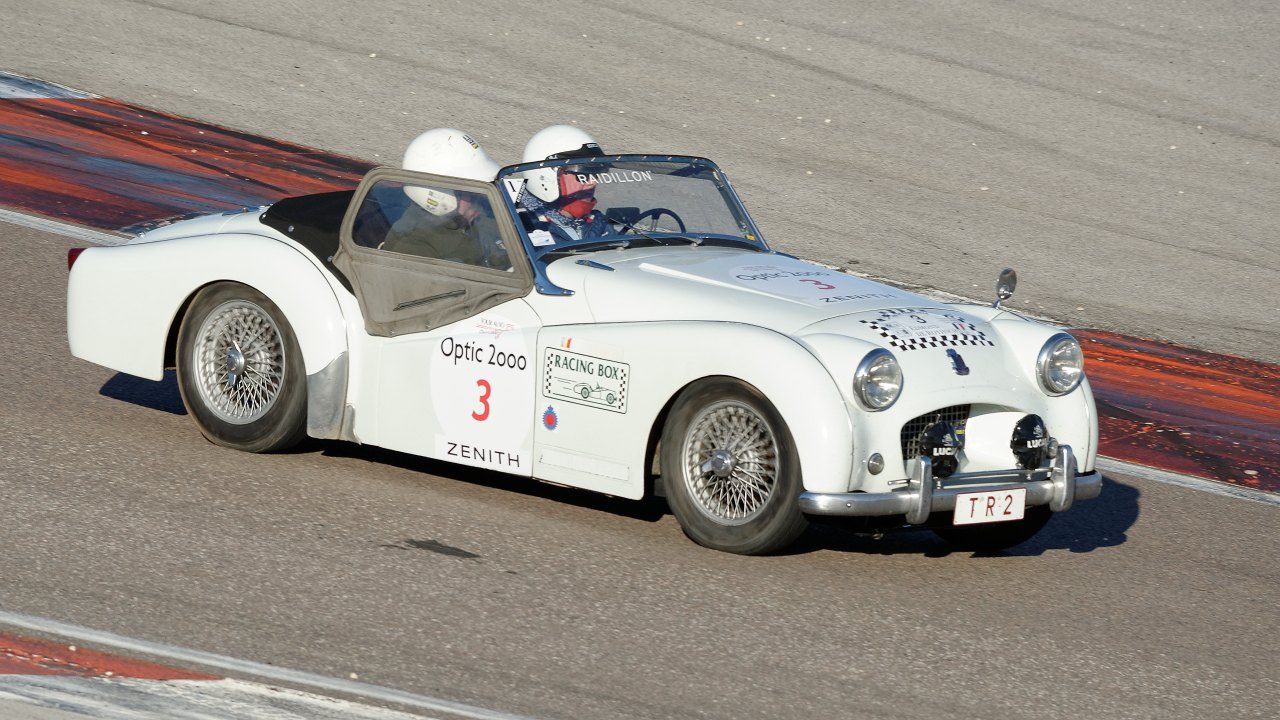
The TR2 did not rely solely on showroom charm to win over American enthusiasts, it also built a competition record that gave the little Triumph serious credibility. Works prepared TR2s were entered in major endurance events, including Le Mans, where they demonstrated that the basic design could survive high speed running for hours at a time. One particularly notable car, later offered through Silverstone Auctions as part of a Classic Motor Show sale, had been both a works Le Mans entry and owned by King Hussein of Jordan, a combination of racing and royal provenance that underlined how far the TR2’s reputation had traveled. The auction listing for that car emphasized its expected sale range in pounds sterling and its status as a factory backed machine, underscoring how a model that began as an affordable sports car had become a collectible with serious historical weight, as documented in coverage of the Silverstone Auctions Classic Motor Show entry.
For American buyers in the 1950s, that kind of competition pedigree mattered, especially to those who were beginning to explore club racing and rallying. The idea that the same basic car they could buy from a dealer had proven itself at Le Mans made the TR2 feel more serious than some domestic attempts at sporty models, which often prioritized styling over genuine performance. That connection between track and street helped justify the compromises in comfort and practicality, and it laid the groundwork for Triumph’s later successes with the TR3 and beyond, models that would continue to trade on the image created by those early works entries and their high profile owners.
How the TR2’s legacy still shapes collector expectations
Today, the 1954 Triumph TR2 occupies a special place in the collector market, particularly among enthusiasts who value driving experience over outright rarity or luxury. Buyer guides describe it as the car where it all began for Triumph’s TR line, noting that it debuted in 53 and was replaced by the TR3 in 55, yet still feels surprisingly usable on modern roads. They point out that while the TR2 itself did not introduce disc brakes as standard, The Triumph sports car family would later become noteworthy for bringing that technology to British production cars, a reminder that this lineage was often at the forefront of making racing style hardware available to ordinary drivers, as explained in technical overviews of The Triumph TR2 and its braking options.
Modern owners and specialists also stress how the TR2’s simplicity makes it relatively approachable to maintain, even as parts of the car, such as the early long door bodywork, have become talking points in their own right. Listings for surviving 1954 examples highlight details like the extended door skins and period correct mechanical specification, while also noting upgrades that can make the cars more usable, such as improved cooling or brake components that echo later developments in the TR range. That blend of historical authenticity and practical enhancement reflects the same balance that first attracted American buyers in the 1950s, who were willing to trade some comfort for a purer driving experience, and it shows how the shock of that original encounter with a small, fast British roadster continues to influence what enthusiasts expect from a classic sports car today.
More from Fast Lane Only: