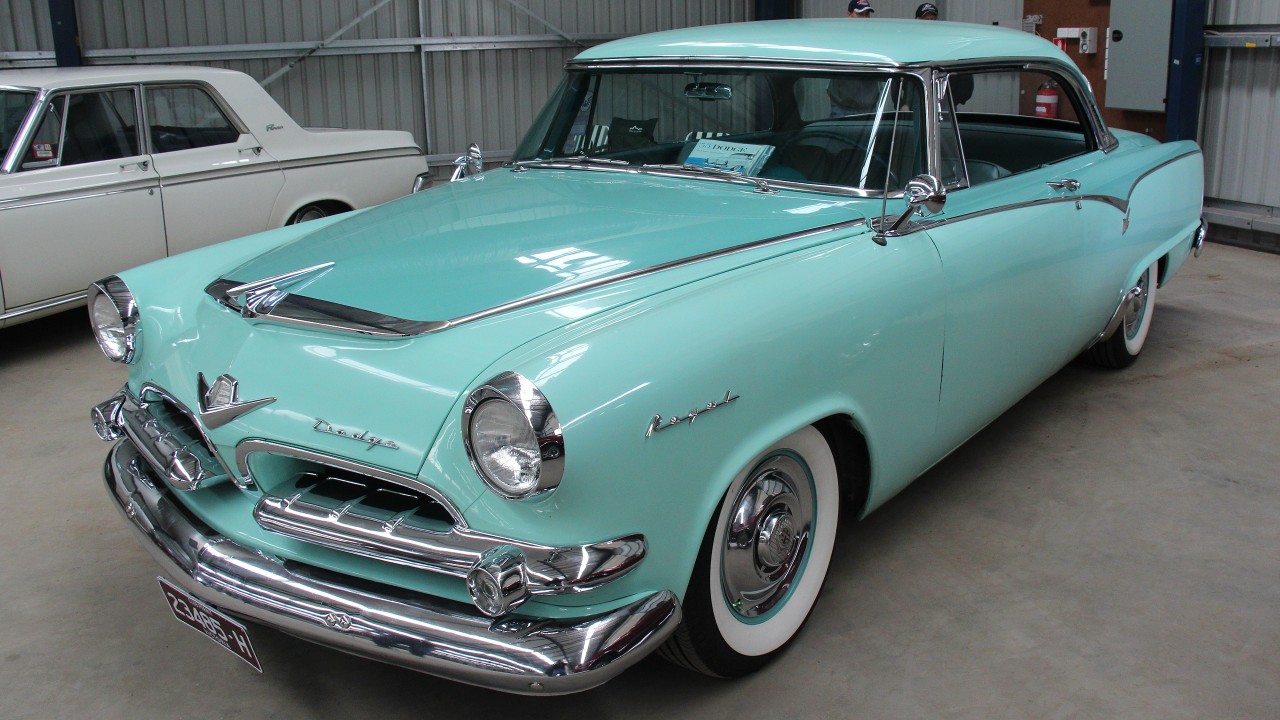
The 1955 Dodge Custom Royal arrived as more than a new top trim. It was Dodge’s bid to climb out of the sales basement and into the American prestige conversation, using bold styling, bigger engines, and carefully staged glamour to chase buyers who might otherwise have walked straight to General Motors and Ford showrooms. In a single model year, the Custom Royal turned a struggling brand into a contender in the mid priced, style conscious market that defined the 1950s.
From near collapse to a prestige flagship
By the early 1950s, Dodge’s parent, the Chrysler Corporation, was in serious trouble. Driven almost out of business in 1953 and 1954, the company had to secure a $250 m loan from Prudenti, described as a $250 million lifeline, to fund a complete redesign of its lineup and avoid ceding the market to rivals. That cash infusion set the stage for a new generation of cars, and Dodge needed a halo model that could signal the turnaround to buyers who had watched Its sales sag while sales at General Motors and Ford soared.
The Dodge Custom Royal became that halo. Introduced for the 1955 model year in the United States for the first of a five year run, The Dodge Custom Royal sat at the top of the Dodge range, above the base level Dodge Coronet and the mid tier Royal. It was positioned as the flagship model, with all hardtop coupe and Custom Royal only convertible versions marketed under the Custom Royal Lanc name, a subtle but telling attempt to give the car a more aristocratic ring. In a market where nameplates like Bel Air and Fairlane were already shorthand for aspirational living, Dodge was clearly signaling that it wanted a place at the same table.
Styling into the “Forward Look” spotlight
Prestige in the mid 1950s started with styling, and Dodge’s designers treated the Custom Royal as their most visible showcase. Chrysler Corp promoted its 1955 designs under the banner of The Forward Look, a phrase that captured the low, sleek, and slightly aggressive stance that Virgil Exner’s studios brought to the entire corporation. The Custom Royal wore that new language with particular flair, using sweeping side trim, a pronounced grille, and a longer, lower profile to distance itself from the upright, conservative Dodges that had helped sink the brand’s fortunes earlier in the decade.
The Custom Royal Lanc hardtops and convertibles pushed this visual drama even further. Period coverage of a 1955 Dodge Custom Royal Lancer convertible, and later derivatives like the Dodge Coronet Custom Royal Lancer Convertible Coral and White My Car Story example filmed with Lou Costabile, underline how two tone paint, abundant chrome, and wraparound glass turned these cars into rolling billboards for The Forward Look. A feature on a surviving Custom Royal Lancer convertible describes it as part of THE DAWN OF THE FORWARD LOOK, a phrase that captures how Dodge used this model to announce that it was no longer content to be the plain, practical choice. Instead, the Custom Royal was meant to be seen in driveways and downtown curbsides as a visual equal to anything from General Motors and Ford.
Powertrains that backed up the image
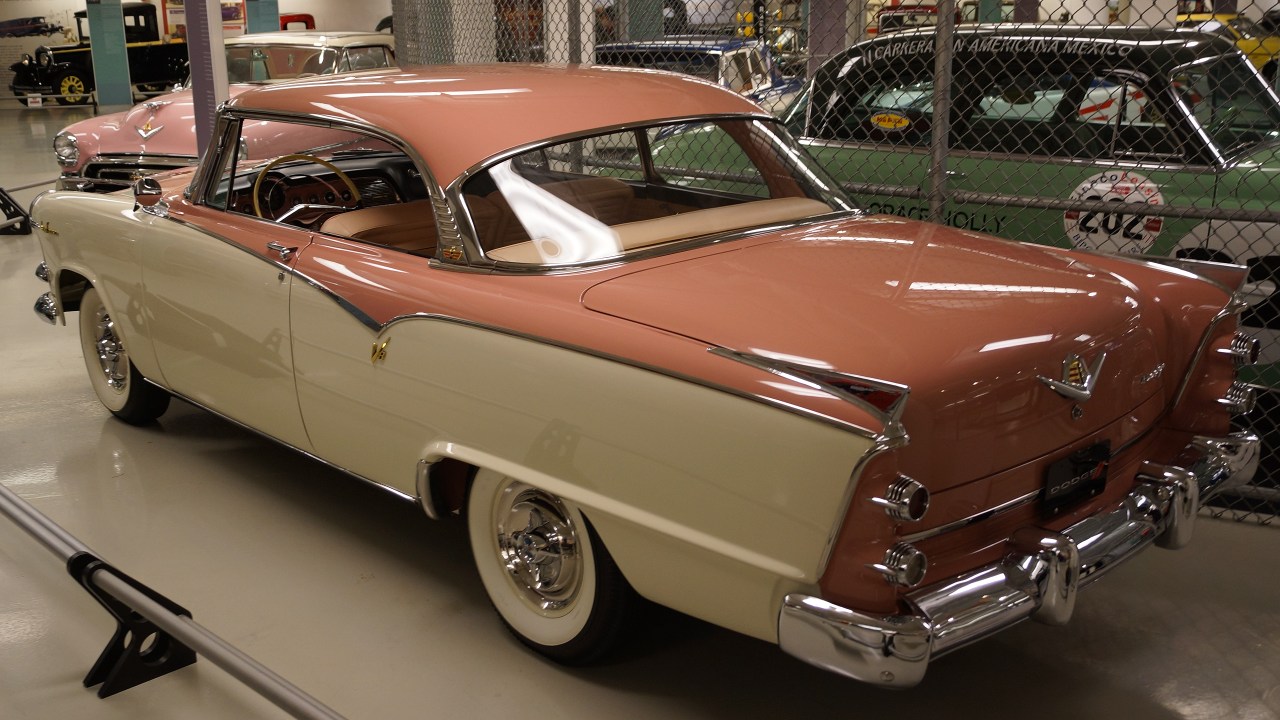
Prestige styling would have rung hollow if the Custom Royal had not delivered on performance, so Dodge paired its flagship with serious hardware. Contemporary technical summaries of the 1955 Dodge note that the top models could be ordered with the CID Super Red Ram engine, a V8 that gave the Custom Royal the kind of effortless highway speed that mid century buyers increasingly expected. In a modern driving review, Zach, who tested a 1955 Dodge Custom Royal, highlights a 4.4 L V8 under the hood, underscoring that even by today’s standards the car’s displacement and torque feel substantial.
Other enthusiasts have documented Hemi powered 1955 Dodge Custom Royal examples, including a project that involved trading a clutch for a Hemi powered 1955 Dodge Custom, reinforcing that Dodge treated its top trim as the natural home for its most advanced engines. This mechanical emphasis aligned with Chrysler Corp’s broader push to market its 1955 lineup as part of a 100-Million dollar engineering and styling investment, a figure used in period advertising to suggest that no expense had been spared. By giving the Custom Royal access to the strongest powertrains in the Dodge stable, the company made sure the car’s performance lived up to its visual promise and helped justify its position above the Dodge Coronet and Royal in the showroom hierarchy.
Luxury cues and niche variants aimed at status buyers
Inside and out, the Custom Royal layered on details that were meant to read as luxury, even if Dodge stopped short of calling the car a full luxury model. Trim differences between the Custom Royal and lower Dodges included more elaborate side moldings, richer interior fabrics, and additional brightwork, all of which signaled to neighbors and coworkers that the owner had paid for something more than basic transportation. The Custom Royal Lanc convertible, in particular, became a prestige object in its own right, with collectors today describing surviving cars as showstoppers that still wow their owners decades later.
Dodge also experimented with niche variants that pushed the prestige message into specific demographics. One of the most striking was the Custom Royal Lancer La Femme, a package aimed at women buyers that combined pastel exterior colors, coordinated interiors, and matching accessories. While the provided sources focus more on related cars like the Dodge Coronet Custom Royal Lancer Convertible Coral and White My Car Story example, the broader pattern is clear: Dodge used color, trim, and limited run options to create a sense of exclusivity around its top models. These strategies mirrored what General Motors and Ford were doing with their own special editions, and they helped the Custom Royal function as a social statement as much as a means of transportation.
How the Custom Royal reshaped Dodge’s place in the market
The real measure of the 1955 Dodge Custom Royal’s prestige chase lies in how it altered perceptions of the brand. Before the Forward Look cars arrived, Dodge was often seen as a conservative, middle of the road choice, overshadowed by flashier offerings from Chevrolet, Pontiac, and Ford. The combination of the Custom Royal’s styling, its access to engines like the CID Super Red Ram and the 4.4 L V8, and its carefully curated trim packages helped Dodge project a new identity as a style and performance player. Coverage of the 1955 Dodge Royal Lancer, a slightly lower trim that still shared much of the Custom Royal’s visual drama, notes how Chrysler Corp used these cars to inject pizzazz into showrooms that had previously struggled to attract attention.
That repositioning mattered because the mid 1950s American car market was as much about image as it was about engineering. Later commentators have observed that if you asked an older American which luxury car represented the United States in the 1950s, they might point first to the obvious prestige brands, but the fact that Dodge is now part of that conversation among enthusiasts speaks to how effectively the Custom Royal elevated the marque. The model’s continued presence in collector circles, from Hemi powered builds to meticulously restored Custom Royal Lancer convertibles featured in DECEMBER retrospectives on THE DAWN OF THE FORWARD LOOK, shows that Dodge’s 1955 flagship did more than chase prestige for a single season. It helped pull the entire brand out of crisis, justified the $250 million gamble that kept Chrysler Corporation in the game, and left a legacy that still shapes how I think about Dodge’s place in the golden age of American cars.