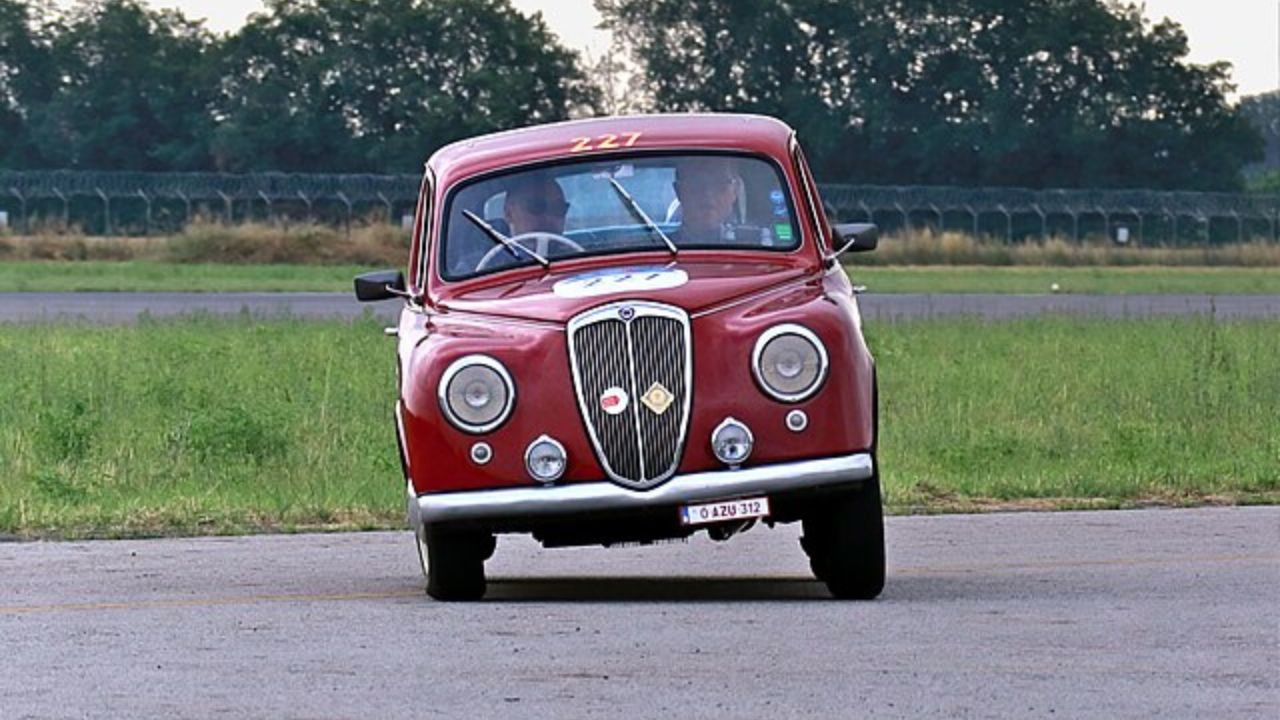
The 1955 Lancia Appia arrived as a compact family saloon that quietly rewrote the rulebook on how much sophistication you could pack into a small car. Instead of chasing outright speed, it blended advanced engineering with a surprisingly cosseting cabin, turning everyday journeys into something calmer and more precise than rivals could manage. When I look at the first-series Appia today, I see a car that treated comfort and technology not as opposing goals but as two sides of the same carefully machined coin.
Engineering brains in a compact package
From the start, the Appia was built around a piece of clever hardware that set the tone for the whole car, a compact narrow-angle V4 that made the engine bay feel like a watchmaker’s bench rather than a blacksmith’s shop. In terms of engine, it was still based on the company’s own V4 single bloc engine with aluminium cylinder head, a layout that kept the powerplant short and light while freeing up space for passengers and luggage. Although the unit was modest in capacity, the way it was packaged and refined mattered more than raw output, and that decision is what let the 1955 Appia balance everyday usability with a quietly high-tech character, as detailed in period descriptions of the Lancia Appia First Series.
The chassis followed the same philosophy of discreet sophistication, with The Appia using a simple but very rigid body structure that underpinned its reputation as an indestructible compact car. To save weight, the first series combined that stiffness with careful construction so the car weighed only 820 kg, which in turn allowed softer suspension tuning without turning the handling to mush. When I picture that light, rigid shell working with the compact V4, I see a car engineered to feel solid and reassuring on rough roads while still responding crisply to steering inputs, a balance that contemporary accounts of The Appia S1 underline again and again.
Suspension and structure as comfort technology
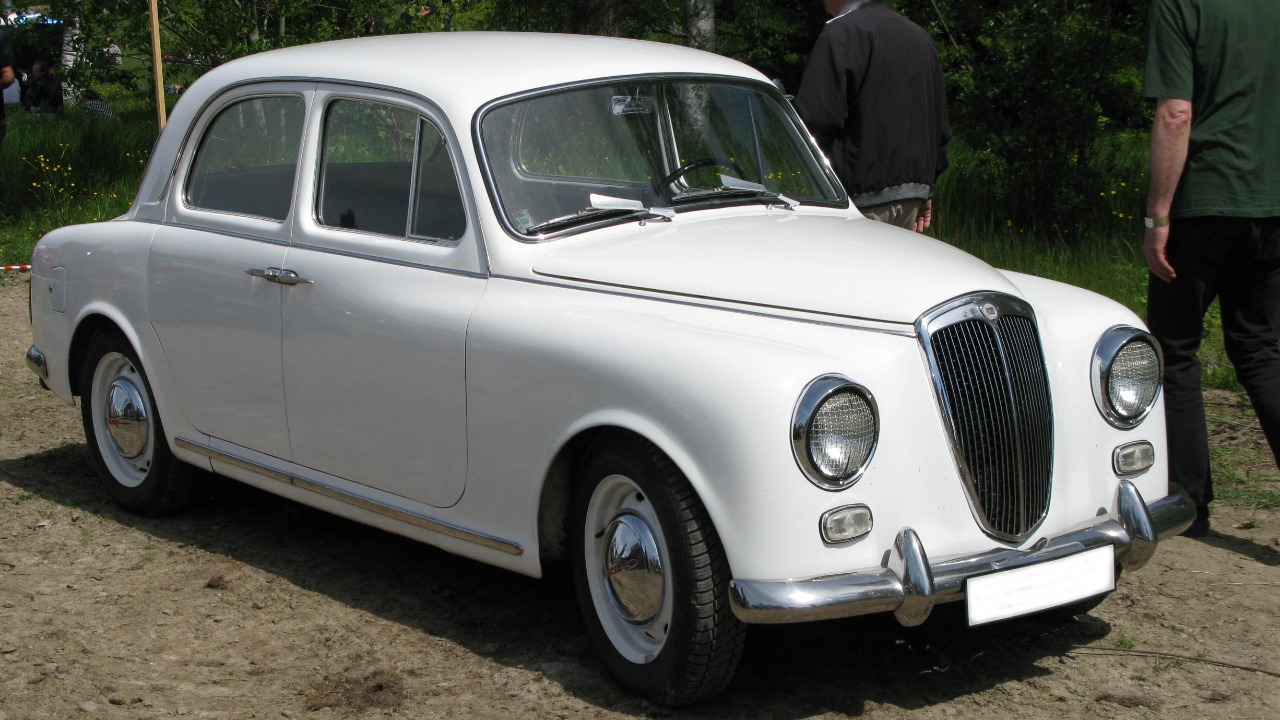
Under the skin, the Appia Berlina used unibody construction at a time when many small saloons still relied on separate frames, and that choice did more for comfort than any amount of extra chrome. By tying the body and chassis together, Lancia could tune out rattles and flex, so the car felt like a single piece rather than a collection of parts buzzing in loose formation. Front suspension was of Lancia’s sliding pillar type, with hydraulic damping that let the wheels move independently in a long, smooth stroke, and that hardware turned cobbled streets into something closer to a gentle vibration than a full-body shake, as the technical breakdown of The Appia Berlina makes clear.
That structural calm paid off inside the cabin, where the Appia 1st Series Berlina had a well-built interior that felt more like a scaled-down luxury car than a basic runabout. In the tradition of Lancia, the Appia 1st Series Berlina paired quality materials with some rather awkward pedal placement and a steering wheel angle that could surprise modern drivers, yet the overall impression was of solidity and care. When I imagine settling into that interior, I can almost feel how the rigid shell and sliding pillar front end would filter out the worst of the road, a sensation that period observers of the Appia Series Berlina describe with a mix of admiration and gentle critique.
Quiet refinement against louder rivals
On paper, the Appia did not shout about performance, yet in practice it delivered a kind of quiet, low-key excellence that set it apart from more extrovert contemporaries. When enthusiasts later compared it with cars like the Riley One-Point-Five, they noted how both models excel at quiet, low-key excellence, from slick four-speed gearboxes to a sense of mechanical polish that rewards unhurried driving. I read those comparisons and see a pattern, the Appia was not built to dominate a drag strip, it was built to make a cross-town trip feel calmer and more controlled, a point that comes through clearly in assessments of its quality street manners.
That same understated approach shows up in how the Appia evolved within Lancia’s own range, sitting as the “junior” Lancia beneath the larger Aurelia yet inheriting much of its big sibling’s engineering mindset. As the pre-war Aprilia gave way to the 1950 Aurelia, so too eventually did the “junior” Lancia, the pre-war Ardea being replaced by the Appia, and that lineage explains why the smaller car felt so grown up. When I trace that family tree, from Aprilia to Aurelia to Appia, I see a steady thread of innovation applied to everyday transport, a story that detailed histories of Lancia and Ardea help flesh out.
Design details that serve the passengers
Walk around a 1955 Appia and the styling looks almost demure, yet the body is full of decisions that quietly serve comfort and practicality. Robadr has found and posted one of the loveliest of the new European post-war cars, the Lancia Appia, and enthusiasts often point out how the absence of a middle pillar on some versions created a wide, airy opening that made getting in and out feel effortless. Like other Lancias of the period, the Appia used its proportions to carve out generous space for four adults within a compact footprint, a trick that modern city cars still struggle to match, as fans of the Lancia Appia like to highlight.
Inside, the comfort story continued with thoughtful ergonomics for the era, from supportive seats to clear instruments that made long drives less tiring even if some controls felt idiosyncratic. Described amusingly by the Quattroruote Collection as the Fiat’s antagonist par excellence, the Appia benefitted from Lancia’s tradition of building cars that felt a class above in finish and detailing for the car’s overall size. When I picture that contrast, I see a family choosing the Appia not because it was the cheapest option, but because its cabin felt like a small sanctuary from the noise and bustle outside, a perception that auction notes on the Appia Berlina still emphasize.
From family saloon to enthusiast’s technical showcase
What fascinates me most is how a car designed as a sensible family saloon has become a touchstone for enthusiasts who care about engineering elegance as much as style. Highlights and Distinct Features The Appia stands out for its advanced engineering, including the compact narrow-angle V4 engine, front sliding pillar suspension and front-hinged doors that remained a signature up to the end of Series III, and those ingredients now read like a checklist of what makes a classic feel special. When I talk to owners, they often describe the Appia as a car that reveals its depth slowly, the more you drive it, the more you notice how each technical choice supports a calmer, more comfortable experience, a view echoed in modern buyer guides that single out the Highlights and Distinct Features The Appia.
That reputation has even spilled over into the world of historic motorsport and specialist workshops, where engineers study how Lancia packaged so much sophistication into such a small footprint. Jan segments of recent video coverage show how Yano and his team must have been especially hardworked as they apply lessons from the Appia not only to restorations but also to the next generation of racing cars, treating its compact V4 and suspension layout as a kind of open textbook. Watching that, I am reminded that comfort and technology are not static achievements but ongoing conversations, and the way modern specialists engage with the Wild about the Lancia Appia story proves that a well-balanced 1955 saloon can still teach us something about how to make machines that are both clever and kind to their occupants.