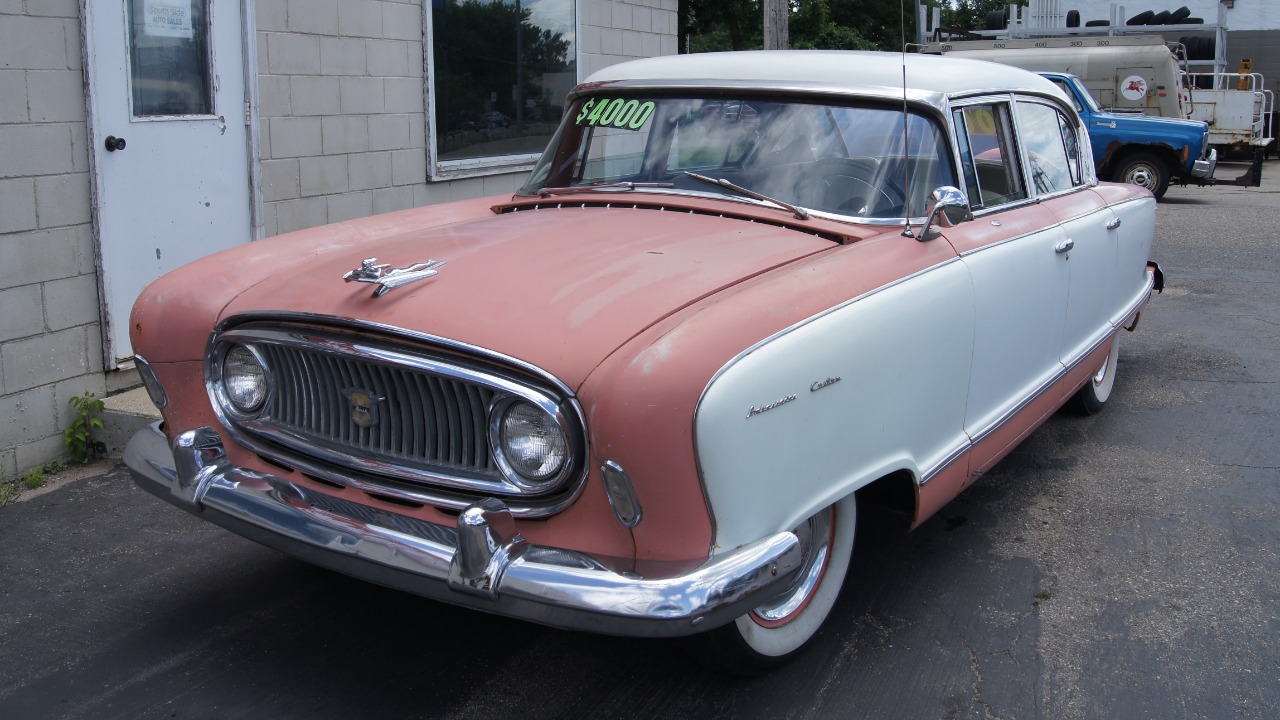
The 1955 Nash Statesman did not chase flash or brute power. It was engineered as a family car that made everyday life easier, cheaper, and more comfortable at a time when many rivals were busy adding chrome and cubic inches. By looking closely at how it was designed and equipped, I see a clear pattern: practicality was not an afterthought, it was the organizing principle.
Practicality in the sheet metal
When I look at the 1955 Nash Statesman, the first thing that stands out is how much of its practicality is literally baked into the bodywork. The car’s rounded, almost pod-like profile was not just a styling quirk, it reduced visual bulk and helped with aerodynamics at typical highway speeds, which mattered for fuel economy in an era when most sedans were growing longer and squarer. Nash engineers even reworked the front wheel openings so the car could maneuver more easily in tight spaces, a small but telling choice that signaled they were thinking about crowded city streets and narrow driveways rather than just showroom glamour.
That decision to raise the front wheel arches slightly gave the Statesman a noticeably better turning radius, which made parking and low speed driving less of a chore for the average owner. Period walkarounds describe how the reshaped arches improved the way the front wheels could swing, turning what might have been a bulky mid‑century sedan into something that felt more nimble in daily use, and they frame the car as a kind of “Drive‑In dream machine” that was easy to live with on real roads, not just on brochures, as seen in a detailed 40K mile Statesman tour.
A frugal heart under the hood
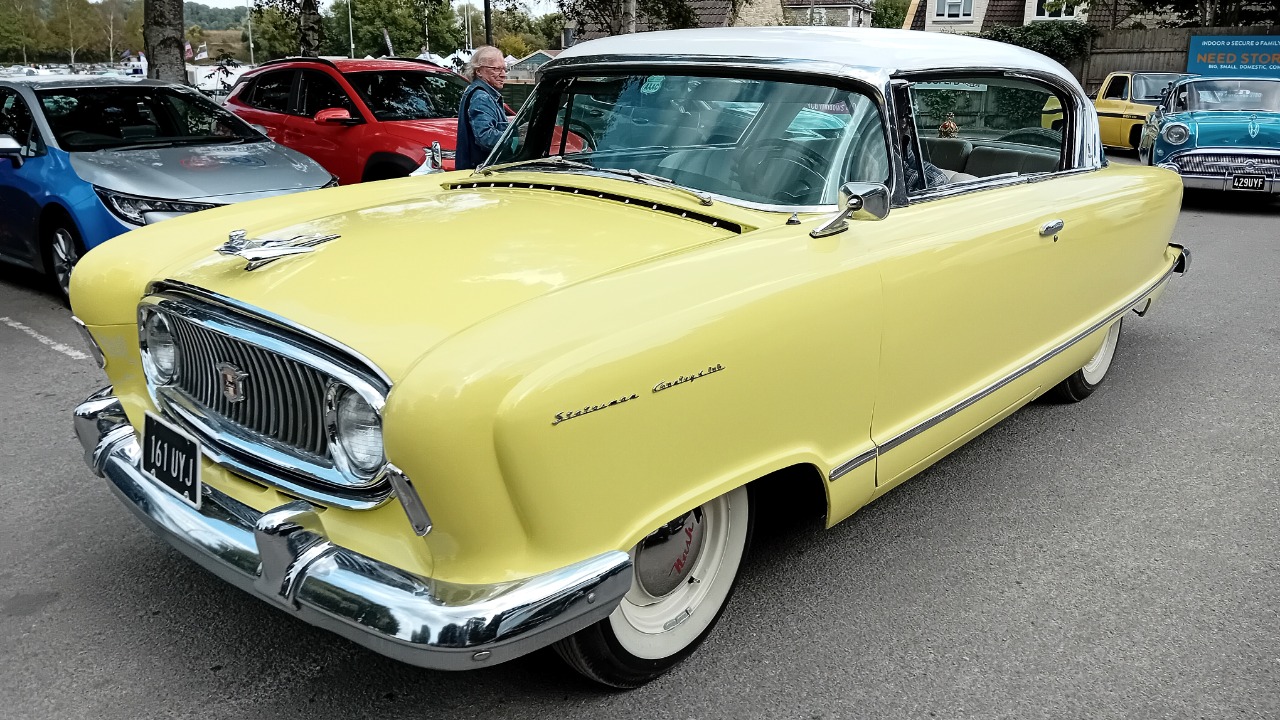
Under that rounded body, the Statesman’s mechanical choices were just as grounded in everyday needs. Instead of chasing the V8 horsepower race that was heating up in Detroit, Nash stuck with inline‑six engines it had been refining since the 1920s, a conservative move that kept costs down and reliability up. By the mid‑1950s those sixes had grown from 3.0 to 3.2 liters, enough to move a family sedan with confidence while still being simple to service at the corner garage, and that balance of modest displacement and proven hardware fit perfectly with a brand that was openly focused on saving money rather than impressing at the drag strip.
To me, that long running six‑cylinder program is one of the clearest signs that Nash prioritized sensible ownership over headline numbers. The company could have rushed out a new, more complex engine to match rivals, but instead it doubled down on a powerplant that mechanics already knew and that buyers trusted, accepting that the Statesman would never be the quickest car on the block. Contemporary analysis of the model underscores how Nash was all about saving money by continuing to use those inline‑six engines, and that choice helped keep the sticker price and running costs within reach of middle class families.
Comfort and space for real families
Inside the 1955 Nash Statesman, practicality showed up in how the cabin was laid out and how the car was meant to be used day after day. The wide, sofa‑like bench seats were designed to carry a full load of passengers without anyone feeling squeezed, and the tall roofline created generous headroom that made entry and exit easier for older relatives and small children alike. Instead of sculpted, bucketed forms that looked sporty but wasted space, Nash favored simple, flat cushions that maximized usable seating width, a decision that made sense for families who routinely packed the car for school runs, church, and long highway trips.
I also see the Statesman’s interior as a rolling living room, a place where comfort took precedence over flash. The large glass area gave good outward visibility, which reduced fatigue on long drives and made it easier to place the car in traffic or when backing into a tight spot. Combined with the improved turning radius from those reworked front wheel arches, the Statesman felt less intimidating to drive than its size might suggest, especially for new drivers or those who were trading up from smaller prewar cars. In that way, the cabin and chassis worked together to deliver a car that was not just roomy on paper but genuinely friendly to live with.
Marketing a sensible car in a flashy era
Practicality alone does not sell cars, so Nash and its parent company had to find a way to make the Statesman’s virtues sound exciting. By the mid‑1950s, Nash was part of American Motors, and the company’s promotional language leaned into the idea that this was a modern, efficient alternative to the excesses coming out of the biggest factories. Period promotional reels talk about how “across the nation the wires now are humming from Chicago Detroit St Louis” with news of American Motors and its latest models, framing the Statesman as part of a broader, forward looking lineup that promised value and innovation rather than just more chrome and cylinders, a pitch that comes through clearly in a surviving 1955 Nash review by Bill Stearn.
Listening to that kind of period marketing, I hear a company trying to make thrift sound aspirational. Instead of apologizing for its smaller, older‑design engines or its focus on comfort, American Motors presented those traits as smart choices for buyers who cared about their budgets and their families. The repeated references to cities like Chicago Detroit St Louis were not accidental, they were meant to signal that this was a car tuned to the needs of real urban and suburban drivers, people who had to navigate crowded streets, pay for their own fuel, and keep a car running for years. In that context, the Statesman’s practical engineering became a selling point, not a compromise.
Why the Statesman’s priorities still matter
Looking back from today, I find the 1955 Nash Statesman surprisingly modern in its priorities. It did not try to be all things to all people, and it did not pretend to be a race car in family car clothing. Instead, it focused on maneuverability, reasonable performance from a proven inline‑six, and a cabin that could genuinely handle a family’s daily routine, all wrapped in a body that was distinctive without being wasteful. Those choices may have looked conservative next to some of the wilder fins and V8 badges of the era, but they anticipated the way many buyers now think about cars as long term tools rather than short term status symbols.
For me, that is the lasting lesson of the Statesman: practicality can be a design philosophy, not just a checklist of features. By raising the front wheel arches to improve the turning circle, by keeping faith with a durable engine family that had been evolving since the 1920s, and by building an interior that treated passengers like people rather than props, Nash created a car that quietly served its owners instead of shouting for attention. In a market that often rewards spectacle, the 1955 Nash Statesman showed how a clear, everyday focus could still produce something distinctive, and that is why its sensible character continues to stand out decades later.
More from Fast Lane Only: