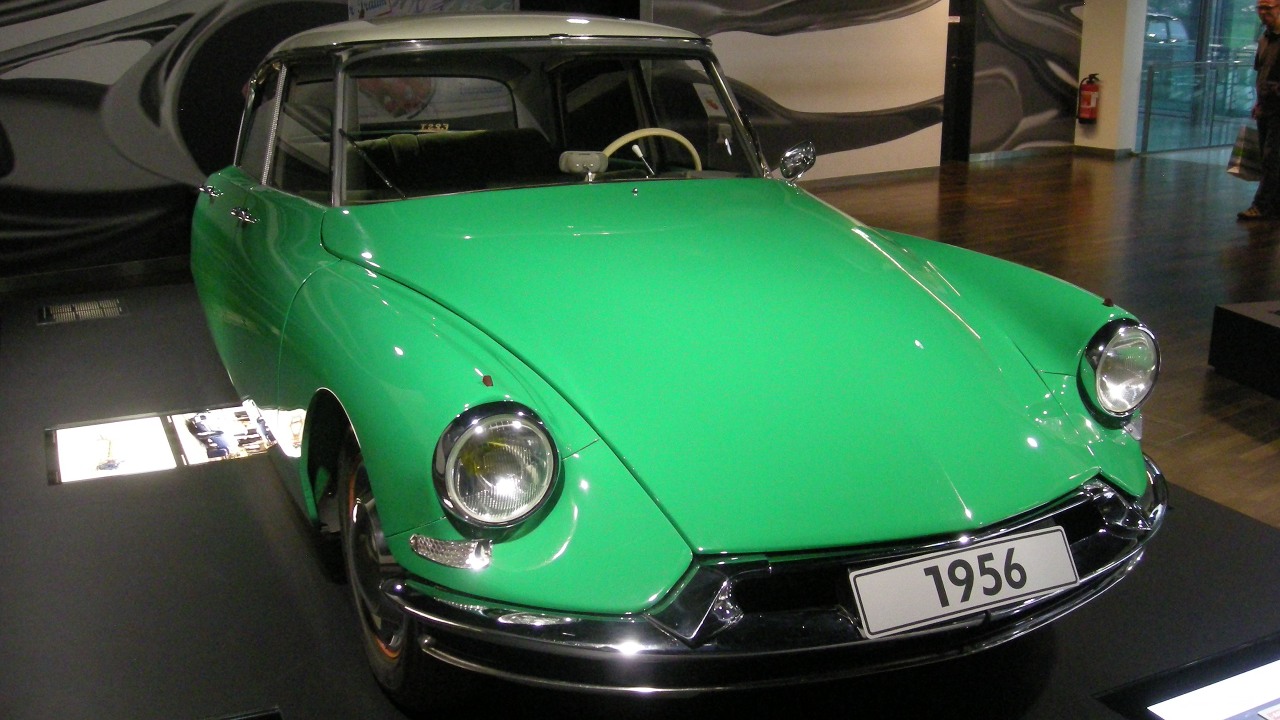
The Citroën DS arrived in the mid‑1950s looking less like a family saloon and more like a visiting spacecraft, yet its real shock lay under the skin. By 1956, engineers and rival carmakers were still trying to understand how one production car could rewrite assumptions about suspension, braking, steering and even crash safety in a single stroke. I see the DS not just as a stylish outlier, but as a technical earthquake that exposed how conservative the rest of the industry had become.
What made the DS so disruptive was the way its radical ideas worked together as a coherent system rather than as isolated gimmicks. Its hydropneumatic suspension, centralized hydraulics and aerodynamic body were engineered to change how a car rode, stopped and protected its occupants, and the result left contemporary Austin and Ford sedans looking like relics almost overnight.
The day a “Goddess” landed
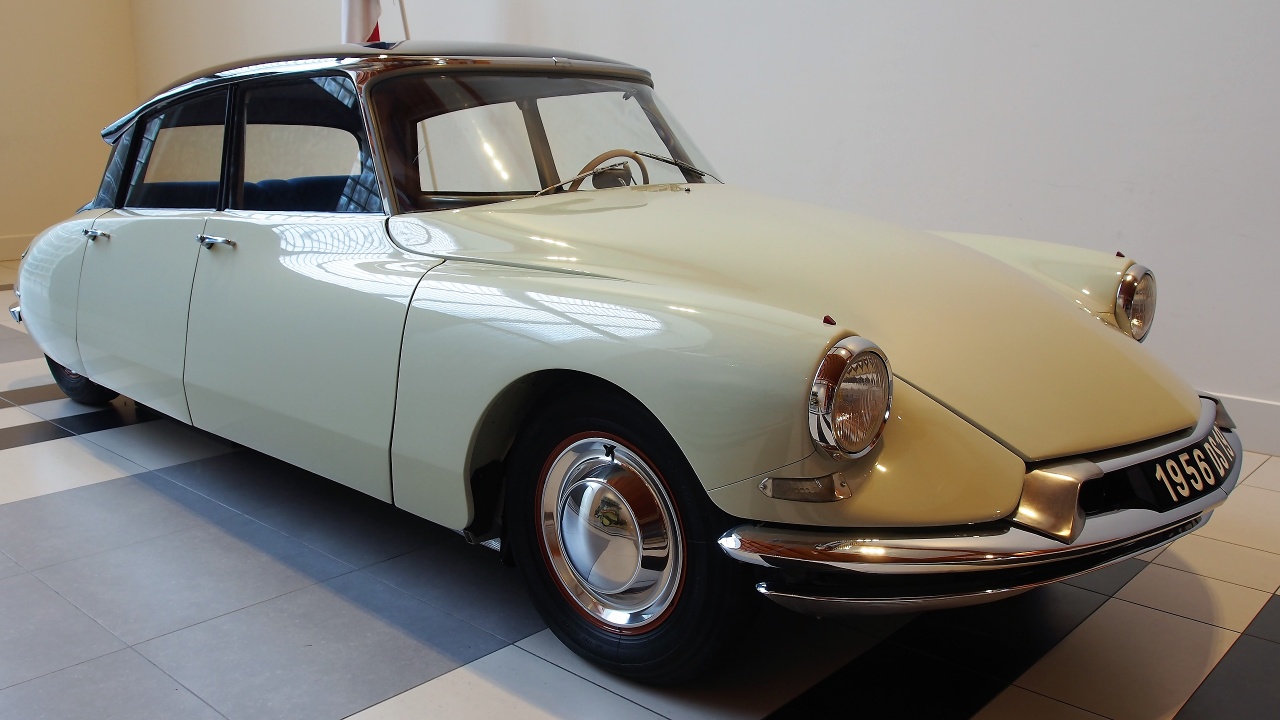
When the DS appeared in the mid‑1950s, it instantly made most other family cars look prewar. Contemporary rivals such as the Austin A90 Westminster and Ford Zodiac Mk1 relied on upright three‑box bodies and conventional chassis thinking, while the DS combined a low hood, tapering tail and smooth, almost teardrop profile that prioritized airflow and stability. Period accounts describe it as aerodynamic and futuristic, a show car that somehow reached showrooms, and that visual shock mattered because it signaled that Citroën was willing to discard almost every styling convention of the time.
The design impact went far beyond aesthetics. Italdesign founder Giorgetto Giugiaro later called the DS “impossible to imitate,” a verdict that underlines how thoroughly it broke with the norms of its era and how hard it was for competitors to respond in kind. The car’s flowing roofline, semi‑covered rear wheels and long wheelbase were not just visual flourishes but part of a holistic approach to stability and comfort that rivals simply did not match. Even decades later, commentators still describe the Citroën DS as the biggest single step ahead of its time, a car that set new standards for how a mass‑market saloon could look and behave on the road.
Hydropneumatic shock to the system
The DS did not merely look like a spaceship, it rode like one, and that is where it most unsettled engineers at other firms. Instead of steel springs, the Citroën system used hollow spheres charged with pressurised hydraulic fluid and nitrogen gas, separated by a rubber membrane, to create a self‑levelling hydropneumatic suspension. This setup allowed the car to glide over battered French roads that would quickly beat up a typical conventional suspension, and it gave the DS an uncanny ability to maintain composure regardless of load or surface.
Citroën went further by tying the suspension into a central high‑pressure hydraulic circuit that also powered the steering, brakes and, on many models, the gearbox and clutch assembly. In early 1956 the DS gained a five‑setting control that let drivers raise or lower the suspension by several inches, high enough to clear obstacles or even lift a wheel for tyre changes, then drop the car back down for better aerodynamics at speed. A hydraulic pump driven by belts kept the system pressurised whenever the engine was running, turning what might have been a fragile experiment into a robust everyday tool. The same basic hydropneumatic principles would later influence air suspensions on top luxury cars, but in the mid‑1950s this level of integration was unheard of in a mass‑produced family car.
Rewriting the rulebook on comfort and control
From behind the wheel, the DS translated its hydraulic complexity into a driving experience that felt almost effortless compared with its peers. Contemporary testers in the United States, who were used to power‑assisted gadgets as optional extras, noted that Citroën’s approach was different: the hydraulics were not tacked on to catch the public eye, but engineered to reduce driver effort to an absolute minimum. Light yet precise steering, powerful assisted brakes and a semi‑automatic hydraulic gearchange meant that long journeys demanded far less physical work than in a typical Austin or Ford of the same period.
Comfort was not just about softness, it was about control, and here the DS again shifted expectations. The self‑levelling suspension kept the body at a consistent height even when fully loaded, which improved headlight aim, stability and passenger comfort at speed. Reports from the time describe the DS as without doubt the most comfortable car in its class in Europe, combining supple ride quality with secure handling that inspired confidence on rough or twisting roads. Where rivals tended to pitch and roll, the DS floated yet remained composed, and that combination forced other manufacturers to rethink what a family car could deliver in terms of refinement.
How far ahead of 1956 rivals was it really?
To understand why the DS so thoroughly rattled competitors in 1956, it helps to look at what else was on sale. The DS’ peers were largely body‑on‑frame sedans with live rear axles, drum brakes and styling that owed more to the late 1940s than to any vision of the future. Against that backdrop, a front‑wheel‑drive car with a low, aerodynamic body, fully independent hydropneumatic suspension and integrated hydraulic systems for steering, brakes and transmission felt like a machine from another decade. Period comparisons stress how easy it is to forget just how far ahead of its time the DS was when it went on sale, because so many of its ideas later became normal.
The performance envelope told a similar story. With a top speed around 145 kph, the DS was not a sports car, but it delivered that pace with a level of stability and braking performance that rivals struggled to match. The ability to adjust ride height for rough roads or high‑speed cruising gave it a versatility that conventional suspensions could not approach. Even the more affordable ID variant, which shared much of the DS architecture but pared back some features to cut costs, retained the core advantages of front‑wheel drive, disc brakes and self‑levelling suspension. In practical terms, that meant Citroën could offer a range of cars that all felt fundamentally more modern than the competition.
A legacy that still unsettles the present
The DS’ shock value did not fade with its production run; if anything, its reputation has grown as later generations of engineers and designers have tried to match its blend of innovation and coherence. Collectors prize the DS today not only for its looks but for the way its hydropneumatic suspension still feels contemporary, with a ride quality that many modern cars struggle to equal. Commentators continue to highlight how the DS’ combination of comfort, safety and efficiency makes it feel very modern even by current standards, which is remarkable for a design rooted in the 1950s.
The car’s influence also stretches into current debates about how far manufacturers are willing to push technology in mainstream models. Record orders for the DS in its day have been compared to the surge of interest in Tesla for the Model 3, a reminder that customers will respond when a company offers a step change rather than an incremental tweak. Modern projects that electrify classic DS models, with companies such as Electrogenic converting them while preserving their character, underline how robust the original engineering was. When I look at the DS from the vantage point of 2025, I see a car that did more than shock its 1956 rivals: it set a benchmark for bold, system‑level innovation that still challenges the industry to think bigger.
More from Fast Lane Only: