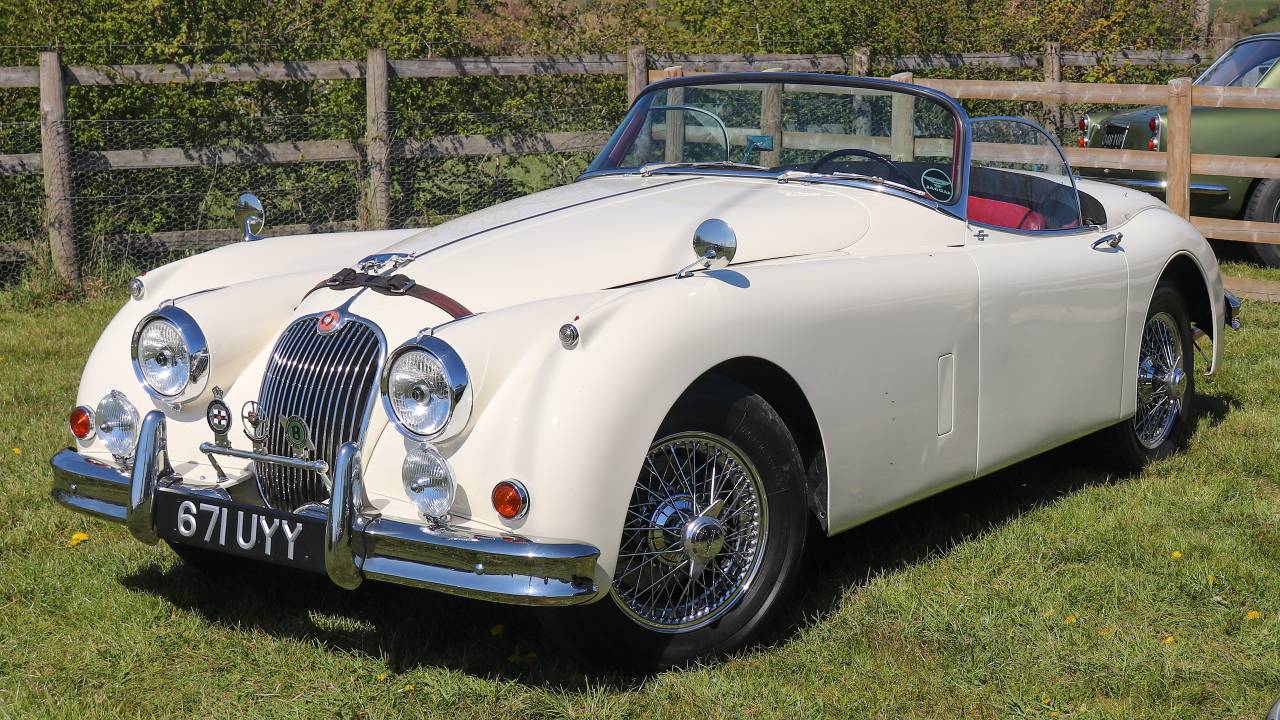
The 1959 Jaguar XK150 arrived at a moment when British sports cars were expected to be both fast and refined, and it managed to sharpen that balance with unusual precision. By evolving the celebrated XK formula rather than discarding it, Jaguar turned the XK150 into a car that felt more mature, more usable, and technically more advanced than its predecessors. I see that combination of speed, comfort, and innovation as the point where British performance stopped being a raw racing export and became a polished roadgoing product.
Instead of chasing headline-grabbing revolution, the XK150 focused on perfecting details that mattered to drivers, from braking and power delivery to cabin comfort. That approach, grounded in incremental but meaningful engineering changes, is what allowed this model year to stand out in a crowded field of postwar sports cars. It did not just go quicker, it made going quickly feel controlled and repeatable in a way that helped define the next decade of British performance design.
From XK120 roots to a more mature grand tourer
By the time the Jaguar XK150 appeared, the XK line had already transformed Jaguar from a niche maker into a global performance nameplate. The XK120 had stunned buyers with its speed, and the XK140 had refined that formula, but both still felt like sports cars first and road cars second. With the XK150, Jaguar kept the familiar silhouette and basic layout yet pushed the car toward a true grand tourer, with more space, better weather protection, and a calmer driving experience at sustained speed, as period overviews of the model make clear.
That shift did not mean abandoning performance. Instead, the XK150 broadened its appeal by offering fixed head coupé and drophead coupé bodies alongside the roadster, giving buyers a choice between open-air drama and closed-roof practicality. The fixed head version in particular, including later 3.8 Litre Fixed Head Coupé examples, showed how the XK platform could be adapted into a more refined long-distance machine without losing its sporting edge, a balance that would become central to Jaguar’s identity in the years that followed.
Disc brakes and racing-bred control
The most decisive way the XK150 perfected British performance was not in raw power but in how it stopped. It was the first production Jaguar available with all-round disc brakes, a technology that had been honed in competition before being brought to the road. That move turned the XK150 into a car that could be driven hard with far more confidence, because repeated high speed stops no longer meant the same fade and unpredictability that earlier drum-braked sports cars suffered, as contemporary reviews underline.
Those brakes were not an isolated upgrade. They were part of a broader pattern in which Jaguar used its racing program to inform road car engineering, particularly in the development of disc systems that Jaguar and Land Rover would later apply across their ranges. The XK150 became one of the first beneficiaries of that transfer from track to street, embodying how lessons learned under racing stress could make everyday driving safer and more controllable, as detailed in accounts of Jaguar’s racing legacy.
Powertrain evolution: from 3.4 to 3.8 litres
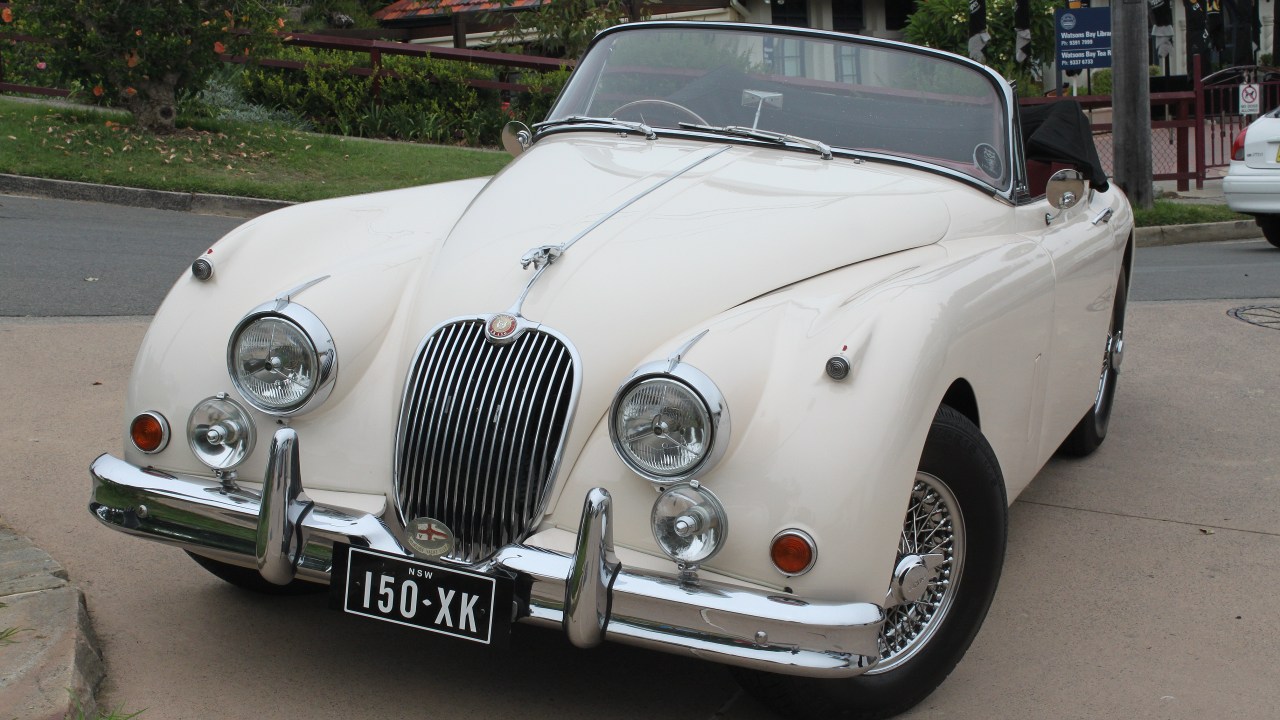
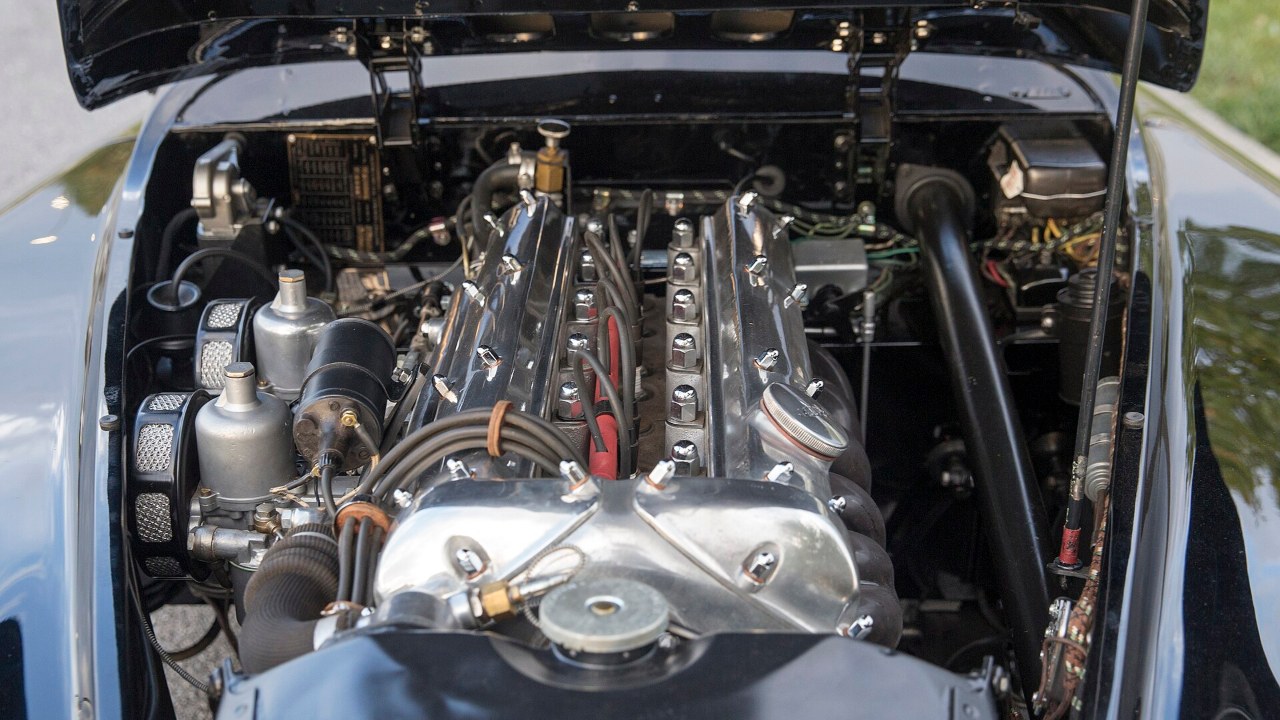
Under the bonnet, the XK150 refined rather than replaced Jaguar’s proven twin cam straight six. Early cars used the familiar 3.4 unit, but Jaguar did not leave the engine alone for long. For 1960, Jaguar bored its 3.4 to 3.8 litres, rating this option at 220 hp (164 kW; 223 PS) in standard tune or 265 hp (198 kW; 269 PS) “S” form, figures that placed the XK150 firmly among the quickest road cars of its day and showed how much headroom remained in the basic design, according to period guides.
The 3.8 option, which appeared in cars such as the 1959 Jaguar XK150 3.8 Litre Fixed Head Coupé, did more than add straight line speed. It broadened the torque curve and made the car feel more relaxed at a cruise, which suited the XK150’s emerging role as a high speed touring machine as much as a back road weapon. Auction records for these 3.8 cars, often described as 3.8 Litre Fixed Head Coupé models and sometimes noted as Subject to comprehensive restoration, highlight how sought after this specification has become among collectors who value both performance and usability, as seen in detailed sale descriptions.
The XK150 S: sharpening the edge
If the standard XK150 represented a more rounded vision of British performance, the XK150 S showed how far Jaguar could push the same platform. The S specification combined the uprated engine with further tuning and, in roadster form, delivered acceleration that was startling for a road car of its era. Period figures for a 1959 Jaguar XK150 S Roadster describe it as capable of reaching 60 mph in 7.8 seconds, a number that put it into territory usually reserved for racing machinery and underscored how effectively Jaguar had extracted extra pace from the straight six, as detailed in specialist sales notes.
The XK150 S also benefited from the same disc brake hardware and chassis tuning that defined the broader range, which meant its extra power did not overwhelm the car’s ability to cope. That balance is what, in my view, made the S more than a straight line special. It was a car that could be driven hard on real roads, then settled into a composed cruise, a dual character that anticipated the way later British performance cars would be expected to combine track pace with daily usability.
Craftsmanship, restoration, and lasting influence
Beyond the numbers, the XK150’s lasting appeal lies in how its engineering advances were wrapped in traditional craftsmanship. Cars such as the 1959 Jaguar XK150 S Roadster that have undergone detailed restoration show how much attention Jaguar originally paid to structure and finish, with work often including reupholstered top frames, stripped and recoated fuel tanks with new gaskets, and careful mechanical refurbishment to preserve matching-number drivetrains. These restoration notes, recorded in specialist catalogues, underline how robust the underlying design was, because it remains worth saving in such detail decades later.
The XK150 also sits at a pivotal point in Jaguar’s broader story, bridging the early XK era and the later E-Type that would become a global icon. The disc brake technology that appeared on the XK150, developed through Jaguar’s racing program and later associated with Jaguar and Land Rover more broadly, fed directly into the engineering of the next generation of sports cars. When I look at the XK150 in that context, it reads as the car where British performance stopped proving it could be fast and started proving it could be sophisticated, a shift that still shapes expectations of what a Jaguar should feel like today, as reflected in historical model guides and broader engineering histories.
More from Fast Lane Only: