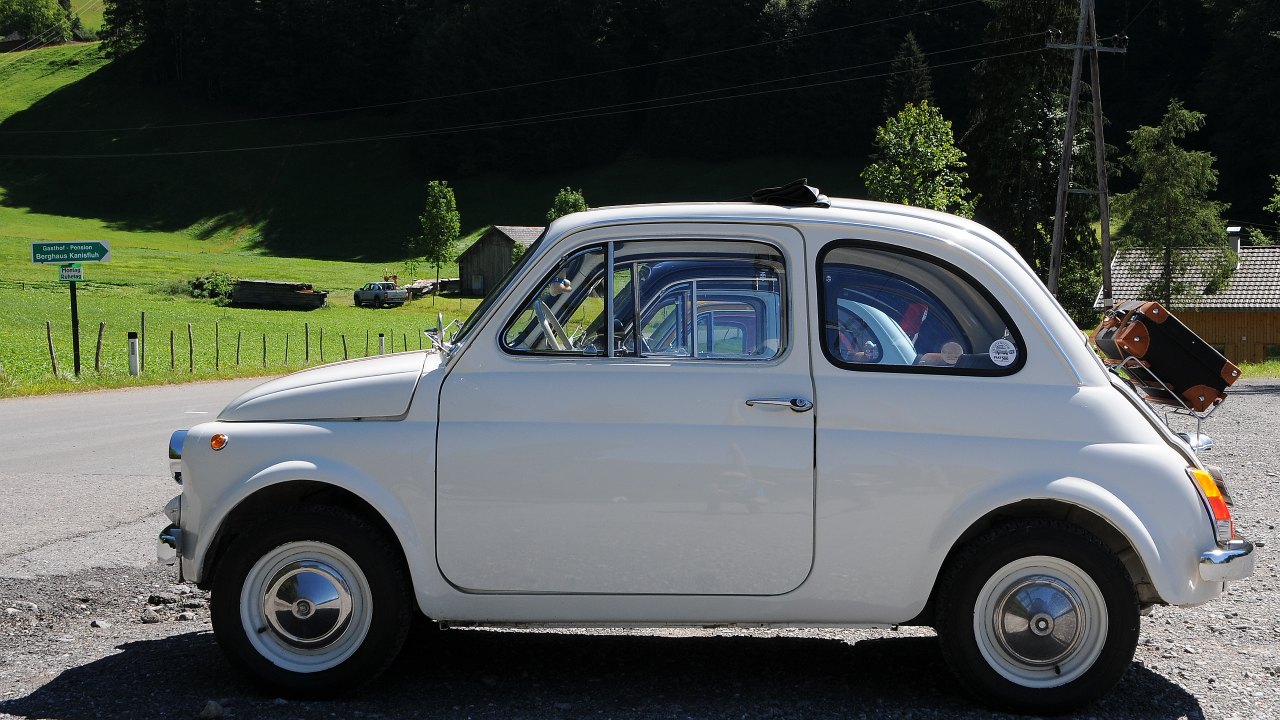
The 1957 Fiat 500 did more than give Italians a cute city runabout. It arrived at the precise moment when postwar Europe was shifting from bicycles and buses to private cars, and it offered a realistic path into motorized mobility for households that had never considered owning a vehicle. By combining radical affordability, tiny dimensions and clever engineering, the “nuova” 500 helped reshape how people moved through cities and across regions, and it set a template that still shapes European small cars today.
From “Topolino” to “nuova” 500: a car built for a changing continent
When the new Fiat 500 appeared in 1957, it was stepping into a role that an earlier generation of Italians already associated with the brand. Fiat had produced a first 500 from 1936 to 1955, nicknamed “Topolino” or “little mouse,” which had given prewar and immediate postwar drivers a basic but vital way to travel. That earlier Fiat 500 Topol showed how a very small, low powered car could still transform daily life, but by the mid 1950s Europe’s expectations were changing, incomes were rising and families wanted something more modern and comfortable without losing the low running costs.
The nuova 500 answered that shift by shrinking the idea of a family car to its bare essentials while still feeling like a real automobile rather than a motorcycle with a roof. In a production run that lasted 18 years, from 1957 to 1975, exactly 3,893,294 examples of the 500 were built, a figure that underlines how thoroughly it penetrated everyday European life. The 500 from Fiat was explicitly designed as a mass mobility tool, and its long career coincided with the period when car ownership in Italy and across much of Europe began to gain momentum from the early 1950s, turning private motoring from a luxury into a normal part of working and middle class life.
Engineering simplicity that made mass ownership possible
The 1957 500 changed mobility not through brute power but through ruthless simplicity. Its compact rear engine layout, minimal bodywork and lightweight construction kept fuel use and maintenance costs low enough that first time buyers could justify the leap from public transport. The car’s tiny footprint made it ideal for dense historic cities, where narrow streets and scarce parking had previously limited the practicality of larger vehicles, and this helped embed the idea that a city car could be a distinct, purpose built category rather than just a shrunken version of a big sedan.
Fiat’s strategy was to create a platform that could be built and sold cheaply in high volumes, then support it with related models like the Fiat 850 Special so that parts, servicing and dealer expertise overlapped. In other words, if Fiat had set out to win over a potential bracket of the domestic market with the 500, supported by the 850, it succeeded by making ownership feel attainable and sustainable over time. That combination of low purchase price, modest running costs and a broad service network made the 500 a realistic first car for hundreds of thousands of households, which in turn shifted commuting patterns and weekend travel habits across Italy and beyond.
Putting Italy, and then Europe, on wheels
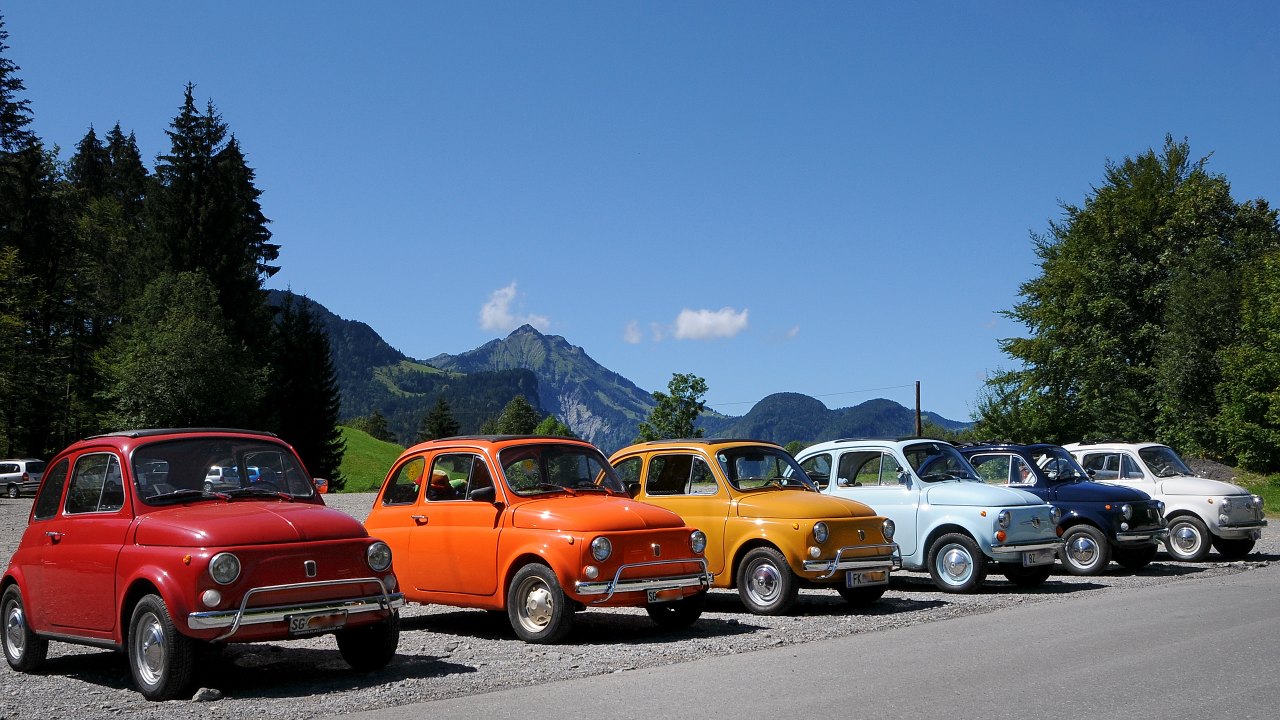
The social impact of the 1957 500 is clearest in how it intersected with Italy’s economic boom. As the country moved through its “economic miracle,” small economy cars made by Fiat became symbols of new prosperity, and the 500 was at the center of that story. Earlier, the Topolino had hinted at what mass motorization could look like, but the nuova 500 arrived just as wages and urbanization were rising, so it became the car that actually put large numbers of workers and young families on the road. Accounts of the period describe how a 500 in the courtyard or on the street signaled that a household had crossed a threshold from subsistence to modest comfort.
That pattern did not stop at the Italian border. As production scaled and exports grew, the 500 helped normalize the idea of a tiny, efficient city car across Europe, particularly in countries with dense urban cores and relatively short intercity distances. Later the Fiat 500 G iardiniera extended the formula with a slightly longer station wagon body that offered four full fledged seats and more luggage space, showing that even practical family duties could be handled by a very small car. By proving that a compact footprint could still deliver everyday usability, the 500 helped anchor a European preference for small, economical vehicles that contrasted with the larger, more powerful cars favored in markets like the United States.
Design, culture and the making of an icon
What made the 500 more than just a cheap appliance was its character. The rounded body, friendly face and airy cabin gave it a personality that owners embraced, and Italians playfully dubbed it “Cinquino,” a nickname that signaled affection rather than mere utility. That emotional connection has proved remarkably durable. When Fiat introduced the 500 Vintage 57 as a tribute, the company explicitly framed it as a celebration of the legendary Cinquino, underlining how deeply the original shape and proportions had lodged in popular memory. The Vintage themed editions, with their retro colors and details, show how a car designed as basic transport evolved into a design reference point that later generations wanted to revisit.
Automakers understand the power of nostalgia, and Fiat has repeatedly returned to the 500 story to reinforce its brand identity. Special series like the 1957 themed editions of the modern 500 tap into the emotional resonance of the original while selling contemporary hardware, a pattern that reflects how the car’s image has outlived its original mechanical package. Heritage exhibitions dedicated to the 500, curated alongside other Italian cultural touchstones, treat the little car as part of a broader narrative about national creativity and postwar recovery. When a vehicle is displayed in that context, it signals that its impact went beyond transport and into the realm of shared cultural memory.
From city car to electric symbol: the 500’s ongoing legacy
The influence of the 1957 500 is visible in the way Fiat has built an entire modern product strategy around its silhouette. Since 2007, more than 3.2 M units of the contemporary 500 have been sold worldwide, including over 2.7 m units in Europe, figures that confirm how the basic idea of a chic, compact city car still resonates. The modern 500 keeps the original’s focus on small size and urban maneuverability but layers in safety equipment, comfort features and digital technology that the 1950s engineers could not have imagined, turning what began as a bare bones people’s car into a fashionable lifestyle object.
The transition to electric power has only sharpened that continuity. In recent years Fiat has introduced battery electric versions of the 500 that translate the original city focused mission into zero emission form. One current electric 500 uses an 87 k W (118 hp) motor with an auto limited top speed of 150 km per hour and a 42 k Wh lithium ion battery, specifications that show how far performance and refinement have moved while the car’s footprint remains close to the 1957 template. Contemporary analyses of the 500e often begin with a Brief History of the Fiat and stress that, Before diving into the specifics of the electric model, it is essential to understand how the original became a symbol of Italian culture and lifestyle. That framing underlines a simple point: the nuova 500 did not just change how Europeans moved in its own era, it created a blueprint for urban mobility that the industry is still updating for new technologies and new environmental demands.
More from Fast Lane Only: