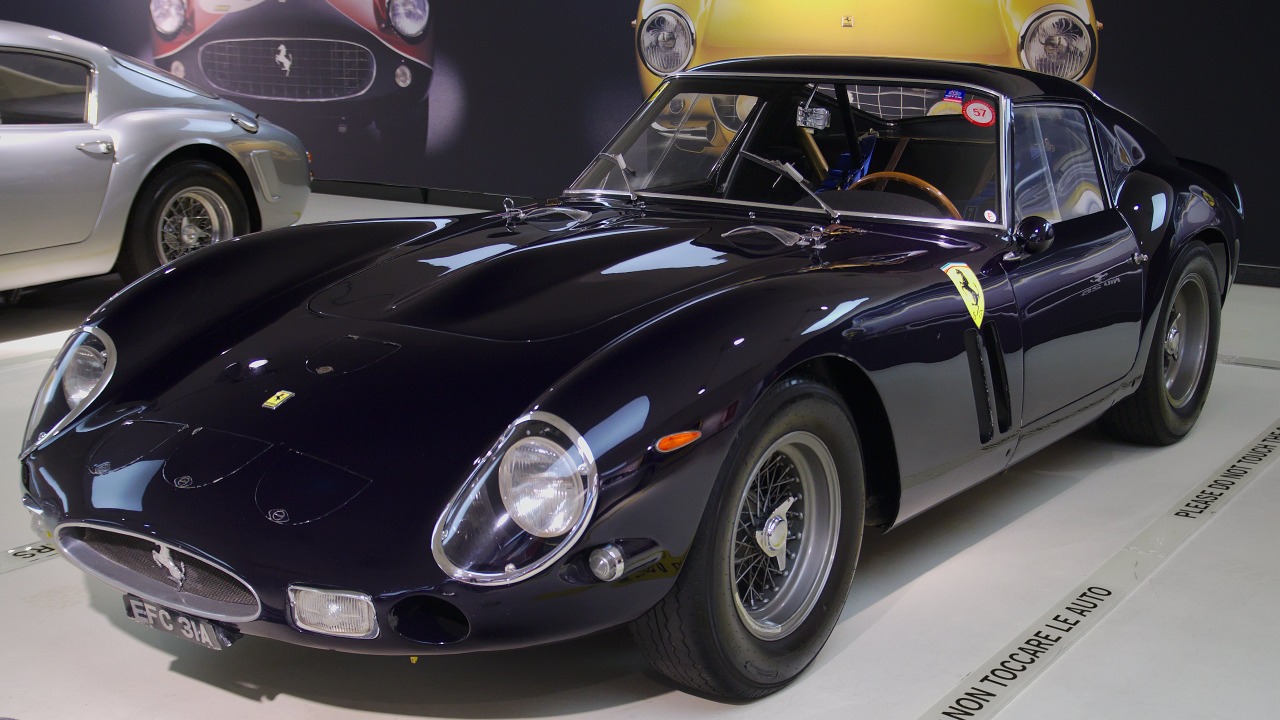
The 1963 Ferrari 250 GTO sits at a strange intersection of racing history, industrial design and high finance, a place where a purpose-built competition car has become almost too valuable to use for its original job. What began as a front-engined GT built to win long-distance races is now treated as a financial instrument and cultural artifact, a machine whose scarcity and mythology have pushed it into a realm where normal market logic barely applies. To understand how it became effectively untouchable, I need to trace the path from its track record to its role as the ultimate status symbol.
From homologation weapon to racing benchmark
The 250 GTO was conceived as a tool to win, not as a collectible, and that intent is the foundation of its later aura. Ferrari developed the car for Racing in the early 1960s to dominate GT endurance events, and its debut at the 12 Hours of Sebring with American Phil Hill, a Formula One World Drivi champion, signaled that this was the factory’s sharpest weapon rather than a customer afterthought. Period accounts of the 250 G’s competition record show it winning and placing at the top of its class across long-distance events and road courses, including the demanding Tour de France Aut, which cemented its reputation as a car that could survive and succeed in the most punishing environments.
That competition pedigree matters because it separates the 250 GTO from later supercars that were engineered as fast road toys first and race cars second. Contemporary analysis of how Early supercars like the Lamborghini Miura and Ferrari 250 GTO shaped performance benchmarks notes that the GTO arrived at the end of the front-engined era, just before mid-engined designs took over at the top level of sports car racing. As racecar design moved into the mid-engined formula still seen today, the 250 GTO was one of the final front-engined contenders capable of winning outright, which gives it a “last of its kind” status that collectors prize and that modern engineering cannot replicate.
Design that blurred road car beauty and race car purpose
Even among 1960s Ferraris, the 250 GTO occupies a special place because it fused competition intent with a sculpted, almost delicate form. The same Italian ecosystem that produced elegant road cars like the 1963 Ferrari 250 GT/L Lusso Berlinetta also shaped the GTO’s bodywork, and period commentary on Scaglietti’s realization of Pininfarina’s body design for the Lusso highlights how those coachbuilders balanced glass proportions and a fastback Kamm tail to achieve both beauty and aerodynamic function. The GTO applied similar thinking in a more aggressive key, with its long nose, muscular haunches and carefully vented body turning airflow into lap time while still looking refined enough to wear a number plate on public roads.
That dual character is central to why the car later became so revered. Factory retrospectives describe the 250 G’s great reputation developing not only on closed circuits but also on road courses such as the Tour de France Aut, where the same car had to be driven flat out on public tarmac and then parked outside a hotel like any grand tourer. In that environment, the GTO’s design signaled both speed and sophistication, and modern commentators who have spent time with surviving examples describe its visual aura as something that photographs cannot fully capture. When a car can be read simultaneously as sculpture and as a piece of hard-edged racing hardware, it acquires a cultural weight that goes beyond its specification sheet.
Scarcity, stories and the making of a “Holy Grail”
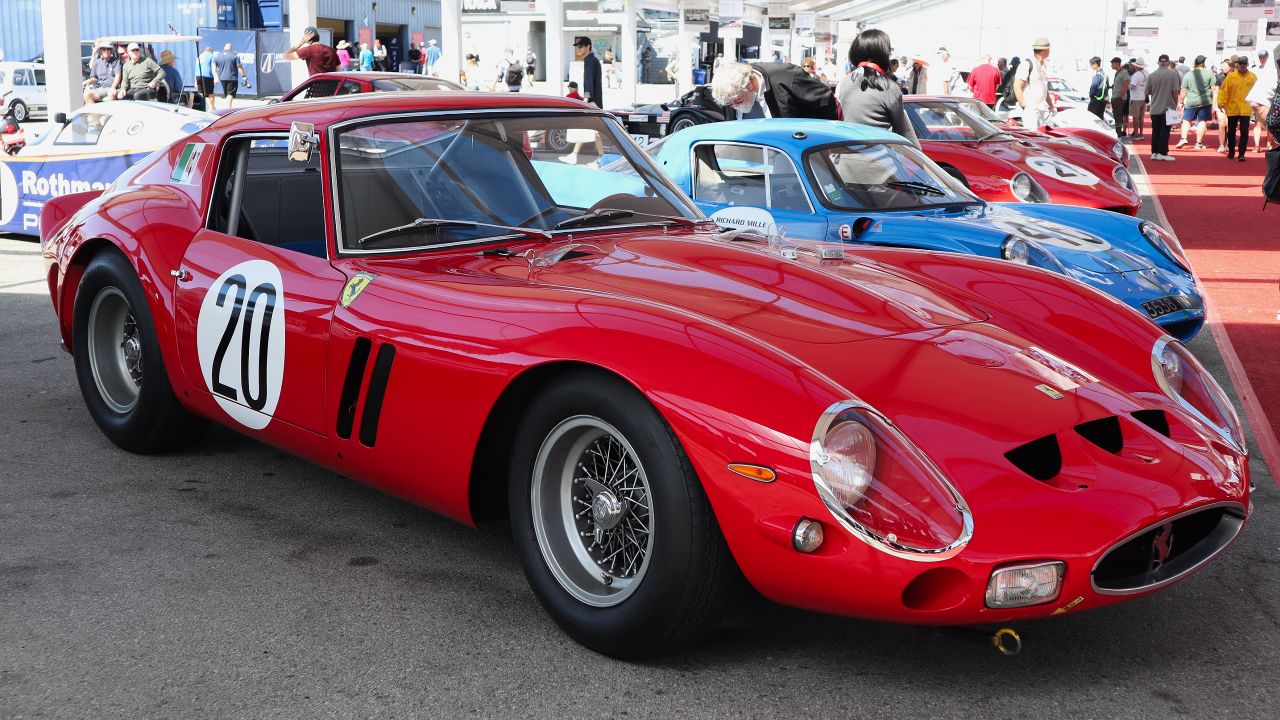
Rarity alone does not guarantee legend, but in the case of the 1963 Ferrari 250 GTO, scarcity amplified every other virtue. Contemporary overviews of the most expensive cars held in collections point out that only 36 examples of the 250 G were ever built, a production run that would be small even for a pure racing prototype, let alone a GT that could be driven on the road. That limited number, combined with the car’s competition success and design appeal, has led some commentators to describe it as the Holy Grail of vintage cars, a phrase that captures how it has come to represent the unattainable ideal for many enthusiasts and collectors.
Individual chassis histories have also fed the mythology, turning each car into a character in a long-running serial rather than a static object. Accounts of specific cars, such as the story of Ferrari 250 GTO chassis number 3589 GT, show how a single example can move through different owners, be raced, damaged, repaired and rediscovered, and then once again become the thing everyone wants. When a model is built in such small numbers, every accident, every restoration and every change of hands becomes part of a shared narrative that reinforces the sense that these cars are not just rare, but almost irreplaceable chapters in motorsport history.
When race cars become blue-chip assets
The leap from coveted classic to untouchable asset happened when the 250 GTO’s market value began to outpace even other elite Ferraris. Reports on record-setting transactions describe a 1963 Ferrari 250 GTO changing hands privately for about $70 m, with the same sale characterized as a $70 million deal involving a Tour de France winning car and buyer David MacNeil. Earlier coverage of the model’s appreciation noted that someone who bought a 1963 Ferrari 250 GTO when it was still a relatively attainable collectible would have seen a near-3000 per cent increase in value by the time similar cars were selling for tens of millions, with one Ferrari GTO reported at $55 million. At those numbers, the car stops being just a machine and becomes a store of wealth comparable to a major artwork.
That financial reality has practical consequences for how owners treat the cars. When a single chassis is insured for figures that rival a small company’s valuation, the risk calculus around racing or even spirited road use changes dramatically. Modern coverage of high-value Ferraris being driven hard, including incidents where a car valued at around $110 million suffered a dramatic failure with an ex Formula One driver at the wheel, underscores the tension between using these machines as intended and preserving them as assets. The 250 GTO sits at the center of that tension, because its identity as a race car is precisely what made it so valuable, yet its current price bracket makes genuine wheel-to-wheel competition almost unthinkable.
The lived experience that money cannot quite buy
Despite the financialization of the 250 GTO, the people who have actually driven them insist that the car’s appeal is not just about numbers on an auction catalog. First hand reflections from those who spent extended time with specific chassis, such as 4219 GT, describe the model as One of the Best When 250 G examples were sub $10 million vehicles, emphasizing how its steering, balance and feedback create a sense of connection that modern supercars, for all their speed, often lack. That kind of testimony matters because it suggests that the GTO’s legend is grounded in a real driving experience, not only in rarity and price inflation.
At the same time, the broader context of performance cars has shifted around it. Analyses of how supercars achieve record breaking performances point out that Early benchmarks like the Lamborghini Miura and Ferrari 250 GTO set the stage for what was to come, but modern machines now deliver far higher speeds and grip with features that were once deemed impossible. In that environment, the GTO’s raw performance is no longer objectively dominant, yet its analog feel, its place at the end of the front-engined racing era and its tiny production run keep it at the top of the desirability hierarchy. The result is a car that owners are desperate to experience yet increasingly reluctant to risk, a paradox that goes a long way toward explaining how the 1963 Ferrari 250 GTO became, in practical terms, untouchable.
More from Fast Lane Only: