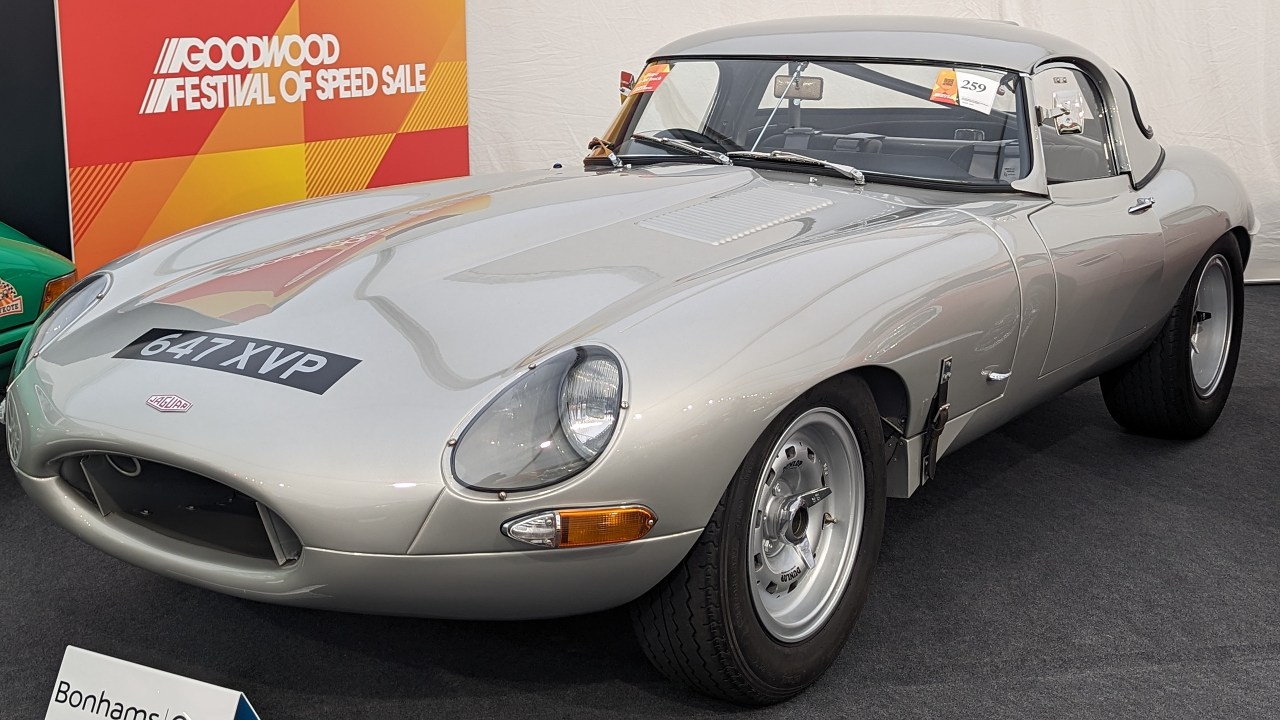
When Jaguar rolled the E-Type onto the show stand in early 1961, the sports car world did not just gain a new model, it gained a new reference point. The long bonnet, low roofline, and almost impossibly clean curves reset expectations of what a fast road car could look like and how it should perform. More than six decades later, designers and collectors still treat that first 1961 Jaguar E-Type as the moment the modern supercar silhouette truly arrived.
From racing workshop to Geneva shock
I see the E-Type’s impact as inseparable from its racing roots. Jaguar had already proved its engineering at Le Mans, and the E-Type was conceived as a way to bring that competition pedigree to the road in a more usable, glamorous form. The result was the Type that enthusiasts now know as the Series 1, a car whose structure and suspension drew heavily on Jaguar’s earlier racers, then wrapped those hard-won lessons in a body that looked like rolling sculpture.
The car was Introduced to a stunned world at the Geneva motor show in March 1961, where its racing heritage was obvious in its low stance and faired-in headlamps. Contemporary accounts describe crowds surrounding the stand and demand so intense that Jaguar had to improvise extra demonstration cars for journalists on the spot. Later retellings even note that Legend has it, at that first Geneva Motor Show appearance, Enzo Ferrari himself regarded the new Jaguar as the most beautiful car he had ever seen, a reaction that underlined how far the British manufacturer had pushed the design envelope.
Design that became a yardstick
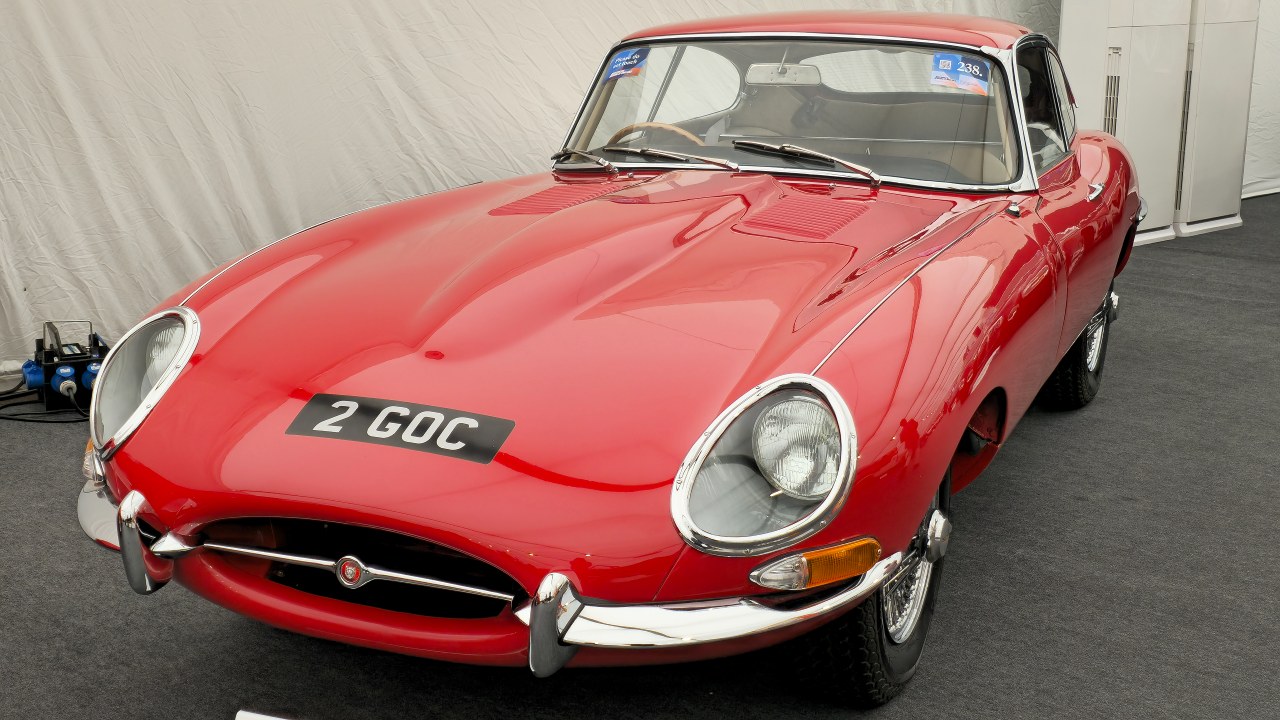
What still strikes me about the 1961 E-Type is how its shape manages to be both dramatic and restrained. The bonnet seems to stretch to the horizon, yet the cabin is compact and the tail neatly tapered, so the whole car reads as a single, flowing gesture rather than a collection of styling tricks. Before super cars became a thing, there was a shape so perfect that even rivals treated it as a benchmark, and the E-Type’s proportions quickly became the yardstick against which later sports cars were judged.
That purity was not an accident. Jaguar’s engineers and stylists used the lessons of high-speed racing to sculpt a body that sliced through the air, then pared away ornament so the form itself did the talking. Later commentators have described the E-Type as proof that art can move, a car whose silhouette still feels modern even as it clearly belongs to the early 1960s. When I look at contemporary sports cars that chase drama with sharp creases and oversized grilles, the original E-Type’s clean surfaces and subtle detailing stand out as a different philosophy, one that prioritised balance over aggression.
Performance that matched the looks
The E-Type would never have become a legend if it had been slow. From the outset, Jaguar engineered the 1961 Series 1 to deliver the kind of performance that, at the time, belonged to racing paddocks rather than public roads. Period tests recorded the car clocking in at 150mph, a figure that put it in the same conversation as exotic machinery costing far more and made the E-Type one of the fastest production cars available to ordinary buyers.
That speed was backed by serious engineering. The car used a sophisticated independent rear suspension and disc brakes, technology that helped it handle and stop as convincingly as it accelerated. Contemporary technical data for an open 3.8-litre car records 0 to 60 mph in 7.1 seconds, a number that, in the early 1960s, placed the Jaguar firmly in the high-performance bracket. The combination of a torquey straight-six engine, relatively low weight, and careful aerodynamics meant the E-Type could cruise at high speeds with a composure that surprised drivers used to more primitive sports cars.
Beauty, Speed, Price: the Swinging Sixties icon
What really cemented the E-Type’s place in history, in my view, was the way it blended Beauty, Speed, and Price at exactly the right cultural moment. As the “Swinging Sixties” gathered pace, the car arrived as a glamorous symbol of new money and new attitudes, yet it remained far more attainable than Italian exotics. Commentators have repeatedly pointed out that this Jaguar offered supercar performance and movie-star looks at a price that put it within reach of successful professionals rather than only industrial magnates.
That accessibility mattered. The 1961 Jaguar E-Type (known as the XK-E in North America) became a familiar sight in magazines and on city streets, not just on racetracks or in private collections. Its mix of Speed and relative affordability helped it define an era in which British design and music were reshaping global culture. When people talk about the definitive icon of that decade, they often mention the Type alongside fashion and rock bands, because it captured the same sense of optimism and forward motion.
A legacy that keeps appreciating
More than sixty years after that first Geneva appearance, the E-Type’s influence is still visible in both design studios and auction catalogues. Modern buying guides describe the Jaguar E-type (1961-1974) as a cornerstone of classic car culture, with detailed histories and checklists for would-be owners that run to 197 separate points of inspection and model nuance. That level of scrutiny reflects how seriously collectors now treat even small variations in specification, from early flat-floor cars to later updates.
The market has responded accordingly. On September 1 on the grounds of Hampton Court Palace in London, auction house Gooding & Company set a world record for the sale of a production E-Type, a headline figure that underlined how far values have climbed. At the same time, valuation tools for a 1961 Jaguar E-Type SI 3.8 still talk about examples in good condition with average spec, a reminder that while the very best cars chase records, there remains a broad enthusiast base keeping the model on the road. For me, that combination of sky-high halo prices and ongoing everyday use is the clearest sign that the car which stunned the world in 1961 has moved beyond novelty into enduring legend.
More from Fast Lane Only: