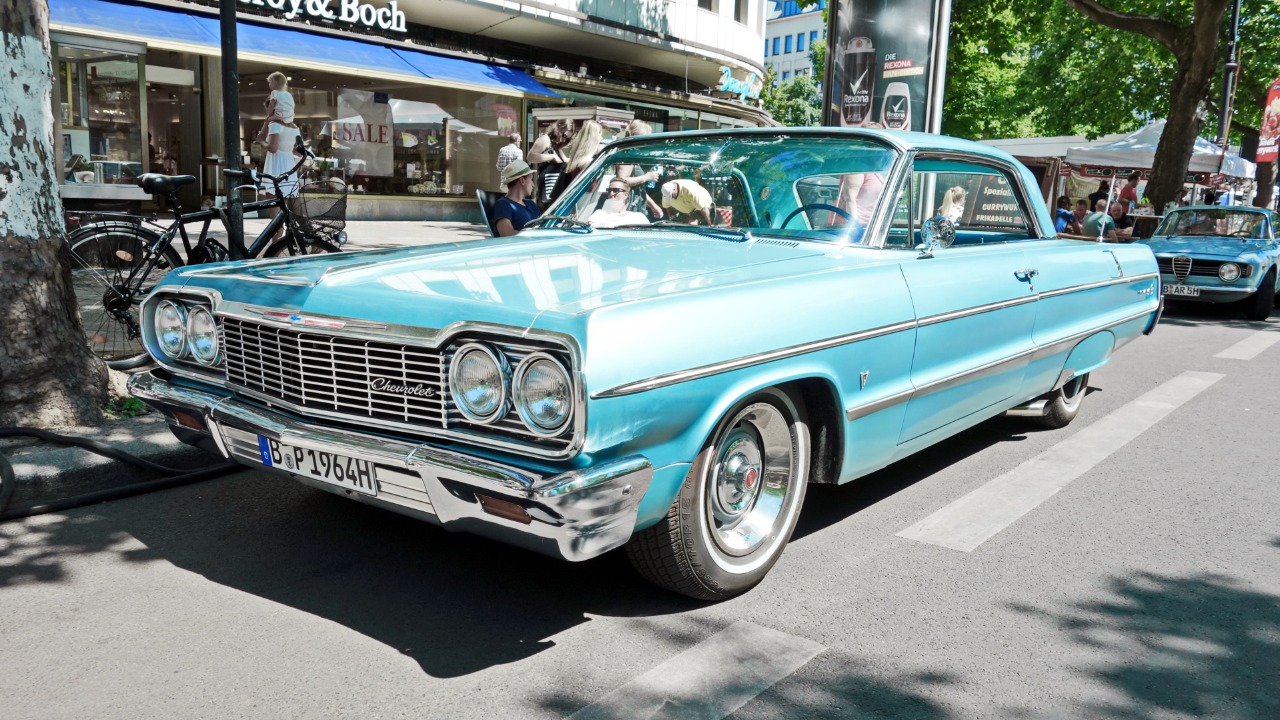
The 1964 Chevrolet Impala did not simply arrive in showrooms as a one-year wonder. It landed at the exact moment when American families wanted space, style, and a sense of modern ease, and it helped push Chevrolet’s full-size line toward record-breaking territory. By the time the closely related 1965 models set all-time sales marks, the 1964 version had already proven how a big car could feel aspirational yet attainable.
When I look back at that moment, I see the 1964 Impala as the pivot point where a popular nameplate became a cultural fixture. It refined a formula that had been building since the late 1950s, then handed the baton to the 1965 lineup that would turn that momentum into historic volume, making the Impala family America’s go-to full-size choice.
The affordable big car that set the stage
Long before the 1964 model year, Chevrolet had been positioning the Impala as a way to get near-luxury presence without luxury pricing. In 1959, a brand new Impala carried a sticker of about $2,900, while a comparable Cadillac could fetch around $6,000, a gap that made the Impala feel like a smart splurge rather than an impossible dream. That pricing logic carried into the early 1960s, so by 1964, buyers already understood that this was the big Chevrolet that let them park something impressive in the driveway without stepping into luxury-car territory. The car’s success as a family workhorse with a bit of flash laid the groundwork for the sales surge that would crest with the next model year.
From my perspective, that balance between size and price is the quiet reason the 1964 Impala mattered so much. It was not just a pretty full-size sedan or coupe, it was the culmination of a strategy that treated middle-class buyers as people who wanted comfort and style, not just basic transportation. When those same shoppers returned to showrooms for 1965, they were already sold on the idea of an Impala-shaped life, which helps explain why the updated cars could ride the wave the 1964 model had stirred up.
1964: Refining the “Jet Smooth” formula
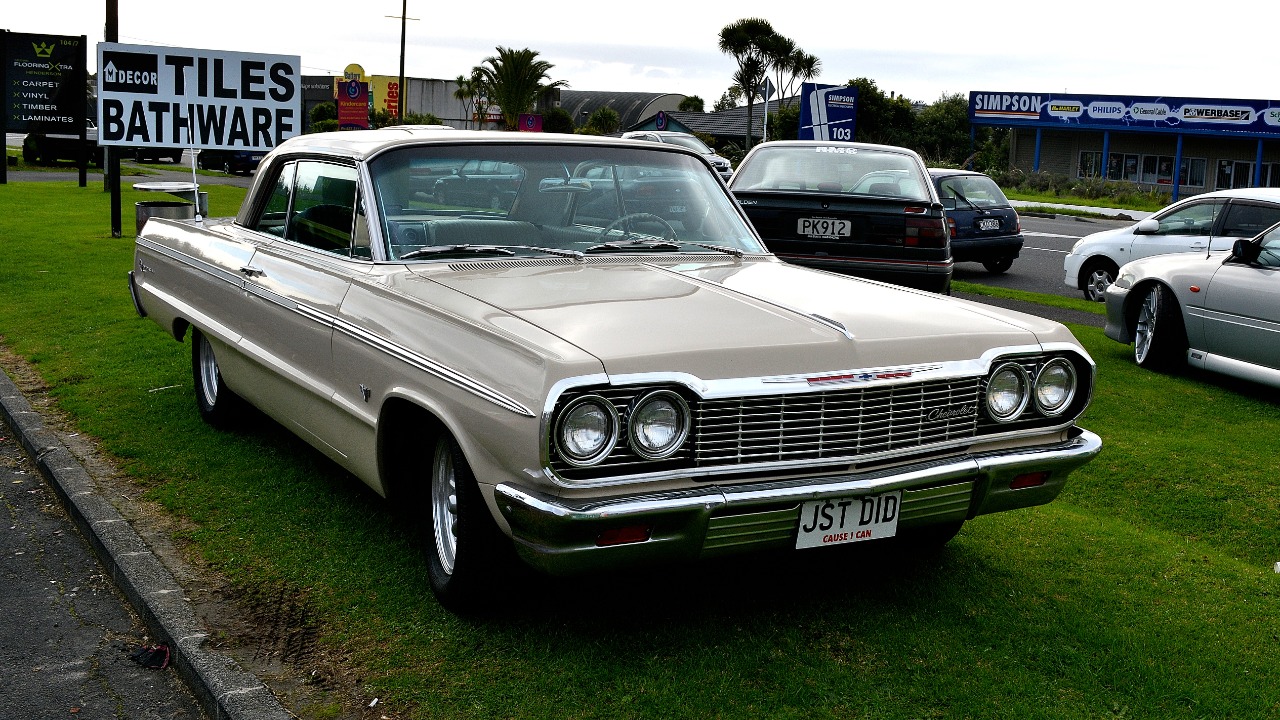
By 1964, Chevrolet was not reinventing the Impala so much as polishing it. The car’s proportions were clean and confident, and the driving experience leaned into what one period-minded reviewer described as “Jet Smooth,” a phrase that captured how the factory exhaust and suspension delivered just enough feedback to feel alive without tiring out the driver. Instead of chasing raw aggression, the Impala was tuned to be Instead, Impala, Jet Smooth, a big car that floated over rough pavement yet still reminded you there was a V8 working under the hood. That kind of composure made it easy for families to choose the Impala over smaller, harsher alternatives.
When I imagine a buyer sliding behind the wheel in 1964, I picture someone who wanted the confidence of a full-size car without the drama. The Impala’s calm road manners, combined with its crisp styling, made it feel modern rather than bloated, and that is a crucial part of why it became the template for the record-setting 1965 lineup. The 1964 model proved that Chevrolet could deliver a big car that felt sophisticated and relaxed, and that proof of concept translated directly into showroom traffic when the redesigned cars arrived.
From strong seller to record-breaking phenomenon
The real numerical explosion came the following year, when the Impala family turned its growing popularity into a sales record that still stands. In 1965, Chevrolet sold 1,074,925 Impalas, a figure that still looms over the full-size market. That achievement did not appear out of thin air. It was the payoff of several years of steady refinement, with the 1964 model serving as the last and most polished version of the earlier body style that had already won over American households.
When I connect those dots, I see the 1964 Impala as the bridge between a successful nameplate and a historic best seller. It cemented the car’s reputation as the default choice for buyers who wanted space, comfort, and a bit of flair, so when the fresh 1965 design arrived, it was not introducing a new idea, it was simply offering a more dramatic version of something people already trusted. In that sense, the 1964 car did the heavy lifting of making the Impala America’s full-size favorite, even if the official sales crown belongs to its immediate successor.
A car that lived far beyond the showroom
Sales numbers tell only part of the story, because the 1964 Impala also embedded itself in American culture in ways that kept demand alive long after the model year ended. One of the clearest examples is Gypsy Rose, the candy pink and red lowrider that became a rolling piece of art and later appeared in advertisements for the film Boulevard Nights. With its crushed velvet interior and intricate paint, that single 1964 Chevrolet Impala turned into a symbol of lowrider culture and helped fix the model in the popular imagination as a canvas for personal expression rather than just a family appliance.
That cultural reach shows up in more everyday memories too. One writer recently noted that it is no wonder everyone between the ages of 40 and 90 seems to have an Impala story, whether it is a first date, a long road trip, or a late-night cruise. When I hear those anecdotes, I notice how often the early to mid 1960s cars sit at the center of the memory, which reinforces the idea that the 1964 model was part of a broader wave that made the Impala feel like a shared national experience.
Why the 1964 Impala still feels like the sweet spot
Decades later, enthusiasts still talk about “These Golden Age Impalas” as uniquely versatile classics that can be luxury liners, drag-strip bruisers, or low-slung cruisers, all while delivering performance at an everyman price. That description fits the 1964 car perfectly, because it sits at the intersection of old-school full-size comfort and the emerging performance and customization scene. When I look at how These Golden Age Impalas are still hot commodities on the used market, I see the 1964 model as the year where all those threads were tightly woven together.
That sweet-spot status shows up in how often the 1964 Chevrolet Impala is singled out as The Sleek Lowrider, a car that captured the “riding low” craze that spread During the 1960s and later echoed through songs like “Still D.R.E.” and “Let Me Ride.” When I talk to owners, they often describe the 1964 body as the one that looks right whether it is stock height, slightly lowered, or sitting inches off the ground on hydraulics. That flexibility helps explain why the car remains a favorite canvas for builders and a touchstone for fans who associate it with music, film, and neighborhood cruise nights.
Legacy of a mass-produced legend
Part of what makes the 1964 Impala feel so familiar is how many full-size Chevrolets from that era were built and how widely they spread across the country. One classic-car owner, reflecting on a later fastback, argued that the only thing that could make these cars legendary was the sheer number of units, noting that 68 fastback production and similar runs meant you saw them everywhere. That observation, shared in a casual comment that begins with “As a 68 fastback owner,” captures how ubiquity can turn a car into a backdrop for everyday life, and how There were simply so many full-size Chevrolets that the Impala shape became part of the American streetscape.
When I connect that sense of ubiquity to the 1964 model, I see a car that helped normalize the idea of a stylish, comfortable full-size sedan or coupe as the default family choice. It may not have worn the official crown for the single biggest sales year, but it was the crucial link between the early Impalas that proved the concept and the 1965 lineup that turned it into a record-setting phenomenon. In that way, the 1964 Chevrolet Impala earned its place in history as the car that quietly, confidently helped make the Impala name synonymous with America’s best-selling full-size car.
More from Fast Lane Only: