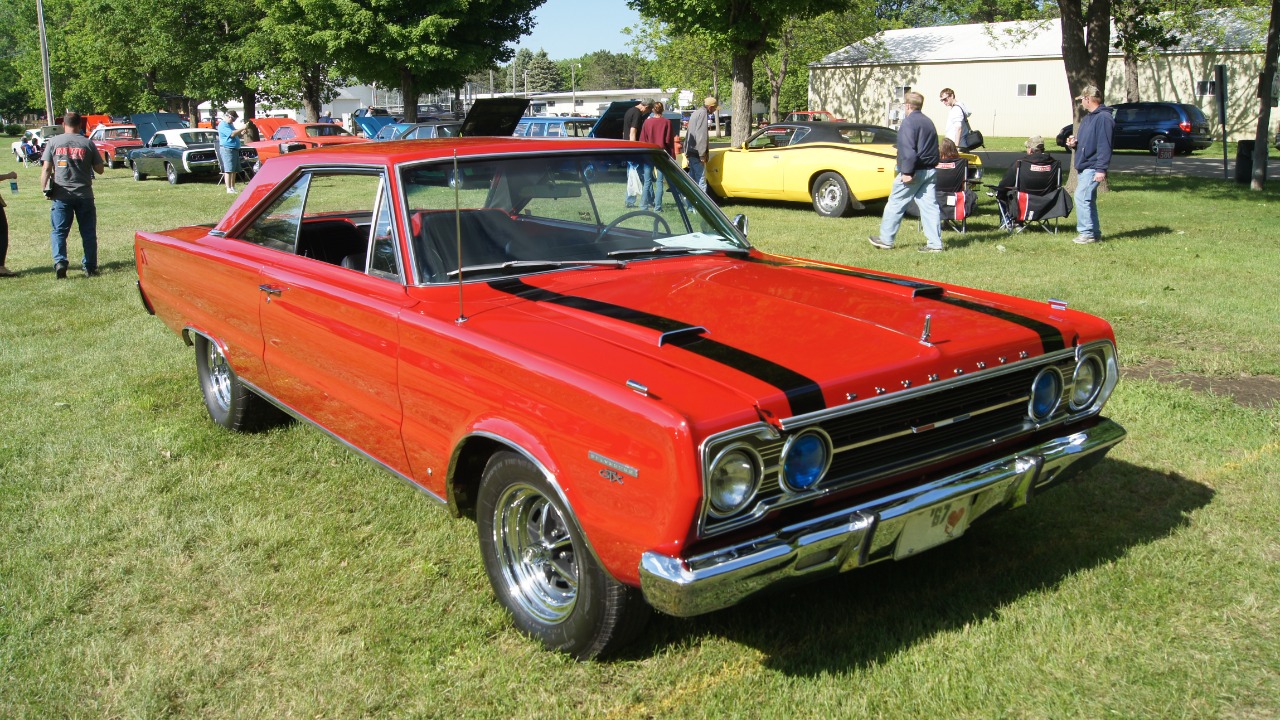
The 1967 Plymouth GTX arrived at a moment when Detroit was obsessed with cubic inches, and it did something bold even by muscle car standards: it skipped the small stuff and went straight to big-block power. Instead of offering a ladder of engines, Plymouth built a car that treated serious displacement as the starting point, then wrapped it in a surprisingly refined package. That decision turned the first-year GTX into a kind of manifesto on how to mix brute force with a bit of manners.
Looking back now, I see that first GTX as one of the clearest statements of intent from the muscle era. It was not just another Belvedere with stripes, it was a carefully positioned “gentleman’s” hot rod that made a 440 cubic inch V8 feel almost mandatory. To understand why that matters, you have to look at how Plymouth structured the car, how it limited the engine menu, and how that strategy still shapes the way enthusiasts talk about the GTX name today.
Setting the stage: a Belvedere with a mission
When Plymouth rolled out The GTX for 1967, it did not start from scratch, it started from the Belvedere. The car shared the basic body shell and proportions of the Belvedere, but it was not a simple trim package. Plymouth gave The GTX a blacked out grille, a special rear fascia, and distinctive fiberglass pieces that visually separated it from the more ordinary Belvedere sedans and wagons. Underneath, a heavy duty suspension system was part of the standard recipe, signaling that this was meant to handle more than grocery runs.
That foundation matters because it shows how deliberately Plymouth carved out space for a new kind of performance model. By taking a familiar mid-size platform and layering on unique styling and upgraded hardware, the company created a car that felt both accessible and aspirational. The GTX looked close enough to a Belvedere to feel usable as a daily driver, but the visual tweaks and chassis upgrades made it clear that this was the top dog in the lineup, a point underscored by the way the 1967 car is described as being based on the Belvedere with a standard heavy duty suspension.
The “gentleman’s muscle car” and its standard 440
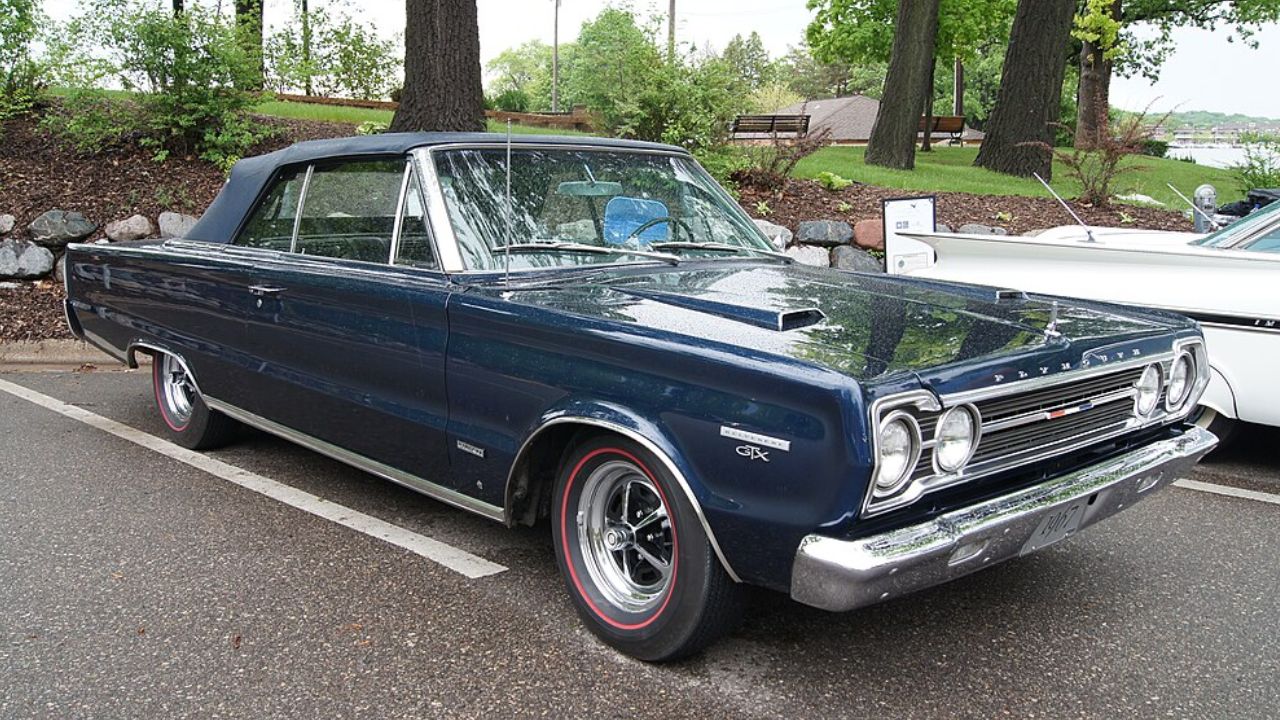
Plymouth did not want The GTX to be just another street brawler, it wanted a car that could be sold as a “gentleman’s muscle car.” That phrase captured the idea of a machine that could run hard but still carry a bit of polish, something you could drive to the office without feeling like you had borrowed a drag racer. To make that positioning real, Plymouth made the big engine part of the identity rather than an optional extra. Standard on The GTX was Plymouth’s 440 cu in (7.2 L) V8, a big block that the company branded the “Super Comman” to emphasize its status as the default choice rather than a rare upgrade.
That decision to make the 440, and its full 7.2 liters of displacement, the baseline engine is what really marks the 1967 GTX as all-in on big blocks. There was no smaller V8 to soften the entry price or broaden the appeal, because the whole point was that Standard meant serious power. In a market where many rivals still let buyers tiptoe in with modest engines, Plymouth built a car whose identity started with a 440 and only went up from there, a fact that is spelled out clearly in descriptions of how The GTX was positioned and how the Standard 440 cu in (7.2 L) “Super Comman” V8 defined the model.
Two engines, no compromises: 440 and 426 Hemi
What really sets the 1967 Plymouth GTX apart in my mind is how ruthlessly simple the engine chart was. For 1967, as with every model year of the GTX, the only engines offered were the 440cid and the 426 Hemi. There was no six cylinder, no small block V8, no economy special hiding in the order guide. If you bought a GTX, you were buying a big block, full stop, and that clarity gave the car a kind of purity that enthusiasts still appreciate.
The optional 426 Hemi, often simply called the Hemi, took that purity to an even more extreme level. With its race-bred cylinder heads and reputation for making power in the realm of 480 to 500 bhp in tuned form, the Hemi turned the GTX into a genuine street terror for buyers willing to pay and live with its temperament. Yet even here, Plymouth kept the menu tight, framing the GTX as a car that lived entirely in the world of serious displacement. That approach is captured in detailed retrospectives that note how the 1967 GTX stuck to the 440cid and 426 Hemi, with the Hemi associated with 480–500 bhp.
Why Plymouth bet the badge on big blocks
From a modern perspective, it might seem risky that Plymouth tied the entire Plymouth GTX identity to big block engines, but in the context of the late 1960s it was a calculated move. The muscle car market was crowded, and Plymouth needed a clear story to tell. By making The GTX a car that only came with two engine choices, both of them large displacement V8s, the brand could pitch it as the ultimate expression of its performance know-how. That message is echoed in descriptions that emphasize how the Plymouth GTX only came with two engine choices and how Plymouth used that to frame it as one of the all time muscle car legends.
There was also a branding benefit in keeping the lineup so focused. Buyers who walked into a showroom knew that if they pointed at a GTX, they were getting something special, not a lightly dressed-up family car. The limited engine menu reinforced the idea that Plymouth was not compromising on the core promise of power, while the “gentleman’s” positioning and the Belvedere-based body kept the car from feeling too extreme for everyday use. That balance is part of why the Plymouth GTX is still described as a Plymouth performance flagship with only two big block choices, rather than a model that tried to be everything to everyone.
Legacy of the 1967 GTX in the muscle car canon
Today, when I think about the 1967 GTX, I see it as a template for how to build a focused performance brand inside a larger lineup. The car’s mix of Belvedere practicality, upscale touches, and mandatory big block power created a personality that was easy to understand and hard to dilute. That clarity is part of why the GTX name still carries weight among enthusiasts, and why a simple search for GTX quickly turns up references that treat it as a distinct performance icon rather than just another trim level.
The big block commitment also shaped how later generations of fans and collectors value the car. Because every 1967 GTX left the factory with either a 440 or a 426 Hemi, there is no such thing as a “slow” example, only variations on how wild the specification gets. That makes the model especially appealing to people who want guaranteed muscle without having to decode option sheets. It is telling that modern overviews of the GTX nameplate still highlight its big block heritage, a reminder that Plymouth’s all-in bet on displacement in 1967 paid off in long-term reputation as well as quarter-mile times.
More from Fast Lane Only: