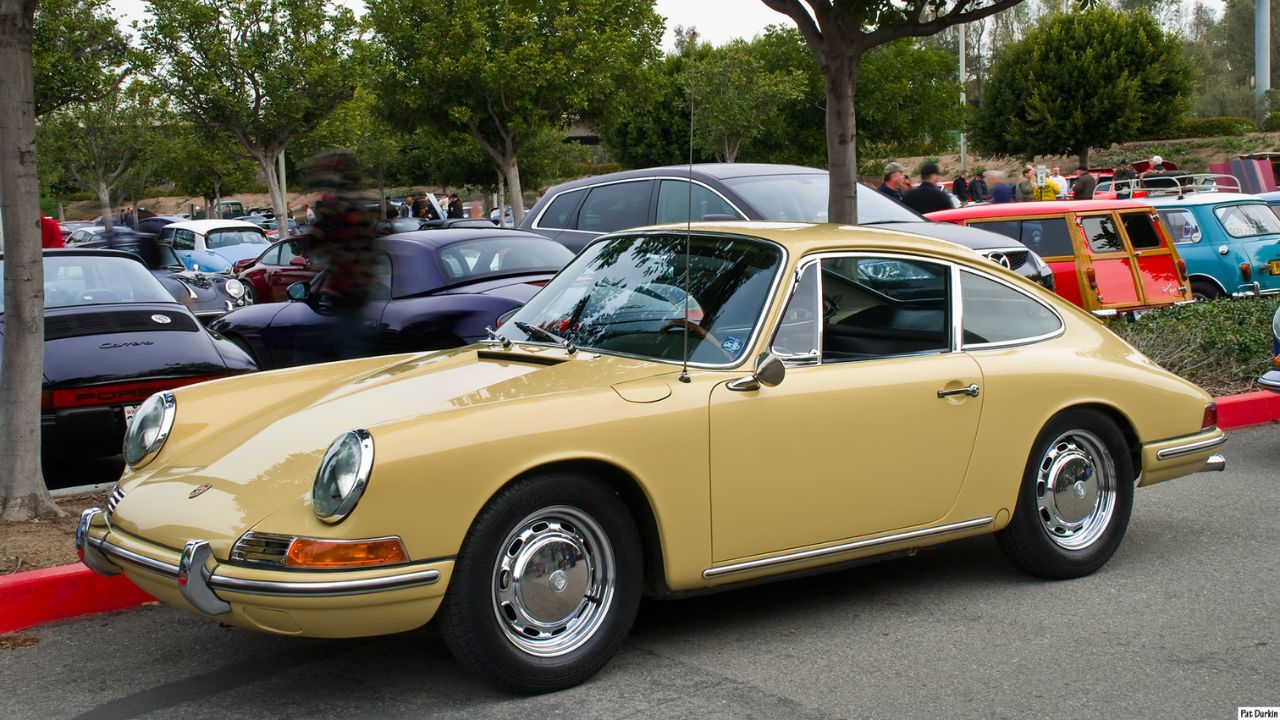
When the first production Porsche 911 appeared in 1964, it was not just a new sports car, it was a reset of what a compact performance machine could be. The basic template that arrived in that moment, a rear engined 2+2 with clean styling and everyday usability, has survived six decades of change while rivals have come and gone. To understand how the 1964 Porsche 911 launched a dynasty, I need to start with the car that first carried the idea into the world and then trace how its core DNA has been refined rather than replaced.
From 901 to 911: a new shape for a sports car future
The car that became the 1964 Porsche 911 began as the 901, a sleeker, more powerful successor to the Porsche 356 that had carried the company through the 1950s. From the beginning, the goal was not a fragile weekend toy but a compact coupe that could commute during the week and attack a mountain road on Sunday, a philosophy that earlier advertising leaned into by stressing that most buyers could afford only one car and needed it to do everything. The production version that reached customers in 1964 kept the 901’s basic styling but had to be renamed after French objections, because Peugeot held a trademark on three digit numbers with a zero in the middle, so the badge changed to 911 while the concept stayed intact.
That renaming did more than solve a legal problem, it gave Porsche a simple, memorable number that could anchor a lineage. The first generation, often called the original 911, arrived with a compact footprint, a rear mounted flat six and a 2+2 layout that made it more practical than pure two seat rivals. Internal histories describe how the renaming to 911 took place at launch in 1964, and how the company quickly spun the basic platform into related models such as the 912, which shared the body but used a different engine. From the earliest production run, the 911 was treated as a flexible architecture rather than a single fixed specification, a mindset that made it easier to evolve the car without losing its identity.
Engineering character: light, communicative and rear engined
What set the 1964 Porsche 911 apart was not just its layout on paper but the way that layout translated into feel. Contemporary and later driving impressions of early cars emphasize light, communicative steering, helped by tall tires and low curb weight, and a sense that the car talked back to the driver through every control. Instead of chasing brute power, the engineers focused on balance, traction from the rear engine and a chassis that rewarded smooth inputs, which is why enthusiasts still seek out early 911s to savor that original character.
The decision to keep the engine behind the rear axle was unconventional even then, but it became the defining trait of the dynasty that followed. Company histories note that quite a bit of early marketing leaned on the idea that a rear engined layout could deliver both performance and everyday usability, reinforcing the message that this was a car you could live with. Later retrospectives on the brand’s evolution argue that the 911 became the ultimate expression of The Porsche engineering philosophy, a car where decades of incremental refinement were layered onto the same basic mechanical concept rather than replaced by a clean sheet design.
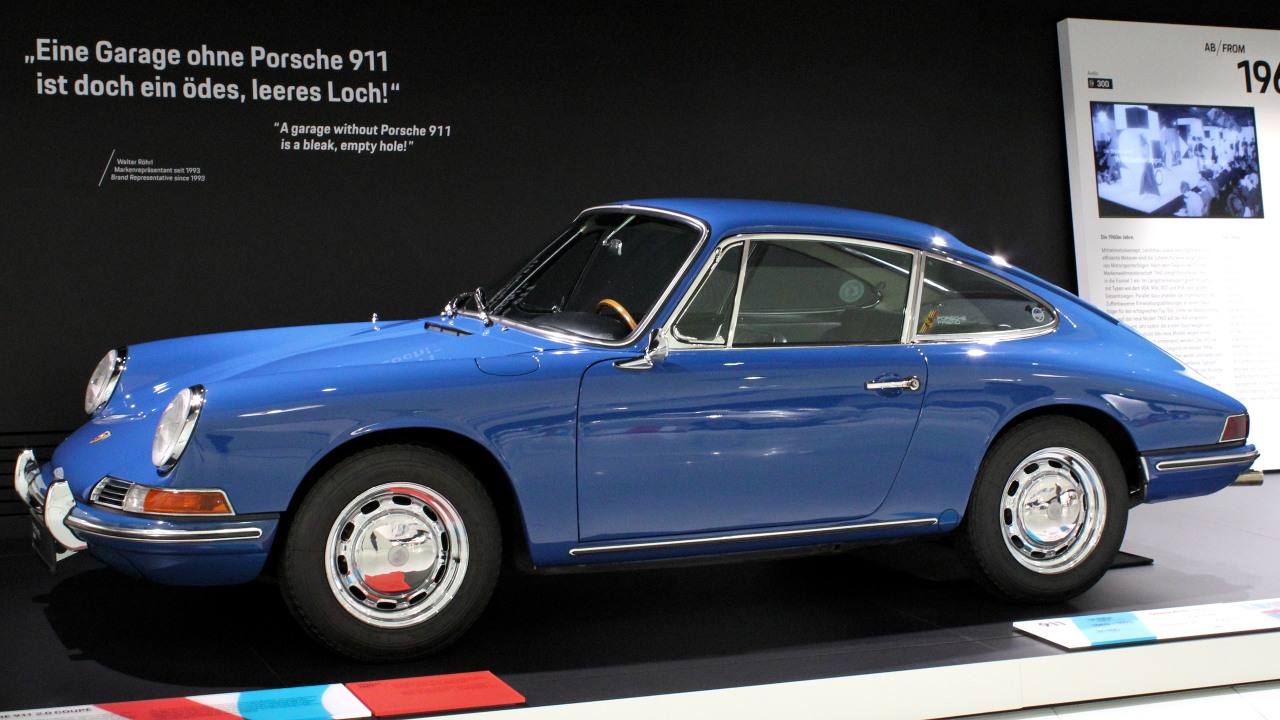
Racing proof: Daytona and the birth of a winner’s image
A dynasty in sports cars is not built in showrooms alone, it is forged on race tracks, and the 1964 Porsche 911 proved its worth early in competition. In the mid 1960s, a lightly modified 911 entered the 24 hour race at Daytona, running as car number 18 and, according to period accounts, needing little more than regular refueling and routine checks while heavier, more powerful machines struggled. The car was not even part of the official works program, yet it carried the unmistakable look of a winner and helped cement the idea that the new 911 could endure the same punishing conditions as purpose built racers.
That Daytona performance was important because it showed that the qualities baked into the road car, durability, efficiency and predictable handling, translated directly into endurance racing. Later brand storytelling points to the 1964 Porsche 911 at Daytona as an early milestone in a competition record that would stretch across rally stages, long distance sports car events and one make series. By proving that a showroom spec 911 could survive 24 hours at speed, Porsche gave customers a powerful narrative, the car in their driveway shared its core engineering with machines that had already earned trophies, and that link between road and track became a central pillar of the dynasty.
Evolution without betrayal: how the template survived 60 years
Looking across the 911’s 60 year history, what stands out is how much has changed around a surprisingly stable core. Early overviews of the model’s evolution describe how the first decade, from 1963 to 1972, saw the 911 grow out of the 356’s shadow with more power, better brakes and a stiffer body, yet the silhouette, rear engine layout and 2+2 cabin remained familiar. Later generations added impact bumpers, turbocharging, water cooling and sophisticated electronics, but the company’s own retrospectives stress that the research and development teams always treated the original 1964 concept as the reference point, not a relic to be discarded.
That continuity was not inevitable. Internal histories recount how, at one point, there were serious plans to wind down the 911 in favor of front engined models, a move that would have broken the line that began in 1964. Instead, leadership changes, including the arrival of American born Peter Schutz, a German Jew whose family had fled Europe, led to a renewed commitment to the rear engined sports car and a decision to keep developing it. Later analyses argue that the ultimate expression of The Porsche philosophy is found in the 911, precisely because it shows how a single idea can be stretched across decades of changing regulations, customer expectations and technology without losing its essence.
The 1964 car’s living legacy in today’s 911
To see how the 1964 Porsche 911 launched a dynasty, I look at what survives in the current car. Modern retrospectives describe the 911 as the heart and soul of Porsche, noting that few cars in history are as legendary and that the model has come to symbolize a blend of power, luxury and handling that rivals still chase. Even after multiple generations, the basic proportions, the view over the front fenders, the rear engined balance and the idea of a sports car that can be driven daily all trace directly back to that first production run in 1964.
The persistence of that template has also shaped how enthusiasts and the company itself talk about the car. Long form histories of the brand describe how Evolution of the 911 over six decades has inspired countless imitators, but none have truly succeeded in dislodging it from its niche. When I watch contemporary coverage of a surviving 1964 example, such as a short feature where a salesman named Gary walks around a very early car and points out its details, I see how the original still feels connected to the latest models in showrooms. The dynasty that began with the 1964 Porsche 911 is not a museum piece, it is a living line of cars that continue to refine the same idea that first took shape when the 901 badge quietly gave way to three digits that would become automotive shorthand for a legend.
More from Fast Lane Only: