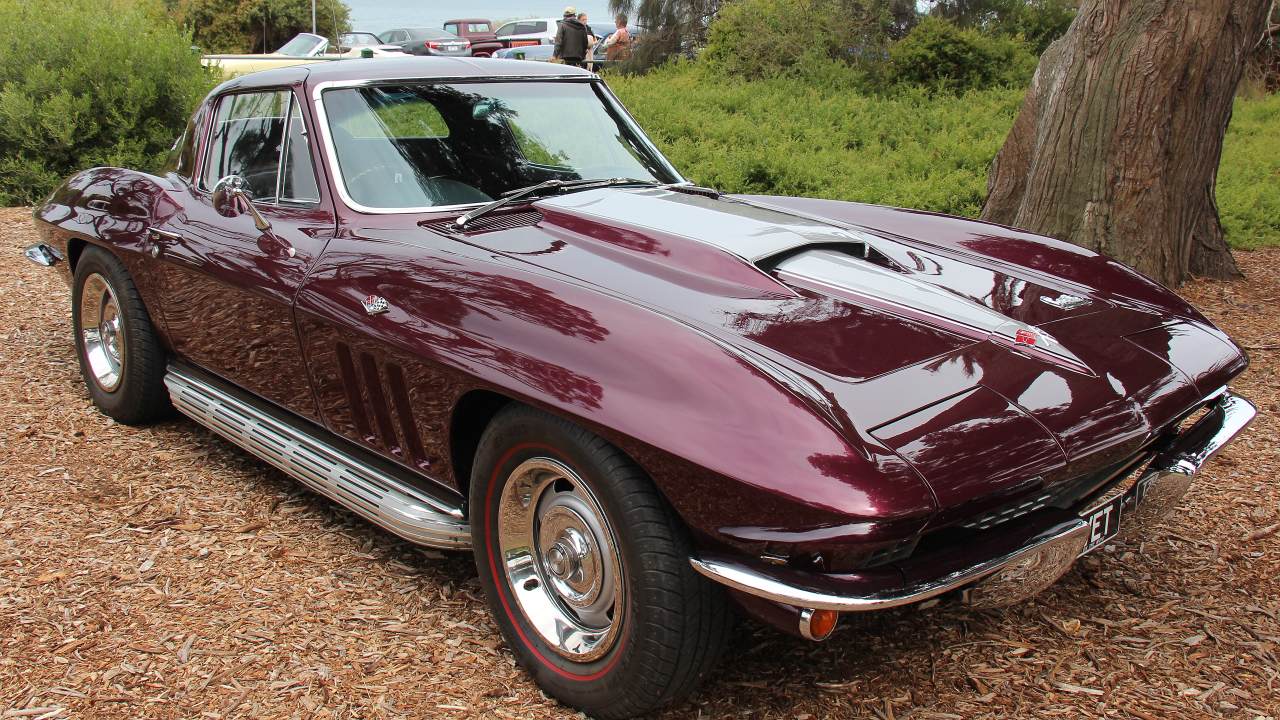
The 1966 Corvette arrived at the height of the horsepower wars, yet its real achievement was not just raw speed. Chevrolet managed to bolt a huge 427 cubic inch V8 into the compact C2 Sting Ray and still deliver a sports car that could corner, stop, and communicate with its driver in a way big-block rivals rarely matched. I see that balance of power and control as the reason the 1966 model year still anchors so many conversations about what a classic American performance car should feel like.
Big-block escalation without losing the sports car brief
By 1966, Chevrolet had a clear mandate from buyers who wanted more displacement and more straight line punch, yet the Corvette still had to behave like a sports car rather than a drag-strip special. The answer was the new 427 cubic inch V8, offered in two distinct states of tune so customers could choose between a more streetable grand tourer and a harder edged track weapon. Official material from the period notes that 1966 marked the introduction of the 427, with output rated at 390 horsepower for the milder version and 425 horsepower for the high compression, solid lifter engine, a spread that let Chevrolet court both luxury and performance buyers without redesigning the entire car.
That strategy built directly on the big-block path the Corvette had already taken. Reporting on the 1966 Corvette history explains that the Chevrolet Corvette would continue to feature big-block engines, and that when Chevrolet released its 427, the focus was not only on peak horsepower but also on a substantial increase in torque. Under the hood, the National Corvette Museum’s specifications describe 427 cubic inches in either of Corvette’s two new V8s for 1966, with the top-output engine listed at 425-hp and using a special camshaft with mechanical valve lifters. In other words, the factory was deliberately walking a line between brutal acceleration and a driveline that could still be lived with on real roads, a balance that defined the car’s character.
Chassis fundamentals that could handle seven liters
Dropping a seven liter engine into a relatively compact chassis only works if the underlying structure and suspension are up to the task. The C2 platform that underpinned the 1966 Corvette had already been engineered with handling and safety in mind, and that groundwork is what allowed the big-block cars to remain controllable. A detailed C2 deep dive notes that under the skin, the C2’s chassis was a major engineering upgrade designed to optimize handling and safety, including a new frame layout and suspension geometry that resulted in a lower center of gravity. That lower stance and more sophisticated layout meant the extra mass of the 427 sat in a package that was already tuned to change direction quickly and stay planted.
Braking was just as critical to keeping the big-block in check. A focused C2 Corvette FAQ points out that the new four-wheel disc brakes, which became standard equipment for the first time on the mid-year cars, were a massive upgrade over the previous drum setup, sharply reducing fade and improving repeated stopping performance. By the time the 1966 big-block arrived, those discs were part of the baseline package, so a driver who unleashed 425-hp on a back road also had modern-feeling stopping power underfoot. Contemporary road tests of the 1966 Corvette 425 HP 427 CID emphasized that the difference between this seven-liter street machine and the big seven-liter super stocks of the era was size and proper suspension, a telling phrase that underlines how much Chevrolet relied on chassis tuning rather than brute force alone.
Drivetrain and steering choices that tamed the torque
Power is only as usable as the drivetrain that channels it, and Chevrolet’s choices here were central to how controllable the 1966 big-block felt. Technical references on drivetrain basics describe the powertrain as the system that manages the entire process of power generation and transmission, from the engine through power conversion in the transmission to power delivery at the wheels. In the Corvette’s case, that meant pairing the 427 with fully synchronized manual gearboxes that let drivers keep the engine in its sweet spot without fighting balky shifts, along with rear axle ratios that balanced acceleration with highway usability. Factory specification sheets for the 1966 Corvette note that both small-block and big-block engines used hydraulic valve lifters in some configurations for smoothness and quiet operation, while listing oil requirements and lubrication capacities that reflected the demands of sustained high speed running.
Steering and stability hardware also played a quiet but important role in keeping the big-block cars from feeling unruly. A discussion among owners disassembling a 66 big block Corvette highlights how some cars were delivered without a steering stabilizer, prompting questions from Corvetters about whether such hardware was necessary for control. That kind of period and enthusiast feedback underscores how carefully Chevrolet had tuned the basic steering geometry and assist levels, to the point that even a 427 car could feel composed without extra band-aid components. Later Corvette generations would add more elaborate suspension aids, and a 1975 Corvette specification sheet describes front suspension using unequal-length upper and lower control arms, ball joints and coil springs, with refinements to help boost road holding and stability, but the 1966 model relied more on fundamental geometry and weight distribution to keep the steering honest.
Real world performance that justified the engineering
All of that engineering would have meant little if the 1966 Corvette had not delivered on the road and track, yet period test numbers show that the car’s performance was exceptional even by modern standards. A detailed profile of a 1966 Chevrolet Corvette Sting Ray 427/425 coupe reports that its performance was exceptional, achieving 0-60 in 4.8 seconds, 0-100 in 11.2 seconds, a quarter-mile time of 12.8 seconds, and a top speed that placed it among the quickest production cars of its era. Those figures were not just the product of raw horsepower, they reflected a package that could put power down efficiently, shift quickly, and maintain stability as speeds climbed.
Contemporary road tests of the 1966 Corvette 425 HP 427 CID reinforced that impression by contrasting the car with other seven-liter machines of the time. Testers emphasized that the difference between this seven-liter street machine and the big seven-liter super stocks was in size and proper suspension, a clear acknowledgment that the Corvette’s relatively compact footprint and carefully tuned chassis made its acceleration more usable. Later video features on surviving 1966 big-block cars, including a 1966 all original 427 big block Corvette and a separate look at a 1966 big block 427 Corvette in a garage setting, show how those performance credentials have translated into long term desirability. When modern hosts fire up these cars and talk through their drivability, they are effectively stress testing the same balance of power and control that engineers targeted in period.
Legacy of the 1966 big-block in the Corvette story
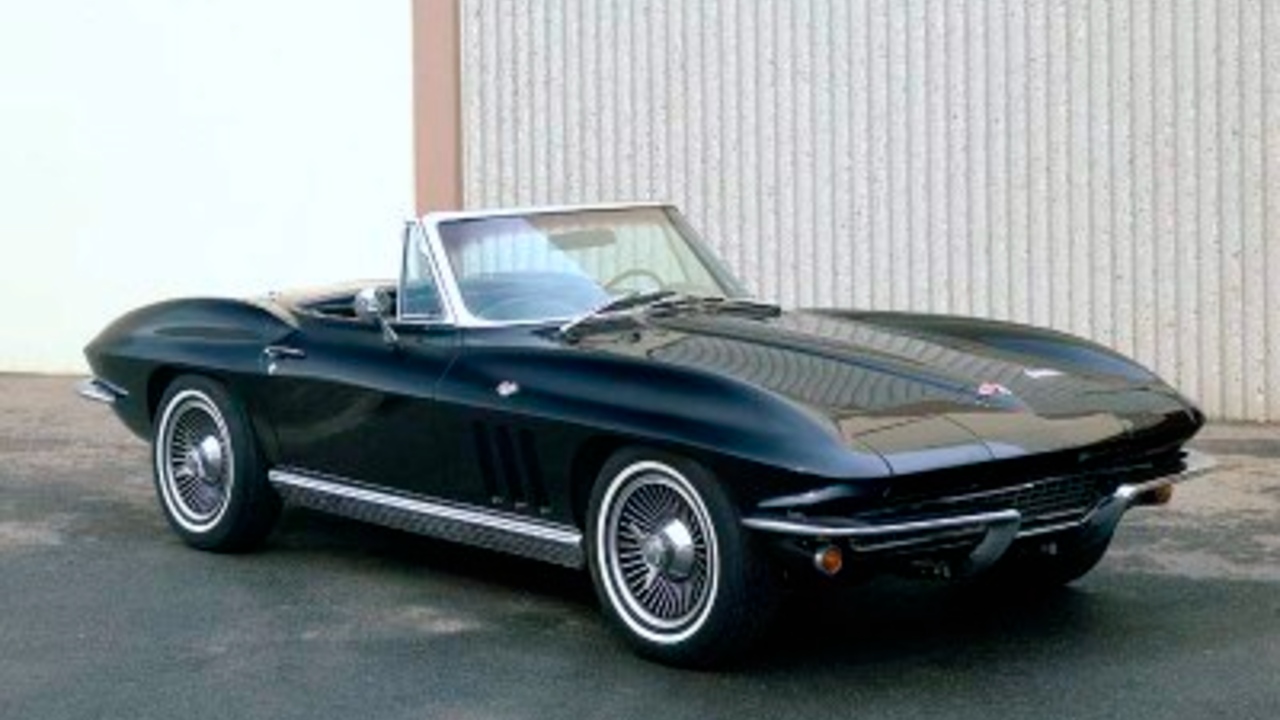
Looking back from today, I see the 1966 big-block Corvette as a pivot point where Chevrolet proved it could escalate the horsepower wars without sacrificing the sports car essence of the Sting Ray. Historical overviews of the Corvette line argue that the 1966 model year is arguably one of the most desirable, in part because it combined the mature C2 styling with the full strength of the 427 and the already sorted four-wheel disc brakes. Auction listings for a 1966 Chevrolet Corvette convertible describe how the winning bid will take this collectible Corvette home, with two versions of the Turbo-Jet V-8 available, a reminder that the market still values the specific blend of options that defined the car’s character. That desirability is not just nostalgia, it is a market verdict on how well the car balanced its competing missions.
The broader C2 story reinforces that point. A deep dive into the Sting Ray revolution notes that under the skin, the C2’s chassis was a major engineering upgrade that resulted in a lower center of gravity, and that foundation allowed Chevrolet to keep adding power through the mid 1960s without losing control. Enthusiast videos on the wicked C2 Corvette 427 big block of the 60’s frame these cars as the start of the horsepower wars back in the 60s, yet they also highlight how the Corvette remained more than a straight line missile. When I look at that mix of engineering choices, performance data, and enduring appeal, the 1966 Corvette stands out as a case study in how to integrate a big-block engine into a sports car without letting the power overwhelm the driving experience.
More from Fast Lane Only: