The 1995 Mitsubishi Eclipse GSX arrived at a moment when compact performance cars were getting sharper, more sophisticated, and more youth focused, and it managed to feel both attainable and exotic at the same time. With turbocharged power, all-wheel drive, and styling that looked ripped from a concept sketch, it became the poster car for a generation that grew up on import tuning, video games, and early internet car culture. I want to unpack why that specific model year still resonates so strongly, long after most examples have vanished from daily traffic.
From joint venture coupe to ’90s performance icon
To understand why the 1995 Mitsubishi Eclipse GSX hit so hard, I first have to look at where the nameplate came from. The original Mitsubishi Eclipse was conceived as an entry in the mid-level four cylinder sports coupe segment, part of a broader collaboration that also produced sibling models under other badges. That first generation laid the groundwork, but it was the second generation, launched for the 1995 model year, that sharpened the car into the sleek, low profile shape most enthusiasts picture when they hear the name. Period descriptions of the Eclipse emphasize how the hood line was so low that special engineering was needed to package the turbocharged engine, a detail that underlined how serious the company was about style and performance in a compact footprint.
By the time the 1995 Mitsubishi Eclipse GSX arrived, the formula had evolved into something close to a greatest hits package for young performance buyers. The GS Turbo and GSX were equipped with turbocharged engines, and the GSX added all-wheel drive to the mix, creating a combination that felt rare in its price bracket. Contemporary overviews of the Mitsubishi Eclipse highlight how the second generation’s design and mechanical package pushed it beyond a simple commuter coupe and into the realm of aspirational performance car, especially in GSX trim. That shift in mission is a big part of why the 1995 model became such a touchstone: it was no longer just a sporty version of an economy car, it was a purpose built turbo AWD coupe that looked and felt special.
Turbocharged hardware that punched above its weight
Under the skin, the 1995 Mitsubishi Eclipse GSX backed up its aggressive styling with numbers that mattered to enthusiasts. The car used the 4G63 engine, a turbocharged four cylinder that put out 210 horsepower with the help of a single turbo, a figure that stood out in a compact coupe of the era. Reporting on the second generation Eclipse notes that peak power from the turbo models was boosted to 210 horsepower thanks to changes like higher compression, which meant the GSX was not just about traction but also straight line speed. For a generation raised on spec sheets in the back of car magazines, that output figure became a shorthand for serious performance.
The drivetrain layout amplified that impression. The GSX paired its turbo engine with AWD, a configuration that enthusiasts associated with rally bred machinery and high end imports. References to the model’s specification consistently emphasize that the GS Turbo and GSX shared the boosted powerplant, while the GSX added the all wheel drive system that set it apart from front drive siblings. In valuation notes for the 1995 Mitsubishi Eclipse GSX, the car is described alongside The Talon TSi and TSi AWD, underscoring how this family of turbo AWD coupes represented a distinct slice of Chrysler and Mitsubishi history. That combination of a compact body, a stout turbo four, and all wheel drive traction gave the GSX a performance identity that felt far more exotic than its price tag suggested.
Styling that looked like a scaled down supercar
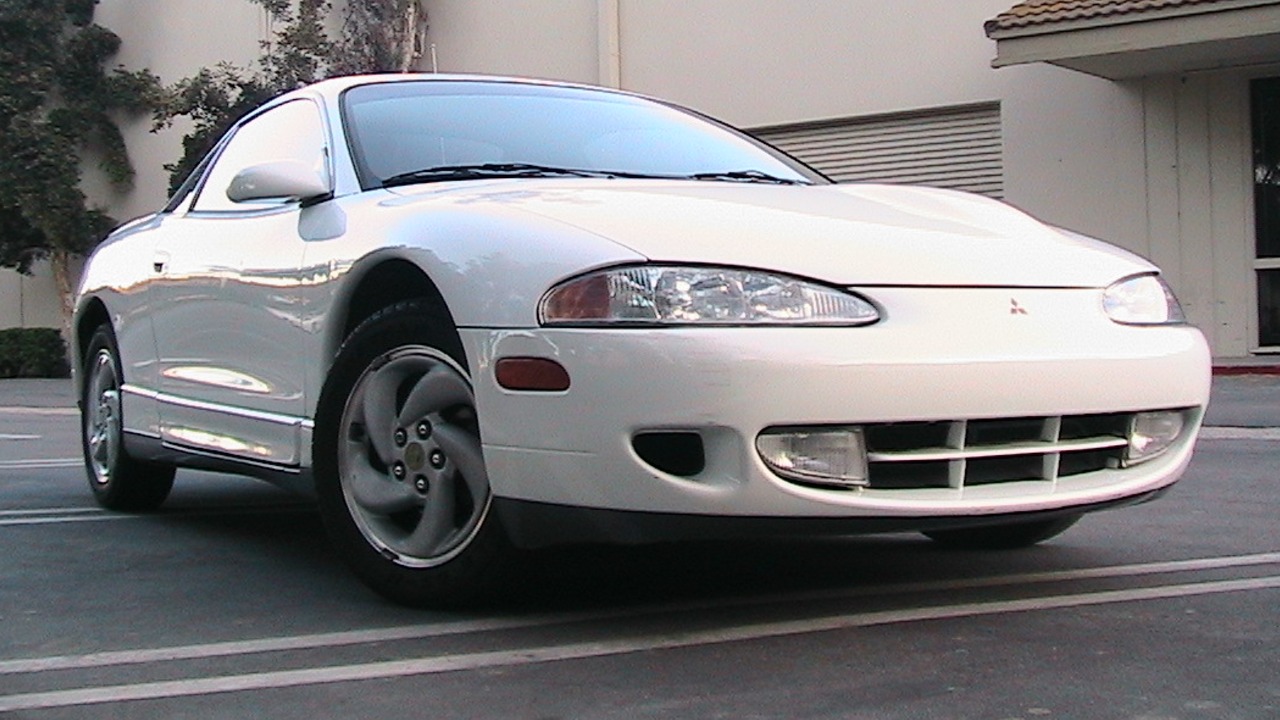
Performance alone does not explain why the 1995 Mitsubishi Eclipse GSX imprinted so deeply on enthusiasts; the styling did just as much work. Contemporary and retrospective descriptions compare the second generation Eclipse to a scaled down 3000GT, with a low, flowing profile and tightly drawn curves that made it look more expensive than it was. The Eclipse also had lower reversing lights, rather than including them in the tail light cluster, a small but distinctive detail that helped the rear end stand out from other coupes. In valuation notes, The Eclipse is singled out for these design touches, which gave the car a more bespoke appearance compared with its platform mates.
Color and trim combinations added to the effect. Auction listings for a 1995 Mitsubishi Eclipse GSX 5 Speed The car finished in Northstar White with Logan Silver lower panels show how the factory two tone schemes accentuated the car’s wedge shape and flared arches. That particular example, with its sunroof, fog lights, and period correct alloy wheels, reads like a time capsule of mid 1990s sport compact design. When I look at those details alongside broader descriptions of the Mitsubishi Eclipse’s low hood line and sleek profile, it is clear why the GSX became a visual icon: it looked like a concept car that somehow made it to the showroom, and for young drivers it offered supercar cues in a package that could realistically be parked in a suburban driveway.
Pop culture, games, and the tuner imagination
The 1995 Mitsubishi Eclipse GSX did not live in a vacuum; it was woven into the fabric of late 1990s and early 2000s car culture. Enthusiast discussions point out that the 95 to 99 M Mitsubishi Eclipse GSX is famous mostly among street racers and tuners, and that it appears in the first wave of high profile street racing movies and games. That visibility meant teenagers who could not yet drive were still forming emotional attachments to the shape and nameplate, long before they could afford one. When those same fans later entered the market, the GSX was already mythologized as a hero car, even if the specific on screen examples were not always 1995 models.
Video games deepened that connection. In a mini documentary, Andrew describes his 1995 Mitsubishi Eclipse GSX and recalls playing Midnight Club on his PSP, where cars like the GSX were part of the digital garage that defined his early sense of speed and style. That kind of testimony illustrates how the car lived a second life in virtual form, influencing players who might never have seen one in their neighborhood. Elsewhere, a short feature on the 2nd generation Mitsubishi Eclipse GSX (1995 to 1999) calls it a legend in the world of performance cars, combining a sleek body with serious hardware, a description that mirrors how the car is framed in enthusiast reels and social posts. Even criticism, such as a video labeling the Mitsubishi Eclipse GSX a JDM failure while still calling it a favorite Japan inspired performance car, reinforces its cultural footprint: the car is debated, referenced, and reinterpreted, which is exactly what happens to machines that capture the imagination.
Nostalgia, scarcity, and the modern collector market
Today, part of the 1995 Mitsubishi Eclipse GSX mystique comes from how rarely it appears in the wild. On enthusiast forums, owners share photos with captions like “My 1995 Eclipse GSX. Don’t see too many of these anymore,” and the Comments Section quickly fills with replies from people saying they want one badly but can only find them on sketchy websites. Another discussion thread titled “Any love for the 2nd gen Eclipse?! Where have they all gone?!” features users reflecting on how few clean examples remain, with one commenter starting a reply with “While” they agree on the car’s appeal but noting that other models may have survived in greater numbers. That sense of scarcity, whether driven by attrition, modifications, or neglect, has turned surviving GSX coupes into minor celebrities whenever they appear at cars and coffee events or online auctions.
Market analysts tie that scarcity directly to rising interest from younger collectors. A report on modern classics notes that Nostalgia for the 1990s is real and that Collector car buyers entering their prime earning years are gravitating toward the vehicles they grew up around. The 1995 Mitsubishi Eclipse GSX fits that pattern perfectly: it was aspirational but visible in its heyday, and now it is rare enough to feel special without being completely unobtainable. Valuation tools for the 1995 Mitsubishi Eclipse GSX point out details like its unique lighting and its place alongside The Talon in AWD turbo history, framing it as a significant piece of the era’s performance landscape. Personal essays from the period, such as one writer recalling how they pored over car magazines and used car pricing guides to track Eclipse values because demand was so high, underline how the car was already a hot commodity when new. That early desirability, combined with the attrition documented by today’s enthusiasts, helps explain why a clean 1995 GSX now commands attention and why it continues to symbolize a formative chapter in 1990s car culture.
More from Fast Lane Only: