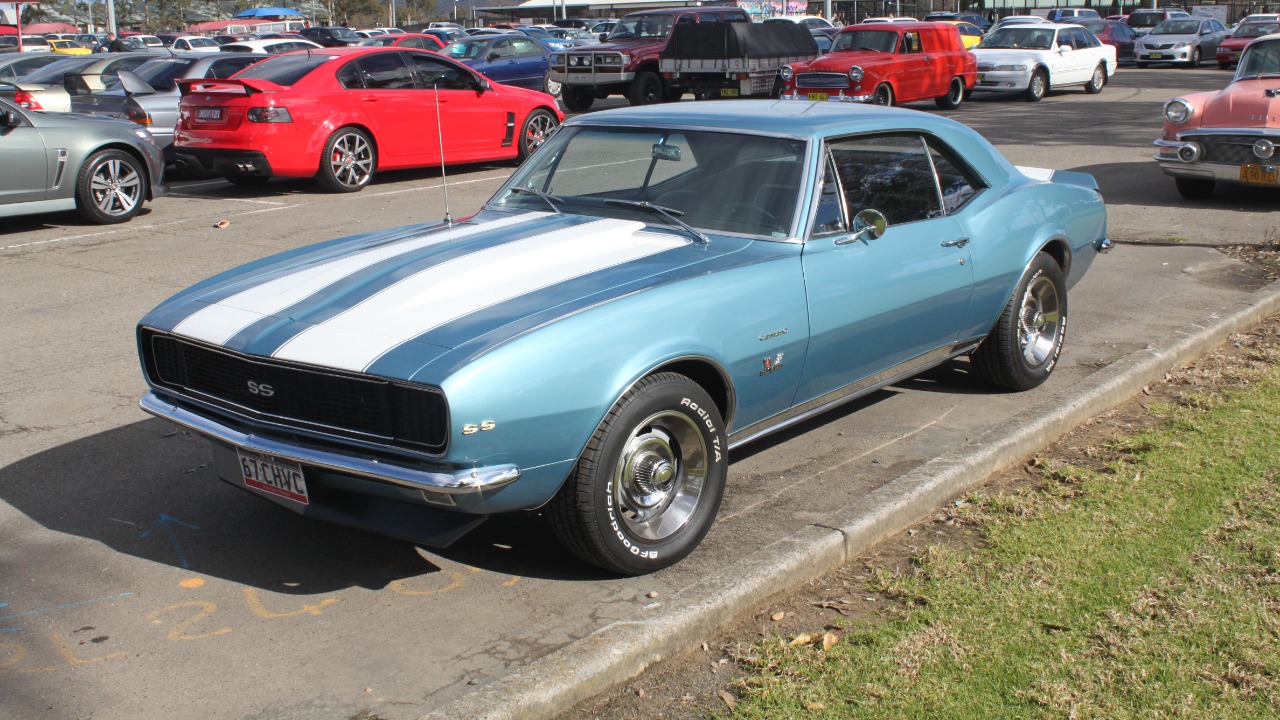
The 1967 Chevrolet Camaro SS did not arrive as a gentle new face in American showrooms. It rolled in as a calculated weapon, shaped by corporate rules, rival egos, and a horsepower race that was already getting out of hand. To understand how it became a genuine threat, you have to look past the stripes and badges and into the boardrooms, engineering labs, and drag strips that turned a first-year pony car into a problem for everyone else.
From the moment it was unveiled, the Camaro SS was designed to unsettle the balance of power that the Ford Mustang had enjoyed. What began as General Motors playing catch-up quickly turned into a car that bent its own company’s rules and pushed the limits of what a street machine was supposed to be.
The corporate panic that birthed a street fighter
By the mid‑1960s, General Motors was watching the Ford Mustang eat into its market share and, more importantly, its image. Knowing that it was running behind a new wave of market excitement, the company’s bosses ordered what they openly called a “pony car,” a compact coupe that could be dressed up with serious performance hardware to go head to head with Ford’s hit. That directive set the stage for a car that was never meant to be polite, only effective, and it is the reason the first Camaro SS arrived with a chip on its shoulder rather than a soft launch.
The urgency inside General Motors filtered straight into the options sheet. Executives did not just want a stylish commuter, they wanted a car that could be ordered with a big‑block V‑8 and enough visual aggression to make Mustang owners nervous at every stoplight. That mindset explains why the SS package quickly became the spiritual core of the lineup, turning what could have been a cautious response into a full‑blown counterpunch that treated the existing pony car hierarchy as a problem to be solved rather than a trend to be joined.
How the press debut framed the Camaro as a Mustang killer
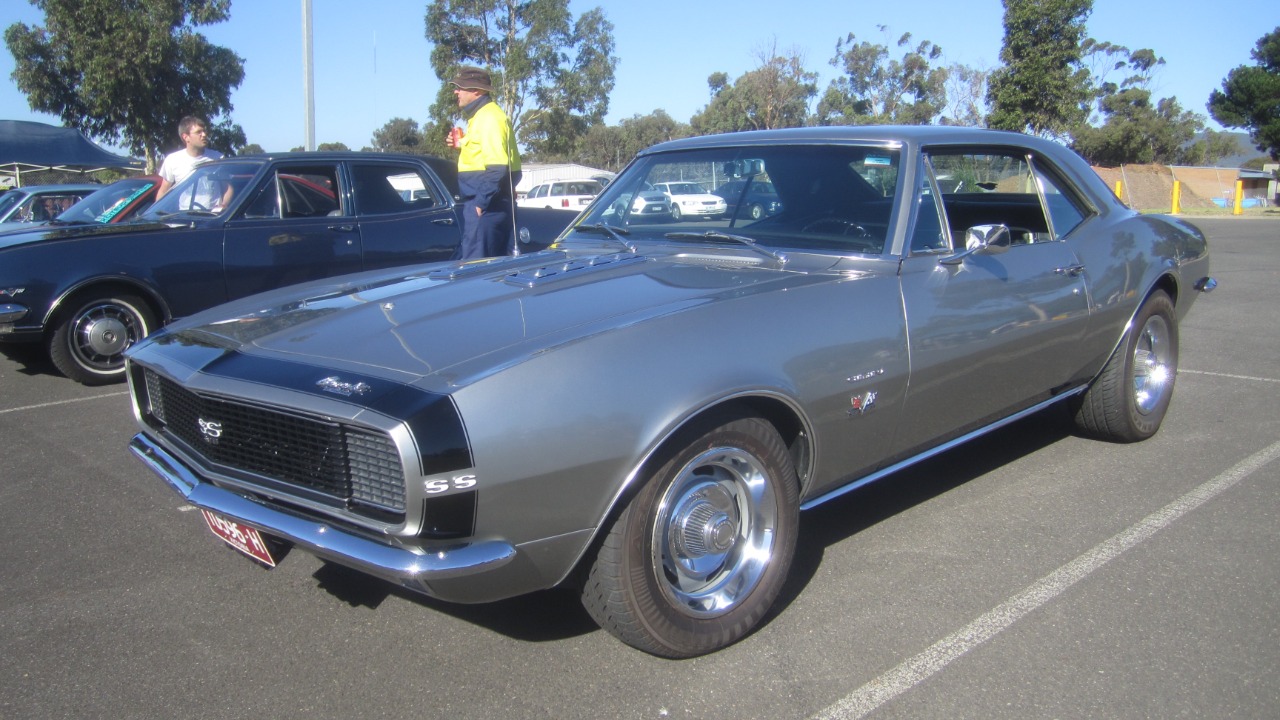
When members of the press were invited by General Motors to meet the new Camaro, the company did not pretend it was inventing a new niche. The car was introduced explicitly as the machine that would go head to head with the Ford Mustang, a framing that told journalists and buyers alike that this was a confrontation, not a coincidence. By positioning the car in direct opposition to its rival from day one, the company made sure every road test, every comparison, and every showroom walk‑around would be read as a scorecard in an ongoing fight.
That early messaging still shapes how I see the 1967 Chevrolet Camaro SS today. It was not just another sporty coupe, it was a statement that General Motors was willing to challenge the narrative that the Mustang had defined the muscle era. Later storytellers have gone even further, arguing that the real spark for the muscle car age was not the original Ford at all but the reaction it provoked, a backlash that turned into a strike back once Chevrolet’s engineers and marketers got their turn at the plate.
The SS 396 and the quiet rule‑breaking under the hood
Underneath the marketing, the real threat came from the hardware that engineers managed to sneak past their own corporate guidelines. General Motors had a rule that no car except the Corvette could have a weight‑to‑power ratio better than ten pounds per horsepower, a policy meant to keep the most extreme performance halo safely on the fiberglass sports car. Since the L78 version of the 396 cubic inch V‑8 violated that rule, it technically should not have existed in the Camaro at all, yet it did, turning the SS 396 into a car that broke ranks with its own maker’s caution.
That engine was not just a number on a brochure. In full L78 tune, the 396 transformed the Camaro SS into a machine that could embarrass bigger, heavier intermediates and make the Corvette’s exclusivity feel a little less secure. The fact that this package slipped into showrooms despite the internal ten‑pounds‑per‑horsepower ceiling shows how far Chevrolet was willing to go to make its new pony car a genuine menace, not just to the Mustang but to the carefully tiered performance ladder inside its own brand family.
Raw power, real flaws, and why the car still scared rivals
For all its muscle, the 1967 Chevrolet Camaro SS 396 was not a perfectly sorted weapon. The car relied on inadequate single‑leaf rear springs that struggled to keep all that torque under control, especially when the big‑block engine was pushed hard off the line. That setup could lead to axle hop and unpredictable traction, a reminder that the chassis had been asked to handle more power than its original pony car mission might have anticipated, and that the rush to market left some rough edges in place.
Yet those flaws did not blunt the car’s reputation as a threat. If anything, they added to its aura, the sense that you were dealing with something barely contained. Buyers could even pair the big‑block with an automatic transmission that was listed as a $226 option, a combination that made brutal acceleration accessible to drivers who were not interested in mastering a clutch. The result was a car that might not have been the most refined on a winding road, but on a straight piece of pavement it delivered the kind of shove that made competitors rethink their own performance limits.
From showroom gamble to lasting street legend
The aggressive intent behind the Camaro SS did not fade once the first wave of buyers drove off the lot. Decades later, the car still inspires the kind of devotion that leads people to take risks most of us would never consider. One owner in central New York, for example, was so convinced of the model’s appeal that he bought a 1967 Camaro sight unseen from a long distance, trusting only the seller’s description and the promise of a big‑block V‑8 making 350 horsepower. That gamble paid off, and the car became a cherished part of his life, a personal reminder of how potent the original design still feels.
Stories like that help explain why the 1967 Chevrolet Camaro SS continues to loom large in the imagination of enthusiasts. It was born from corporate anxiety, introduced as a direct challenger to the Mustang, and powered by engines that bent General Motors’ own rules about what a non‑Corvette was allowed to be. Even with its imperfect suspension and hurried development, the SS 396 turned a late entry into a lasting menace, a car that forced rivals to respond and still commands enough respect that people are willing to chase one across the country, sight unseen, just for the chance to feel that original threat from behind the wheel.
More from Fast Lane Only: