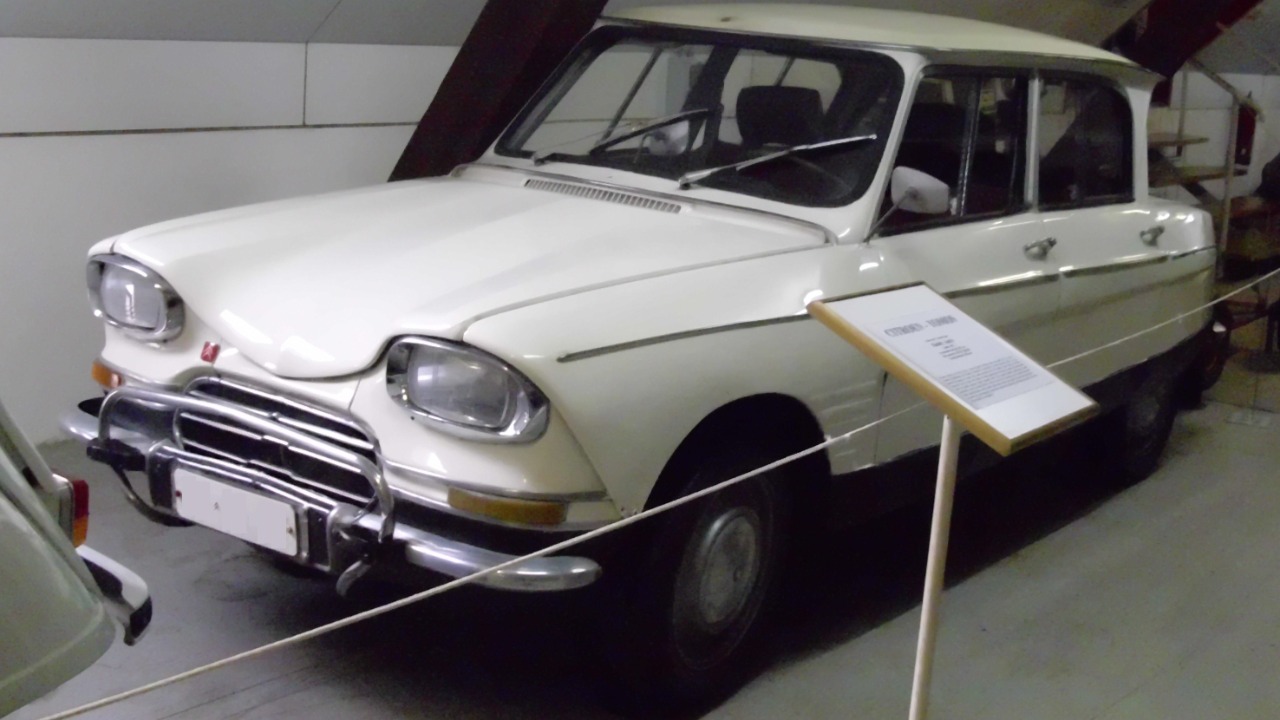
The 1967 Citroën Ami should have been the moment this oddball family car settled down. Instead, it doubled down on being different, from its reverse-rake rear window to its stubbornly simple mechanicals. Rather than chasing convention, it refined a strange formula that had been evolving since the early 1960s and, in the process, laid the groundwork for a nameplate that still refuses to behave like a normal car today. I want to trace how that late‑sixties Ami managed to stay so unconventional, and why its spirit still echoes in the tiny electric machine that now wears the same badge.
The brief that invited weirdness
To understand why the 1967 Ami never looked or felt ordinary, I start with the design brief that created it. Citroën wanted something more comfortable and upmarket than the 2CV, but still cheap to run and easy to live with, a car pitched very deliberately at what internal documents called “the lady of the household.” That task fell to Flaminio Bertoni, the stylist behind the Traction Avant, the 2 CV and the DS, who was asked to conjure a new body on familiar mechanicals, a challenge that almost guaranteed a left‑field result once he began sketching the Ami 6 that would evolve into the 1967 car After designing the Traction Avant.
Because the Ami had to sit between the bare‑bones 2CV and the futuristic DS, it was always going to be a misfit, and that tension is what kept it unconventional in 1967. The chassis and suspension were essentially 2CV, with long‑travel, soft springs and a focus on comfort over speed, while the bodywork tried to look more sophisticated without adding cost. That is how you end up with a car whose proportions, glasshouse and detailing feel almost baroque, a small family saloon that seems to have been designed from the inside out rather than to please a styling clinic.
Styling that refused to be tidied up
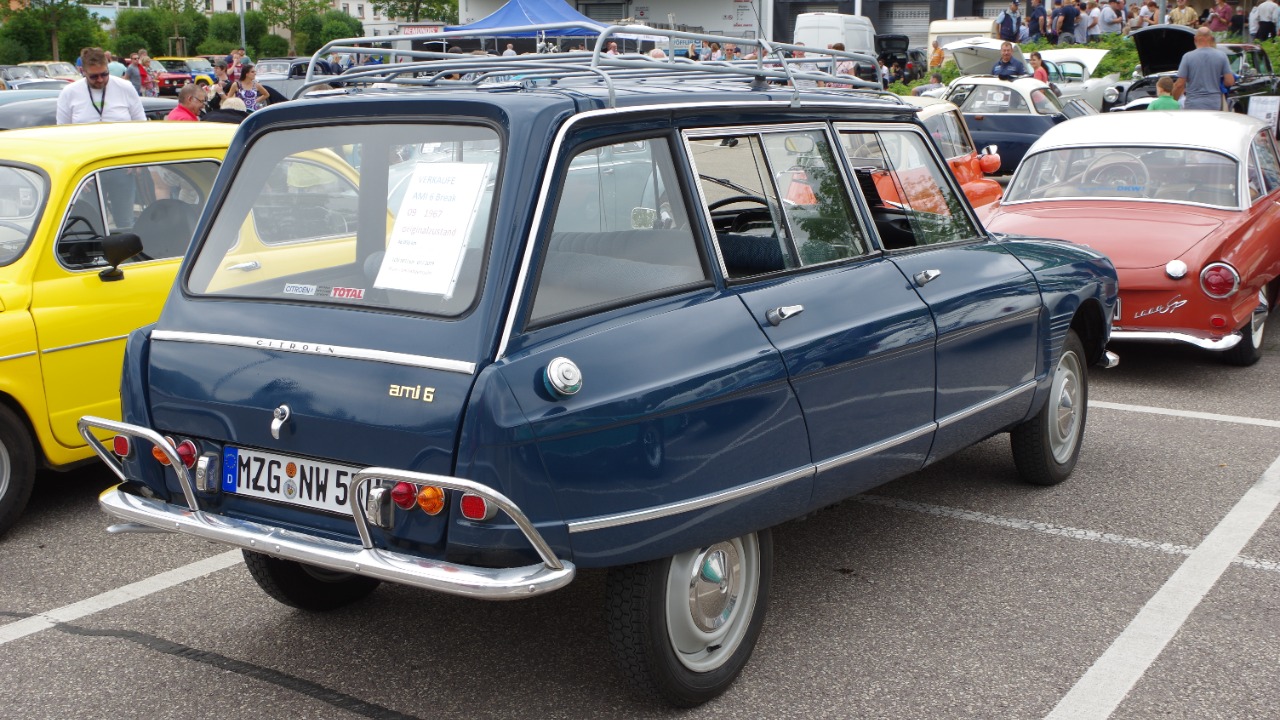
By 1967, most rivals were smoothing out fins and odd angles, but the Ami leaned into its eccentricity. The most notorious feature, the reverse‑rake rear window, was not a gimmick so much as a packaging solution that allowed a longer roofline and better access to the boot while keeping the car short, and it gave the Ami a profile that still looks like nothing else on the road. Contemporary observers often called it ugly, yet that awkwardness is exactly what made the car instantly recognisable and helped it stand apart from more conservative small saloons that have since faded into anonymity.
Looking back at period photos and later commentary, I am struck by how much of the Ami’s shape came from experimentation rather than timid evolution. Citroen had already explored radical forms with the DS, and internal prototype work on the Ami shows a company willing to try different front ends and rooflines before settling on the famously polarising look. That willingness to accept a “greatest ugly car ever” reputation, rather than sanding off the oddities, is a big part of why the 1967 version still feels defiantly offbeat today.
Mechanical modesty with a twist
Under the skin, the 1967 Ami stayed just as unconventional by refusing to chase power for its own sake. To give the car a useful step up over the 2CV, Citroën bored and stroked the familiar 425 cc flat‑twin to 602 cc, lifting output to 24 bhp, a modest figure on paper that transformed the way the car could keep up with traffic without changing its character. That engine choice kept the Ami light, simple and cheap to maintain, and it meant owners got a car that felt more capable on open roads while still sharing parts and servicing know‑how with the rural workhorse it was based on To give the car a.
Driving impressions from enthusiasts underline how different the Ami felt from more conventional small cars of its era. Helped by a sizeable steering wheel set unusually flat, the steering was direct but not heavy, and the long‑travel suspension soaked up rough surfaces that would have a stiffer saloon hopping about, while drum brakes inspired more confidence than their specification suggests Helped. The result was a car that asked you to recalibrate your expectations: not fast, not glamorous, but oddly relaxing, with a ride and control layout that felt like nothing else in its price bracket.
Practical shapes and strange model politics
If the saloon’s styling kept the Ami on the fringes, the estate version pulled it closer to the mainstream without losing its quirks. Marque historians like to point out that, in the summer of 1964, the Ami’s salvation arrived in the form of the Break, a wagon body that finally made sense of the platform by adding real load space and a more conventional rear treatment. By 1967, that Break had become the version many buyers preferred, and it showed how a single new body style could turn a “nightmarish” curiosity into a genuinely useful family car without diluting its mechanical oddity But.
The Ami also sat in a complicated family hierarchy that kept its image unconventional. The Dyane was introduced as a more upmarket alternative to the 2CV, replacing the AZAM Export and offering a smoother, less shocking shape that some buyers found easier to accept. Yet even as The Dyane As it evolved, it never quite stole the Ami’s thunder, because the Ami’s shock value and oddball charm remained unmatched, a reminder that Citro sometimes let overlapping models coexist if each spoke to a different kind of customer The Dyane As.
A name that still refuses to act like a car
What fascinates me most is how the Ami name has resurfaced in the 21st century with the same refusal to play by normal rules. The modern Ami is marketed as a 100% electric urban mobility solution that officially classifies as a light quadricycle, with Citro spelling out that it is not a car at all, a legal and conceptual shift that lets teenagers and city dwellers use it in ways a conventional hatchback never could 100%. On paper it looks like a tiny cube on wheels, but in spirit it feels like a direct descendant of the 1967 Ami, once again taking familiar mechanical ideas and wrapping them in a body that seems to ignore every styling trend around it.
Spend time with modern reviews and that continuity becomes even clearer. The Citroen Ami is described as a funky little city machine that is great fun for short hops but compromised out of town and oddly expensive compared with a good second‑hand hatchback, a verdict that could almost have been written about its air‑cooled ancestor The Citroen Ami. Another road test calls the new Ami très cool, très connected and très cheap, but also notes that it is really a more traditional and practical take on the kind of micro‑cars that firms like Renault Tw and Ligier have been selling for years, which again places it slightly to one side of the mainstream rather than squarely inside it Ami.
Why the Ami’s awkwardness still matters
Looking back at the late‑sixties Ami from today, I see a car that stayed unconventional because Citroën never tried to smooth away its contradictions. It was positioned as a practical family tool yet styled with a reverse‑rake window, engineered with a tiny 602 cc engine yet expected to carry children and luggage across rural France, and sold alongside both bare‑bones 2CVs and more polished Dyanes. Even the trim structure reflected that split personality, with two versions of the Ami 6 saloon, the basic model and the upscale Club, giving buyers a choice between austerity and a hint of luxury without changing the underlying oddball character There.
That is why the Ami name still resonates with people who like their transport a little strange. When I look at Citro’s current Ami page, with its bright colours and modular accessories, I see the same willingness to build something that is useful first and pretty second, a machine that treats urban mobility as a design problem rather than a styling contest Citro. The 1967 Ami did the same thing in its own era, and its refusal to conform, from Flaminio Bertoni’s bodywork to that 24 bhp flat‑twin, is exactly what keeps it interesting long after more conventional contemporaries have been forgotten.
More from Fast Lane Only: