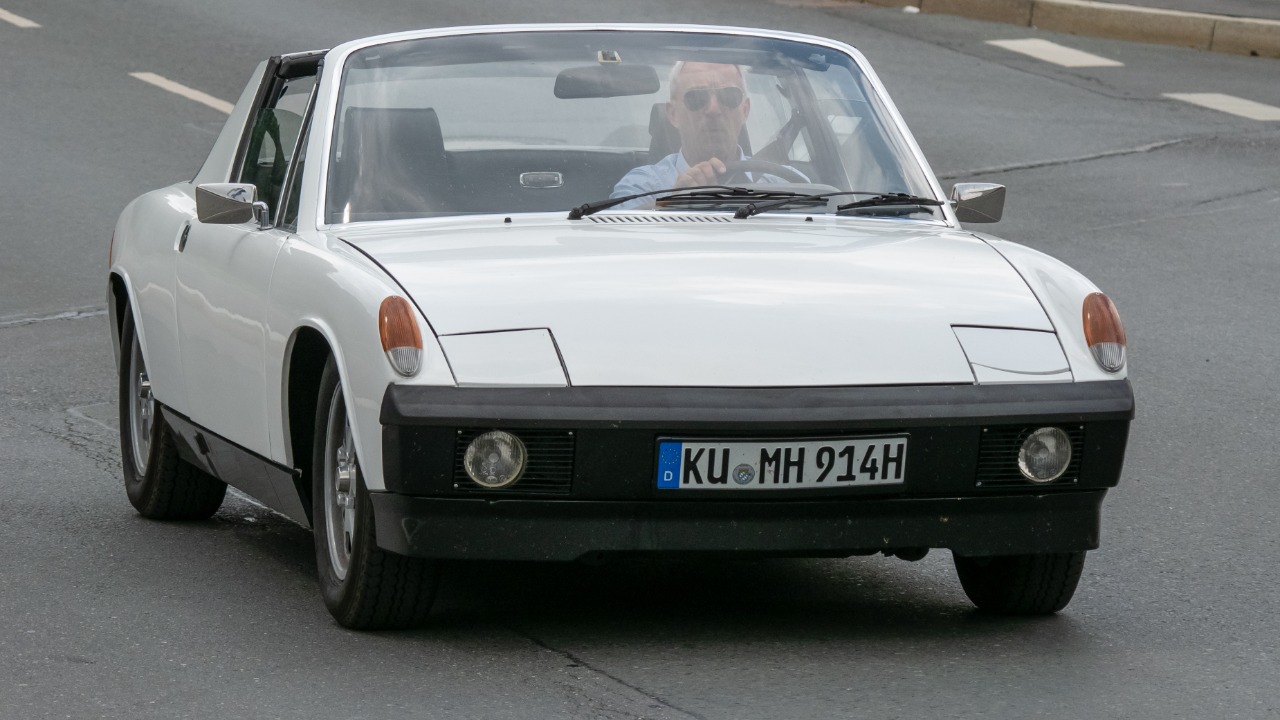
The 1969 Porsche 914 arrived as a compact, mid‑engined sports car aimed at younger drivers just as the market was still learning what that layout could offer. It promised sharp handling, everyday usability and a new kind of partnership between Porsche and Volkswagen, yet it landed in a world that was not quite ready to understand it. Looking back now, I see a car whose concept anticipated later icons, but whose timing and politics kept it from the recognition it deserved at birth.
The radical idea behind an “entry” Porsche
When I trace the 914 back to its roots, I find a company trying to solve two problems at once: Porsche needed an affordable sports car below the 911, and Volkswagen needed a halo replacement for its aging Karmann‑Ghia. The solution was a joint project that would share costs and let the small sports car maker build a new model it could not have financed alone, a collaboration that, as one account notes, only worked because of a close understanding between the firms and the fact that Such agreements were still sealed with handshakes. That trust produced a mid‑engined two‑seater with a removable roof panel and clean, almost architectural bodywork that looked nothing like the curvy 911 many buyers associated with the brand.
The design team did not pull this shape out of thin air. Porsche’s own chief designer Michael Mauer has pointed to the way the lightweight racing heritage of the 550 influenced early studies, saying the spirit of that 550 Spyder Model carried into the 914’s crisp proportions and low cowl. The result was a car that felt incredibly modern for its time, with a mid‑engine layout that put the mass between the axles and a cabin pushed forward for visibility, but that same modernity also made it hard for traditionalists to place in the Porsche family tree.
How the Porsche–Volkswagen politics muddied the message
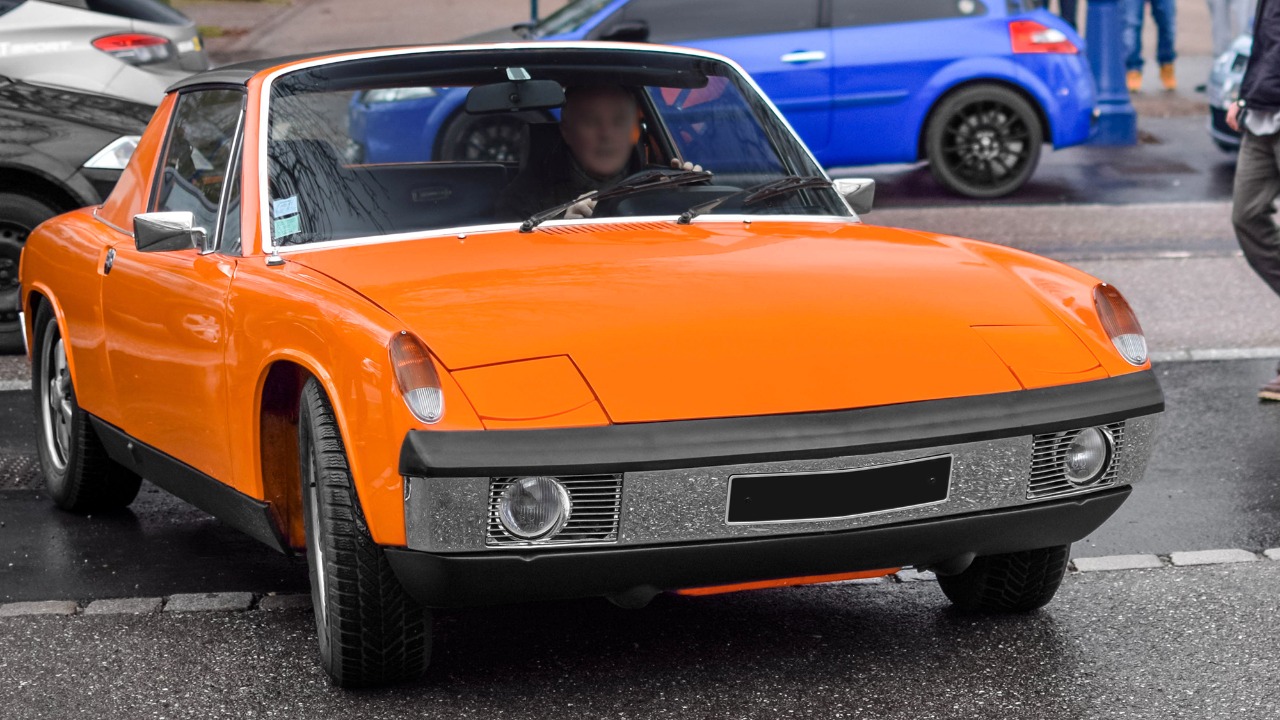
On paper, the joint venture between Porsche and Volkswagen should have been a masterstroke, yet in practice it created an identity crisis that dogged the 914 from day one. The plan was straightforward: four‑cylinder versions would be sold through Volkswagen channels, while six‑cylinder cars would wear Porsche badges, a split that reflected how Porsche and Volkswagen divided the engineering and marketing work. In Europe, that meant the same basic car appeared in different showrooms with different names, which made it harder for buyers to understand whether this was truly a Porsche or a dressed‑up VW.
Inside the company, the politics were even more tangled. Commentators who have dug into the corporate history describe how the deal structure left Volkswagen holding most of the commercial leverage, with one critic bluntly noting that in the story of the 914 VW holds all the cards. That imbalance shaped pricing and positioning, and it fed the perception in some markets that the car was a “VoPo,” a Volks‑Porsche that lacked the purity of a 911, even though the engineering underneath was far more sophisticated than the badge snobbery suggested.
Design and dynamics that anticipated later sports cars
What strikes me most, driving or even just studying a 914 today, is how much of its thinking shows up in later mid‑engined sports cars that enthusiasts now celebrate. The body is a study in functional minimalism, with flat planes, squared‑off corners and a tail that deliberately echoes the 911’s light signature while stripping away ornament, a look described in detail in a profile that notes how the taillight signature echoed the 911 yet avoided shouting about displacement or status. The removable Targa roof turned it into an open car without sacrificing rigidity, and the cabin packaging delivered real luggage space front and rear, something few rivals could match.
The chassis was even more forward‑looking. With the engine mounted just ahead of the rear axle, the 914 offered near‑ideal weight distribution, quick turn‑in and braking performance that surprised contemporary testers, traits that later events celebrating the car have highlighted by pointing to its ideal weight distribution and traction. Power from the early four‑cylinder engines was modest, but the balance and steering feel rewarded smooth driving in a way that foreshadowed later mid‑engined Porsches, even if period buyers were more focused on straight‑line numbers than on how a car flowed along a back road.
Market reality: success on paper, misunderstanding in showrooms
For all the criticism it attracted, the 914 was not a flop in the conventional sense, and that is where the “too early” story becomes more nuanced. Porsche itself has acknowledged that such a project would have been impossible for the small Zuffenhausen firm to fund alone, and that However, The Zuffenhausen partnership allowed it to build a car that went on to score significant race results, including a class win at Le Mans. In the showroom, the two‑seater with its characteristic Targa roof was aimed squarely at younger buyers, and internal retrospectives describe how this Market success translated into strong sales and a string of competition victories that should have cemented its reputation.
Numbers back that up. Over its production run, the 914 became the brand’s best‑selling model, with one analysis noting that it ultimately shipped more than Ultimately 118,000 cars and even outsold the 911 of the same era. Yet in the United States especially, the pricing of the six‑cylinder 914‑6 overlapped heavily with the base 911, and period buyers often chose the familiar silhouette over the new concept, a pattern reflected in later appraisals that point out how, in spite of high prices and the stigma of being seen as a rebadged VW, the 914 sold well between 1969 and 1976 but never quite escaped that early image problem.
Living with a 914 today and the case for its early arrival
Spend time around owners now and you quickly realize how far ahead of its time the car was in day‑to‑day use. Modern buyer’s guides emphasize that while it was never a powerhouse in terms of raw speed, the Mechanical & Performance Considerations When Buying a 914 center on its balance, steering and the way incremental improvements over the years addressed early teething issues. Club enthusiasts like to remind newcomers that Porsche had long understood the importance of an entry‑level sports car, and that the Porsche figured out strategy of offering something more accessible is part of why the brand survived, even if the 914’s particular execution confused some buyers at the time.
In enthusiast culture, the reevaluation is well under way. Commentators now argue that in the world of Porsche few cars spark as much debate as the 914, with some dismissing it as a VW in disguise and others defending it as the most underrated model the company ever built, a case laid out passionately in a video that calls the 914 the most underrated Porsche. Specialist dealers and restorers talk about the spirit of the car, even describing the Porsche 914 as a so‑called “poor man’s 911” that in reality delivered a very different, and in some ways purer, driving experience. When I look at how values have climbed and how often I now see these cars at track days and club meets, it feels clear that the 914’s concept finally found its moment, just a few decades after it first arrived.
More from Fast Lane Only: