The 1962 Bentley S3 arrived at a moment when traditional British luxury was about to be redefined. It looked familiar, even conservative, yet beneath its polished surface it quietly closed the book on the way grand touring sedans had been built and sold since before World War II. When I look at the S3 today, I see less a mere facelift of the S2 and more a carefully staged farewell to an entire philosophy of motoring.
That is why the S3, especially in its early 1962 form, feels like a hinge between eras rather than just another model year. It was the last and most mature expression of Bentley’s classic postwar formula, even as it pointed, sometimes reluctantly, toward the more modern luxury automobiles that would follow.
The last and finest of the S‑Series
By the time the 1962 Bentley S3 reached customers, the S‑Series had already earned a reputation as the definitive postwar Bentley saloon. The S3 did not start from scratch, it refined a winning recipe, offering the highest level of performance of the three S‑Series generations while keeping the stately proportions and quiet authority that defined the line. One period description is blunt about it, noting that the S3 was the end of the S‑series but provided the highest level of performance of the three, a reminder that Bentley chose to go out on a technical high.
That sense of culmination is echoed in more recent model histories, which describe how the S3, produced between 1962 and 1965, marked the final evolution of the acclaimed S‑Series just as the market was shifting toward a new generation of more modern luxury automobiles. In other words, the S3 was both the last of its kind and a car that had to coexist with changing expectations around comfort, safety and style, a tension that helps explain why The Bentley S3 now reads as such a clear bookend to the classic era.
Subtle styling, radical implications
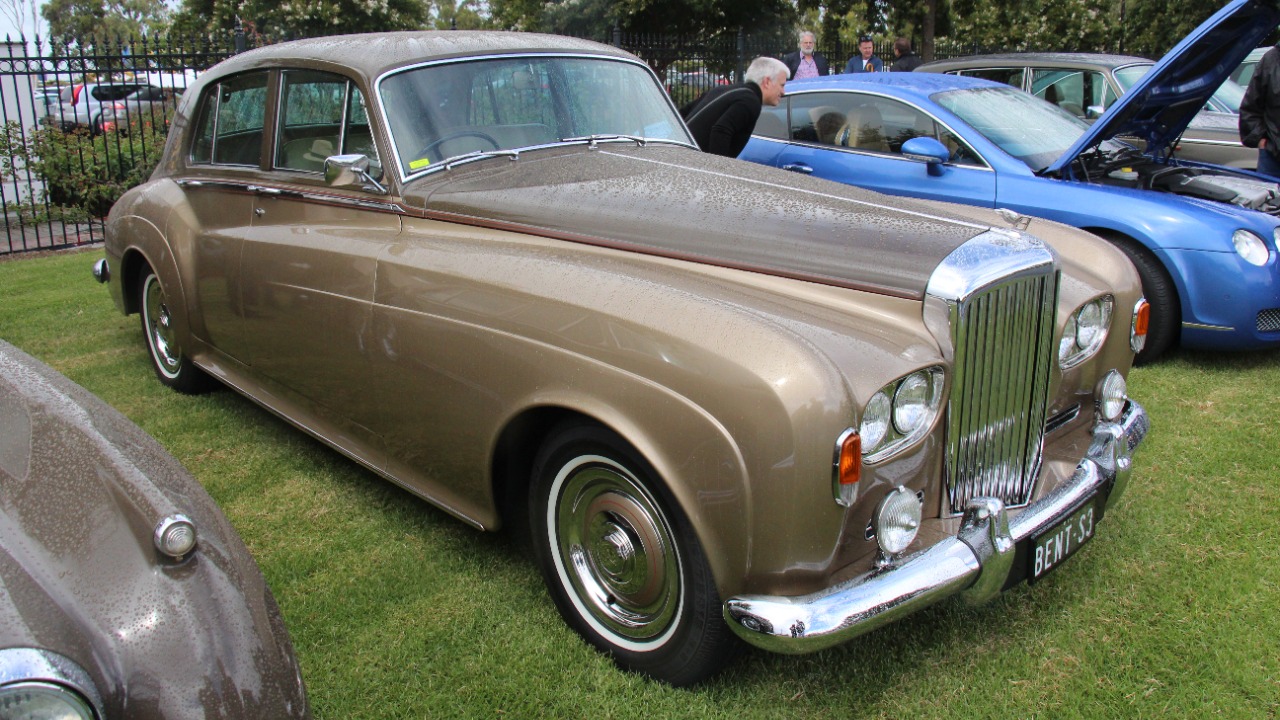
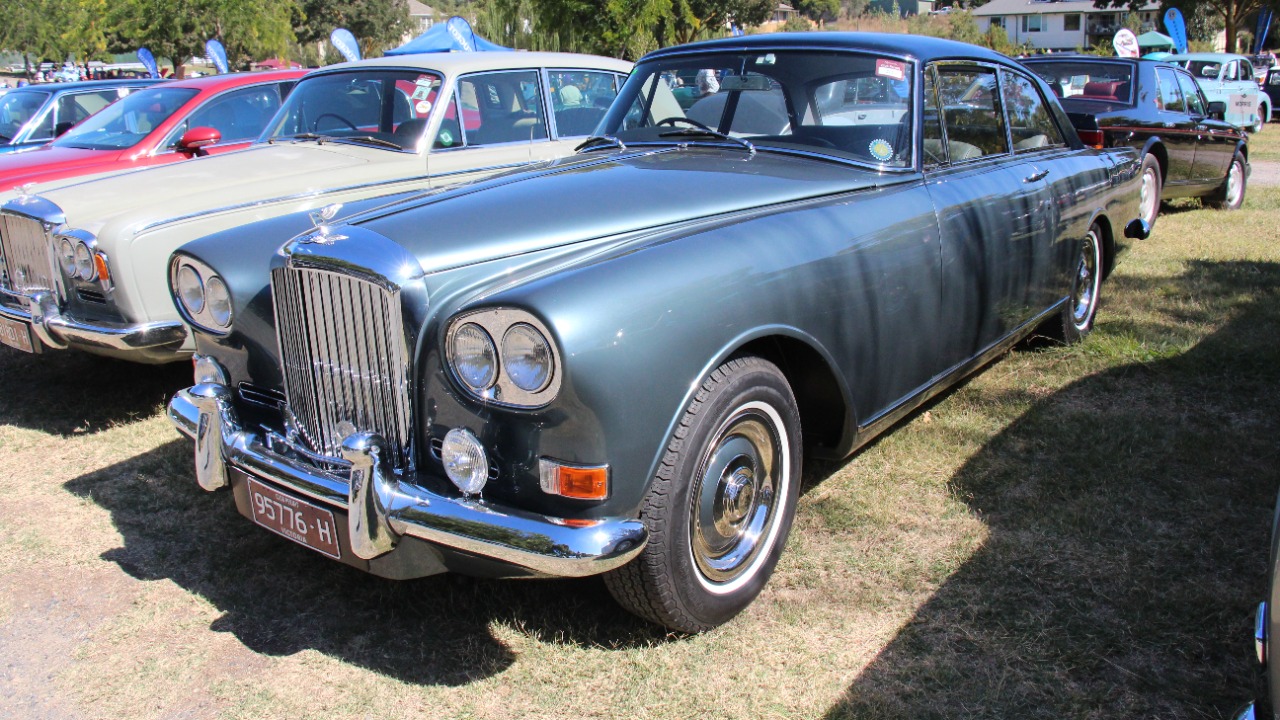
At a glance, the S3 looked like a gentle update of the S2, but the details told a more ambitious story. The most obvious change was the adoption of quad headlamps, a feature that required careful rethinking of the front coachwork. Designers found that the existing body did not lend itself happily to horizontal headlights, so they were instead positioned on a slight slant, a compromise that gave the car its distinctive “Chinese eye” look and reflected the hand of stylist Vilhelm Kor in balancing tradition with fashion.
Contemporary observers have pointed out that, despite the new lamps and other tweaks, the S3 remained very similar to the S2 under the skin, which is why some enthusiasts initially dismissed it as a mild facelift. Yet that underestimates how much these visual changes signaled a shift in attitude. The quad headlamps, the slightly crisper front wings and the more assertive stance all hinted at a car that wanted to stay relevant in a world where American and Continental rivals were growing flashier. One detailed guide notes that the S3 was introduced as an evolution of the S2 but featured some changes that were immediately visible, a reminder that The Bentley S3 was carefully judged to reassure loyalists while catching the eye of new buyers.
Engineering tradition at full stretch
Underneath that familiar body, the S3 carried forward a mechanical layout that traced its roots back before the war. The car used a separate chassis and a 6.23‑liter V‑8, a combination that delivered smooth, near‑silent power and allowed coachbuilders to continue mounting bespoke bodies on a proven frame. One enthusiast summary of a 1963 example highlights that 6.23‑liter V‑8 and notes that the S3 marked the end of an era as it was the last production luxury sedan from Bentley with body‑on‑frame construction, a configuration that had replaced the S2 in 1962 and would soon give way to a more modern, unitary Bentley platform.
The factory’s own heritage records underline how thoroughly developed this traditional package had become by the early 1960s. A preserved 1963 S3 in the company collection, identified as car 176 FGH, is documented with its Date Produced, Chassis and Engine No, and is credited with a top speed of 115 mph, a figure that would have been impressive for such a substantial saloon. That blend of old‑school construction and quietly strong performance shows how far the engineers could stretch a layout that, as other histories of Bentley and Rolls Royce remind us, had its roots in the Standard Steel saloons that had dominated the brand’s output from just after World War II until the mid‑1960s.
Coachbuilt glamour and the end of bespoke luxury
For me, the most poignant aspect of the S3 story lies not in the standard saloon but in the coachbuilt Continental versions. These cars, bodied by firms like H. J. Mulliner and Park Ward, represented the last flowering of a tradition in which wealthy clients ordered a rolling chassis and then commissioned unique bodywork. When the Bentley S3 Continental appeared, it was effectively the final chapter for this approach, and decades later Charles Morgan could look back and note that, Now, over 50 years later, the car still had the same presence it did when it rolled out as one of Bentley’s last coachbuilt cruiser designs.
That sense of a curtain call is reinforced by specialist model guides, which argue that the S3 marked the end of a major chapter for Bentley, representing the culmination of decades of classic postwar luxury motor car design and the close of an era it had been refining since the late 1940s. In that light, the S3 Continental is not just a handsome grand tourer, it is the final, polished statement of a coachbuilding culture that had been central to Bentley identity for generations.
From European benchmark to modern classic
In period, the S3 was not an anachronism, it was a benchmark. Contemporary assessments placed the Bentley S3 Saloon, along with the Rolls Royce Phantom V, at the top of the European luxury hierarchy, describing how The Bentley Saloon and its Rolls stablemate represented the standard of luxury in Europe for buyers who wanted space, silence and craftsmanship. That status is reflected in later retrospectives that stress how The Bentley S3 Saloon could hold its own even if you want to compare it with the most opulent limousines of its day.
Yet even as it set that standard, the S3 was already a kind of rolling time capsule. Technical write‑ups note that the car was based on pre‑war designs, a phrase that captures both the depth of its engineering lineage and the reason it could not last unchanged. The S3 was first announced and displayed at the Paris Motor Show in October 1962, and while it arrived looking thoroughly contemporary, its separate chassis and conservative mechanical layout were already out of step with the monocoque, mass‑produced luxury cars that would dominate the later 1960s. That is why modern histories of the Saloon and broader overviews of the S3’s Description both emphasize this duality: a car that was at once a pinnacle and a swan song.
How the S3 still shapes Bentley’s identity
Decades on, the S3’s influence is still visible in the way Bentley presents itself and in how enthusiasts respond to the car. Commentators who have studied the model argue that, Still, the S3 is an important car in Bentley’s history for at least a couple of reasons, not least because it preserved the marque’s signature grille and overall stance at a time when other elements were in flux. One detailed analysis of a 1964 example notes that, But at least the grille stayed, and goes on to trace how the quad headlamps and other cues from the S3 can still be seen in present‑day Bentley models.
Collectors have taken note as well. Market overviews describe how the Bentley S3, produced between 1962 and 1965, blended refined British engineering with understated style and has become particularly sought after among discerning classic car enthusiasts. Listings of Bentley S 3 Classic Cars for Sale frame it as the final evolution of the S‑Series and highlight how its mix of traditional craftsmanship and usable performance keeps demand strong among buyers who want a car that still feels special on modern roads. That is why references to Classic Cars for Sale and to the S3’s place in the broader Series consistently stress its enduring appeal as a bridge between old‑world luxury and the expectations of today’s drivers.
A farewell that still feels modern
When I think about why the 1962 S3 feels like the end of an era, I keep coming back to how completely it gathered up Bentley’s postwar values before the company pivoted to something new. Histories of the brand explain that, Until some time after World War II, most high‑end motorcar manufacturers like Bentley and Rolls Royce sold chassis to be bodied by independent coachbuilders, a practice that gradually gave way to in‑house Standard Steel saloons as volumes grew. The S3 sits at the tail end of that evolution, the last mainstream model to carry the full weight of that tradition before the T‑series and its unitary construction reset the rules for Bentley and Rolls Royce alike.
That is why, when I see an S3 glide past, I do not just see a handsome early‑sixties saloon. I see the final, confident stride of a company that had spent decades perfecting a particular way of building cars, from the slanted lamps shaped by Vilhelm Kor to the body‑on‑frame engineering that had defined its Standard Steel era. The S3 marked the end of a major chapter for Bentley, but it did so with such poise that, more than half a century later, the car still feels less like a relic and more like a quietly confident farewell note that continues to resonate.
More from Fast Lane Only: