The muscle car era was fueled by big engines, bold styling, and even bigger marketing claims. Throughout the late 1960s and early 1970s, automakers competed fiercely for attention, each trying to convince buyers that their latest performance machine was the fastest thing on four wheels.
Names like the Chevrolet Chevelle SS 454, Plymouth Hemi ‘Cuda, and Pontiac GTO have become household legends among enthusiasts. Yet lurking in the shadows of those famous rivals was a car that delivered something many drivers valued even more than horsepower: massive torque.
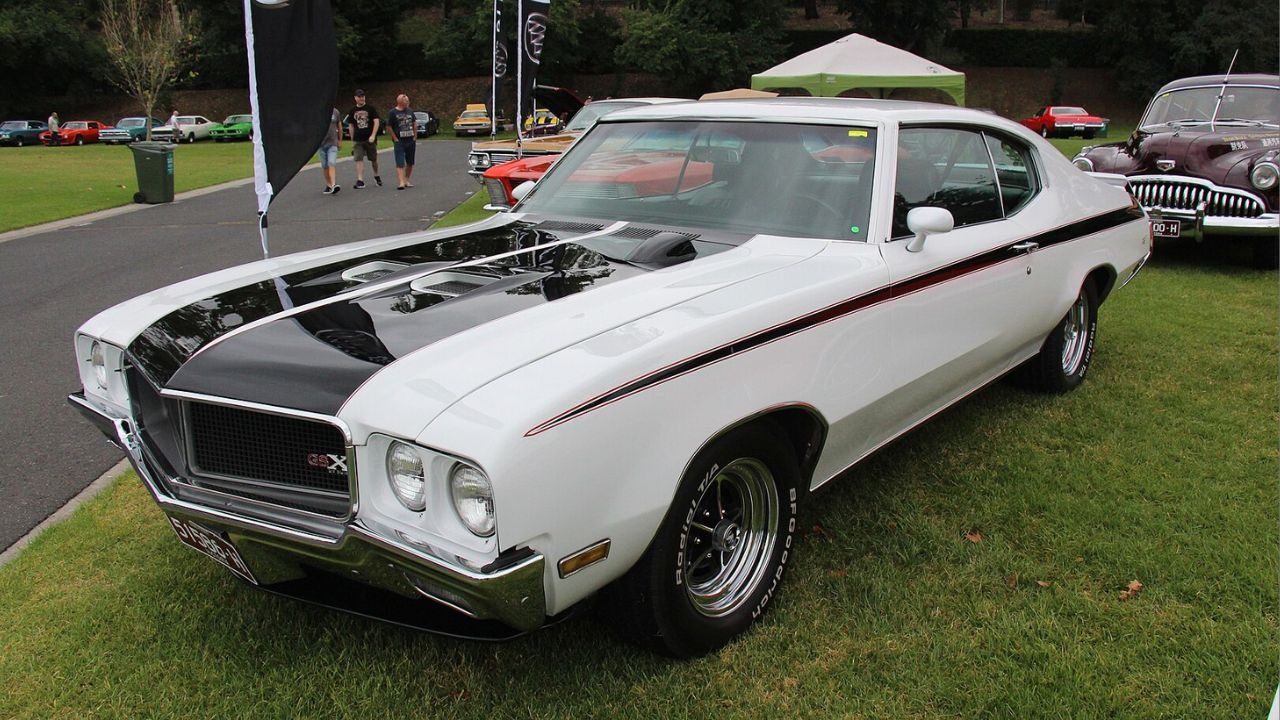
The 1970 Buick GSX wasn’t just another muscle car. It was a street machine capable of producing more twisting force than nearly every competitor in the showroom. Buyers who expected a comfortable Buick with a performance package often discovered they had purchased one of the most formidable torque monsters of the entire muscle car era.
While competitors chased horsepower headlines, Buick quietly built a car that could overwhelm its rear tires with a simple stab of the throttle.
Buick Wasn’t Supposed to Build a Muscle Car Hero
To understand why the GSX surprised so many buyers, it’s important to understand Buick’s position within General Motors.
During the 1960s, Buick occupied a unique place in GM’s lineup. Chevrolet attracted budget-minded buyers, Pontiac marketed excitement and performance, Oldsmobile blended innovation with comfort, and Cadillac focused on luxury.
Buick traditionally catered to professionals and families who wanted premium features, smooth rides, and upscale styling.
Performance wasn’t supposed to be the division’s primary identity.
Yet Buick engineers understood something that many competitors overlooked. Customers didn’t necessarily need a race car. What they often wanted was effortless power.
The division began developing a reputation for building engines that produced tremendous low-end torque. Instead of focusing exclusively on high engine speeds and headline horsepower numbers, Buick emphasized strong acceleration in real-world driving situations.
That philosophy would reach its peak in 1970.
The Arrival of the 455
The heart of the GSX was Buick’s 455-cubic-inch V8.
At first glance, the engine seemed similar to the large-displacement powerplants offered by other manufacturers. Bigger engines were common during the muscle car years, and nearly every major automaker offered some version of a big-block V8.
But Buick’s approach was different.
The 455 featured a relatively lightweight design compared to some competing big-blocks. Engineers prioritized strong breathing characteristics and abundant low-rpm power. Rather than creating an engine that needed to be revved aggressively to make power, Buick built one that produced enormous force almost immediately.
The result was an engine that felt incredibly strong in everyday driving.
Drivers didn’t have to wait for the tachometer needle to climb. The power was available almost the moment the accelerator moved.
That characteristic would become one of the GSX’s defining traits.
The Stage 1 Package Changed Everything
The standard GS 455 was already impressive, but buyers seeking maximum performance could order the Stage 1 package.
This option transformed Buick’s grand touring coupe into one of the most intimidating muscle cars on American roads.
The Stage 1 package included a variety of engine upgrades designed to improve breathing and performance. Revised cylinder heads, larger valves, a more aggressive camshaft profile, and other modifications helped unlock additional capability from the already potent 455.
Officially, Buick rated the engine at 360 horsepower.
That number sounded respectable, but it wasn’t the figure enthusiasts focused on.
The truly astonishing statistic was torque.
The Stage 1 engine was rated at 510 lb-ft of torque.
At the time, that was among the highest torque ratings available in any American production car.
Even today, 510 lb-ft remains an impressive figure.
In 1970, it was almost unbelievable.
Why Torque Mattered More Than Horsepower
Modern enthusiasts often focus heavily on horsepower because manufacturers advertise it so prominently.
But during the muscle car era, torque often played a bigger role in how fast a car felt.
Horsepower helps determine a vehicle’s ultimate performance potential, particularly at higher speeds. Torque is what creates the immediate sensation of acceleration.
It’s the force that shoves occupants back into their seats.
It’s the reason a car can leap away from a stoplight with seemingly effortless authority.
It’s what causes the rear tires to surrender before the engine does.
The Buick GSX excelled in exactly those situations.
Drivers didn’t need to launch the engine at high rpm or work through multiple gear changes to experience its strength. The engine produced such abundant low-end torque that acceleration felt immediate and relentless.
Many owners discovered the GSX was quicker in everyday driving than some rivals with higher advertised horsepower figures.
The numbers on paper told only part of the story.
The Mystery of Buick’s Conservative Ratings
One reason the GSX earned such a formidable reputation is that many enthusiasts believe Buick understated the engine’s true output.
The late muscle car era was full of suspiciously conservative power ratings.
Insurance companies were beginning to target high-performance cars. Manufacturers faced growing scrutiny regarding horsepower claims. Internal corporate politics also influenced how engines were marketed.
As a result, several famous muscle car engines are widely believed to have produced significantly more power than their official ratings suggested.
The Buick Stage 1 is frequently included in those discussions.
Contemporary road tests often recorded quarter-mile times and trap speeds that seemed inconsistent with a 360-horsepower rating.
Automotive journalists repeatedly praised the car’s brutal acceleration and effortless power delivery.
Many enthusiasts have long suspected the actual horsepower figure was considerably higher than advertised.
Whether or not that was true, the results spoke for themselves.
The GSX was extraordinarily fast.
Road Tests Confirmed the Buick’s Strength
Period automotive magazines quickly realized the GSX was something special.
Road testers praised the car’s ability to accelerate with almost absurd ease. Drivers reported that the engine felt stronger than many competitors, particularly during street driving where low-end torque mattered most.
Unlike some high-strung muscle cars that required aggressive driving techniques, the Buick felt powerful in virtually every situation.
A light touch of the accelerator could produce instant forward motion.
A heavier throttle application often produced clouds of tire smoke.
The car’s performance was so impressive that many journalists began referring to it as one of the quickest production cars available in America.
For a brand better known for luxury than drag racing, that was a remarkable achievement.
Styling That Matched the Performance
Buick didn’t hide the GSX’s intentions.
The model featured distinctive styling designed to separate it from ordinary GS models.
Bold striping stretched across the body. Functional hood scoops helped emphasize the car’s performance credentials. Front and rear spoilers added visual drama.
Most famously, many buyers chose the vibrant Saturn Yellow paint option.
The bright yellow finish made the GSX impossible to ignore.
Even parked, it looked fast.
Combined with the aggressive graphics package, the styling ensured that the car attracted attention wherever it appeared.
Yet beneath the bold appearance remained a distinctly Buick personality.
The cabin was more refined than many competitors. Ride quality remained relatively comfortable. Long-distance cruising was still part of the car’s mission.
The GSX offered muscle without completely abandoning luxury.
Why So Few Were Built
Despite its capabilities, the GSX arrived at a difficult moment in automotive history.
The muscle car market was nearing its peak.
Insurance premiums for high-performance vehicles were rising rapidly. Government emissions regulations were becoming stricter. Fuel economy concerns were beginning to influence buyer behavior.
As a result, production numbers remained relatively low.
Only a small number of GSX models were built during the 1970 model year, making surviving examples exceptionally desirable today.
Their rarity has only enhanced their reputation among collectors.
What was once a niche performance car has become one of the most sought-after muscle machines of the era.
The Legacy of Buick’s Torque King
More than five decades after its debut, the 1970 Buick GSX continues to occupy a unique place in muscle car history.
It wasn’t the most heavily advertised performance car. It didn’t enjoy the same level of public recognition as some rivals. And it came from a division few people expected to challenge Detroit’s performance leaders.
Yet the GSX consistently earned respect from those who drove it.
Its secret was simple.
While other manufacturers chased ever-larger horsepower numbers, Buick focused on delivering the kind of power drivers could feel immediately.
The result was a car capable of producing extraordinary acceleration with minimal effort.
Many buyers walked into Buick dealerships expecting a fast grand touring coupe.
What they discovered was one of the most torque-rich production cars America had ever built.
The 1970 GSX proved that horsepower may win headlines, but torque wins believers. And once drivers experienced all 510 lb-ft of Buick’s twisting force, they understood exactly why the GSX became one of the most underrated legends of the muscle car era.
More from Fast Lane Only