Some cars become legends because they were rare. Others earn their place in history through beauty, performance, or innovation. The 1970 Plymouth Superbird managed to do all three. Yet one of the most fascinating parts of its story is that it was almost a victim of its own success.
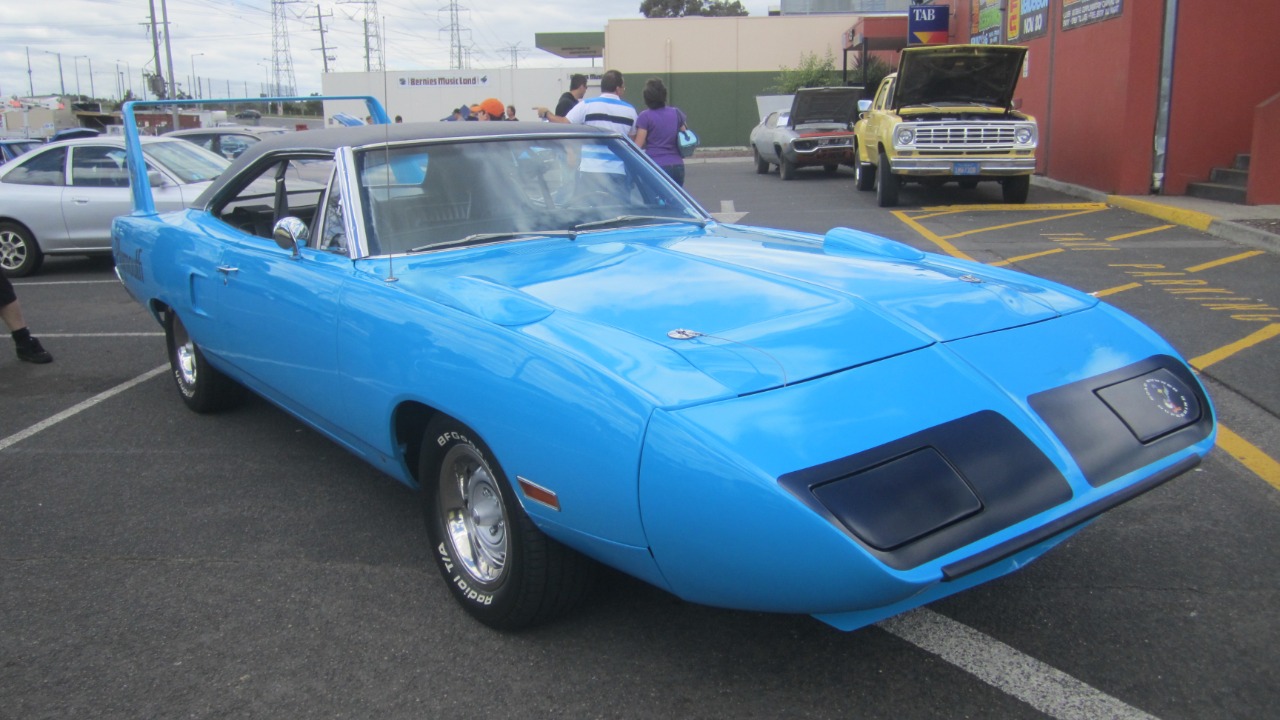
Today, the Superbird is one of the most recognizable muscle cars ever built. With its towering rear wing, pointed aerodynamic nose, and NASCAR pedigree, it looks like something from another planet. But the very qualities that made it dominate on the racetrack ultimately led to rule changes that pushed it out of competition after just one season.
NASCAR’s Need for Speed
By the late 1960s, NASCAR was becoming increasingly competitive. Manufacturers were searching for any advantage that could help their drivers reach higher speeds on the sport’s fast superspeedways.
Plymouth found itself at a disadvantage. Its sleek competitors were posting faster speeds, particularly on tracks like Daytona and Talladega. To solve the problem, Chrysler engineers developed a radically aerodynamic version of the Plymouth Road Runner.
The result was the Superbird.
The car featured an extended nose cone that reduced drag and a massive rear wing mounted high above the trunk. The wing wasn’t designed to look dramatic—although it certainly did. Its height allowed clean airflow to reach the wing while still letting the trunk open normally.
The changes worked better than anyone expected.
The Car That Changed the Game
When the Superbird debuted for the 1970 NASCAR season, it immediately proved its worth. Drivers could reach speeds that were previously difficult to achieve while maintaining greater stability.
Behind the wheel of a Superbird, NASCAR star Richard Petty returned to Plymouth after a year with Ford. Petty’s popularity and success helped cement the Superbird’s place in racing history.
The car was incredibly effective. Combined with its corporate cousin, the Dodge Charger Daytona, Chrysler’s aerodynamic machines became known as the “winged warriors.”
They were so fast that competitors and NASCAR officials began to worry. Speeds were approaching levels that raised concerns about safety, competition, and escalating engineering costs.
Too Good for NASCAR
The Superbird’s success created a problem for NASCAR.
If Chrysler’s aerodynamic specials continued to dominate, other manufacturers would likely spend heavily developing even more extreme designs. NASCAR feared an expensive aerodynamic arms race that could fundamentally change the sport.
For the 1971 season, NASCAR introduced new rules aimed directly at the winged cars. Engines larger than 305 cubic inches would be required for the aerodynamic specials if they wanted to compete in the regular divisions.
Since the Superbird and Charger Daytona relied on much larger engines to be competitive, the rule effectively ended their dominance overnight.
In other words, the cars weren’t banned. They were regulated into irrelevance.
The Superbird had become too successful for its own future.
A Slow Seller Turned Collector Gold
Ironically, racing success did not immediately translate into showroom success.
To satisfy NASCAR homologation requirements, Plymouth had to build nearly 2,000 street-going Superbirds. Many buyers loved the car’s performance, but its unusual appearance proved too extreme for mainstream tastes.
Some dealers struggled to sell them. A few even removed the nose cones and wings in attempts to make the cars more appealing to local customers.
Fast-forward several decades, and the situation has completely reversed.
Collectors now view original Superbirds as some of the most desirable American muscle cars ever built. Auction prices regularly reach six figures, with exceptional examples selling for far more.
What once looked strange now looks iconic.
The Legacy of the Superbird
The Plymouth Superbird existed for only a brief moment, but its impact has lasted for more than half a century.
It demonstrated how aerodynamics could transform stock-car racing performance. It helped push NASCAR toward new regulations. It returned Richard Petty to Plymouth. And it left behind one of the most unforgettable designs in automotive history.
Most cars disappear because they fail.
The 1970 Plymouth Superbird disappeared because it succeeded too well.
Its extraordinary speed forced the rulemakers to step in, ending an era almost as quickly as it began. That unusual fate is exactly what turned the Superbird from a race car into a legend.