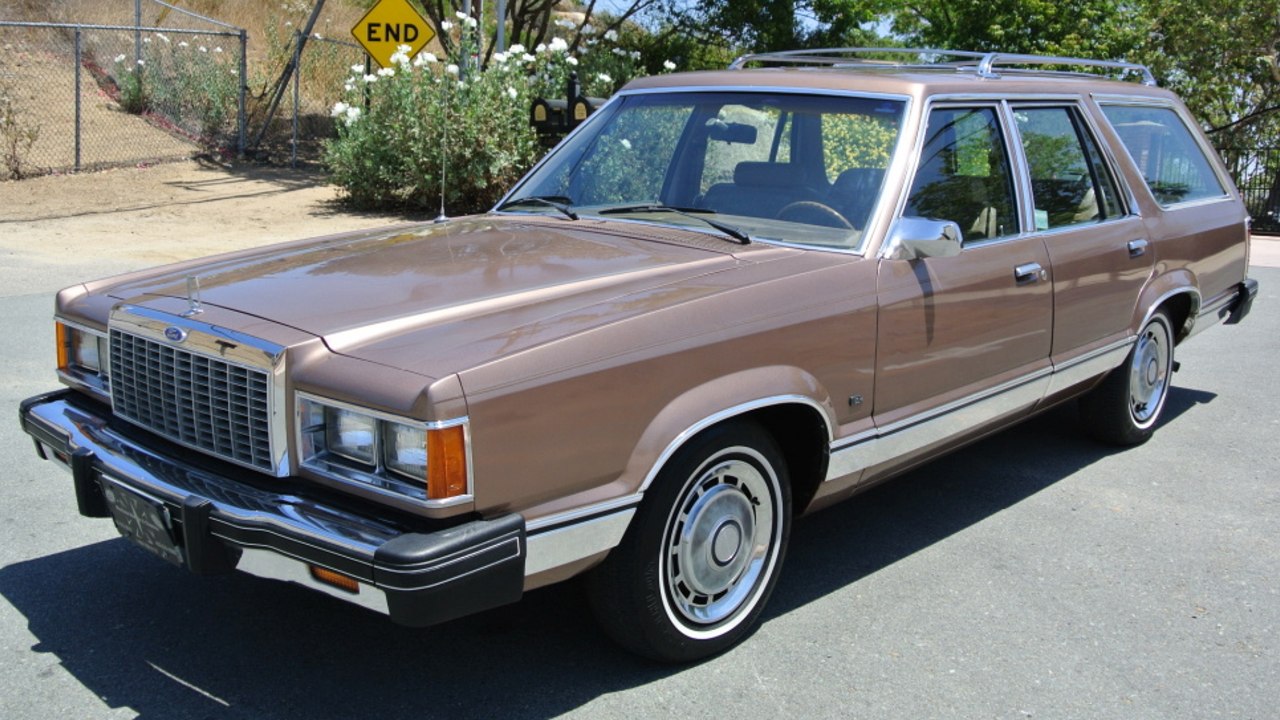
The final model year of the North American Ford Granada arrived in 1982 trying to project a level of polish that belied its compact roots. Ford had spent much of the late 1970s turning this sedan into a kind of budget luxury car, and by the time the nameplate bowed out, the company was still working hard to keep it looking and feeling upscale even as the basic formula aged.
From “poor man’s Mercedes” to Fox-platform compromise
When The North American Ford Granada debuted for 1975, Ford positioned it as a smaller car with big-car manners, a calculated response to buyers who wanted comfort and status without full-size bulk. Contemporary marketing leaned heavily on European cues, and some commentators later described the early Granada as a “poor man’s Mercedes,” a nod to its upright styling and emphasis on trim and ride quality rather than raw performance. That positioning helped the first generation carve out a niche as an affordable step up from basic compacts, and it set the tone for the upscale ambitions that would carry through to 1982.
By the turn of the 1980s, however, the landscape had shifted and Ford moved the Granada onto the Fox architecture shared with the Fairmont, a change that one analysis framed as putting “the fox in the Fairmont’s henhouse.” The new platform promised lighter weight and better efficiency, but it also exposed how much of the Granada’s appeal depended on image rather than unique engineering. Commenters looking back on late 1970s cars in pieces like the “On-The-Go Classic: 1978-’80 Ford Granada” have noted that the model often felt like “granola for breakfast,” practical and familiar rather than truly aspirational, which made the upscale pitch harder to sustain as rivals refined their own compact luxury offerings.
Upscale cues on a budget sedan
To keep the Granada feeling premium without pricing it out of reach, Ford leaned on features and finishes that were still unusual in smaller American cars. The Ford Granada was marketed as a compact to mid-size sedan that, in North America, offered upscale features in a smaller vehicle, a combination that appealed to buyers who wanted comfort and convenience but were wary of large fuel-thirsty sedans. The US version of the Ford Granada when first introduced for the 1975 model year offered a genuine personal luxury car experience, and that template of plush seats, generous chrome and quiet ride carried through to the 1982 cars, even as the underlying platform changed.
Inside, higher trims tried to mimic the feel of larger executive sedans with thickly padded seats, wood-look dash panels and extra sound insulation, echoing the way European variants like the Ghia models used richer materials to justify their status. A retrospective on the Ford Granada 2.8 Ghia X, for instance, highlights how Ghia trim levels leaned into luxury, with details such as upgraded seats and additional comfort equipment, and that same logic informed North American packages that bundled nicer upholstery and more convenience features. The strategy was clear: if the mechanicals were shared with more ordinary Fords, the cabin and the options list had to convince buyers they were getting something a little more special.
European Ghia glamour and its American echo
Across the Atlantic, Ford of Europe was refining its own Granada into a genuinely sophisticated executive car, and that effort provided a kind of halo for the nameplate. In Motion Classics coverage of a 1976 Ford Granada Ghia 3.0 and a later 1985 example notes that the European car looked calmer and more subtle after updates, with a much nicer interior and Ford of Europe’s first electric windows and central locking. Those touches, along with the prestige of the Ghia badge, reinforced the idea that Granada meant comfort and status, even if the North American and European cars shared little beyond the name.
The Ghia story underlined how far Ford was willing to go to dress up a mainstream platform. What set the Ghia X apart was probably its luxury, with the model Named after Carrozzeria Ghia, Ford’s Italian styling house, and the Ghia trim bringing features like plusher seats for that essential 1980s executive style. While the North American Granada did not mirror every European specification, the shared emphasis on trim and image helped Ford sell the car as something more than a rebadged Fairmont. Buyers drawn to the idea of European-inspired luxury could see the Granada as a domestic interpretation of the same theme, especially in its better-equipped versions.

Competition closes in on compact luxury
Ford’s attempt to keep the Granada upscale did not happen in a vacuum, and rivals quickly noticed that there was money to be made in smaller luxury-leaning sedans. One detailed look at the 1975-1980 Granada notes that the competition had watched the Granada become a success and rushed their own versions of compact luxury in the form of the Cadill Cimarron and Chrysler’s downsized K Car based variants. Those cars, whatever their flaws, signaled that the idea of a premium badge on a smaller, more efficient platform had become mainstream, eroding the Granada’s early-mover advantage.
As more brands piled into the segment, the Granada’s mix of modest hardware and upscale trim looked less distinctive. Commenters like Scoutdude, responding in discussions about late 1970s Granadas, have pointed out that there were reasons the Maverick-based formula had limits, especially as expectations for refinement and technology rose. Even enthusiasts who fondly recall owning a red 1978 two-door in a Finnish-language thread, where the owner bluntly called it a “Paska auto” and complained that “Molempien” door window mechanisms broke and the “Takapuskuri” suffered, underscore how the ownership reality could clash with the upscale image. By 1982, the Granada was competing not just with traditional domestic sedans but with a growing field of front-wheel-drive compacts and imported models that offered similar comfort with more modern engineering.
The 1982 swan song and the legacy of an “upscale budget car”
By its final model year, the 1982 Ford Granada was still trying to live up to the promise embedded in descriptions of the 1975-1982 Ford Granada as “The Upscale Budget Car,” but the market had moved on. The Fox-platform layout tied it closely to the Fairmont, and while that brought efficiency benefits, it also made it harder to justify a premium image without more dramatic differentiation. A retrospective on 1970s Ford cars notes that the Ford Granada, produced in North America from 1975 to 1982, was designed to offer upscale features in a smaller vehicle, and that mission remained intact right up to the end, even if the formula felt increasingly stretched.
Looking back, I see the 1982 Granada as a bridge between eras, a car that tried to maintain a veneer of luxury through trim and marketing at a time when buyers were starting to demand substance in the form of advanced features and more modern packaging. The fact that Then again it is still happening at GM today as the current Silverado falls into this same category, where image and equipment are used to elevate a workaday platform, shows that the Granada’s playbook never really disappeared. In Europe, later Granada Mk2 models would continue to evolve, with guides noting estate versions, limited edition trims and engines like the 2.3-litre Colo powered variants, while power steering and front discs became standard on many 1980s Ford Granada MK2 Estate cars, reinforcing their everyday usability. The North American Granada did not get that extended run, but its attempt to stay upscale on a budget foreshadowed a modern industry where badges, trim lines and carefully curated options still work hard to make familiar hardware feel just a bit more special.
More from Fast Lane Only: