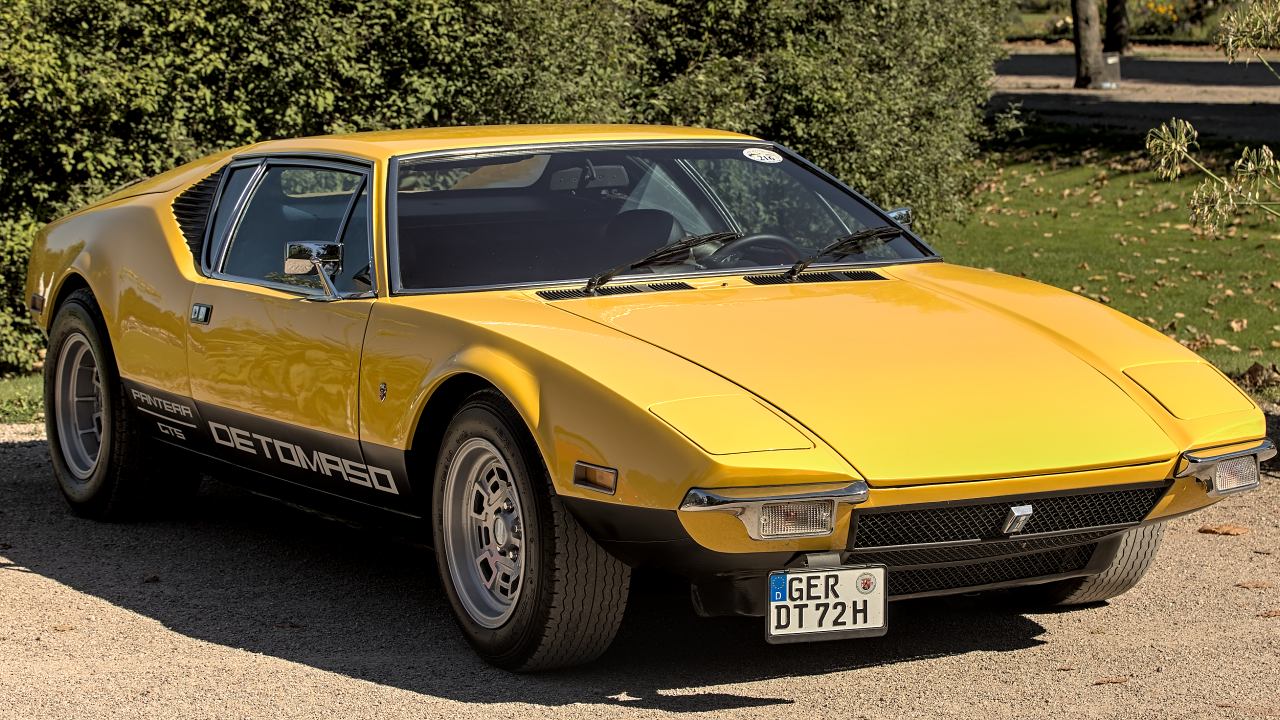
The 1972 De Tomaso Pantera did something few sports cars manage: it fused two very different automotive cultures into a package that felt coherent, desirable, and surprisingly usable. Italian style and a mid‑engine layout met American V‑8 muscle and dealership support, creating a car that, at its best, bridged continents rather than clashing them.
That blend was imperfect and sometimes fragile, yet it worked well enough that the Pantera still reads as a successful experiment in cross‑pollination rather than a confused compromise. Its mix of Modena design cues, Detroit hardware, and rock‑and‑roll mythology shows how a car can be both a product of its era and a template for later global performance machines.
Italian lines, American heart
The core of the Pantera’s appeal was its unapologetically Italian shape wrapped around a very American powertrain. The wedge profile, low nose, and cab‑forward stance were pure Modena theater, the kind of mid‑engine silhouette that, in period, usually came with a hand‑built European engine and a price tag to match. Instead, the Pantera hid a big American V‑8 behind the seats, which gave it the visual drama of an exotic with the straightforward punch of a muscle car. Contemporary observers noted that the exterior was all Italian, especially with that mid‑engine setup, while the mechanicals leaned heavily on Detroit familiarity, a contrast that defined the car’s character.
That decision to pair Italian design with a mass‑produced American engine was not just a styling trick, it was a strategic way to make supercar performance more accessible. The De Tomaso Pantera was first presented to the public in Modena, Ital, as a mid‑engine sports car that could be sold at a fraction of the price of traditional Italian exotics while still delivering serious speed. By using a robust American V‑8, the car offered strong performance and easier servicing than a bespoke Italian powerplant, which helped it appeal to buyers who wanted exotic looks without exotic maintenance. Reports on the model’s history underline how this Italian body and American heart combination became the defining feature of the Pantera’s identity.
How the 1972 model balanced promise and flaws
The 1972 Pantera sat at a pivotal moment, when the concept had been proven but the rough edges were still very visible. Early cars were known as a mixed bag, with thrilling performance offset by build quality issues and quirks that reminded owners they were driving a low‑volume Italian machine. Yet even critics who cataloged its flaws acknowledged that the basic recipe worked: the car looked like a thoroughbred from Modena and accelerated like a big‑block muscle coupe, all while costing significantly less than the most famous Italian rivals. That tension between promise and imperfection is part of why the 1972 model year remains so interesting.
From a structural standpoint, the Pantera’s mid‑engine layout and steel monocoque gave it a modern foundation compared with many front‑engine contemporaries. The De Tomaso Pantera was not just a styling exercise, it was engineered as a serious sports car with bucket seats, a purposeful cockpit, and equipment that reflected its performance intent, including items such as a fire extinguisher in some specifications. The 1972 cars benefited from incremental improvements over the earliest production examples, which helped the model gradually move from fragile curiosity toward credible sports car. Period and retrospective assessments that describe the Pantera as both flawed and compelling show how the 1972 version managed to keep the core strengths of the concept while starting to address the weaknesses.
Price, accessibility, and the “should have been bigger” argument
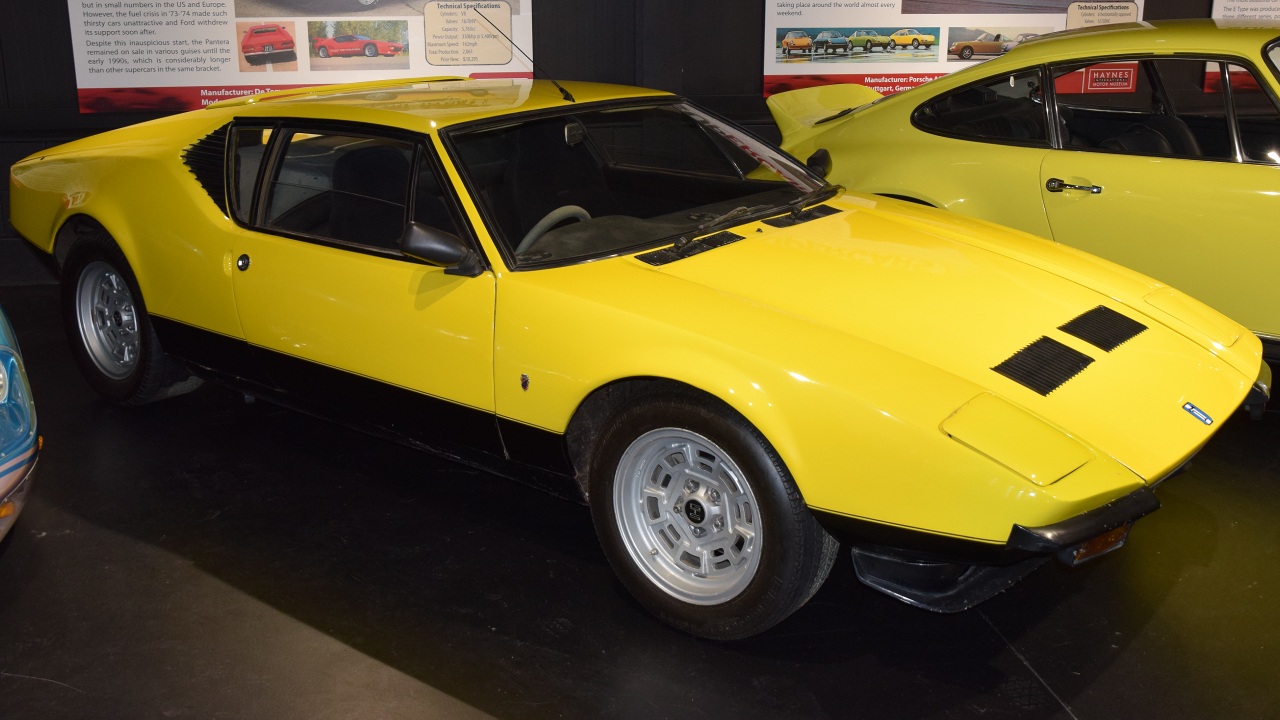
One of the most striking aspects of the Pantera story is how close it came to being a mainstream performance hit. Commentators have argued that the Pantera should have been a bigger success, precisely because it delivered Italian mid‑engine style and serious speed at a fraction of the price of established exotics. In an era when many buyers had to choose between a high‑strung European sports car and a more affordable but less sophisticated American muscle machine, the Pantera offered a third path that combined both worlds. The 1972 model, sold through conventional channels rather than boutique showrooms, embodied that promise of accessibility.
Affordability, however, is only one part of a car’s market impact, and the Pantera’s mixed reputation limited how far its appeal could spread. Reports that describe the car as a mixed bag highlight how quality issues, inconsistent refinement, and the compromises of low‑volume production undercut what was otherwise a compelling value proposition. The De Tomaso Pantera had the ingredients to disrupt the sports car hierarchy, but the ownership experience did not always match the visual and mechanical promise. That gap between what the car could have been and what it sometimes was explains why analysts still frame it as a model that deserved a larger audience than it ultimately found.
From Modena to rock‑and‑roll mythology
Even if the Pantera never dominated sales charts, it carved out a cultural footprint that far exceeded its production numbers. The car’s combination of Italian drama and American muscle made it a natural fit for celebrity garages and high‑profile enthusiasts. The model attracted more headlines when Vince Neil, the Mötley Crüe frontman, crashed his Pantera on the way home from a party, an incident that cemented the car’s association with rock‑and‑roll excess. That kind of notoriety kept the Pantera in the public eye and reinforced its image as a wild, intimidating machine rather than a polite grand tourer.
Those stories matter because they show how the Pantera’s cross‑cultural formula resonated beyond spec sheets and price lists. A mid‑engine Italian‑styled coupe with an American V‑8 was not just a technical configuration, it was a statement that appealed to musicians, racers, and enthusiasts who wanted something more rebellious than a conventional sports car. Retrospectives that describe the Pantera as an automotive rock star emphasize how its intimidating American V‑8 and dramatic bodywork created a presence that photographs could barely capture. In that sense, the 1972 Pantera succeeded not only as a product but as an icon, embedding its mixed‑worlds identity into popular culture.
Why the formula still feels modern
Looking back, the Pantera’s Italian‑American blend anticipated a pattern that is now common in performance cars. Today, it is routine to see global collaborations where design, engineering, and powertrains cross borders, but in the early 1970s the idea of pairing a Modena‑styled mid‑engine chassis with a mass‑produced American V‑8 was still unusual. The De Tomaso Pantera, presented in Modena, Ital, as a serious sports car rather than a styling exercise, showed that such a combination could be more than a novelty. Its structure, with a mid‑engine layout and purposeful interior, provided a platform that could handle the power and give drivers a genuine high‑performance experience.
That is why, when I look at the 1972 Pantera today, I see a car that mixed worlds successfully even if it did not fully conquer the market. The exterior was all Italian, the engine was unmistakably American, and the ownership experience sat somewhere between exotic and everyday, a balance that later sports cars would refine but rarely replicate with the same raw character. Analyses that describe the Pantera as both an icon and a missed opportunity capture this duality: it proved that cross‑continental collaboration could produce a compelling sports car, even as its flaws kept it from total dominance. The legacy of that 1972 model lies in how confidently it bridged cultures, showing that the distance between Modena and American V‑8 muscle could be crossed in a single, unforgettable machine.
More from Fast Lane Only: