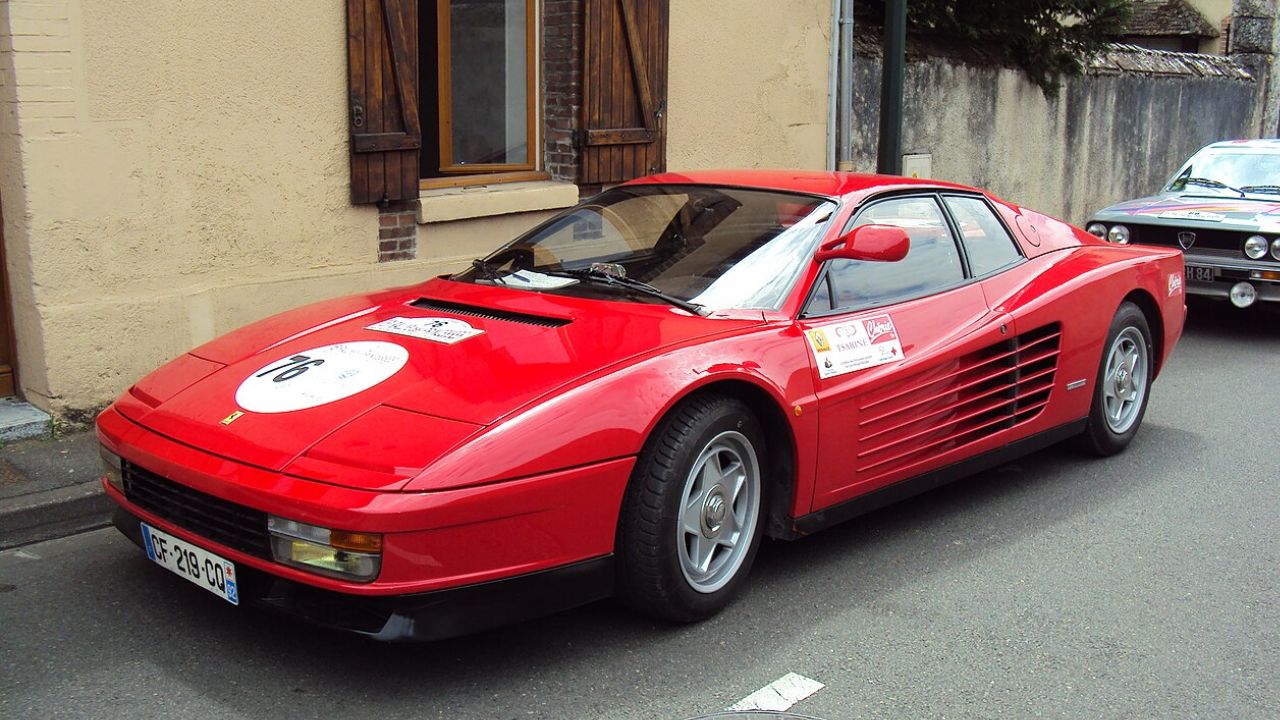
The 1984 Ferrari Testarossa is not just a car; it symbolizes an era defined by opulence and speed. With its striking design and powerful performance, the Testarossa became an icon of luxury and excess, reflecting the cultural zeitgeist of the 1980s.
The Birth of an Icon
Ferrari’s journey to the creation of the Testarossa is steeped in a rich history of automotive excellence. Founded by Enzo Ferrari in 1939, the company quickly established itself as a leader in performance and luxury sports cars. By the 1980s, Ferrari was already a household name, with models like the 308 GTS and 288 GTO capturing the imagination of car enthusiasts around the world. The Testarossa emerged as a response to the need for a flagship model that would not only carry the brand’s legacy forward but also redefine the standards of sports cars.
Designed by the renowned Italian automotive design firm Pininfarina, the Testarossa’s development was led by an impressive team of engineers and designers. The name “Testarossa,” meaning “red head” in Italian, refers to the car’s distinctive engine covers painted in a vibrant red. This design choice was not merely aesthetic; it symbolized the power and performance that lay beneath the sleek exterior. Influences from aerodynamics and motorsport can be seen throughout the vehicle, with every curve and line meticulously crafted to enhance both form and function.
Design Elements that Captivated
The Testarossa’s design is characterized by its aggressive stance and distinctive features that set it apart from its contemporaries. One of its most notable design elements is the side strakes, which not only enhance airflow to the engine but also provide a striking visual impact. The low profile and wide body contribute to its powerful presence on the road, making it an unforgettable sight. Additionally, the use of pop-up headlights was a bold choice, adding a touch of drama that appealed to the 1980s aesthetic.
Color options for the Testarossa were equally impressive, with classic red being the most iconic choice, but other colors like black, white, and silver also gained popularity. Inside, the cabin exuded luxury, featuring leather upholstery, advanced instrumentation, and a driver-focused layout. The combination of opulence and sportiness made the Testarossa a true representation of the excess that defined the decade. It was not just a car; it was a statement piece, embodying the lavish lifestyle that many aspired to during this era.
Performance and Specifications
At the heart of the Testarossa lies its remarkable flat-12 engine, which was a technological marvel for its time. With a displacement of 4.9 liters, this engine produced an astonishing 390 horsepower, allowing the car to accelerate from 0 to 60 mph in a mere 5.2 seconds. This level of performance was unprecedented, positioning the Testarossa among the elite sports cars of the period. Its unique engine layout not only provided exceptional power but also contributed to a lower center of gravity, enhancing handling and stability.
Performance metrics aside, the Testarossa’s handling capabilities were equally impressive. The car featured a rear-mounted engine and a near-perfect weight distribution, resulting in a balanced and responsive driving experience. Compared to its contemporaries, such as the Lamborghini Countach and Porsche 911 Turbo, the Testarossa offered a smoother ride and greater drivability. This blend of raw power and refined performance solidified its reputation as one of the best sports cars of the 1980s.
Cultural Impact and Media Presence
The cultural impact of the Testarossa cannot be overstated, particularly due to its prominent appearances in film and television. One of its most iconic roles was in the hit television series “Miami Vice,” where it served as a symbol of wealth and success. The show’s protagonist, Sonny Crockett, famously drove a white Testarossa, which became synonymous with the glamour and excess of the 1980s lifestyle. This exposure helped cement the Testarossa’s status as a cultural icon, appealing to audiences far beyond car enthusiasts.
As a vehicle that epitomized luxury, the Testarossa also played a crucial role in shaping the image of wealth during the decade. It represented the aspirations of the “yuppie” culture, where owning such a car was a badge of honor reflecting one’s financial success. Media portrayals consistently highlighted the Testarossa as the ultimate symbol of affluence, contributing to its legendary status and desirability among collectors and enthusiasts alike.
The Luxury Lifestyle and Excess
In the 1980s, the Testarossa became the epitome of the “yuppie” culture—young urban professionals who embraced a lifestyle of excess and luxury. The car was more than just a means of transportation; it was a status symbol that signified affluence and success. To own a Ferrari was to be part of an exclusive club, and the Testarossa, with its striking design and powerful performance, was the crown jewel of that club.
Celebrity ownership further enhanced the allure of the Testarossa. High-profile figures, including musicians, actors, and athletes, were often seen behind the wheel of this iconic car. Their association with the vehicle helped to elevate its status, making it a sought-after possession among the elite. Stories of celebrities like Michael Jordan and Rod Stewart driving their Testarossas added to the car’s mystique, ensuring that it remained a dream car for many aspiring to the luxurious lifestyle it represented.
Collectibility and Market Value
The Testarossa’s status as a collector’s item is influenced by several factors, including its limited production run and iconic design. Between 1984 and 1991, approximately 7,177 units were produced, making it a relatively rare find today. As collectors seek out vehicles that embody both performance and historical significance, the Testarossa has become increasingly desirable, leading to a steady appreciation in market value over the years.
Current market trends indicate that well-maintained Testarossas have seen substantial increases in value, with some models fetching prices well above their original retail price of around $100,000. Car shows and auctions play a crucial role in maintaining the Testarossa’s status; events like the Pebble Beach Concours d’Elegance often feature these vehicles, attracting enthusiasts and buyers alike. The continued interest in the Testarossa, fueled by its legendary status, ensures that it remains a coveted piece of automotive history.
The Legacy of the Testarossa
The Testarossa’s influence extends beyond its production years, paving the way for future Ferrari models and reshaping automotive design and performance standards. Its design language and engineering innovations have inspired subsequent Ferrari models, including the 550 Maranello and the F430, both of which carry elements of the Testarossa’s DNA. The flat-12 engine layout also set a benchmark for performance, influencing how manufacturers approached power and efficiency in their designs.
Today, the Testarossa enjoys a dedicated fanbase and community, with enthusiasts celebrating its legacy through forums, car clubs, and events. The vehicle remains a popular topic of discussion among car aficionados, with many sharing their experiences and stories about owning or dreaming of owning this iconic sports car. The Testarossa is not just a car; it is a cultural phenomenon that continues to inspire admiration and desire across generations.
More from Fast Lane Only