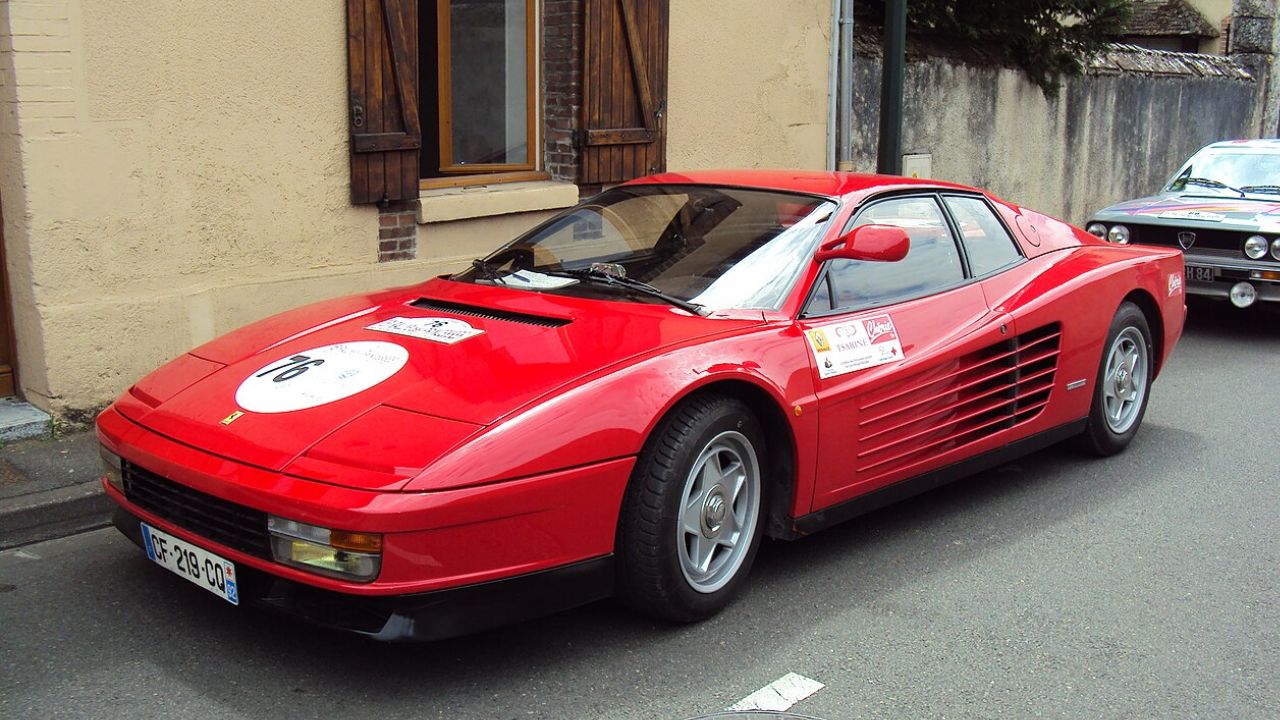
When Ferrari introduced the Testarossa in 1984, its dramatic styling immediately captured worldwide attention. Wide side strakes, an exceptionally broad rear body, and a flat-12 engine made it one of the most recognizable supercars of the decade. Yet many of its distinctive design elements were not created purely for appearance. Instead, they were the result of an unusual packaging solution aimed at solving important engineering and regulatory challenges.
Ferrari Needed Better Cooling for More Power
The Testarossa succeeded the Berlinetta Boxer at a time when Ferrari was seeking greater performance, improved reliability, and compliance with increasingly demanding emissions regulations. Its 4.9-liter flat-12 generated more power and heat than its predecessor, requiring a more effective cooling system.
Rather than placing the radiators at the front as many sports cars did, Ferrari relocated them to either side of the engine bay. This shortened the coolant plumbing, improved weight distribution, and helped the cooling system operate more efficiently under demanding conditions.
Moving the radiators, however, created a new challenge: they still needed a large supply of cool air.
That requirement would shape the Testarossa’s unmistakable appearance.
The Wide Side Intakes Became the Solution
To feed air to the side-mounted radiators, Ferrari designed large air intakes behind the doors. These intakes needed to be both highly functional and compliant with safety regulations in various markets.
The result was the famous horizontal side strakes, often called “cheese graters.” Rather than being purely decorative, the slats directed airflow toward the radiators while also helping shield the large openings. In some markets, the design also helped satisfy regulations concerning the size of exposed body openings.
The cooling system worked effectively, and the strakes became one of the defining styling features of the 1980s.
Few automotive design elements have blended function and visual identity so successfully.
The Entire Car Was Shaped Around Its Layout
The unusual packaging extended well beyond the side intakes. The Testarossa’s broad rear body accommodated the wide engine, transmission, cooling hardware, and suspension while maintaining stability at high speeds.
Its flat-12 engine sat low in the chassis, contributing to a lower center of gravity and allowing Ferrari to create a sleek roofline without sacrificing mechanical packaging. Engineers carefully balanced aerodynamics, cooling efficiency, and service accessibility, ensuring the supercar remained practical enough for road use despite its exotic configuration.
Although the car appeared extravagant, much of its dramatic shape resulted from genuine engineering requirements rather than styling excess.
Its proportions reflected necessity as much as artistic expression.
A Design That Became an Automotive Icon
The Testarossa remained in production for more than a decade, receiving updates while retaining the core packaging philosophy introduced in 1984. Its bold styling became synonymous with the supercar culture of the 1980s, appearing in films, television shows, video games, and countless automotive magazines.
Today, collectors admire the Testarossa not only for its performance but also for the intelligent engineering hidden beneath its dramatic bodywork. The side strakes, once viewed simply as an eye-catching styling cue, are now appreciated as a practical solution to a complex engineering problem.
Looking back, the 1984 Ferrari Testarossa used unusual packaging to solve a problem by reorganizing its cooling system in a way that improved performance while creating one of the most recognizable automotive designs ever produced. It stands as a reminder that some of the most iconic styling features in automotive history began as carefully considered engineering solutions.
More from Fast Lane Only
- Unboxing the WWII Jeep in a Crate
- 15 rare Chevys collectors are quietly buying
- 10 underrated V8s still worth hunting down
- Police notice this before you even roll window down
*Research for this article included AI assistance, with all final content reviewed by human editors