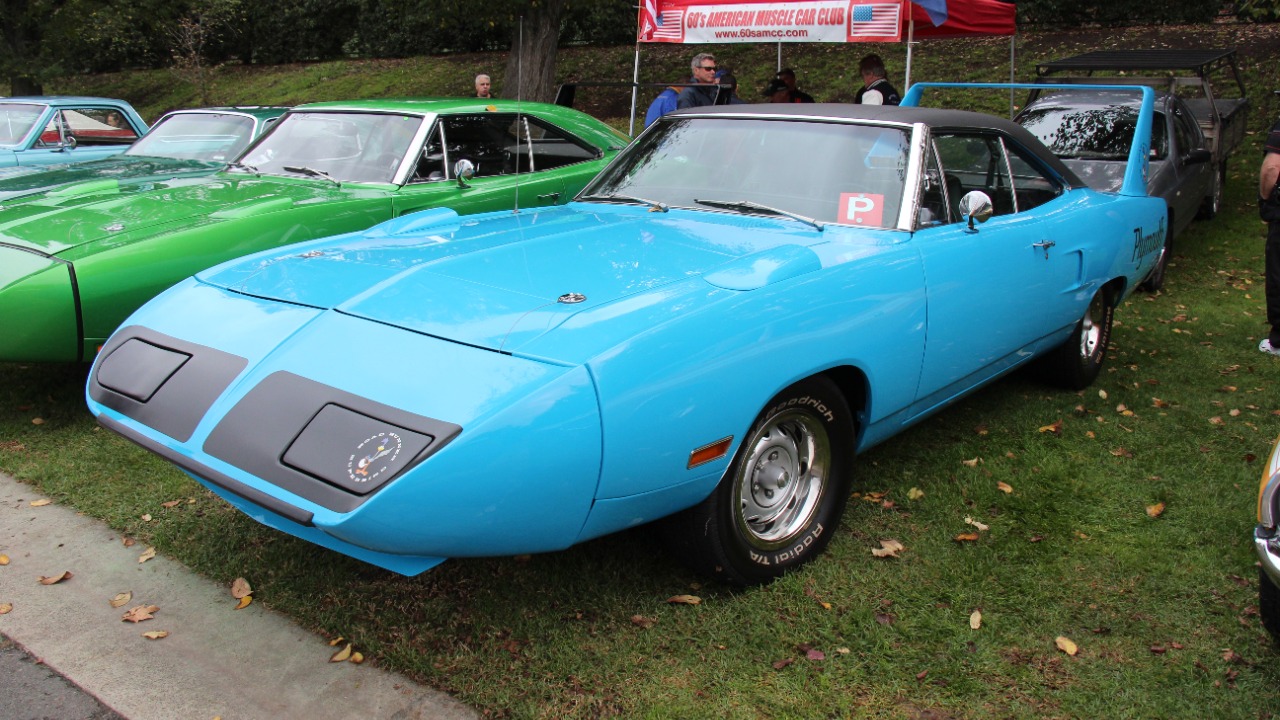
Few American muscle cars are as instantly recognizable as the 1970 Plymouth Superbird. With its towering rear wing and pointed aerodynamic nose, it looked more like a race car than a production vehicle. While many people assumed these dramatic features existed simply to attract attention, they were actually developed to solve real aerodynamic problems. The Superbird’s enormous wing was a functional necessity born from NASCAR competition rather than a styling exercise.
NASCAR Inspired an Aerodynamic Revolution
During the late 1960s, NASCAR races were becoming faster every season, and manufacturers searched for every possible advantage. Plymouth wanted a car that could compete with Ford and Dodge on high-speed superspeedways, where aerodynamic efficiency played a critical role.
Building on lessons learned from the Dodge Charger Daytona, engineers created the Superbird specifically to improve airflow and increase stability at speeds approaching 200 mph. NASCAR rules required manufacturers to sell production versions of race cars, leading Plymouth to build enough Superbirds for public purchase.
Although it became available to ordinary buyers, the car was designed first and foremost with racing in mind.
Every unusual body modification served a purpose.
The Tall Wing Improved High-Speed Stability
The Superbird’s towering rear wing was its most distinctive feature, but its height was carefully chosen rather than arbitrary. Engineers discovered that placing the wing high above the trunk allowed it to operate in cleaner, less turbulent airflow, generating more effective downforce at racing speeds.
The elevated position also allowed the trunk lid to open fully beneath the wing, preserving everyday practicality despite the car’s competition-focused design.
By increasing rear tire grip, the wing helped stabilize the car through high-speed corners and reduced the tendency for the rear end to become unsettled on long straightaways. At the extreme speeds reached on NASCAR tracks, these improvements gave drivers greater confidence and control.
The wing was an engineering tool before it became a styling icon.
The Nose Worked Together With the Wing
The massive rear wing alone could not deliver the desired performance. Plymouth paired it with a long, pointed aerodynamic nose that replaced the standard front end. This cone-shaped extension reduced aerodynamic drag while helping manage airflow over and around the vehicle.
Together, the nose and wing created a balanced aerodynamic package. The streamlined front improved top speed by reducing resistance, while the rear wing generated stability that conventional muscle cars of the era simply could not match.
These changes allowed the Superbird to achieve remarkable performance on superspeedways, where small aerodynamic advantages often translated into meaningful gains over long races.
Its appearance reflected engineering priorities rather than styling trends.
A Rare Example of Racing Shaping Road Cars
Although the Superbird was produced for only one model year, it left an enduring mark on automotive history. Its success demonstrated how racing technology could influence production vehicle design, even if only to satisfy homologation requirements.
Today, the Superbird is one of the most collectible American muscle cars ever built. Collectors prize its rarity, unmistakable appearance, and direct connection to NASCAR’s aerodynamic era. What once seemed like an outrageous design has become a celebrated example of form following function.
Looking back, the 1970 Plymouth Superbird needed its massive wing because it was built to solve real high-speed aerodynamic challenges on the racetrack. The towering spoiler was never intended as decoration—it was a carefully engineered solution that helped transform an already powerful muscle car into one of the most effective race-inspired production cars of its generation.
More from Fast Lane Only
- Unboxing the WWII Jeep in a Crate
- 15 rare Chevys collectors are quietly buying
- 10 underrated V8s still worth hunting down
- Police notice this before you even roll window down
*Research for this article included AI assistance, with all final content reviewed by human editors