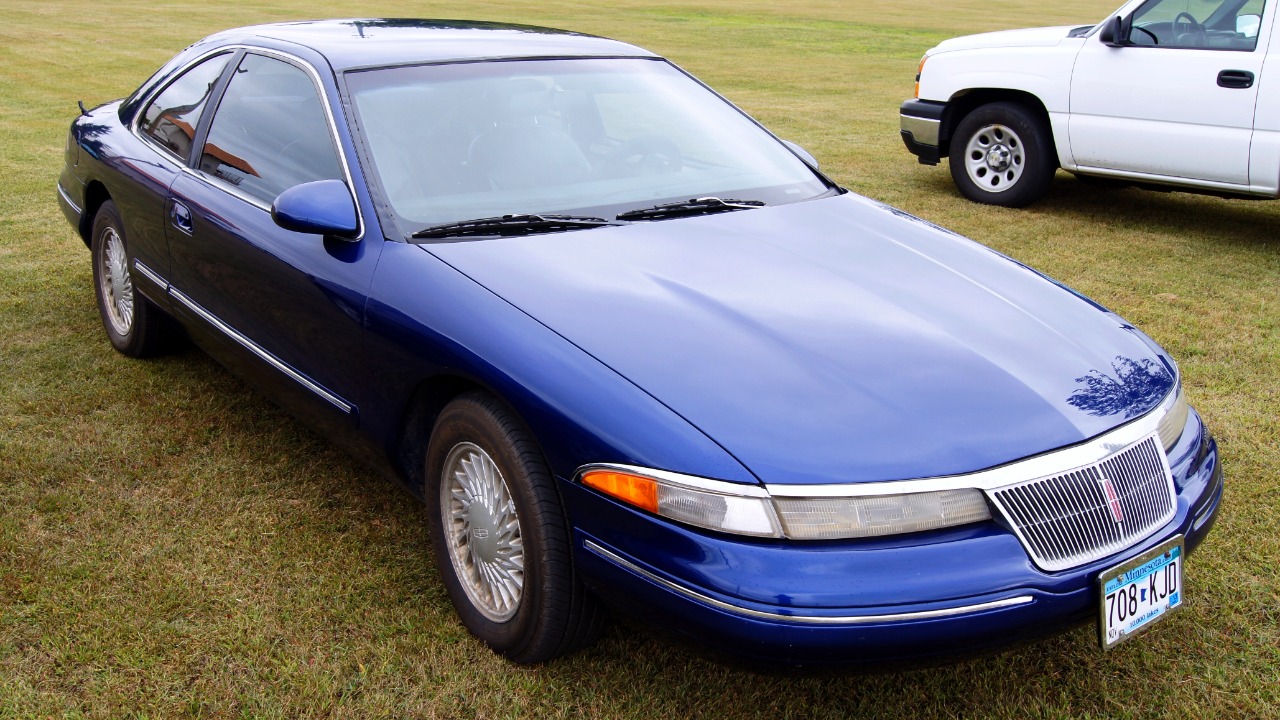
The 1993 Lincoln Mark VIII arrived at a moment when big American coupes were supposed to be dinosaurs, yet it treated the wind as an ally instead of an obstacle. By rethinking everything from its body structure to its suspension, Lincoln turned a traditional luxury nameplate into a sleek grand tourer that sliced through the air more like a contemporary sports car than a boulevard barge. I want to look at how that transformation happened, and why the Mark VIII’s aerodynamic focus still feels surprisingly modern today.
A clean sheet for a slippery shape
What strikes me first about the 1993 Lincoln Mark VIII is how deliberately it broke with its own past. Rather than gently updating the previous coupe, Lincoln engineers scrapped the old recipe and started fresh, treating the car as a blank-sheet project aimed at the 1990s instead of the 1970s. That decision freed them to chase a low, flowing profile, with a long hood, tucked tail, and glass that blended into the roofline in a way that clearly prioritized cutting drag over preserving chrome-heavy formality. Internal teams treated this as a MARK like no other, and that mindset shows in the way the body sides are pulled tight and the front fascia is rounded to meet the air instead of punching through it, a far cry from the Old square-edged coupes that had defined the brand.
From the side, the Mark VIII looks almost like a concept car that escaped the studio, and that is not an accident. Lincoln stepped into the decade with what one account calls a wild idea, to build a grand tourer that fused classic American luxury with a futuristic, wind-cheating silhouette. The 1993 Lincoln Mark VIII, described as The Future, Forward Cruiser of the era, leaned on a low cowl, a steeply raked windshield, and a fastback rear window that smoothed airflow off the roof, all in service of stability and quiet at speed. In my view, that combination of traditional length with a surprisingly athletic stance is what makes the Lincoln Mark VIII still look contemporary when you see one slip by in traffic today.
Unibody strength and a low, planted stance
Underneath that sleek skin, The Mark VIII relied on unibody construction, which was a crucial piece of its aerodynamic puzzle. By integrating the frame and body into a single structure with a high-strength roof and heavy-gauge steel door beams, Lincoln could lower the overall profile without sacrificing rigidity or side-impact protection. That stiffer shell let engineers fine tune suspension geometry and ride height, keeping the car hunkered down at highway speeds instead of bobbing around like older body-on-frame luxury coupes. The same platform also supported a sophisticated 4.6 liter DOHC 32-valve V8, and the compact packaging of that engine helped preserve the low hood line that is so central to the car’s slippery look.
Crucially, the Mark VIII did not just borrow an existing Ford shell and drape new panels over it. However, the Mark VIII boasted a number of platform-exclusive features, including exterior sheet metal that was notably sleeker and wider than the previous version of the Lincoln coupe. That wider track, combined with the low roof and tapered tail, gave the car a planted stance that visually communicates stability before you even turn the key. When I look at period photos, the way the fenders flare gently over the wheels and then pull inward toward the rear bumper reads like a designer’s sketch of airflow, frozen in steel.
Air suspension that literally fights the wind
The Mark VIII’s aerodynamics were not just about styling; they were baked into the chassis hardware. Ford Motor Company equipped the car with an electronically controlled air suspension that could vary ride height in response to speed and conditions, a feature that was still exotic in the early 1990s. The system used air springs at each corner to maintain a consistent attitude, which helped keep the nose from lifting under acceleration and the tail from sagging with passengers or luggage. That consistency matters for aerodynamics, because a car that squats or pitches changes the angle at which it meets the air, increasing drag and lift.
The clever part is how the system behaved at speed. The air suspension, which normally maintained a comfortable static ride height, could lower the car from its static ride height when conditions called for better stability. By dropping the body closer to the pavement on the highway, the Mark VIII reduced the amount of air flowing underneath, trimming turbulence and helping the car feel more settled in crosswinds. I see that as a very direct way of using technology to manage airflow, not just around the car but under it, long before adjustable ride height became common on modern luxury sedans and SUVs.
Powertrain and technology tuned for high-speed cruising
Of course, there is no point in streamlining a big coupe if it cannot comfortably live in the fast lane, and Lincoln clearly understood that. The Mark VIII’s 4.6 liter V8 was marketed with unapologetic confidence, with brochures bragging that THE NEXT STEP IN 32-VALVE TECHNOLOGY MAKES it go very fast, very fast. That 32-VALVE layout, shared with contemporary performance Fords, allowed the engine to breathe freely at higher rpm, which paired naturally with a body designed to be stable and quiet at sustained highway speeds. In my mind, that combination of a sophisticated VALVE train and a low drag shell is what made the car feel more like a European grand tourer than a traditional domestic luxury coupe.
That powertrain sat within a package that was pitched as a modern replacement for the Mark VII, a car that already had a loyal following. Well received at launch, the Mark VIII arrived for the 1993 model year as Lincoln’s answer to the challenge of updating a beloved nameplate while adding a lengthy roster of modern technology and engineering. Features like four-wheel independent suspension, anti-lock brakes, and traction control were not just comfort or safety upgrades; they were tools that helped the car exploit its aerodynamic stability by keeping it composed when the driver used all of that V8 power. When I think about the Mark VIII in this context, it feels like a bridge between analog American muscle and the electronically assisted luxury performance cars that would dominate the 2000s.
Design details that made the wind visible
Even parked, the Mark VIII wears its aerodynamic intent on its sleeve. The Mark VIII already was a pretty slick set of wheels that lived in the rarified air of luxury coupes, and later updates only sharpened that impression. With Lincoln refining the front and rear styling, the car became instantly recognizable for its smooth nose, integrated headlamps, and gently arched roofline that flowed uninterrupted into the decklid. Those choices minimized sharp edges that could create wind noise, while the flush glass and tight panel gaps helped the car slip through the air with less turbulence. When I study the profile, I see a designer trying to draw the path of the wind as much as the shape of the sheet metal.
There is also a mechanical elegance to the way the chassis supports that shape. Besides having independent suspension in each corner, the car features an air-suspension that is computer controlled, which lets it adapt to changing driving situations in a way that keeps the body level and the tires planted. That hardware works hand in hand with the sculpted body sides and tapered rear to keep the car stable when the wind picks up or the road surface gets rough. To me, that integration of design and engineering is what separates the Mark VIII from earlier personal luxury coupes that treated aerodynamics as an afterthought rather than a guiding principle.
More from Fast Lane Only: